 Save
Save There's something about a board that transforms lunch from routine to an event. I discovered this the Tuesday my coworker brought one to our office potluck—rows of jewel-toned vegetables, creamy dips pooled in tiny bowls, cheeses in three different shades. Everyone stopped working to assemble their perfect bite. I went home and built one for myself that weekend, and suddenly what I thought would be a quick meal turned into an hour of me arranging and rearranging, discovering that the ritual of choosing what goes together was half the pleasure.
I made this for my sister's book club last month, and the moment I set it down, the room got quiet in that specific way that means you've done something right. She'd asked me to bring something, and I almost made pasta salad out of habit, but instead I took a risk. Three women came back for seconds just of the vegetables and dips, which told me everything I needed to know about what people actually want when they're hungry but don't want to feel heavy.
Ingredients
- Baby carrots: These don't need peeling if you choose the smaller ones, and their natural sweetness becomes obvious the fresher you buy them.
- Cucumber slices: Cut them no more than an hour before serving or they'll weep water and get sad on the board.
- Cherry tomatoes: Leave them whole—they're easier to grab and the pop of flavor is better this way.
- Bell pepper strips: Use the colors you'd actually want to look at; the red ones taste sweeter and are worth the extra cost.
- Sugar snap peas: The ones you can eat whole feel luxurious compared to regular peas, and guests always reach for them first.
- Hummus: Buy the good stuff from the refrigerated section if you can; it has texture and real flavor.
- Ranch dressing or Greek yogurt dip: Greek yogurt is lighter and tangy, but honestly, ranch is why people come to boards.
- Cheddar cheese, cubed: Cut it into bite-sized pieces so people will actually eat them instead of leaving chunks behind.
- Mozzarella balls: These feel fancy but are just fresh mozzarella with an attitude; they disappear first.
- Gouda or Swiss cheese, sliced: The holes in Swiss make it look intentional; Gouda tastes like caramel and is worth seeking out.
- Whole grain crackers: The thicker, rougher ones hold up to dips better and feel substantial in your mouth.
- Roasted nuts: Toast your own if you have 10 minutes; the difference between store-bought and fresh-roasted is the difference between fine and memorable.
- Olives: Kalamata if you like bold, Castelvetrano if you prefer buttery; the type you choose sets the whole tone.
- Dried fruit: Apricots bring a tartness that balances the saltiness of everything else beautifully.
Tired of Takeout? 🥡
Get 10 meals you can make faster than delivery arrives. Seriously.
One email. No spam. Unsubscribe anytime.
Instructions
- Wash and dry everything like you mean it:
- Wet vegetables will slip around on your board and make the whole thing look rushed. Pat them dry with paper towels and let them air for a moment.
- Plan your layout before you start:
- Imagine the board divided into sections—don't just scatter everything randomly. Your eye will thank you, and your guests will actually try more variety.
- Arrange vegetables in groups of the same kind:
- A pile of carrots next to a pile of tomatoes looks intentional. Random mixing looks accidental.
- Pour dips into bowls and nestle them into the board:
- Never put a dip directly on the board unless you enjoy watching it seep into everything. Use small bowls and position them where they won't get knocked over.
- Cluster the cheeses so they look generous:
- Three cheeses grouped together looks like abundance; three cheeses scattered look sparse. Aim for interesting shape combinations—cubes next to balls next to slices.
- Fill the gaps with crackers and crunch:
- The nuts, olives, and crackers are your spacers and your texture contrast. Tuck them into the remaining gaps so nothing feels empty.
- Taste as you go:
- Sneak a piece of every cheese, a cracker with each dip. You're building this for people, but you should know exactly what you're serving.
- Serve it immediately or cover it loosely:
- A board is best within the first two hours of assembly. If you need to wait, drape it with plastic wrap and refrigerate it, then let it sit out for 10 minutes before serving so the cheeses aren't cold and hard.
 Save
Save The real reason I keep making these boards is because of the moment when someone's eyes land on it and they pause before reaching for anything. There's a gratitude in that pause, a recognition that someone took time to think about their experience. Food can be fuel, but sometimes it can be a small kindness, and that's what this board taught me.
Board Strategy and Visual Composition
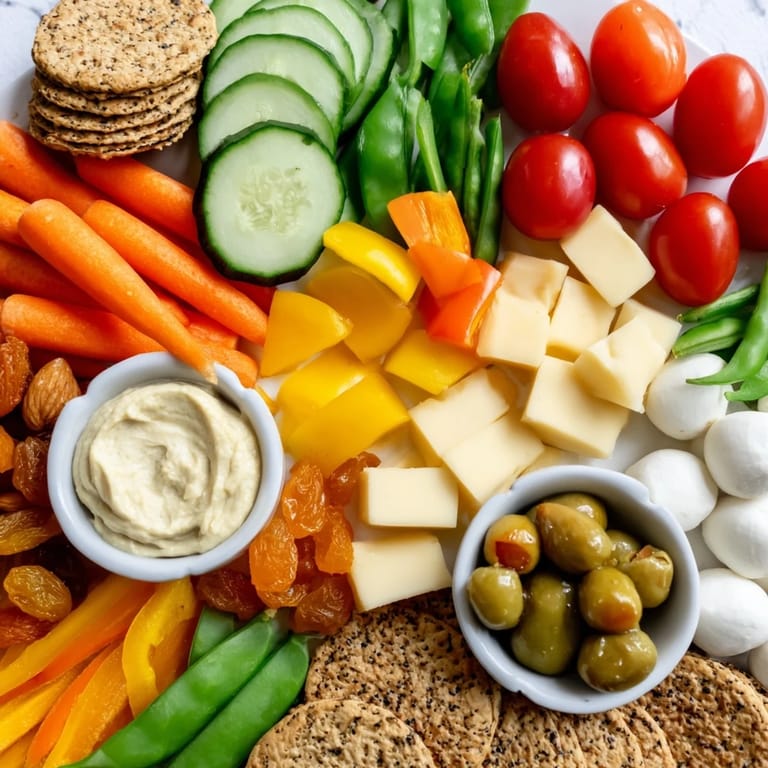
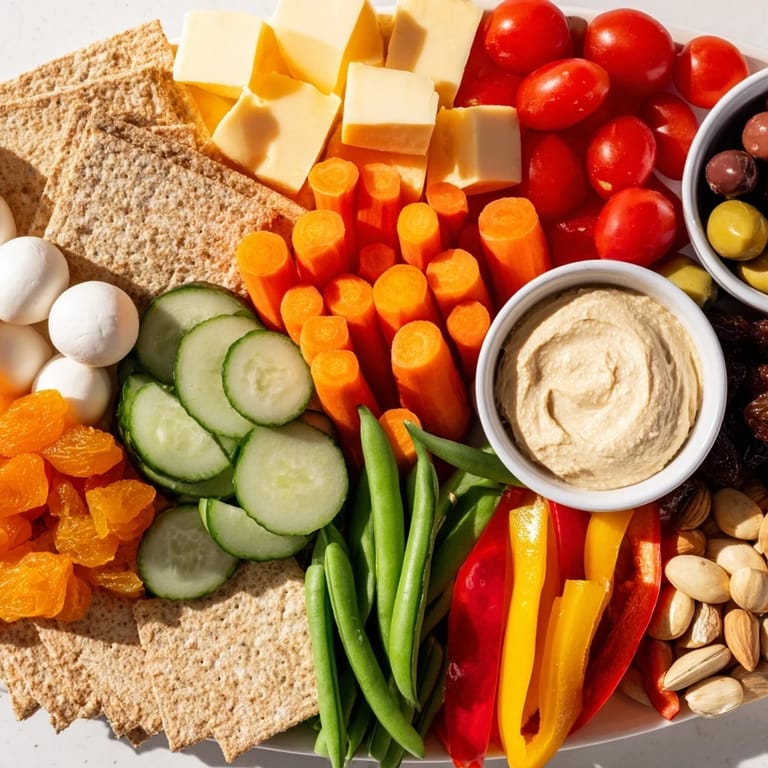
Think of your board as a landscape with height, color, and texture. Tall items like crackers and peas create visual interest; the bright reds and oranges of tomatoes and peppers draw the eye; the soft cream of cheese balances the vibrant vegetables. Arrange colors so no single shade dominates the whole board—if you put all the red tomatoes together and all the orange carrots together, you've created visual blocks that make the board look more intentional and less like you just dumped everything out. The dips should be positioned at natural stopping points, places where someone's hand might naturally pause as they move across the board.
Pairing and Flavor Combinations
Not every vegetable belongs with every cheese and dip, and understanding these partnerships makes the board feel less random and more considered. Sweet elements like the dried apricots pair beautifully with tangy cheeses like gouda. Earthy vegetables like sugar snap peas sing with ranch dip. The hummus wants roasted vegetables, raw vegetables, and nuts all nearby so people can build a complete bite. Think about creating small flavor moments across your board—spots where a combination of three or four items creates something better than any one item alone. This is what separates a board from a platter; it's the difference between a collection and a composition.
Customization and Personal Touches
The beauty of this board is that it belongs to you, not to anyone's recipe. I've made this with roasted red peppers instead of raw ones on days when I had them. I've swapped gouda for sharp cheddar, hummus for baba ganoush, crackers for toasted bread. The framework stays the same, but your preferences make it yours.
- Add hard-boiled eggs, sliced deli meats, or smoked salmon if you want more protein and don't need it to be vegetarian.
- For a vegan board, use cashew cream instead of ranch, swap the cheeses for plant-based versions, and go heavier on the nuts and olives.
- If gluten is a concern, choose crackers labeled gluten-free and make sure your dips and cheeses don't have hidden sources—most do, but some brands don't.
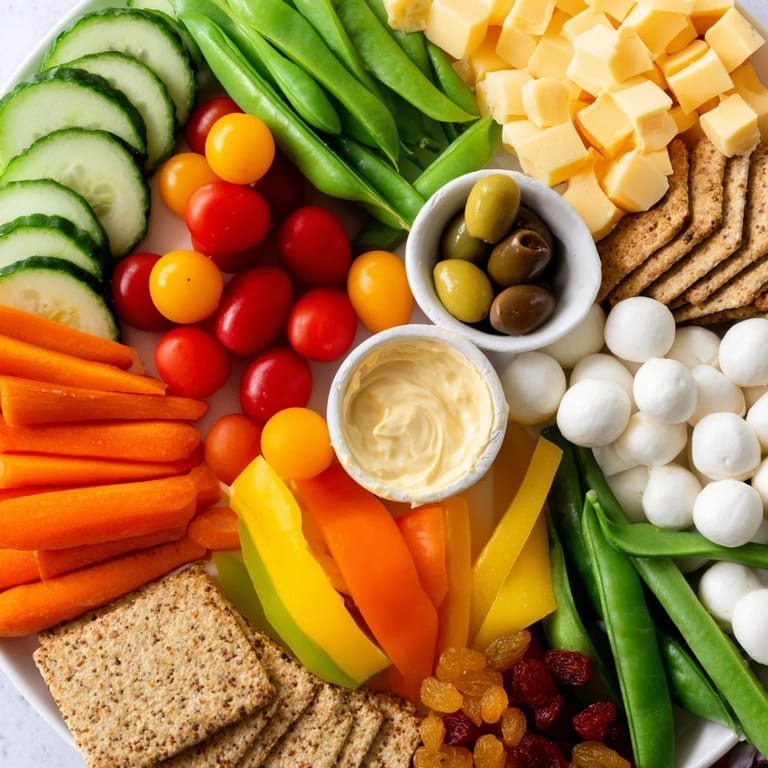 Save
Save Building a board is building an invitation, a way of saying you thought about what would make someone happy to eat. That's the whole recipe.
Recipe FAQs
- → What vegetables work best on this snack board?
Fresh, crisp vegetables like baby carrots, cucumber slices, cherry tomatoes, bell pepper strips, and sugar snap peas offer vibrant colors and varied textures.
- → Can I substitute the cheeses with plant-based options?
Yes, dairy-free cheeses can be used to accommodate vegan preferences while maintaining creaminess and flavor diversity.
- → How should dips be served for best presentation?
Place dips in small bowls arranged on the board to keep them contained and easily accessible for dipping.
- → What crunchy elements can complement the vegetables and cheese?
Whole grain crackers and roasted nuts like almonds, cashews, or walnuts add satisfying crunch and richness.
- → How long can the board be refrigerated before serving?
Cover and refrigerate the assembled board for up to a few hours to keep ingredients fresh and crisp before enjoying.