 Save
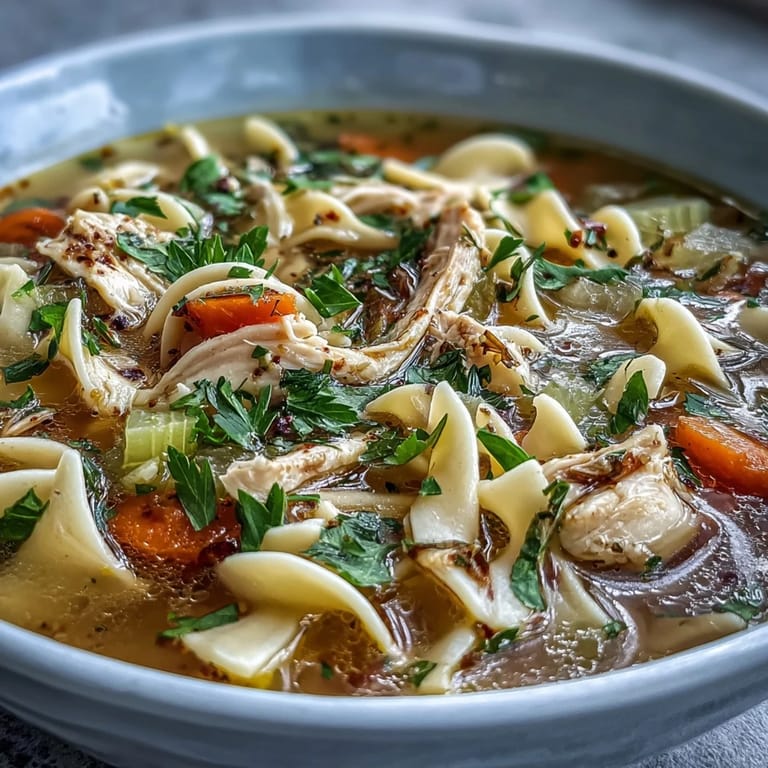
Save There's something about the sound of a wooden spoon scraping the bottom of a pot that signals comfort is on the way. My neighbor taught me this particular version one grey afternoon when she saw me trudging home looking defeated by the weather, and she insisted I learn it properly instead of relying on canned soup. The smell of chicken simmering with celery and carrots filled her kitchen so completely that I understood why she made this at least once a week.
I made this for my partner the night after they got their wisdom teeth out, and watching them actually smile while eating something soft and warm reminded me why comfort food matters so much. The broth was gentle enough to sip, the shredded chicken melted on their tongue, and for the first time that week, they looked like themselves again.
Ingredients
- Bone-in, skinless chicken thighs or breasts: Thighs give you richer flavor and more forgiving cooking—they're harder to dry out than breasts, though a mix of both is honestly the ideal play.
- Low-sodium chicken broth: Use the good stuff here because this is basically your soup's backbone, and eight cups means it needs to taste like something you'd actually want to drink on its own.
- Yellow onion, carrots, and celery: This holy trinity isn't just tradition—it creates a flavor base that somehow tastes homey without tasting boring.
- Garlic, bay leaves, thyme, and rosemary: Don't skip the dried herbs even if you think they're old school, because they're what makes this feel like a proper meal and not just boiled chicken.
- Wide egg noodles: They catch the broth beautifully and have a tender texture that matters more than you'd think.
- Fresh parsley and lemon juice: These finish the dish with brightness that cuts through the richness and makes everything feel alive.
Tired of Takeout? 🥡
Get 10 meals you can make faster than delivery arrives. Seriously.
One email. No spam. Unsubscribe anytime.
Instructions
- Start with the chicken and broth:
- Pour the broth and chicken into your largest pot and watch as it comes to that first excited boil. Skim off the cloudy foam that floats up—it only takes a minute but makes the broth clearer and cleaner tasting.
- Build your flavor base:
- Add the onion, carrots, celery, garlic, and all those herbs at once, then lower the heat to a gentle simmer. You want it barely bubbling, not aggressively rolling, because gentle heat keeps the chicken tender instead of tough.
- Cook until everything is ready:
- Give it 25 to 30 minutes and you'll smell when it's done—the vegetables soften, the chicken gets tender, and the whole pot smells like dinner at someone's house who knows what they're doing. Taste the broth and it should taste rich and complete.
- Shred and return the chicken:
- Pull the chicken out with tongs and use two forks to tear it into bite-sized pieces, discarding any bones. Return it to the pot where it'll stay warm and soak up even more flavor.
- Bring it back to a boil and add noodles:
- Increase the heat to medium-high and once it's gently boiling again, scatter in the egg noodles. They'll soften in 8 to 10 minutes—taste one to be sure it's tender but not falling apart.
- Finish with brightness:
- Stir in the fresh parsley and add lemon juice if you want—it's optional but it changes everything by making the whole soup feel fresher. Fish out the bay leaves, taste, and adjust salt and pepper until it tastes like home.
 Save
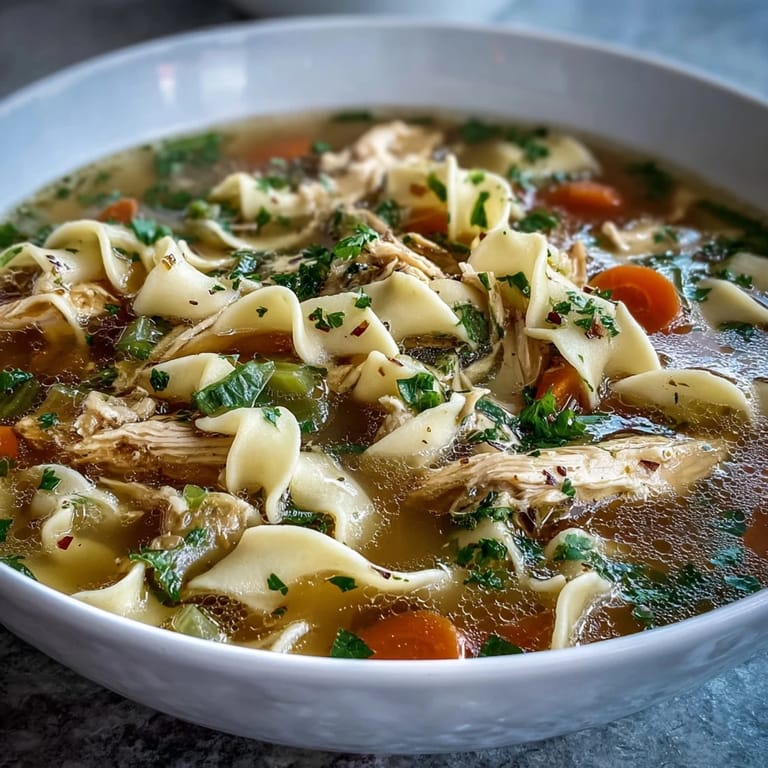
Save There's a particular kind of quiet that happens when someone who's been sick or cold or just worn down sits down with a bowl of this soup and actually looks relieved. That's the moment I realized comfort food isn't really about fancy techniques or rare ingredients—it's about showing up with something warm when someone needs it.
When to Make This
This soup belongs in your rotation for any Monday evening when energy is low, or for those unexpected moments when someone you care about needs feeding. Cold snap at 3 p.m.? Make it. Someone's under the weather? Make it. You've had a day that requires carbs and warmth? Make it. The beauty is that it's humble enough for a regular Tuesday but feels thoughtful enough for someone who needs real care.
Building Flavor with What You Have
If you only have chicken breast, go ahead and use it—just watch it closely so it doesn't overcook and turn stringy. If your herbs are fresher than dried, use half the amount because fresh herbs pack more punch. The flexibility here is actually a feature, not a bug, and your soup will taste like what you have in your kitchen and the care you put into it.
Make It Your Own
Once you understand the basic framework, this soup becomes a blank canvas for whatever sounds good to you. Some nights I add a handful of spinach in the last minute, other times a pinch of chili flakes if I'm craving heat, and occasionally I swap in gluten-free noodles for guests. The recipe works because it's forgiving, not because it's precious.
- Add diced potatoes with the vegetables if you want something more filling and hearty.
- A splash of apple cider vinegar at the end adds depth if the broth tastes a little one-note.
- Fresh dill scattered on top at the end tastes wonderful if you have it growing or can grab some from the store.
 Save
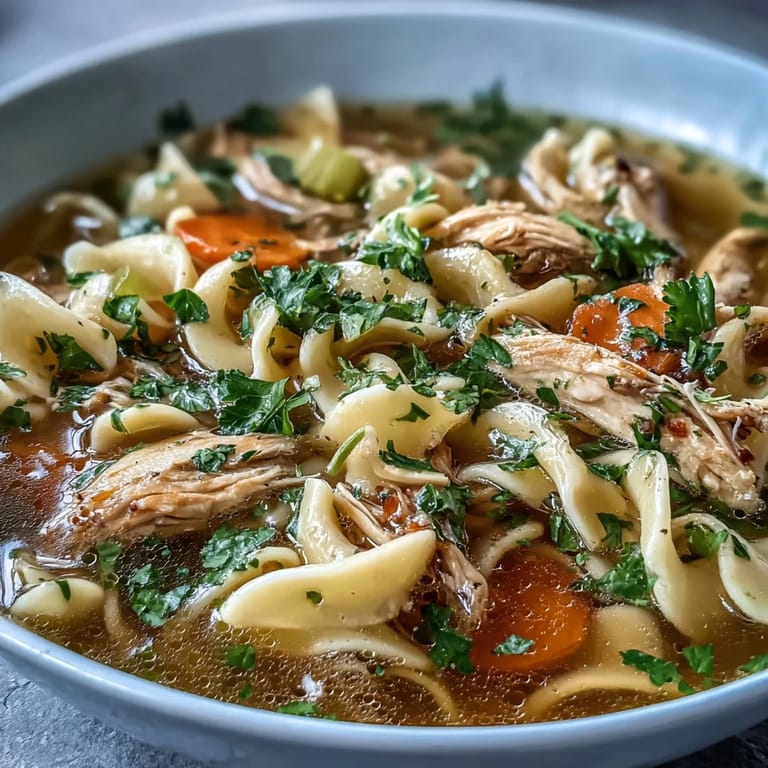
Save This is the kind of soup that teaches you something about cooking if you pay attention—that simple ingredients treated with respect become something that matters. Make it, share it, and watch how quickly it becomes the dish people ask you to bring.
Recipe FAQs
- → How long does it take to make?
Total time is about 1 hour and 5 minutes, including 20 minutes of prep and 45 minutes of cooking. Most of that hands-off simmering time builds the flavorful broth.
- → Can I use rotisserie chicken?
Yes, shred a store-bought rotisserie chicken and add it during the last 10 minutes of cooking along with the noodles. This reduces total time to about 30 minutes.
- → What noodles work best?
Wide egg noodles are traditional and hold up well in broth. For gluten-free options, use rice noodles or gluten-free pasta. Small shapes like ditalini or shells also work beautifully.
- → How do I store leftovers?
Keep in an airtight container in the refrigerator for 4-5 days. The noodles will continue absorbing broth, so you may want to add extra liquid when reheating.
- → Can I freeze this?
Freeze without noodles for best results—cook fresh noodles when reheating. If freezing with noodles, expect them to become softer. Portion into freezer-safe bags for up to 3 months.
- → How can I add more vegetables?
Spinach, kale, or peas can be added in the last 5 minutes. diced potatoes or butternut squash should simmer with the other vegetables for the full cooking time.