 Save
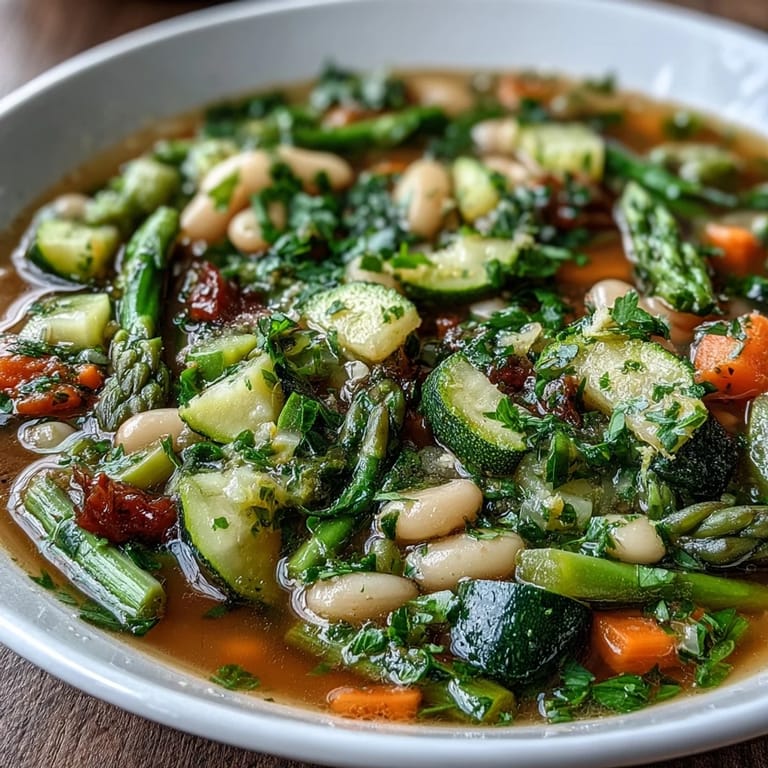
Save There's something about opening the fridge in spring and seeing all those tender vegetables begging to be used that makes me want to throw everything into a pot with white beans and call it minestrone. One Saturday morning, I had asparagus tips still dewy from the farmers market, a bunch of spinach on its last leg, and this sudden craving for something warm but not heavy. What came out was this bowl of pure green-and-gold comfort that somehow tasted like the season itself.
I made this for my neighbor who'd just had surgery and couldn't leave the house, and watching her face when she tasted it—that moment of genuine relief, like warmth and nourishment in one spoonful—reminded me why simple, honest food matters so much.
Ingredients
- Olive oil: Start with good oil because you'll taste it in those first minutes when the onions are softening and releasing their sweetness.
- Onion, carrots, and celery: This trio is the foundation—the soffritto that builds everything else—so don't rush through dicing them.
- Garlic: Two cloves minced small so they disappear into the broth and flavor every spoonful.
- Zucchini: Adds tender texture without overpowering the delicate spring vegetables that follow.
- Asparagus: Cut into one-inch pieces so they stay slightly firm and don't turn to mush by the time you ladle the soup.
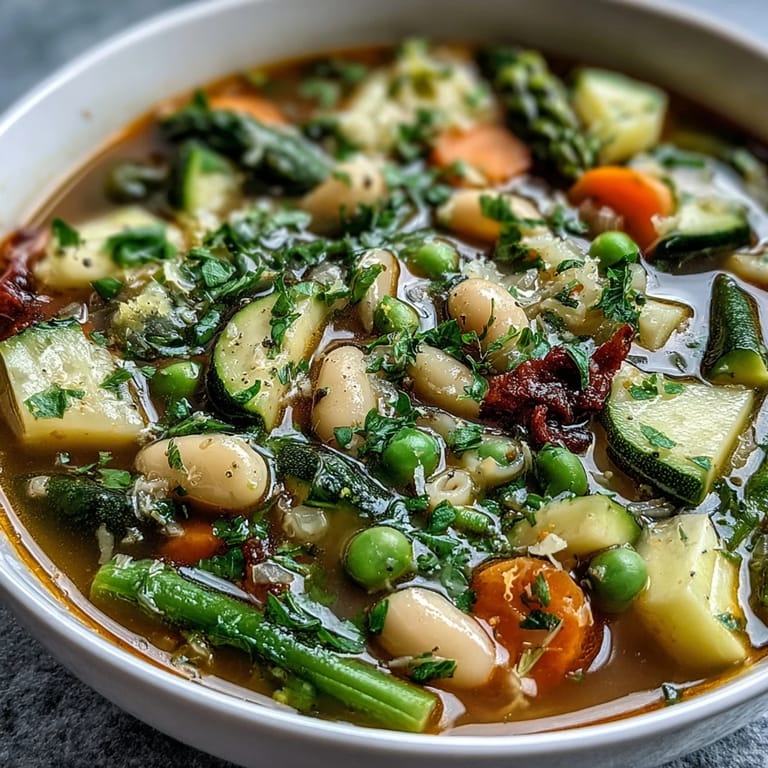
- Peas: Fresh or frozen both work beautifully; they add sweetness and that pop of green.
- Baby spinach or Swiss chard: Added at the very end so the greens stay bright and tender rather than turning dark and sad.
- White beans: Cannellini beans are traditional and creamy without being heavy; they make the soup satisfying enough to be a meal.
- Small pasta: Ditalini or small shells work best because they don't overwhelm the delicate vegetables; cook them directly in the broth so they absorb all that flavor.
- Vegetable broth: Use low-sodium so you can taste and season as you go; you're in control of the salt level.
- Thyme and oregano: Dried herbs work fine here because they bloom in the warm broth and create that gentle Italian backbone.
- Bay leaf: Adds depth without announcing itself.
- Lemon zest and fresh parsley: These are the final wake-up call that makes the whole soup sing with brightness.
- Parmesan and extra virgin olive oil: Optional but worth it—a drizzle of good oil and a shaving of cheese transforms a simple soup into something you'll want to savor slowly.
Tired of Takeout? 🥡
Get 10 meals you can make faster than delivery arrives. Seriously.
One email. No spam. Unsubscribe anytime.
Instructions
- Build your flavor base:
- Heat olive oil in a large pot over medium heat and add your diced onion, carrots, and celery. Watch them soften for about five minutes, listening for that gentle sizzle and noticing when the onion turns translucent and sweet-smelling.
- Bloom the garlic:
- Stir in your minced garlic and let it toast for just one minute until it becomes fragrant—you'll know the exact moment to move forward.
- Add the tender spring vegetables:
- Toss in your diced zucchini and let it cook for two minutes, which softens it just enough without making it lose its character.
- Pour in the broth and seasonings:
- Add your vegetable broth along with the thyme, oregano, and bay leaf, then bring everything to a gentle boil. This is where the soup begins to come alive.
- Introduce the beans and pasta:
- Stir in your white beans and small pasta, then reduce the heat and let it simmer for ten minutes so the pasta absorbs the broth and becomes tender.
- Add the spring vegetables:
- Now add your asparagus and peas, cooking for another five to seven minutes until everything is tender but still has a bit of life to it.
- Finish with greens and brightness:
- Stir in your spinach or Swiss chard along with lemon zest and fresh parsley, then season generously with salt and pepper. Let it cook for two more minutes just until the greens wilt and become silky.
- Serve and celebrate:
- Remove the bay leaf, ladle the soup into bowls, and top with Parmesan and a drizzle of olive oil if you're feeling it.
 Save
Save My daughter asked for a second bowl and then wanted to know if we could make this every week, which told me everything I needed to know about whether I'd gotten it right. There's something beautiful about feeding people food that's both nourishing and joyful.
Why Spring Vegetables Matter
Spring vegetables have a delicate sweetness that disappears by summer, so there's a real window of time when asparagus and tender peas taste like nothing else in the world. Using them in a soup where they cook gently rather than aggressively means you get to taste that subtle flavor instead of cooking it away. I learned this the hard way by overcooking a batch of asparagus soup once and wondering why it tasted sad and gray.
The Pasta Question
Cooking the pasta directly in the broth instead of separately seems like a small choice, but it's actually where a lot of the flavor comes from. The pasta releases its starch, which makes the broth silkier and more cohesive, and every piece of pasta soaks up the herbs and vegetables around it. Using small shapes like ditalini or small shells means they don't compete with the vegetables for attention in your spoon.
Making It Your Own
This soup is forgiving and flexible, which is probably why it's been made for generations in Italian kitchens. You could swap fava beans for white beans if they're in season, add green beans instead of asparagus, or throw in some fresh fennel if you love that licorice-like quality. The structure stays the same; you're just riffing on what's available and what calls to you.
- A squeeze of fresh lemon juice stirred in right before serving adds brightness that makes everything taste fresher.
- Crusty bread on the side transforms this into a complete meal that feels substantial without being heavy.
- Leftover soup keeps well in the fridge and tastes even better the next day when the flavors have deepened.
 Save
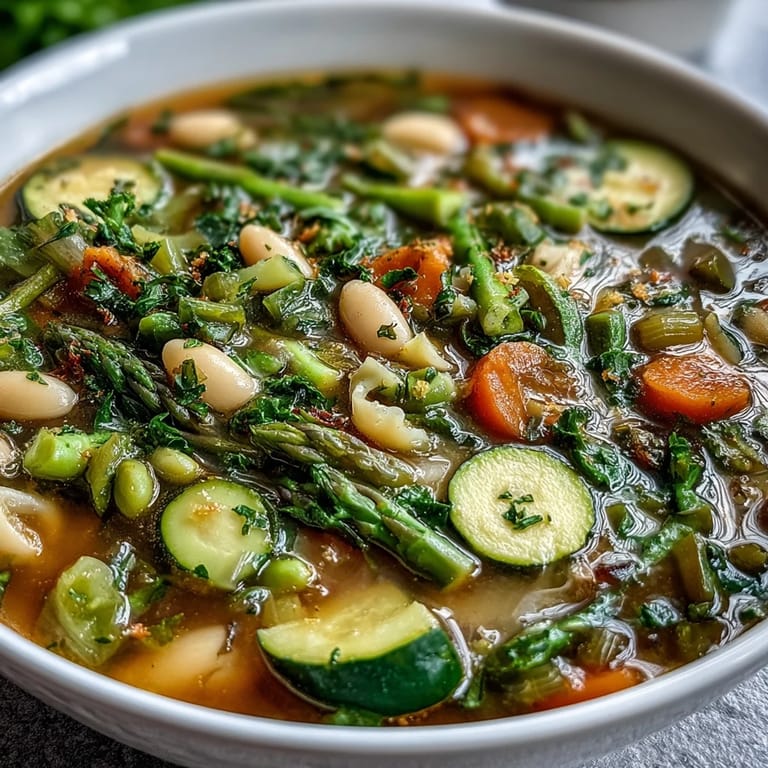
Save This is the kind of soup that tastes better than it has any right to, given how simply it comes together. Make it when spring vegetables are at the farmers market, serve it to people you care about, and watch their faces light up.
Recipe FAQs
- → Can I use frozen vegetables instead of fresh?
Yes, frozen peas and asparagus can be used to maintain convenience without sacrificing flavor.
- → How can I make this dish gluten-free?
Simply substitute the small pasta with gluten-free varieties like gluten-free ditalini or shells.
- → What herbs enhance the flavor best?
Dried thyme and oregano along with fresh parsley add bright, aromatic notes balancing the vegetables and beans.
- → Is it suitable for a vegan diet?
Omit the Parmesan or use a plant-based alternative to keep it fully plant-based and vegan friendly.
- → How should leftovers be stored?
Store in an airtight container in the refrigerator for up to 3 days and reheat gently to preserve texture.
- → Can other spring vegetables be used?
Yes, swap or add ingredients like fava beans or green beans to customize the vegetable mix.