 Save
Save My neighbor Maria stopped by on a chilly Tuesday carrying a mason jar of homemade vegetable broth and a knowing smile. She'd spent the afternoon making this soup, the kind that fills your kitchen with the smell of thyme and rosemary before you've even finished chopping vegetables. When she ladled it into bowls at my counter, that first spoonful—creamy beans, tender kale, and a whisper of lemon—made everything else fade away. I've made it dozens of times since, and it never fails to feel like an embrace in a bowl.
I made this for my sister during her first week working from home, when she texted saying she'd forgotten to eat lunch. Showing up with a pot of this soup felt like the right answer to a day gone sideways. She's called asking for the recipe three times now, and each time I remind her it's the kind of cooking that teaches you something about generosity.
Ingredients
- Olive oil: Use good quality oil here because you taste it directly—the difference between grocery store and something special shows up in every spoonful.
- Yellow onion, carrots, and celery: This trinity builds the foundation of flavor, so don't rush the sautéing; those six to eight minutes matter.
- Garlic: Minced fresh garlic blooms when it hits hot oil, filling your kitchen with that unmistakable fragrance that signals something good is happening.
- Kale: Remove those woody stems without guilt—they're tough and don't belong here, but the tender leaves become silky as they cook.
- Lemon zest: A microplane gives you the finest, most delicate zest; a box grater works too, just be gentle and avoid the bitter white pith.
- Cannellini beans: Canned beans are your friend here—rinse them well to remove excess sodium and starch.
- Vegetable broth and water: Low-sodium broth lets you control the salt level, and the water stretches it without diluting flavor.
- Dried thyme and rosemary: These Mediterranean herbs are the soul of this soup; if you have fresh rosemary, it's even better with a slightly more assertive flavor.
- Bay leaf: One leaf flavors the whole pot; remove it before serving or you'll find it floating unexpectedly.
- Red pepper flakes: Optional but worth including if you like a gentle heat that builds as you eat.
- Lemon juice: Fresh squeezed makes a real difference; bottled juice tastes tinny and flat by comparison.
- Parmesan cheese: Freshly grated is worlds better than the pre-grated kind, which coats itself in anti-caking powder.
- Extra-virgin olive oil for drizzling: Save your best oil for finishing—it's the last thing you taste and deserves to be good.
Tired of Takeout? 🥡
Get 10 meals you can make faster than delivery arrives. Seriously.
One email. No spam. Unsubscribe anytime.
Instructions
- Build your base:
- Heat olive oil in a large pot over medium heat, then add onion, carrots, and celery. Let them soften for six to eight minutes, stirring occasionally; you'll know they're ready when the edges of the onion turn translucent and everything smells sweet.
- Add the garlic:
- Stir in minced garlic and cook for just one minute until it becomes fragrant but not brown. This quick step awakens the garlic without letting it turn bitter.
- Introduce the kale:
- Add your chopped kale to the pot and cook for two to three minutes, stirring gently until it begins to wilt and releases its grassy, vibrant smell. Don't overcook it here—there's more time for it to soften in the broth.
- Combine everything:
- Pour in the rinsed cannellini beans, vegetable broth, water, thyme, rosemary, bay leaf, and red pepper flakes if using. Season generously with salt and freshly ground black pepper, stirring well to distribute the herbs.
- Simmer gently:
- Bring the soup to a boil, then reduce heat and let it simmer uncovered for twenty minutes, stirring occasionally. The beans will soften further, the kale will become truly tender, and all the flavors will begin dancing together.
- Create creaminess:
- Remove about one cup of soup and beans with a ladle, and either mash it gently with a fork or blend it until smooth. Return this mixture to the pot, stirring well; this technique creates a creamy texture without any cream, letting the beans do the work.
- Finish with brightness:
- Stir in the lemon zest and fresh lemon juice, then simmer for two more minutes so the acidity mellows slightly and melds with the soup. Taste and adjust salt and pepper, knowing that you want to taste both the herbs and the lemon equally.
- Final touch:
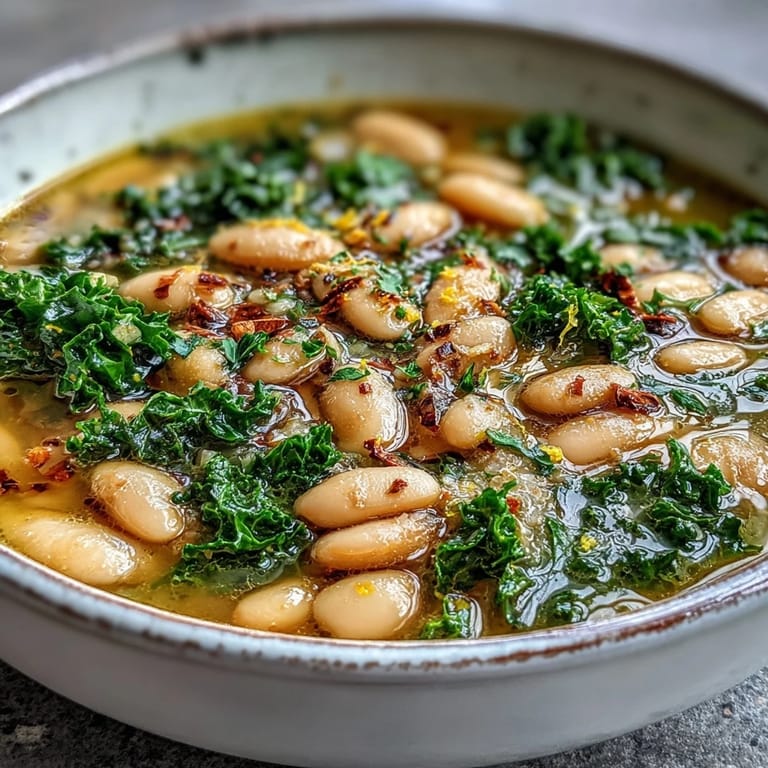
- Remove the bay leaf, ladle soup into bowls, then top each one with freshly grated Parmesan and a small drizzle of excellent olive oil. This finishing flourish is where the soup becomes restaurant-quality.
 Save
Save One winter evening, I made this soup while my daughter did homework at the kitchen table, and she looked up mid-problem to ask why the kitchen smelled so good. I realized then that this soup had become part of how she thinks about comfort, about the sounds of simmering and the smell of thyme.
Why This Soup Works Year-Round
Summer calls for a chilled version—make it in advance, chill it completely, and serve it with a squeeze of fresh lemon and crusty bread alongside. Winter demands it hot and steaming, perhaps with a crusty garlic bread for scooping. Spring and fall land somewhere in between, where this soup feels exactly right whether your kitchen is warm or cool. The flexibility is part of its charm; it adapts to what you need without losing its identity.
Variations That Keep It Interesting
I've learned that this soup is a canvas rather than a rigid formula. Swap baby spinach for kale if that's what's in your crisper drawer and you'll barely notice the difference. A handful of fresh chard adds earthiness, or you can skip the greens entirely for a cleaner bean-forward version. For non-vegetarians, crispy pancetta stirred in at the end adds smoke and salt, while Italian sausage browned separately transforms it into something heartier.
Serving and Pairing Ideas
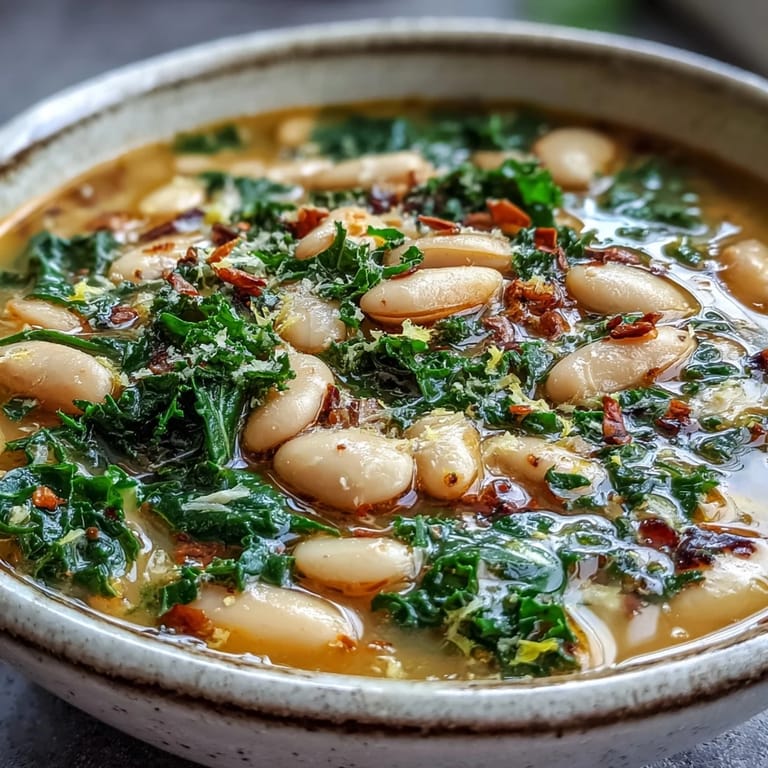
Crusty bread is non-negotiable—use it to soak up every last bit of broth and bean. A simple green salad on the side keeps things balanced, while a wedge of sharp cheese afterward feels indulgent. This soup freezes beautifully for up to three months, making it smart meal-prep for weeks when cooking feels like a luxury you can't afford.
- Drizzle aged balsamic vinegar over the top for subtle depth that surprises people.
- Crispy sage leaves scattered on top add textural contrast and an herbal note.
- A dollop of creamy ricotta stirred in at the table transforms each bowl into something richer.
 Save
Save This soup has taught me that the simplest dishes often carry the most meaning. There's something about a pot of beans and greens that says I'm thinking of you without needing fancy techniques or rare ingredients.
Recipe FAQs
- → Can I use fresh spinach instead of kale?
Yes, baby spinach can replace kale for a milder flavor and quicker cooking time, adding a delicate touch to the dish.
- → How do I make the broth richer?
Simmering the beans and vegetables slowly helps build depth, while adding a splash of white wine or a Parmesan rind enhances richness.
- → What is the purpose of mashing some of the beans?
Mashing a portion of the beans creates a creamier texture and thickens the stew naturally without adding extra ingredients.
- → Can I prepare this dish vegan?
Simply omit the Parmesan cheese or substitute with a plant-based alternative to keep the dish vegan-friendly.
- → What herbs best complement the flavors?
Thyme and rosemary bring earthy notes that balance the beans and kale, while bay leaf adds subtle aromatic depth.