 Save
Save My neighbor brought over a box of Irish soda bread one misty morning, and I bit into one warm slice still steaming from her oven—dense, buttery, studded with raisins. That's when it hit me: why not transform this rustic loaf into muffins? The idea sat with me for weeks until one Sunday when I had buttermilk going bad and a craving for something wholesome. These muffins emerged tender and crumbly, tasting like a breakfast version of that beloved bread, and they've been my go-to ever since.
I made these for my book club once, nervous they'd seem too humble for the gathering, but everyone asked for the recipe before leaving. One friend said they reminded her of mornings at her grandmother's cottage in Cork, and that's when I knew I'd gotten something right—when food bridges someone back to a memory they cherish.
Ingredients
- All-purpose flour (2 cups): The foundation—keep it at room temperature and spoon it into your measuring cup rather than scooping directly, or you'll end up with too much and dense muffins.
- Old-fashioned rolled oats (1 cup, plus extra for topping): These give the muffins their wholesome chew and that signature soda bread texture; don't use instant oats, they'll disappear into the crumb.
- Granulated sugar (1/4 cup): Just enough sweetness to balance the tangy buttermilk without making these feel like dessert.
- Baking powder and baking soda (1 1/2 teaspoons and 1/2 teaspoon): The pair that makes these rise gently; baking soda reacts with the buttermilk's acid, creating that tender crumb.
- Salt (1/2 teaspoon): A small amount that quietly enhances everything else.
- Raisins (3/4 cup): Plump them up slightly by tossing with a splash of warm water five minutes before mixing, so they stay juicy in the muffins.
- Buttermilk (1 1/4 cups): The secret to tenderness and tang; if you don't have it, whisk regular milk with a tablespoon of lemon juice and let it sit five minutes.
- Egg (1 large): Binds everything together and adds richness without heaviness.
- Unsalted butter, melted and cooled (1/4 cup): Melted ensures it mixes evenly, and cooling it first prevents scrambling the egg.
Tired of Takeout? 🥡
Get 10 meals you can make faster than delivery arrives. Seriously.
One email. No spam. Unsubscribe anytime.
Instructions
- Prepare your stage:
- Heat the oven to 400°F and line your muffin tin with paper liners—this matters because it keeps cleanup easy and muffins from sticking. If you prefer greasing, use a pastry brush with melted butter so every cup gets covered.
- Build the dry base:
- Whisk together flour, oats, sugar, baking powder, baking soda, and salt in a large bowl, making sure the leaveners are evenly distributed or you'll get some flat and some puffy. Stir in raisins so they're suspended throughout the batter.
- Combine the wet mixture:
- In another bowl, whisk buttermilk, egg, and cooled melted butter until smooth. This step takes 30 seconds and ensures no egg streaks.
- Bring them together gently:
- Make a well in the center of your dry ingredients and pour the wet mixture in, then stir with a spatula until just barely combined—lumps are your friend here, they mean tender muffins. Overmixing develops gluten and tightens everything up, so stop as soon you don't see dry flour.
- Fill and top:
- Divide batter evenly among cups using a spoon or ice cream scoop, then sprinkle a few extra oats on each muffin top for texture and visual charm. The oats toast slightly and add a subtle nuttiness.
- Bake until golden:
- Bake for 18 to 20 minutes, watching for a light golden-brown color and testing the center with a toothpick for doneness. The muffins will smell buttery and slightly sweet when ready.
- Cool with patience:
- Let them rest in the tin for five minutes so the bottoms set, then transfer to a wire rack. This prevents soggy undersides and lets steam escape.
 Save
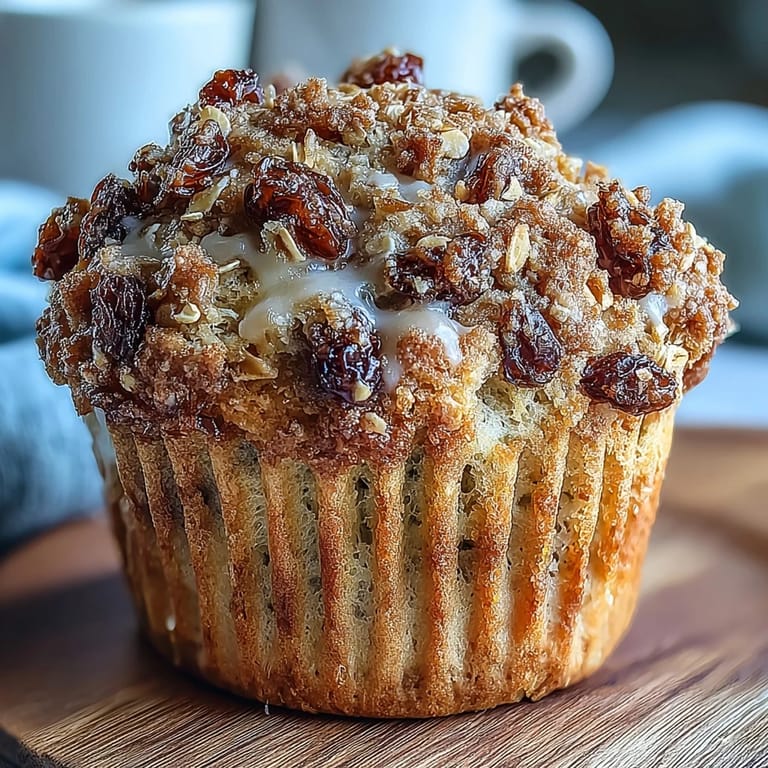
Save These muffins taste best within hours of baking, still warm with a pat of butter melting into the crumb. But they also freeze beautifully wrapped individually, ready to toast back to life on a rushed Tuesday morning.
Flavor Variations to Explore
Orange zest stirred into the dry ingredients brings brightness and pairs beautifully with raisins, a trick I borrowed from traditional Irish soda bread recipes. Currants work instead of raisins if you like something subtly tart, and I've experimented with chopped dried apricots for a more floral sweetness.
Storage and Make-Ahead Tips
These keep covered at room temperature for two days, though they're best the day they're baked when the oats are still tender. Freeze them in an airtight container for up to three weeks, then thaw at room temperature or warm briefly in a 300°F oven.
Serving Suggestions and Moments
Serve these warm with a pat of salted butter and good honey, or simply with strong tea on a quiet morning. They're humble enough for a school lunch but special enough to bring to someone who's had a rough week.
- A smear of salted butter while still warm lets it melt into every crevice.
- Pair with Irish breakfast tea or strong coffee for the full experience.
- They make wonderful gifts when wrapped individually and tied with kitchen twine.
 Save
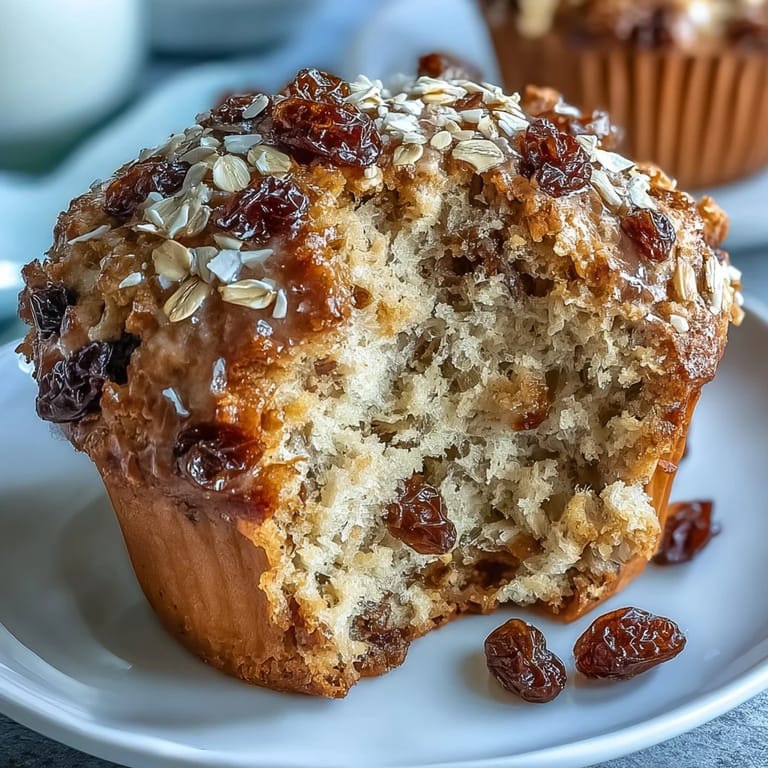
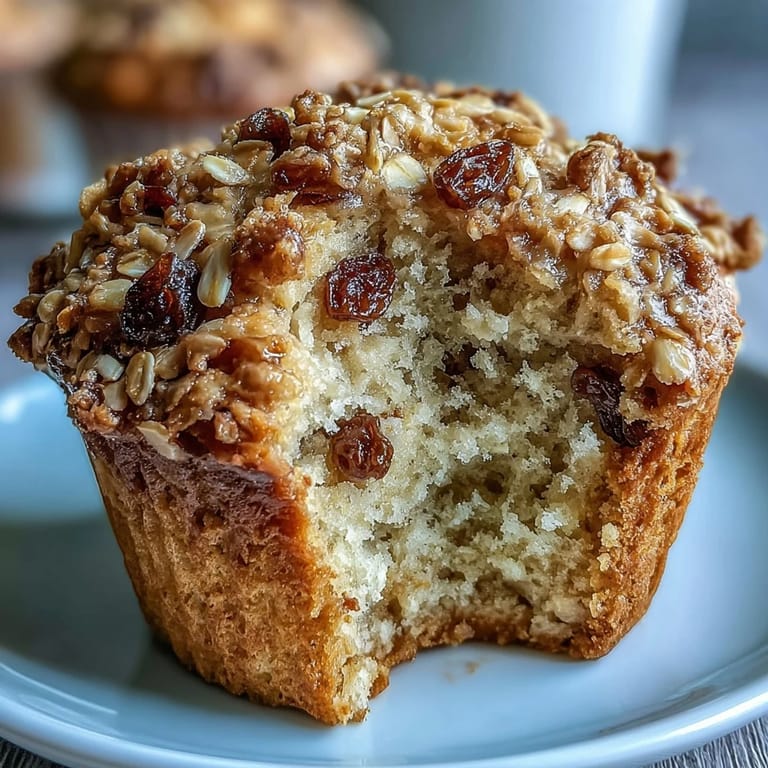
Save There's something deeply satisfying about pulling warm soda bread muffins from the oven, their tops golden and inviting. They're proof that simple ingredients and respectful technique can create something that tastes like home.
Recipe FAQs
- → Can I substitute raisins with other fruits?
Yes, currants or chopped dried apricots work well as alternatives, adding a different but complementary sweetness.
- → What makes these muffins tender?
The combination of buttermilk with baking powder and baking soda creates a light, tender crumb with a slight tang.
- → Is it necessary to use old-fashioned rolled oats?
Old-fashioned oats contribute texture and a hearty chew; quick oats could be used but will alter the crumb.
- → How do I prevent overmixing the batter?
Stir gently just until combined to keep the muffins tender and avoid a dense texture.
- → Can I add flavorings to the muffins?
Absolutely—adding orange zest or spices like cinnamon can enhance the flavor profile nicely.