 Save
Save The first time I encountered celery root, I stared at this knobby, alien-looking vegetable for ten minutes before committing to buying it. My grandmother had mentioned using it in soups back home, and something about its rough exterior hiding such tender potential stuck with me. That afternoon experiment turned into the silkiest, most elegant soup I'd made in years. Now it's my go-to when I want something that feels special without demanding hours of attention.
I served this bisque at my first dinner party in a new apartment, nervously watching my friends take their first spoonfuls. The silence that followed was terrifying until someone finally spoke up and asked for seconds. That quiet moment of shared pleasure over something so simple reminded me why I love feeding people. Since then, this soup has become my comfort blanket, the dish I turn to when I need to feel capable and generous in the kitchen.
Ingredients
- 1 large celery root: The star of the show with its earthy, celery-like sweetness that becomes incredibly mellow when cooked
- 1 medium Yukon Gold potato: Essential for natural thickening without making the soup heavy or starchy
- 1 medium leek: Provides a gentle onion sweetness that complements celery root without overpowering it
- 1 small yellow onion: Builds the aromatic foundation that makes every spoonful feel complete
- 2 garlic cloves: Just enough to add depth without competing with the delicate main flavor
- 4 cups vegetable broth: Use a high-quality broth since its the primary liquid and flavor carrier
- 1 cup whole milk: Adds creamy richness while keeping the bisque light and elegant
- 1/2 cup heavy cream: The finishing touch that transforms soup into something luxurious
- 2 tbsp butter: For sautéing the aromatics and building that restaurant-quality mouthfeel
- 1 bay leaf: An old-fashioned secret for adding background herbal complexity
- 1/4 tsp white pepper: Gentle heat that wont speckle your pristine ivory bisque
- Salt: The only seasoning that truly matters for bringing everything together
Tired of Takeout? 🥡
Get 10 meals you can make faster than delivery arrives. Seriously.
One email. No spam. Unsubscribe anytime.
Instructions
- Build your aromatic base:
- Melt the butter in a large pot over medium heat, then add the leek, onion, and garlic. Sauté until softened and fragrant, about 5 minutes, taking care not to let them brown or develop any color.
- Add the root vegetables:
- Toss in the diced celery root and potato, stirring to coat them in the buttery aromatics. Let them cook for another 3 minutes, which helps develop their natural sweetness before the liquid hits the pot.
- Simmer until tender:
- Pour in the vegetable broth and tuck in the bay leaf. Bring everything to a gentle boil, then reduce the heat to low, cover, and let simmer for 25 minutes until the vegetables surrender completely to a fork.
- Transform into velvet:
- Fish out and discard the bay leaf, then use an immersion blender to purée the soup until it's impossibly smooth. If using a countertop blender, work in batches and be careful with hot liquids.
- Add the finishing cream:
- Stir in the milk and cream, then warm the bisque gently over low heat. Avoid boiling at this stage, which can cause the dairy to separate. Season with salt and white pepper until the flavors pop.
- Serve with intention:
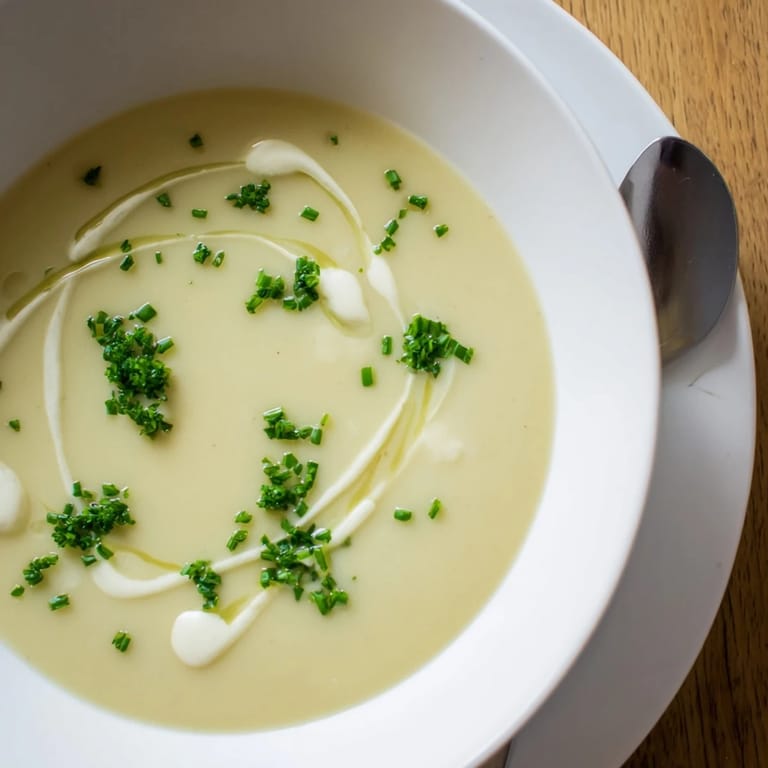
- Ladle the hot bisque into warmed bowls and finish with chopped chives or parsley. A delicate drizzle of cream on top creates that restaurant-worthy presentation.
 Save
Save 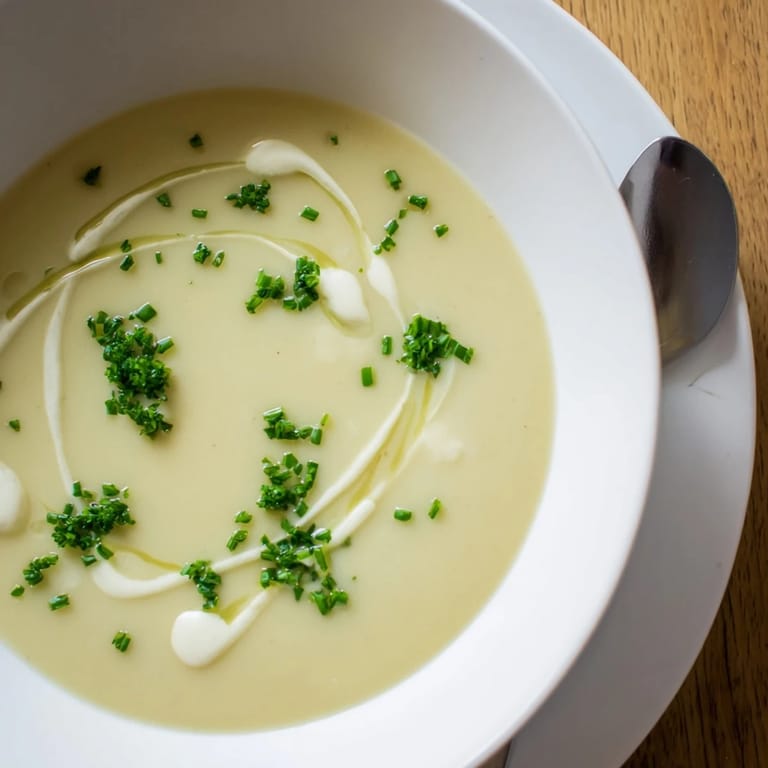 Save
Save This bisque has seen me through countless cozy Sundays and became the soup I packed in mason jars for sick friends. There's something about its humble ingredients transforming into something so refined that feels like a small kitchen miracle every single time.
Making It Your Own
I've discovered that a splash of dry white wine added after sautéing the vegetables adds another layer of sophistication. Sometimes I'll roast the celery root chunks in the oven before simmering, which brings out a natural sweetness that's absolutely intoxicating.
The Perfect Texture
The difference between good and great bisque comes down to patience during blending. Take those extra thirty seconds to really purée until it's satin-smooth, and if you want to be extra meticulous, pass it through a fine-mesh sieve afterward for that ultra-refined restaurant finish.
Serving Suggestions
A warm crusty baguette is non-negotiable for soaking up every last drop. I like to serve this in small portions as an elegant first course, letting people appreciate its richness before the main event arrives.
- Pair with a crisp white wine that has good acidity
- Top with toasted pumpkin seeds for a contrasting crunch
- Keep portions modest since its incredibly satisfying
 Save
Save  Save
Save Every spoonful of this bisque proves that the most unassuming ingredients can create something extraordinary given a little patience and care.
Recipe FAQs
- → What does celery root taste like?
Celery root has a mild, subtle flavor reminiscent of celery and parsley with earthy undertones. It's less intense than stalk celery, offering a delicate taste that becomes wonderfully savory when cooked and puréed.
- → Can I make this bisque ahead of time?
Absolutely. This bisque actually develops more flavor when made 1-2 days ahead. Store covered in the refrigerator and reheat gently over low heat, adding a splash of liquid if needed to restore consistency.
- → Why add potato to celery root bisque?
Potato acts as a natural thickener and contributes to the silky texture. It also helps balance the celery root's slight bitterness while adding body that makes the bisque feel luxuriously creamy.
- → What's the difference between bisque and soup?
Bisque specifically refers to a smooth, creamy soup that has been strained or blended to an ultra-fine consistency. This bisque uses both cream and milk for richness and is puréed until velvety smooth.
- → How do I achieve the smoothest texture?
Blend thoroughly with an immersion blender or countertop blender until no visible pieces remain. For extra refinement, pass the purée through a fine-mesh sieve before adding the cream and milk.
- → Can I freeze celery root bisque?
Yes, though the texture may change slightly. Freeze before adding the final cream and milk for best results. Thaw overnight in the refrigerator, reheat gently, and stir in the dairy just before serving.