 Save
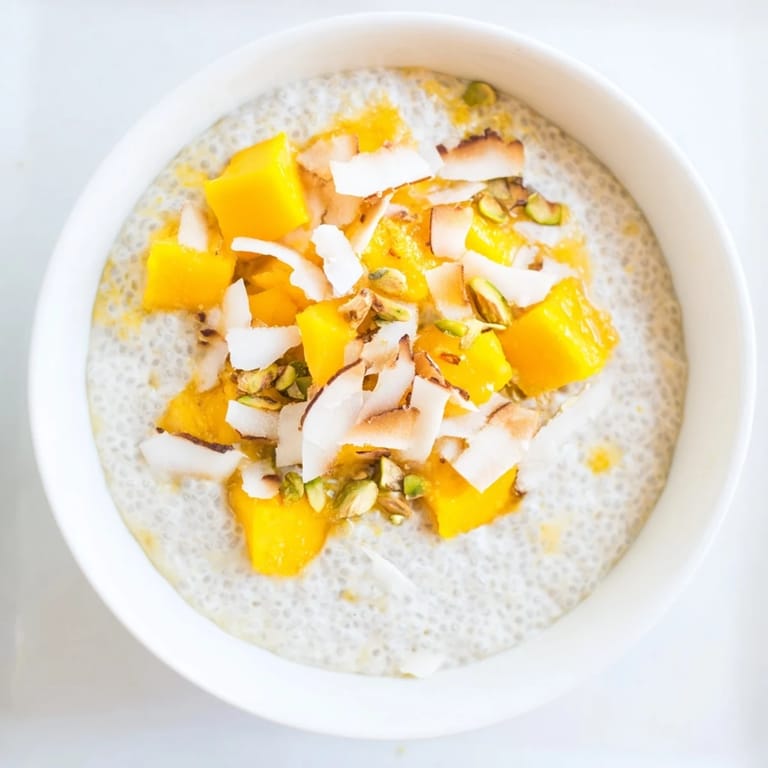
Save There's something about a mango that catches you off guard—one bite and suddenly you're somewhere warm and unfamiliar, even if you're standing in your kitchen on a gray Tuesday morning. A friend handed me a perfectly ripe mango years ago with the casual confidence of someone who grew up eating them for breakfast, and I realized I'd been choosing the wrong ones my whole life. That led me to this pudding, which became my way of chasing that golden, creamy feeling whenever I needed it most.
I made this for my sister during a sticky July afternoon when everyone was too hot to eat anything that required effort. She took one spoonful, closed her eyes for a beat, and asked if I'd learned some secret in the meantime. The truth was simpler—I'd just stopped overcomplicating tropical flavors and let the mango speak for itself.
Ingredients
- Coconut milk (400 ml, full-fat): The richness here is essential; full-fat versions create that silky base that makes each spoonful feel luxurious without any cream or dairy.
- Chia seeds (6 tbsp): These absorb the liquid and transform it into pudding magic—but stir them in right away or they'll clump stubbornly at the bottom.
- Maple syrup or honey (3 tbsp, plus 1–2 tbsp for mango): The sweetness should be gentle; let the mango's natural sugars carry some of the weight if it's truly ripe.
- Vanilla extract (1 tsp): Optional but worth it—it deepens the coconut flavor without announcing itself.
- Ripe mangoes (2 large, about 400 g flesh): This is where everything lives or dies; pick ones that smell fragrant and yield slightly to pressure, never the rock-hard ones.
- Lime juice (1 tbsp): A tiny splash that wakes everything up and prevents the sweetness from becoming flat.
- Toasted coconut flakes and nuts (optional toppings): These add texture and a little warmth against the cool pudding—don't skip them if you can help it.
Tired of Takeout? 🥡
Get 10 meals you can make faster than delivery arrives. Seriously.
One email. No spam. Unsubscribe anytime.
Instructions
- Whisk your coconut foundation:
- Pour the coconut milk into a bowl and whisk in the maple syrup and vanilla until smooth—this takes maybe a minute but matters because it ensures even sweetness throughout.
- Stir in the chia seeds carefully:
- Add them all at once and stir immediately and thoroughly, breaking up any clumps that form, or they'll sink and harden into a layer at the bottom.
- Chill and stir once:
- Cover the bowl and refrigerate for at least 2 hours, stirring once around the 30-minute mark to redistribute the seeds as they start to absorb the liquid.
- Blend your mango layer:
- While waiting, blend the diced mango with lime juice and a touch of sweetener until completely smooth, tasting as you go to adjust to your mango's natural sweetness.
- Assemble with intention:
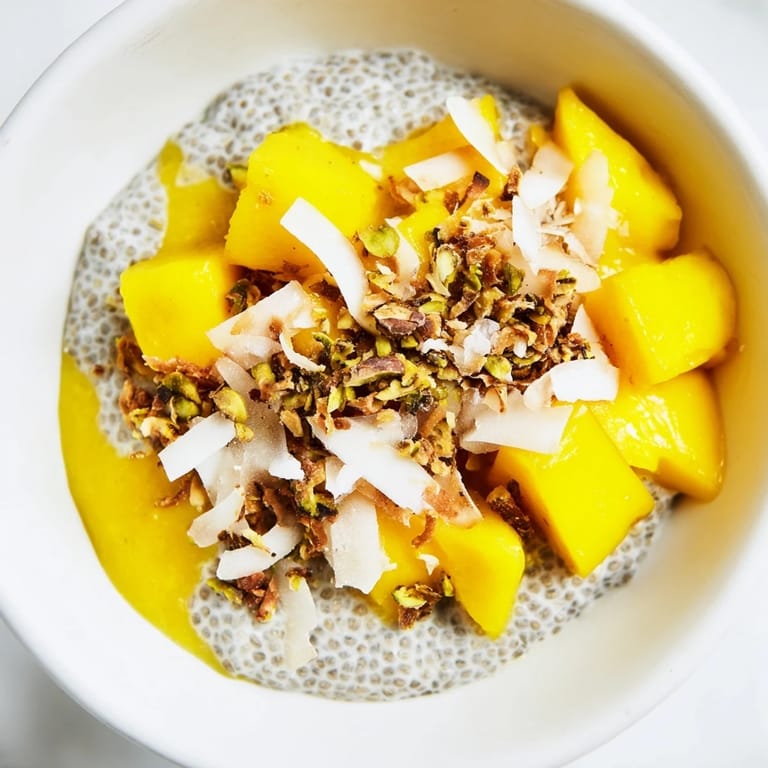
- Spoon pudding into glasses until halfway full, then top generously with mango puree—you want equal parts creaminess and tropical brightness in every spoonful.
- Finish and chill:
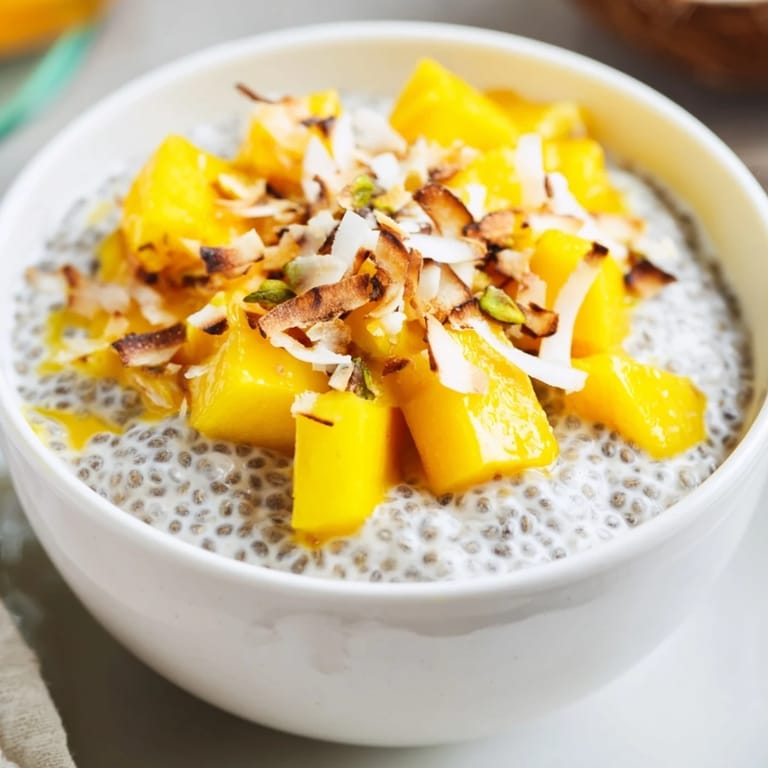
- Crown each serving with toasted coconut, a scatter of nuts, fresh mango cubes, or mint, then serve cold, letting the flavors settle together.
 Save
Save I served this to someone who claimed they didn't like chia pudding, too gelatinous and strange. Halfway through, they asked for the recipe and admitted the mango had changed their mind about the whole thing. That's when I knew it wasn't about mastering a technique—it was about respecting each ingredient enough to let it shine.
Why This Works as a Tropical Escape
There's something about the combination of coconut and mango that transports you before you even taste it. The pudding base is neutral enough to be a canvas, but rich enough that you don't feel like you're eating diet food. Chia seeds, once you make peace with their texture, become almost invisible—just a pleasant thickening agent that holds everything together.
Making It Your Own
The beauty of this recipe is how forgiving it is if you want to improvise. Swap coconut milk for oat or almond milk if you prefer something lighter, though you'll lose a little of that tropical warmth. The mango layer can be chunky if you prefer texture, or blended completely smooth for elegance. Some mornings I've layered it like a parfait, alternating pudding and mango three times over, just for the visual satisfaction of slicing through all those colors.
Timing and Storage
This recipe rewards a little patience but doesn't demand much of it. The pudding base takes 10 minutes of actual work, then 2 hours of sitting in the fridge while you do something else. The mango puree comes together in moments, so there's no real waiting on that front. Everything stays fresh in the refrigerator for up to 3 days, though I've never had any last longer than that.
- Make the chia pudding base the night before and let it sit overnight for a thicker, more tender texture.
- Blend the mango just a few hours before serving so it stays bright and doesn't oxidize into a duller color.
- If you're assembling ahead, spoon the pudding and mango into glasses separately, then combine just before eating to keep everything fresh-tasting.
 Save
Save This pudding has become my shorthand for a moment of self-care that doesn't require any fuss. It's tropical without being complicated, indulgent without being heavy, and honest in a way that feels increasingly rare.
Recipe FAQs
- → How long should the chia mixture chill?
Chill for at least 2 hours to allow chia seeds to absorb the liquid and form a creamy texture. Stir once after 30 minutes to prevent clumps.
- → Can I use alternative sweeteners?
Yes, options like maple syrup or honey work well and can be adjusted to your taste preference.
- → What texture should the mango puree have?
The mango puree should be smooth yet thick enough to layer easily over the chia base without mixing in completely.
- → Are toppings necessary?
Toppings such as toasted coconut flakes and chopped nuts add crunch and contrast but can be omitted if preferred.
- → Can I prepare this ahead of time?
Yes, it can be refrigerated overnight. Assembly of layers is best done just before serving to maintain freshness.