 Save
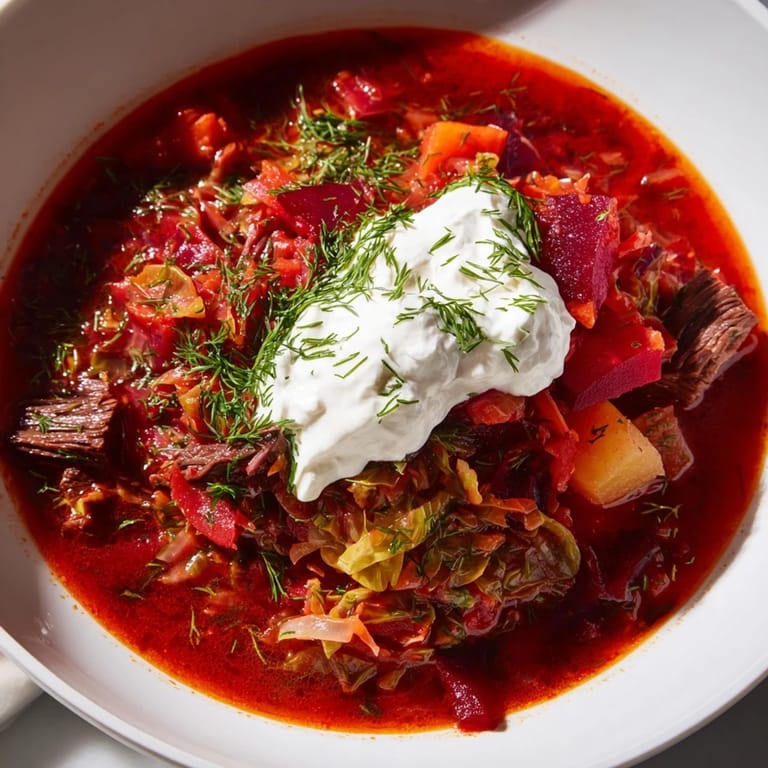
Save My grandmother kept a worn wooden spoon specifically for stirring borscht, claiming the wood absorbed decades of flavor. I didn't believe her until I made this soup for the first time on a freezing January evening, and the steam rising from that deep crimson broth felt like a hug from someone who understood exactly what I needed. The beets stain everything—your hands, your cutting board, even your thoughts—but that's part of the magic. This isn't a soup you make casually; it's one that demands your attention and rewards it with comfort so complete you'll wonder why you waited this long to make it.
I served this to my Russian coworker once, nervously, knowing she'd probably tell me it wasn't authentic. She took one spoonful, closed her eyes, and said nothing for a long moment. Then she asked for the recipe, which felt like the highest compliment possible. That bowl sat in front of her untouched for a few minutes longer than seemed necessary, and I realized she wasn't eating—she was remembering.
Ingredients
- Beef chuck or brisket (400g): Use a tougher cut that becomes tender and flavorful when simmered; it gives the broth a rich, meaty depth that no quick-cooking beef can match.
- Water (1.5 liters): Don't skip the bay leaves and peppercorns here—they're building the foundation of everything that comes next.
- Beets (3 medium): The star ingredient that gives borscht its iconic color and earthy sweetness; grating them instead of cubing helps them release their color into the broth more efficiently.
- Carrots (2 medium): Grate them to match the beets so they cook at the same rate and release their sweetness into the fat.
- Onion (1 medium): Finely chopped onions soften into the oil and create an aromatic base that anchors the whole dish.
- Potatoes (2 medium): Dice them into half-inch pieces so they soften at the right moment without disappearing into mush.
- Cabbage (1/4 small head): Shred it finely so it wilts into tender threads rather than sitting as chewy chunks.
- Tomato paste (2 tablespoons): This adds subtle acidity and depth that makes people ask what your secret ingredient is.
- Garlic (2 cloves): Add it at the very end so the flavor stays bright and alive instead of becoming muted by the long simmer.
- Oil (2 tablespoons): Use sunflower or vegetable oil for sautéing vegetables before they hit the broth.
- Sugar (1 tablespoon): Just enough to balance the earthiness of beets and the tang of vinegar without making it sweet.
- Vinegar (2 tablespoons): White vinegar adds brightness; some people use lemon juice or even kvass instead.
- Sour cream (150g): The finale, the luxury, the reason you might want a second bowl.
- Fresh dill or parsley: Scatter it on top just before serving so it stays vibrant and fragrant.
Tired of Takeout? 🥡
Get 10 meals you can make faster than delivery arrives. Seriously.
One email. No spam. Unsubscribe anytime.
Instructions
- Start the beef broth:
- Place beef, water, bay leaves, peppercorns, and salt in your pot and bring it to a rolling boil. You'll see pale foam rise to the surface—skim it off gently because it makes the broth cleaner and more refined. Turn the heat down to a steady, quiet simmer where just a few bubbles break the surface.
- Build the vegetable foundation:
- While the beef gently gives up its flavor, heat oil in a skillet and let your onions turn soft and translucent in about three minutes. Add the grated carrots and beets and let them soften in the heat, which should take about five minutes and fill your kitchen with an earthy, slightly sweet aroma.
- Bloom the tomato paste:
- Stir in the tomato paste with the sugar and vinegar, cooking everything together for seven or eight minutes so the flavors marry and the raw edge of vinegar softens slightly. You're coaxing sweetness and depth out of relatively simple ingredients.
- Build the soup structure:
- Remove the beef from its broth and set it aside to cool slightly, then strain the broth if you like clarity, though a little sediment never bothered anyone. Return it to the pot at a gentle simmer and add the diced potatoes, which should go tender in about ten minutes.
- Layer in the rest:
- Add your shredded cabbage and the entire sautéed vegetable mixture from the skillet, letting everything simmer together for another ten minutes until the cabbage has surrendered to the heat. The pot is now a living thing, all those vegetables and flavors learning to speak the same language.
- Finish with beef and garlic:
- Shred or cube your beef into tender pieces and return it to the pot along with the minced garlic, letting it all simmer for five more minutes so the garlic flavor spreads without overwhelming. Then turn off the heat and let the whole pot rest for fifteen to twenty minutes, which somehow makes everything taste deeper and more true.
 Save
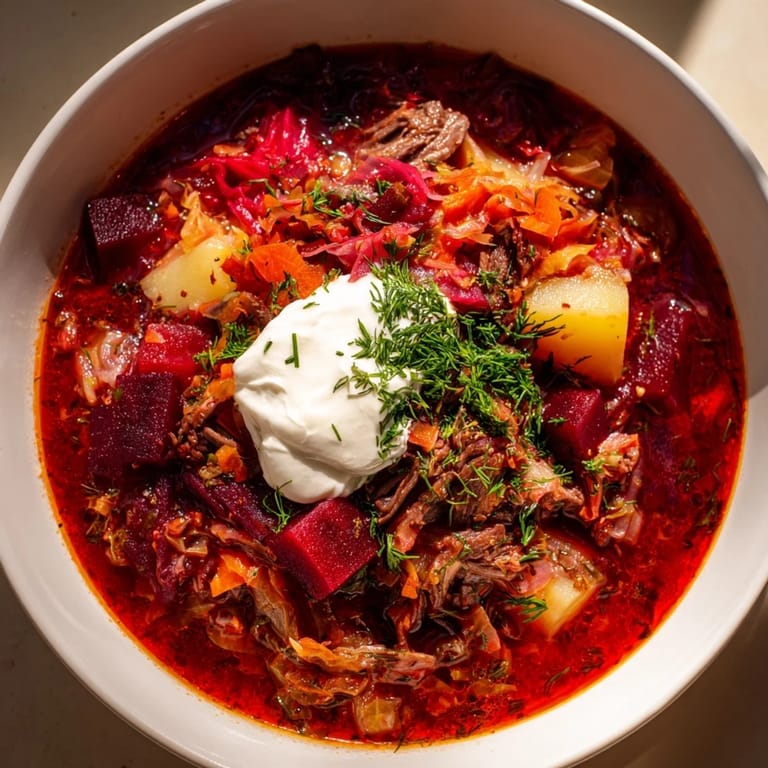
Save There's a moment, usually on the second or third bite, when the different flavors suddenly click into place—earthy beets, bright vinegar, tender beef, and that cool sour cream beginning to swirl through the hot broth. That's when you know you've made something worth making again.
Why This Soup Gets Better Overnight
I learned this the hard way by making a pot too early for a dinner party and fretting about it all day. By evening, the flavors had deepened, the beets had softened even more, and the broth had become this almost velvety thing. The vegetables hadn't lost texture; they'd gained a kind of presence they didn't have fresh from the stove. Time does something to borscht that heat alone cannot.
The Sour Cream Question
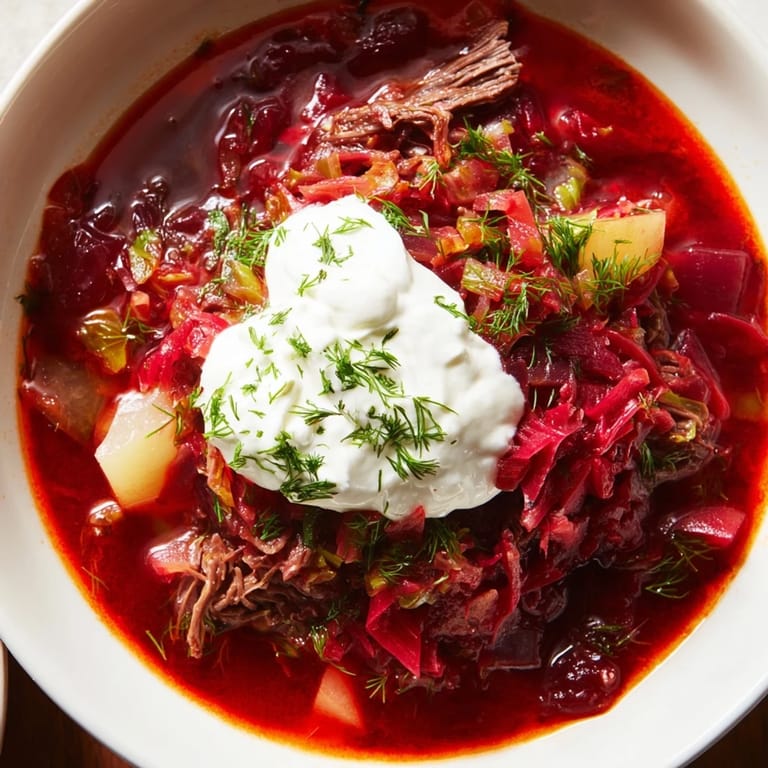
Some people stir it directly into the pot, which mellows the whole thing into a pink, creamy version of itself. Others, like my grandmother, preferred a generous dollop sitting on top, so each spoonful was a choice between the crimson soup and the cool, tangy cream. There's no wrong answer, only your own preference discovering itself in a bowl.
Variations Worth Exploring
For vegetarians, simply skip the beef and use vegetable broth instead—the beets still sing, and the sautéed vegetables still build a satisfying body. Some people add diced apples for sweetness, others a splash of kvass if they can find it, or even red wine for earthiness. The core soup is flexible enough to hold your personal touches without losing its soul.
- A squeeze of fresh lemon juice stirred in at the very end brings brightness that vinegar sometimes misses.
- Rye bread on the side is traditional, but I've served it with crusty sourdough and nobody complained.
- If you make extra, it freezes beautifully for up to three months, which means one quiet afternoon can give you comfort on multiple difficult days.
 Save
Save There's something about a bowl of borscht that says you're someone who takes the time to make things well. Serve it when you want people to know they matter.
Recipe FAQs
- → What cut of beef works best for this soup?
Beef chuck or brisket is ideal as they become tender during the long simmer, adding rich flavor to the broth.
- → Can I make this soup vegetarian?
Yes, simply omit the beef and use vegetable broth to maintain the depth of flavor.
- → Why is vinegar added to the soup?
Vinegar enhances the natural sweetness of the beets and balances the overall flavor with mild acidity.
- → How long should the soup rest before serving?
Allowing the soup to rest 15-20 minutes after cooking helps the flavors to fully meld and develop.
- → What are traditional garnishes for this dish?
A dollop of sour cream and fresh herbs like dill or parsley add creaminess and a fresh finish.
- → Is this soup gluten-free?
Yes, when served without bread, the dish is naturally gluten-free.