 Save
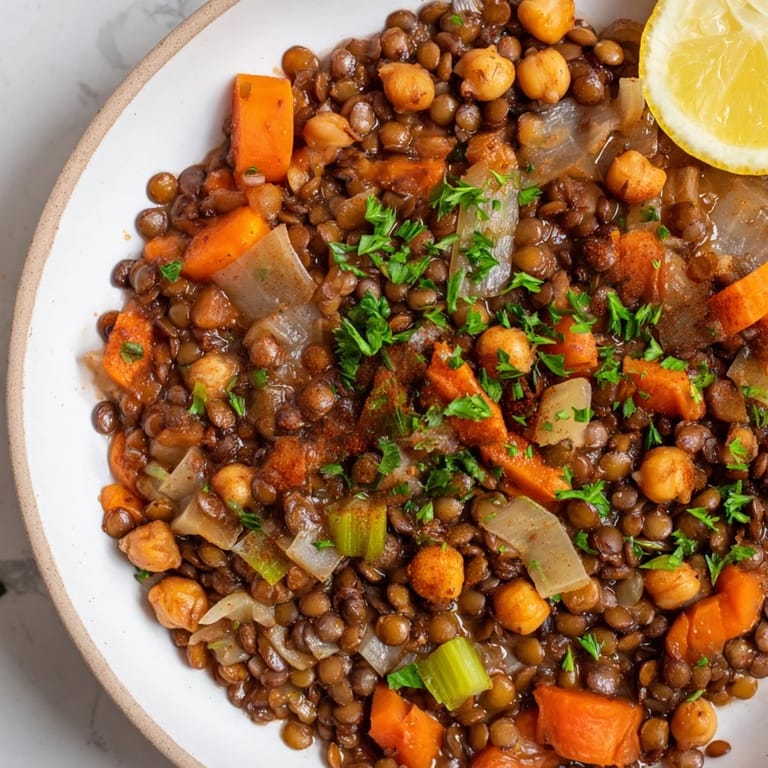
Save There's something about the smell of sumac hitting hot oil that stops me in my tracks every time. Years ago, I picked up a small jar at a spice market while wandering through an unfamiliar neighborhood, drawn by the deep burgundy color and the vendor's casual mention that it would change how I cooked. I didn't know what I was doing with it at first, but one evening when I had lentils and chickpeas on hand, I decided to build a stew around that mysterious spice. The result was so vibrant and alive that it became the dish I keep returning to whenever I want something that feels both grounding and bright.
I made this for a friend who was going through a rough patch, and she sat at my kitchen counter with a bowl in her hands, just breathing in the steam for a long moment before tasting it. She said it was exactly what she needed, and honestly, that's when I knew this recipe was something special—it has the kind of warmth that goes beyond just being hot food.
Ingredients
- Brown or green lentils (1 cup dried): These hold their shape beautifully and don't turn to mush, which matters more than you'd think for texture.
- Chickpeas (1 can, 15 oz): Canned saves time without sacrificing anything; just rinse them well to reduce sodium and foam.
- Olive oil (2 tablespoons): Use something you actually like tasting, not the cheapest bottle.
- Yellow onion (1 large, finely chopped): This is your flavor foundation, so don't rush it.
- Garlic (3 cloves, minced): Fresh garlic makes a real difference; jarred is a last resort.
- Carrots and celery (2 medium and 2 stalks): These create a flavor bed that holds everything together.
- Sumac (1 ½ teaspoons): The secret weapon; it brings a lemony tartness without adding liquid.
- Cumin, coriander, and smoked paprika: Each one adds depth; don't skip any of them.
- Vegetable broth and water (4 cups and 1 cup): This ratio keeps the stew from being too salty or too bland.
- Lemon juice (from 1 large lemon): Squeeze it fresh if you can; it's worth the extra thirty seconds.
- Fresh parsley (½ cup chopped): This isn't just garnish—it brightens every spoonful.
Tired of Takeout? 🥡
Get 10 meals you can make faster than delivery arrives. Seriously.
One email. No spam. Unsubscribe anytime.
Instructions
- Build Your Flavor Base:
- Pour olive oil into a large pot over medium heat and add the chopped onion. Let it cook for 4 to 5 minutes until it turns soft and translucent; this takes patience but creates the foundation everything else rests on.
- Add Aromatics and Vegetables:
- Stir in the garlic, carrots, and celery, cooking for another 3 to 4 minutes until the vegetables are just starting to soften. You want to smell the garlic releasing its aroma without it burning.
- Bloom the Spices:
- Add sumac, cumin, coriander, smoked paprika, salt, pepper, and cayenne if you're using it. Toast these for about 1 minute, stirring constantly, until the whole pot smells warm and inviting.
- Simmer the Stew:
- Pour in the lentils, chickpeas, vegetable broth, and water, then bring everything to a boil. Once it's bubbling, lower the heat, cover the pot, and let it simmer gently for 25 to 30 minutes until the lentils are tender but not falling apart.
- Finish with Brightness:
- Stir in the lemon juice and half the fresh parsley, cooking uncovered for 2 to 3 more minutes. Taste it now and adjust the salt or lemon to your preference.
- Serve with Intention:
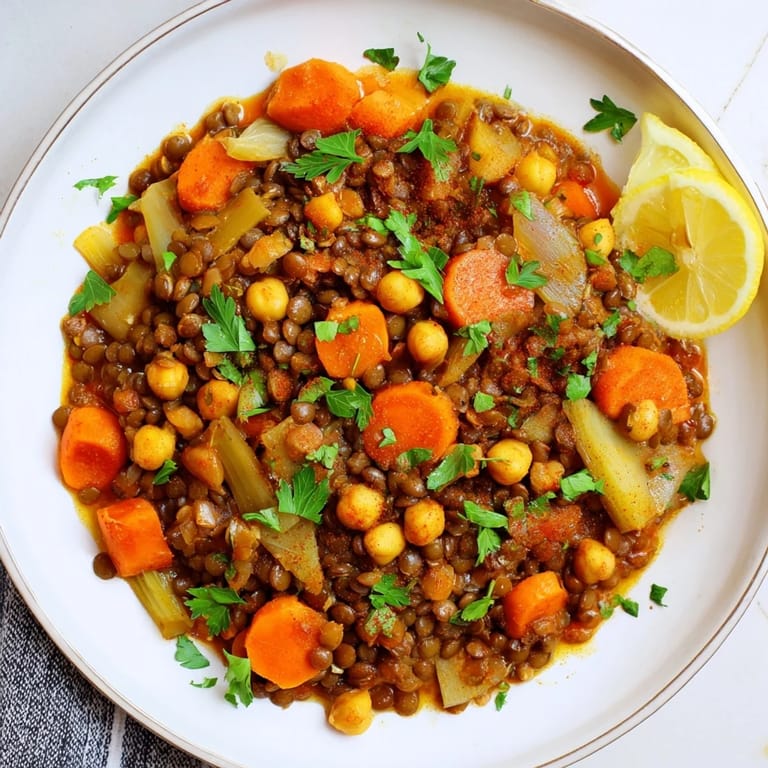
- Ladle the stew into bowls and scatter the remaining parsley over the top with a lemon wedge on the side. There's something about that final green sprinkle that makes it feel like a real meal.
 Save
Save I once doubled this recipe thinking I'd have leftovers, but my family ate it in one sitting while we told stories around the table. There's something about a bowl full of warm spices and tender legumes that makes people linger longer than they usually would.
Why This Stew Tastes Like Home
This dish works because it respects balance—the earthiness of lentils and chickpeas against the brightness of sumac and lemon, the richness of olive oil against the clarity of fresh herbs. It's not complicated, but it's not careless either. Every ingredient earns its place, and that's what makes you want to make it again.
Making It Your Own
The beauty of this stew is that it welcomes additions without needing them. Some nights I add spinach or kale in the final few minutes, and other times I serve it over rice or with warm flatbread alongside. I've even stirred in a dollop of tahini when I wanted something creamier, and it was wonderful.
From Pantry to Table
This is the kind of recipe that rewards having good spices in your cabinet and fresh lemons on hand. When you have those basics ready, you can make something genuinely special with ingredients you might otherwise ignore. It's a reminder that the best cooking often comes from paying attention to what you already have rather than chasing something new.
- Keep a jar of sumac on your shelf—it transforms simple vegetables into something memorable.
- Fresh lemon juice makes an enormous difference; keep lemons visible so you actually remember to use them.
- This stew tastes even better the next day, so don't hesitate to make it ahead.
 Save
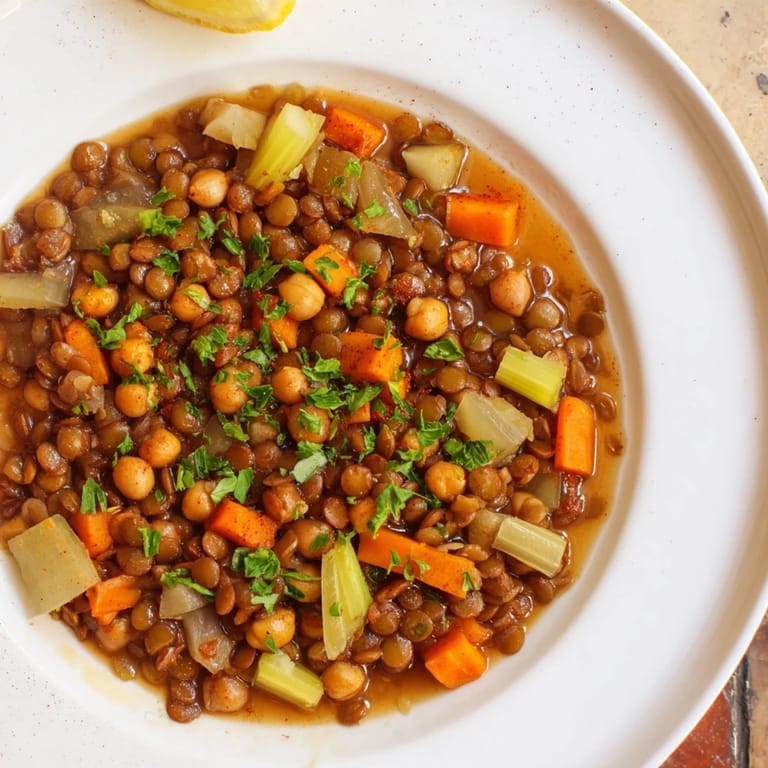
Save This stew has become my go-to recipe for moments when I want to cook something that feels generous and alive. Make it once and you'll understand why.
Recipe FAQs
- → What spices create the flavor base in this stew?
Sumac, cumin, coriander, smoked paprika, black pepper, and optional cayenne pepper blend together to give the stew its aromatic and mildly spicy notes.
- → Can I use dried chickpeas instead of canned?
Yes, but ensure they are soaked overnight and cooked fully before adding to the stew for best texture and flavor.
- → What can enhance the richness of this dish?
Drizzling extra olive oil before serving adds a silky richness that complements the earthy lentils and chickpeas.
- → Are there suggested additions for more greens?
Adding chopped spinach or kale in the last 5 minutes of cooking brightens the dish and boosts its nutritional value.
- → What are ideal accompaniments for serving?
Warm flatbread or steamed rice are excellent sides that soak up the flavorful broth wonderfully.
- → How does sumac affect the dish’s flavor?
Sumac contributes a tangy, lemony brightness that lifts the stew’s depth and balances its earthiness.