 Save
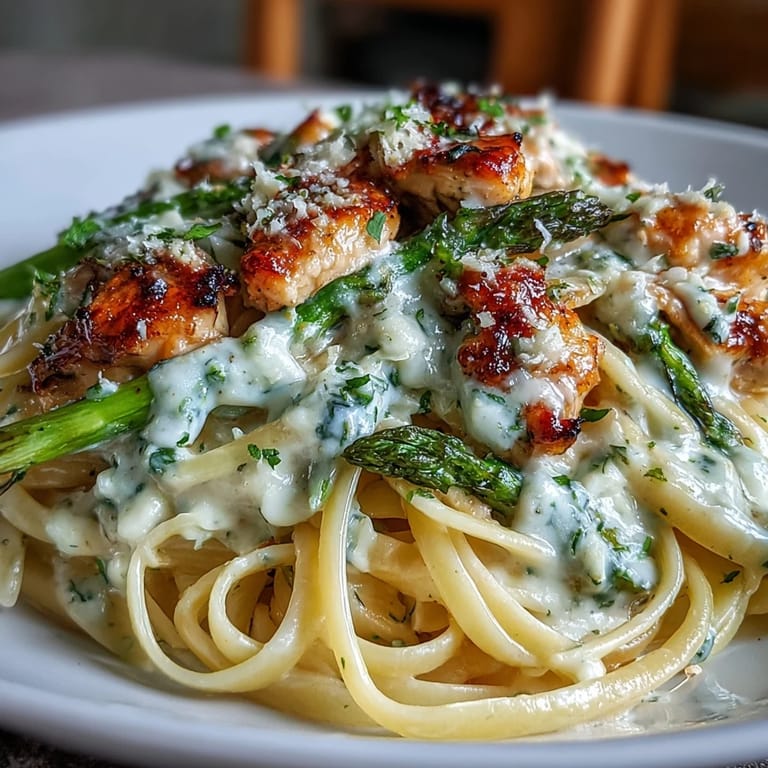
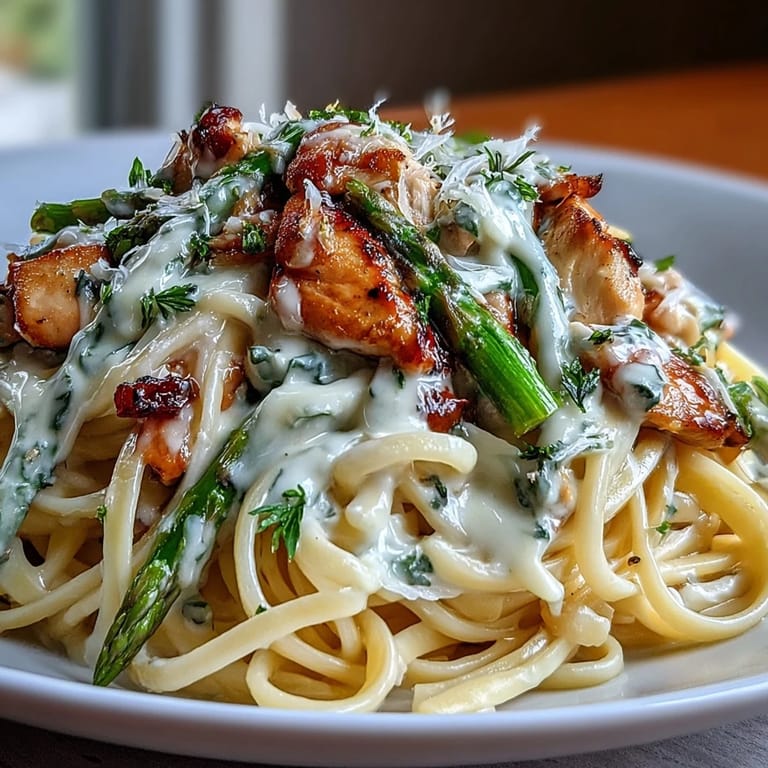
Save There's something about the way Asiago melts into cream that makes you feel like you've unlocked a secret in the kitchen. I discovered this dish on a Tuesday evening when I had chicken, asparagus, and a craving for something that didn't require much thinking but felt entirely worth the effort. The combination of crispy cheese-crusted asparagus with tender pasta and that silky sauce changed how I approach weeknight cooking. It's the kind of meal that tastes like you've been in the kitchen for hours when really, you've barely broken a sweat.
I made this for my sister on a cold March afternoon, and she sat at my kitchen counter watching the asparagus roast, asking a dozen questions about why I was grating cheese into the roasting pan. When she tasted it, she got quiet for a moment, and then asked for the recipe before finishing her plate. That's when I knew this wasn't just dinner, it was the kind of thing people actually want to make at home.
Ingredients
- Boneless, skinless chicken breasts: Cut these into generous bite-sized pieces so they cook quickly and stay tender, and they'll distribute evenly through the pasta.
- Linguine: The long, ribbon-like shape catches the sauce beautifully, but fettuccine works just as well if that's what you have.
- Asparagus: Trim those woody ends without overthinking it, and cut pieces to roughly the same size so they roast evenly and don't turn into mush.
- Asiago cheese: If you've never grated fresh Asiago, you're in for a treat because the flavor is so much more complex than the pre-shredded stuff, and it melts like a dream.
- Heavy cream: Don't skip this or try to substitute with milk because the richness is what makes this sauce feel luxurious.
- Garlic and onion: These are the quiet foundation that makes everything else taste better, so don't rush them.
- Butter: A tablespoon might seem small, but it's what gives the pan that necessary richness for sautéing the chicken properly.
- Olive oil: Use a decent quality oil because you're not cooking with it hot enough to burn away the flavor.
- All-purpose flour: This is your thickening agent, and whisking it in slowly prevents lumps from sneaking into your sauce.
Tired of Takeout? 🥡
Get 10 meals you can make faster than delivery arrives. Seriously.
One email. No spam. Unsubscribe anytime.
Instructions
- Get your oven hot and ready:
- Set it to 220°C and line a baking sheet with parchment paper, which is honestly the move that saves you from aggressive scrubbing later.
- Cheese the asparagus and let it roast:
- Toss your asparagus pieces with olive oil, salt, pepper, and that first portion of Asiago cheese, then spread them on the sheet and let them get golden and crispy at the edges for about 10 to 12 minutes. You'll know it's ready when the tips start to darken and the cheese has melted into little flavor pockets.
- Cook the pasta until it's just right:
- Get a big pot of salted water boiling and cook your linguine until al dente, which means it still has a tiny bit of resistance when you bite it. Before you drain it, scoop out about 120 milliliters of that starchy pasta water and set it aside because you'll need it to adjust the sauce later.
- Brown the chicken with intention:
- Heat olive oil and butter in a large skillet over medium-high heat until it's shimmering, then add your chicken pieces and let them sit long enough to develop a golden crust before stirring them around. This takes about five to six minutes, and you'll know they're done when there's no pink inside and they smell incredible.
- Build flavor with aromatics:
- Once the chicken comes out, add your chopped onion to the same pan and let it soften for a couple of minutes, then add the minced garlic and cook just until it becomes fragrant, which is about thirty seconds of careful attention.
- Make the sauce foundation:
- Sprinkle in your flour and stir it around for a full minute to cook out the raw taste, then slowly pour in the cream and some of that reserved pasta water while whisking constantly so you don't end up with lumps. The whisking motion matters here, so don't just dump it in and hope.
- Melt the Asiago into silkiness:
- Turn the heat down to low and add that second portion of Asiago cheese, stirring until it completely dissolves and you've got a smooth, creamy sauce. If it looks too thick, loosen it up with a splash more pasta water until it coats the back of a spoon without sliding off immediately.
- Bring everything together:
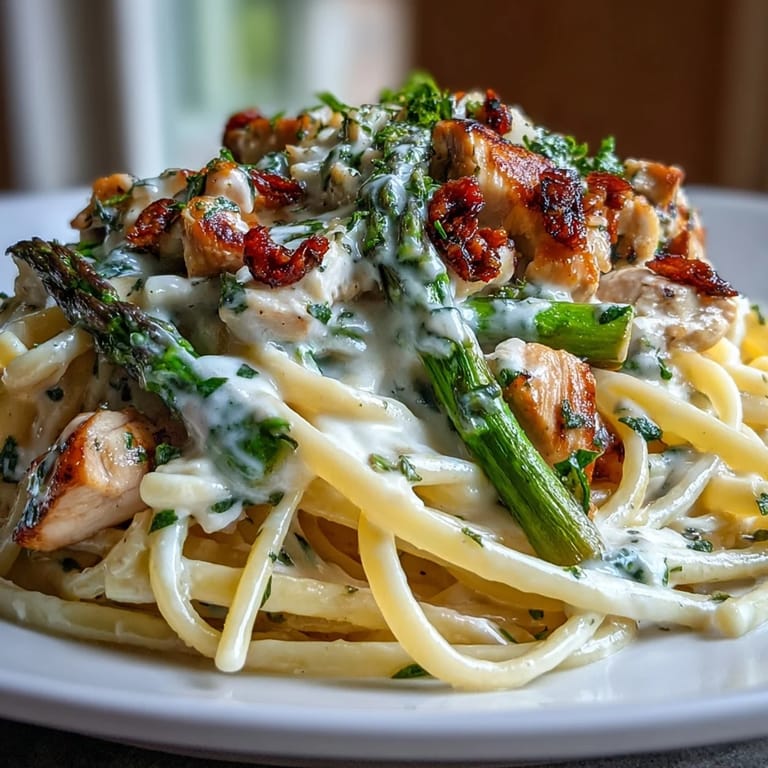
- Return the chicken to the pan, add your cooked linguine, and toss everything together so every strand gets coated in that gorgeous sauce. Then fold in your roasted asparagus gently so you don't crush all those crispy edges.
- Plate and enjoy immediately:
- Serve it right away while the sauce is still clinging to the pasta, and top with fresh parsley and extra cheese if you're feeling generous.
 Save
Save This dish became my solution to the five o'clock panic when I had good ingredients but zero inspiration. There's comfort in knowing that I can turn a Wednesday into something that feels intentional and delicious, and that's what this pasta taught me.
The Asiago Factor
Asiago cheese has this nutty, slightly tangy personality that separates it from the milder Parmesan you might reach for automatically. When you grate it fresh and fold it into a warm cream sauce, it doesn't just melt, it dissolves into the background while somehow making everything taste richer and more complex. I learned this the hard way after trying it with regular Parmesan once, and the dish was fine but missing that little spark that makes people ask if there's something special in it.
Timing and Temperature Matter
One night I tried to speed up the process by blasting the asparagus at a higher temperature, and it burned on the outside before the inside was tender. Now I respect the suggested 220°C because it gives you that golden, crispy exterior without charring everything, and the ten to twelve minutes is a rhythm that works every time. Cooking isn't always about doing things faster, sometimes it's about doing them right.
Make It Your Own
The beauty of this dish is that it's a framework, not a prison. Some nights I've added a splash of dry white wine to deglaze the pan after cooking the chicken, which deepens the flavor in a way that makes people lean back from the table satisfied. Other times I've kept it vegetarian by skipping the chicken and doubling the asparagus, which still feels decadent and complete. You can swap in fresh spinach, mushrooms, or sun-dried tomatoes if that's what calls to you.
- A splash of white wine added after searing the chicken brings acidity and sophistication to the sauce.
- Fresh lemon zest stirred in at the end adds brightness and cuts through the richness beautifully.
- Don't be afraid to taste as you cook and adjust the seasoning because that's how you make it taste like your version, not someone else's.
 Save
Save This recipe sits in that sweet spot between effort and reward that makes cooking feel less like a chore and more like a small act of kindness toward yourself. Serve it with a glass of crisp white wine and maybe some quiet time at the table, and you've created something worth savoring.
Recipe FAQs
- → What makes Asiago cheese special in this pasta?
Asiago brings a nutty, slightly sharp flavor that melts beautifully into the cream sauce. Its distinct taste elevates the dish beyond standard Parmesan, while still maintaining that comforting cheesy appeal everyone loves.
- → Can I prepare this pasta ahead of time?
The components can be prepped in advance—roast the asparagus, cook the pasta, and prepare the sauce separately. Combine everything just before serving to maintain the ideal texture and prevent the pasta from absorbing all the sauce.
- → What pasta shapes work best with this sauce?
Linguine works wonderfully because the flat surface holds the creamy sauce well, but fettuccine, penne, or rigatoni are excellent alternatives. Short pasta shapes with ridges are particularly good at trapping the cheesy coating.
- → How do I prevent the cream sauce from curdling?
Keep the heat at medium-low when adding the cream and whisk continuously. Avoid boiling the sauce once the dairy is incorporated. Adding a bit of pasta water helps stabilize the emulsion and creates a smoother consistency.
- → What vegetables can substitute for asparagus?
Broccoli florets, green beans, or roasted Brussels sprouts work beautifully. The roasting technique remains the same—toss with olive oil, season, and coat with cheese before roasting until golden and tender.
- → Is there a lighter version of this dish?
Substitute half-and-half for heavy cream, reduce the butter amount, and increase the vegetable proportion. The sauce will be slightly thinner but still delicious. You can also use whole wheat pasta for added fiber and nutrients.