 Save
Save My sister called one rainy Tuesday asking if I could make her Irish stew, but lighter—she'd been craving comfort food without the guilt. I realized I'd never actually lightened a traditional stew before, so I started experimenting with lean beef and swapped the heavy potatoes for cauliflower mash. The first time I ladled it into bowls, watching the steam rise and smelling that deep, wine-and-herb perfume, she texted back that it tasted like home but better. That's when I knew this version had become something special on its own.
I made this for a small dinner party last February when snow was piling up outside, and something magical happened—everyone slowed down, had seconds, and the conversation just deepened the way it does around a warm bowl. One guest, who's usually counting macros, said she felt like she was cheating because it was so good and so nourishing at the same time. That meal reminded me that the best food isn't about restriction or perfection; it's about how it makes people feel gathered and cared for.
Ingredients
- Lean beef stew meat: Trimming every visible fat is worth the five minutes it takes—it keeps the broth clear and lets the beef flavor shine without heaviness.
- Olive oil: Just enough to get a good sear; you're not deep-frying, just building those caramelized edges that taste like umami.
- Onion, carrots, and celery: The holy trinity that gives stew its backbone—don't rush the sauté, let them soften and start to caramelize slightly.
- Garlic: Minced fine so it melts into the broth rather than sitting in chunks.
- Beef broth: Low-sodium matters here because you're reducing the liquid slightly and seasoning to taste—high-sodium broth can turn salty.
- Dry red wine: A decent wine you'd actually drink, not cooking wine; the flavor mellows beautifully into the stew.
- Tomato paste: Two tablespoons adds depth and a slight sweetness that balances the wine's acidity.
- Worcestershire sauce: The secret ingredient that makes people ask what that amazing flavor is.
- Dried thyme and rosemary: These are the herbs that make it unmistakably Irish stew—don't skip them or substitute fresh, which won't have the same concentrated flavor.
- Bay leaves: Remove them before serving, but they're doing essential work in the broth.
- Peas: Added at the end so they stay bright green and tender, not gray and mushy.
- Cauliflower: Choose a head that's dense and creamy-white; boil it until it's almost falling apart so the mash is silky.
- Butter and milk: Just enough to make the cauliflower taste indulgent without being heavy.
Tired of Takeout? 🥡
Get 10 meals you can make faster than delivery arrives. Seriously.
One email. No spam. Unsubscribe anytime.
Instructions
- Prep and sear the beef:
- Pat the meat completely dry—this is non-negotiable if you want a good crust instead of steam. Season generously with salt and pepper, then sear in batches in hot oil until deeply browned on all sides, about three minutes per side. Don't crowd the pan or the beef will stew instead of sear.
- Build the flavor base:
- In the same pot, sauté the onion, carrots, and celery until the edges soften and the onion turns translucent, about five minutes. The browned bits stuck to the pot are your flavor gold—keep them there for now.
- Bloom the aromatics:
- Add the minced garlic and let it cook for just one minute until it smells incredible but hasn't burned. Stir in the tomato paste, thyme, rosemary, and bay leaves, cooking for another minute so everything toasts together.
- Deglaze and simmer:
- Return the beef to the pot, pour in the red wine, and scrape the bottom with a wooden spoon—all those browned bits dissolve into the liquid and become pure flavor. Add the beef broth and Worcestershire, bring to a simmer, then lower the heat, cover, and let it barely bubble for one hour and fifteen minutes. The beef should be fall-apart tender when you're done.
- Finish with peas:
- Remove the lid, stir in the peas, and simmer uncovered for five to ten minutes until they're heated through and still bright. Taste and adjust the salt and pepper—this is your moment to make it exactly right.
- Make the cauliflower mash:
- While the stew is simmering, boil the cauliflower florets in salted water until they're so tender a fork tears through them easily, about ten to twelve minutes. Drain well in a colander, pressing gently to remove excess moisture.
- Blend into silk:
- Transfer the drained cauliflower to a food processor with the butter and milk, then blend until completely smooth and creamy—don't undersell this step, the texture should be indistinguishable from mashed potatoes. Season with salt and pepper to your taste.
- Plate and serve:
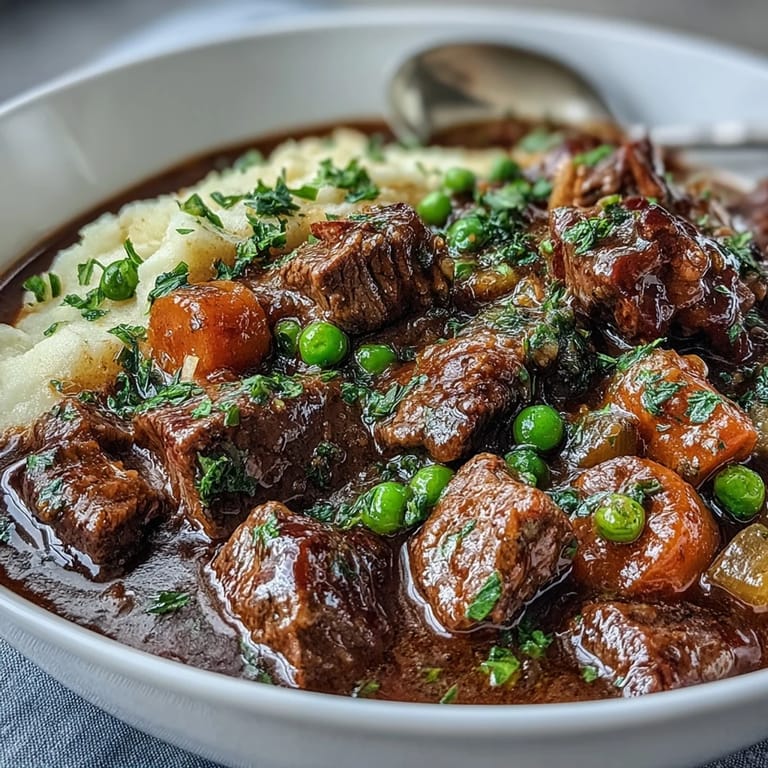
- Spoon a generous mound of cauliflower mash into each bowl, then ladle the hot stew around and over it. A scatter of fresh chives on top adds color and a whisper of onion flavor that catches your palate at the last moment.
 Save
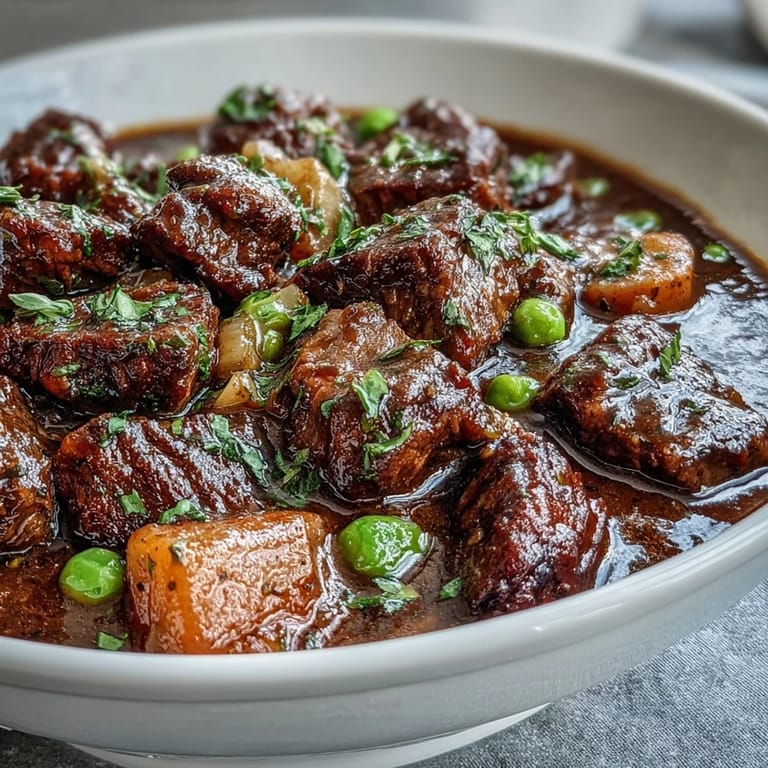
Save There's something about spooning this stew into a quiet house on a cold evening that feels like you're not just feeding yourself, you're giving yourself permission to slow down. My partner and I have started making it without planning—just pulling out the pot when the weather turns and we both know we need something warm and real.
Why This Recipe Works Better Than Traditional Stew
Traditional Irish stew relies on potatoes for creaminess, which means you're eating a lot of carbs even if the portions are reasonable. By replacing potatoes with cauliflower mash, you get that same luxurious, velvety texture on your plate—the same comfort factor—but the stew itself becomes less about starch and more about the beef and broth's actual flavors. Using lean beef instead of chuck means the broth stays cleaner and brighter instead of becoming greasy as it cools. The wine and tomato paste add complexity that would normally come from hours of cooking, so you save time without sacrificing depth.
Make It Your Own
This stew is forgiving and loves improvisation once you understand the basic structure. I've added a splash of Guinness instead of wine on nights when I wanted something darker and more roasted-tasting. A coworker who made it added diced sweet potato to the broth itself, which sounds like it shouldn't work but somehow made the whole thing taste warm and slightly sweet in a way that surprised everyone. If you find the broth is too thin at the end, you can remove half a cup of the cooked vegetables, mash them smooth, and stir them back in to thicken everything naturally.
Wine Pairing and Serving
A light-bodied red wine—something like a Pinot Noir or even a Beaujolais—drinks beautifully alongside this without overwhelming the delicate balance of the stew. If wine isn't your thing, an Irish ale has enough body and subtle sweetness to complement the herbs and beef. I've found that serving this stew in wide, shallow bowls rather than deep ones makes it feel more restaurant-like, and somehow that small detail makes people feel more indulged. The cauliflower mash gets a chance to cool slightly on the plate, which creates a beautiful contrast with the hot broth poured around it.
- Pair with a full-bodied salad dressed with sharp vinaigrette to cut through the richness.
- Crusty bread works, but skip it if you're keeping carbs low—the cauliflower mash does all the work.
- Leftovers reheat beautifully and actually taste better the next day after the flavors have merged overnight.
 Save
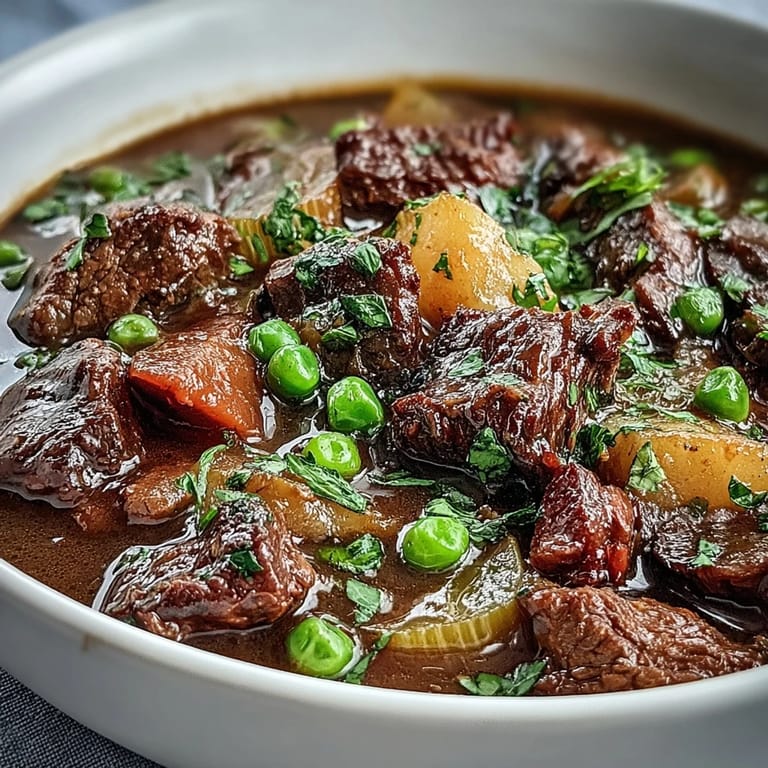
Save This stew taught me that eating lighter doesn't mean eating less satisfyingly—it just means being smarter about where the richness comes from. Make it and share it with someone you want to slow down with.
Recipe FAQs
- → How can I make the beef more tender?
Simmering the beef slowly over low heat for at least an hour helps break down tough fibers, resulting in tender, flavorful meat.
- → Can I replace cauliflower mash with another side?
Yes, mashed sweet potatoes or steamed green vegetables make excellent alternatives to complement the stew.
- → What wine pairs best with this dish?
A light-bodied red wine or an Irish ale enhances the hearty flavors of the stew without overpowering it.
- → Is this dish suitable for a low-carb diet?
Yes, using cauliflower mash instead of potatoes keeps the carbohydrates low while maintaining creaminess and texture.
- → Can I prepare this dish dairy-free?
Replace butter and milk in the cauliflower mash with plant-based alternatives to accommodate dairy-free preferences.