 Save
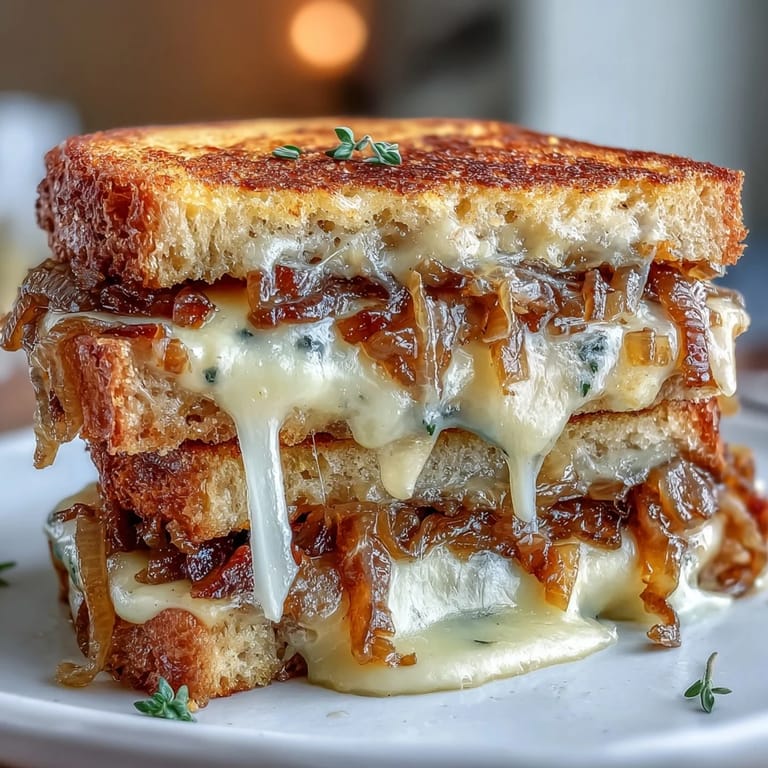
Save There's something about the smell of onions turning golden in butter that makes you forget you're just making a sandwich. My neighbor mentioned she'd been craving French onion soup but didn't have time for the long simmer, and something clicked—why not capture that entire experience between two slices of sourdough? What started as a late afternoon experiment became the kind of meal that stops conversations mid-bite.
I made these for my partner on a rainy Tuesday when we both needed comfort food that felt special. He bit into his, paused, and said it tasted like every good thing about autumn in one sandwich—the caramelization, the earthiness of the thyme, that slight sharpness from the Gruyère hitting all at once. We ended up eating them in silence, which for us meant everything.
Ingredients
- Unsalted butter: Use it cold for spreading and melted for cooking the onions; this gives you control over the flavor without salt fighting your seasoning choices.
- Large yellow onions: They're sweeter than white onions and caramelize into something almost candy-like if you're patient and don't rush the process.
- Sugar: Just a teaspoon helps break down the onions faster and deepens their color to a rich mahogany.
- Fresh thyme: Optional but worth seeking out because dried thyme tastes dusty next to these onions; if you can't find fresh, skip it rather than settle.
- Dry white wine or sherry: This deglazes the pan and adds a whisper of acidity that balances the richness of the cheese.
- Sourdough bread: The tang and crispy crust are non-negotiable; this isn't the time for soft white bread.
- Dijon mustard: A thin layer acts as a flavor anchor, preventing the sandwich from tasting one-note and sweet.
- Gruyère cheese: This is where the magic lives—it has a nuttiness that plays beautifully with caramelized onions, and it melts without becoming greasy.
- Swiss cheese: Adds another dimension of meltiness and prevents the sandwich from being too dense with just Gruyère.
Tired of Takeout? 🥡
Get 10 meals you can make faster than delivery arrives. Seriously.
One email. No spam. Unsubscribe anytime.
Instructions
- Caramelize those onions slowly:
- Melt butter in a large skillet over medium heat, add your sliced onions with sugar and salt, then let them sit and cook undisturbed for a few minutes before stirring. You want them to turn a deep golden brown, which takes about 20 to 25 minutes of patient cooking and occasional stirring; rushing this step gives you soft onions instead of the magical sweet and savory depth you're after.
- Build the sandwich with intention:
- Spread mustard on one side of two bread slices, then layer half your cheese blend, distribute the caramelized onions evenly on top, add black pepper, finish with the remaining cheese, and cap with the second bread slice mustard-side facing in. This layering method keeps the onions from sliding around when you cook it and ensures every bite has cheese and onion together.
- Butter the outside generously:
- Spread softened butter across both outer surfaces of each sandwich—this creates the crispy, golden crust that makes people ask for the recipe. Don't skimp here; enough butter means enough browning, which means enough flavor.
- Cook low and slow with pressure:
- Heat your skillet to medium-low and place the sandwiches in gently, then use a spatula to press down every minute or so for the first few minutes to help the cheese melt evenly. After about 3 to 4 minutes, flip carefully when the bottom is golden and crispy, then cook the other side until it matches.
 Save
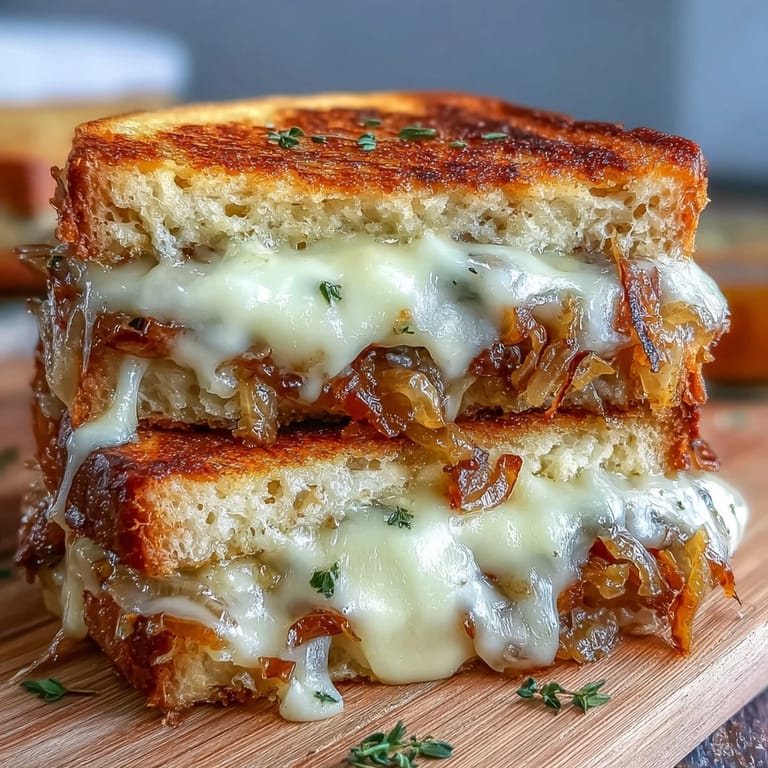
Save There was a moment when my friend took her first bite and closed her eyes like she was listening to music. When she opened them, she asked if I could make these every week, which felt like the highest compliment anyone's ever paid a sandwich. Sometimes food becomes a small ritual because it carries more than just flavor.
Why Sourdough Makes All the Difference
Regular sandwich bread would turn mushy under the heat and cheese, but sourdough has a tight crumb structure and tangy flavor that stands up to the richness without disappearing. The crust gets crispy and golden in a way that other breads simply can't match, creating texture contrast that makes you aware you're eating something intentional and delicious.
The Chemistry of Melting Cheese
Gruyère and Swiss melt at different temperatures and textures, which might sound overly technical until you taste how one gets creamy and nutty while the other becomes stretchy and mild. Using both together means you get complexity instead of monotony, and they complement caramelized onions in ways that single cheeses can't quite achieve on their own.
Variations and Serving Ideas
You can swap Gruyère for Emmental if Gruyère's out of stock, or use a sharp white cheddar if you want more bite. A pinch of garlic powder stirred into the onions during caramelization deepens everything, and serving these alongside a simple green salad or tomato soup turns lunch into something that feels like a restaurant experience.
- A dry white wine like Sauvignon Blanc pairs beautifully, cutting through the richness with acidity.
- If you have fresh caramelized onions left over, they work on burgers, in omelets, or stirred into cream cheese on crackers.
- Make these the day you buy fresh sourdough for maximum crust texture and tang.
 Save
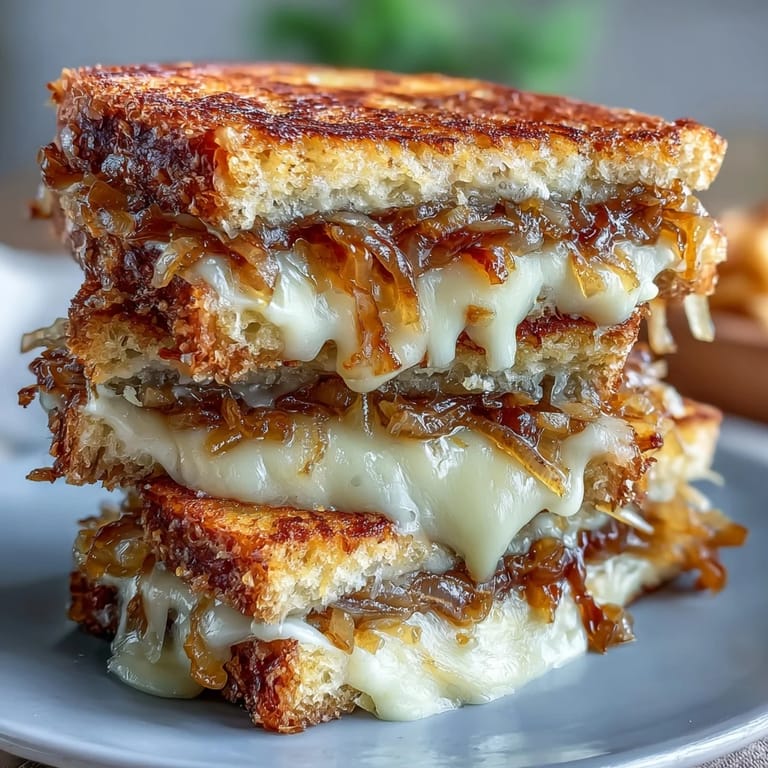
Save These sandwiches remind me that sometimes the best food comes from wanting to solve a problem elegantly—in this case, how to capture the soul of French onion soup in something you can eat with one hand while standing in your kitchen. Make them when you want to feel like you've done something special without the labor.