 Save
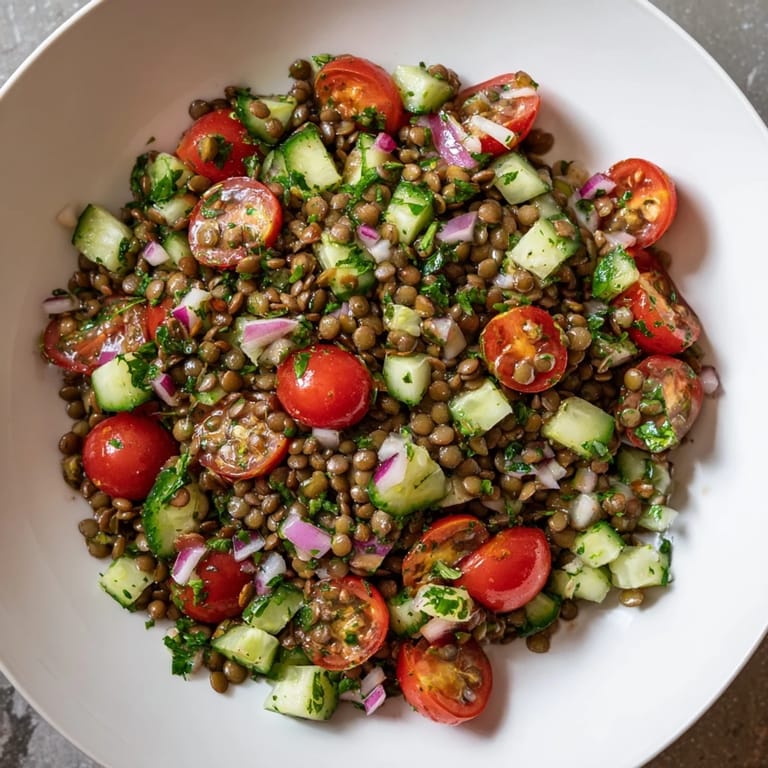
Save There's something about the hiss of lentils hitting boiling water that makes me slow down in the kitchen. I discovered this salad on a Wednesday afternoon when I had leftover lentils and a crisper drawer full of summer vegetables demanding attention. The mustard vinaigrette turned what could have been a sad desk lunch into something I actually looked forward to eating, and now it's become my go-to when I need something that feels both nourishing and effortless.
I made this for a potluck once and watched it disappear while heavier salads sat untouched, which taught me that people actually want food that makes them feel good. My friend Sarah asked for the recipe mid-bite, and I realized it wasn't just me—there's something about the way the tangy mustard plays against the earthiness of the lentils that makes people pause and actually taste what they're eating.
Ingredients
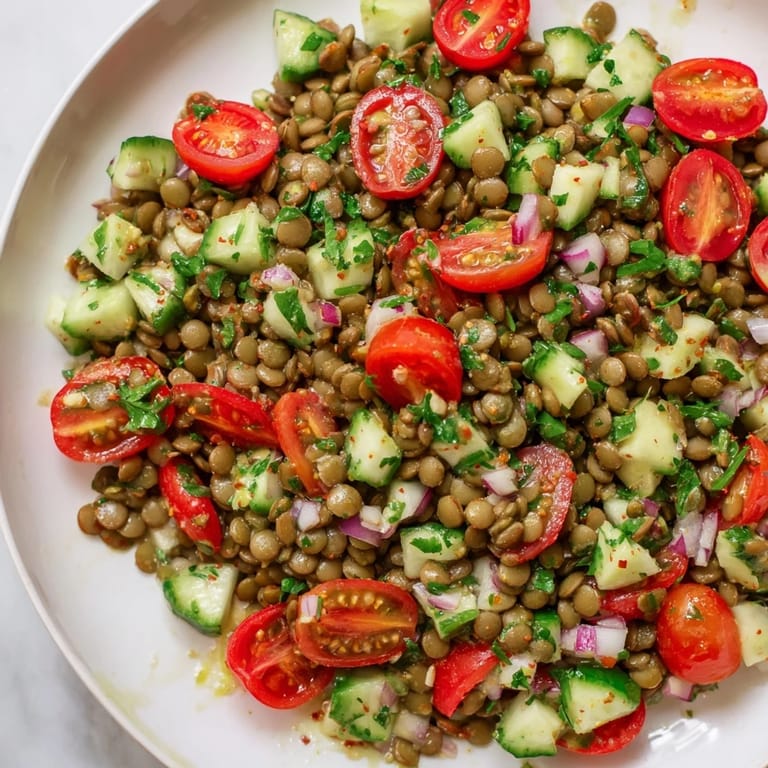
- Green or brown lentils (1 cup dried): The backbone of this salad—they hold their shape beautifully unlike red lentils, which turn to mush. I rinse them first not because it's fancy, but because you'll find little stones sometimes, and biting one is memorable for all the wrong reasons.
- Water and bay leaf: This isn't just boiling lentils; the bay leaf whispers flavor into every grain, transforming something ordinary into something intentional.
- Cherry tomatoes (1 cup): Halved instead of whole because they break down slightly as they sit, releasing their juice into the vinaigrette and making every bite juicy.
- Cucumber (1 cup diced): The cooling element that keeps this from feeling heavy, especially on hot days when you need something refreshing.
- Red onion (1/4 cup): Sharp and assertive raw, it softens and mellows as it sits in the vinaigrette—a quiet transformation that happens while you're not looking.
- Fresh parsley (1/4 cup): The brightness that wakes everything up; dried parsley will leave you disappointed, so don't even consider it.
- Extra virgin olive oil (3 tbsp): Use something you actually like tasting, because you'll taste every drop in this vinaigrette.
- Red wine vinegar (1.5 tbsp): The acid that brings everything into focus; it's the difference between bland and memorable.
- Dijon mustard (1 tsp): The emulsifier and flavor-maker, turning oil and vinegar into something cohesive and interesting.
- Honey or maple syrup: Optional but worthwhile—just a tiny bit balances the vinegar's punch and makes you wonder what that subtle sweetness is.
- Garlic (1 small clove): Minced fine so it disperses throughout rather than attacking in chunks; raw garlic here stays raw and essential.
Tired of Takeout? 🥡
Get 10 meals you can make faster than delivery arrives. Seriously.
One email. No spam. Unsubscribe anytime.
Instructions
- Bring the lentils to life:
- Rinse your lentils under cold water while looking through them for any stones or debris—this takes thirty seconds and prevents disaster. Put them in a saucepan with water and a bay leaf, turn the heat up until it's boiling, then immediately turn it down to a gentle simmer where just a few bubbles break the surface.
- Cook with patience:
- Set a timer for 20 minutes, but start tasting at 18 because every stove is different and mushy lentils are the only thing worse than crunchy ones. You're looking for that sweet spot where they're completely tender but still hold their shape—they should collapse when you press them with your tongue, not with your fork.
- Let them cool and compose yourself:
- Drain them in a colander, toss away the bay leaf, and spread them on a plate or bowl to cool to room temperature—this stops the cooking and lets them stay firm. This is when you chop your vegetables because they'll be ready for the lentils rather than the other way around.
- Gather everything together:
- In a large bowl, combine the cooled lentils with tomatoes, cucumber, red onion, and parsley—don't overthink this, just let them all get to know each other.
- Make the vinaigrette with intention:
- In a small bowl or jar, whisk the olive oil, red wine vinegar, mustard, honey if using, minced garlic, salt, and pepper until it looks slightly thick and emulsified—you'll see the texture change as the mustard does its work. Taste it straight from the spoon; it should make you pucker slightly and then smooth out, with that subtle sweetness blooming at the end if you used the honey.
- Dress and let it rest:
- Pour the vinaigrette over everything and toss gently so nothing bruises—you're looking for every piece to be kissed by dressing, not drowning in it. Taste and adjust: needs more salt? Add a pinch. Needs more tang? A splash more vinegar.
- Chill if you have time:
- Fifteen to thirty minutes in the refrigerator lets the flavors settle and meld, but honestly, it's good immediately too—just colder. It stays delicious for three days if you keep it sealed.
 Save
Save I made this for myself on a Tuesday after a long day, ate it straight from the bowl standing at the kitchen counter, and felt genuinely restored. It was the moment I realized that salads don't have to be punishment or health theater—they can just be delicious, nourishing food that you actually want to eat.
Why This Salad Works Year-Round
In summer, it's a way to use up the last of the season's vegetables and eat something cool and light that doesn't require heating up the kitchen. In winter, the warm lentils taste almost comforting when you pair them with crisp cucumber and that sharp vinaigrette, creating a salad that feels grounded and substantial. Spring brings new parsley and tender young vegetables, while fall lentils seem somehow earthier and more satisfying when the air gets cooler.
Making It Your Own
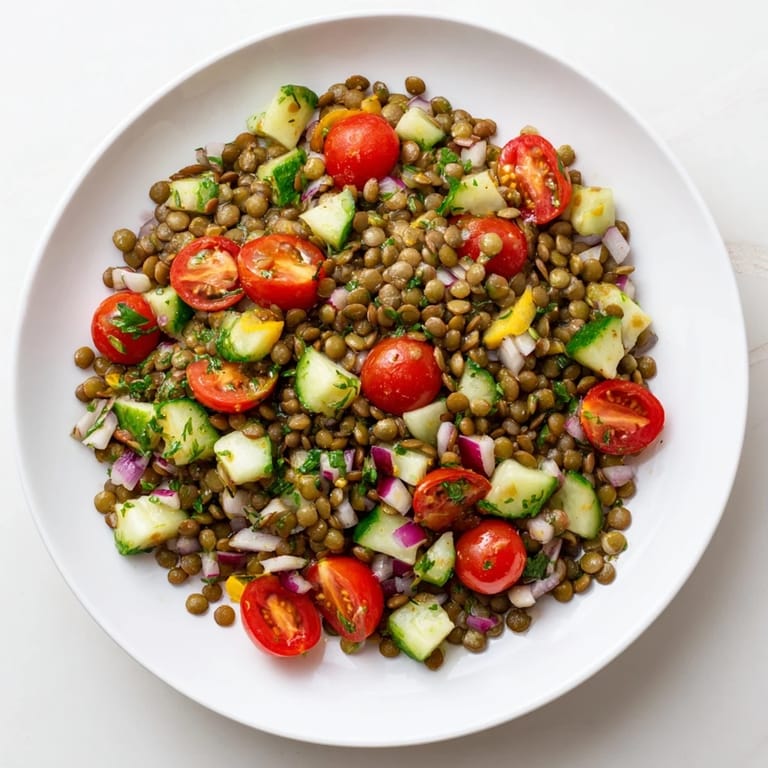
The beauty of this salad is that it's completely forgiving and adaptable without losing its identity. I've added crumbled feta on days I wanted something richer, thrown in diced red bell pepper when it was around, and once stirred in a handful of spinach that needed using. The core—the mustard vinaigrette and tender lentils—is what makes it sing, but everything else is negotiable based on what you have and what you're hungry for.
Storage and Serving
This salad actually improves in the refrigerator as the flavors continue to develop and the mustard's assertiveness softens into something almost sweet. It keeps for three days covered, and reheats to room temperature beautifully, though I prefer eating it cold straight from the fridge on a hot day or letting it come to room temperature if it's chilly outside.
- Add fresh vegetables right before eating if you're making it ahead, otherwise they'll weep water and make the salad soggy.
- It's sturdy enough to pack for lunch, tough enough to survive a commute without wilting into sadness.
- Serve it cold, at room temperature, or even slightly warm—it's forgiving that way.
 Save
Save This is the kind of recipe that proves good food doesn't need to be complicated or time-consuming. It just needs to be made with attention and served to people—or yourself—who appreciate it.
Recipe FAQs
- → How long should I cook the lentils?
Simmer lentils uncovered for 20 to 25 minutes until tender but not mushy, then drain and cool before mixing.
- → Can I prepare the vinaigrette ahead of time?
Yes, whisk the mustard vinaigrette ingredients together and refrigerate. It can be made a day in advance to deepen the flavors.
- → What variations can I add to the salad?
Try including diced bell peppers, shredded carrots, or chopped spinach for extra color and nutrients.
- → Is this dish suitable for a vegan diet?
Yes, replace honey with maple syrup in the vinaigrette to keep it fully plant-based.
- → How should the salad be served for best flavor?
Chill the salad for 15 to 30 minutes before serving to allow the flavors to meld. It can be served cold or at room temperature.
- → What are some good pairings with this salad?
This salad pairs well with grilled meats or can stand alone as a protein-rich lunch.