 Save
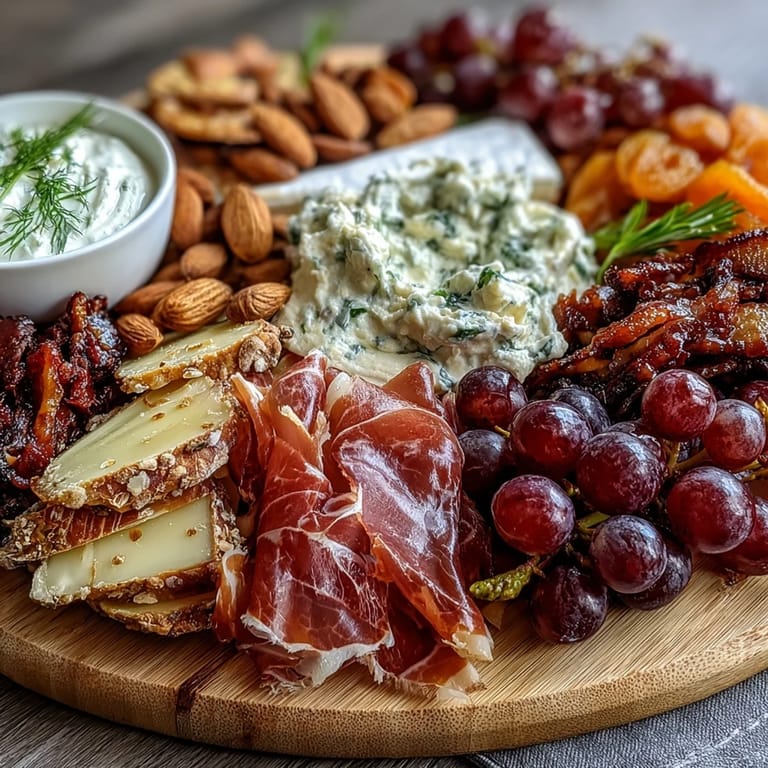
Save My neighbor handed me a key to her new place on a Tuesday afternoon, and within hours I was standing in her empty kitchen thinking about what could turn a bare room into somewhere that felt like home. A charcuterie board seemed like the obvious answer—something that says welcome without requiring a working oven or any real cooking knowledge. What started as a casual idea became this beautiful, generous spread that's now my go-to move whenever someone needs that perfect first meal in a new space.
That first board I made, my neighbor cried a little when she walked in. Not sad tears—just the kind that come when someone shows up with exactly what you needed without you having to ask. We sat on her kitchen floor with that platter between us, talking about her move and eating cheese until it got dark outside. That's when I realized a charcuterie board isn't really about the food at all.
Ingredients
- Prosciutto, salami, and chorizo (100 g each): These cured meats anchor the board with salty, savory depth—buy them sliced if you can, but whole ones work fine if you slice them thin yourself.
- Brie, aged cheddar, and goat cheese (120 g each): Three different styles give texture and flavor variation; brie gets creamy at room temperature, cheddar adds sharpness, and goat cheese brings tang.
- Baguette, crackers, and breadsticks (1 baguette, 200 g crackers, 100 g breadsticks): Toast the baguette slices lightly if you want them crispy, or leave them soft—it's your call depending on how you like to carry cheese and meat.
- Grapes, cherry tomatoes, cucumber, and baby carrots (1 cup each): Fresh vegetables cut through richness and add color; chill them before arranging so they stay crisp throughout service.
- Olives, marcona almonds, dried apricots, fig jam, and honey (80 g each, plus condiments): These touches transform a simple board into something that feels intentional and layered.
- Plain Greek yogurt (1 cup): Thick, tangy base for the herbed dip that feels lighter than cream cheese.
- Fresh dill, chives, lemon juice, and garlic (2 tbsp, 1 tbsp, 1 tbsp, 1 clove): These four ingredients wake up the yogurt and make people ask what's in the dip.
- Canned chickpeas, roasted red pepper, tahini, olive oil, lemon juice, and garlic (1 can, 1 large pepper, 2 tbsp, 2 tbsp, 1 tbsp, 1 clove): The hummus hits different when you make it yourself—creamier, fresher, and you control how garlicky it gets.
Tired of Takeout? 🥡
Get 10 meals you can make faster than delivery arrives. Seriously.
One email. No spam. Unsubscribe anytime.
Instructions
- Mix the herbed yogurt dip first:
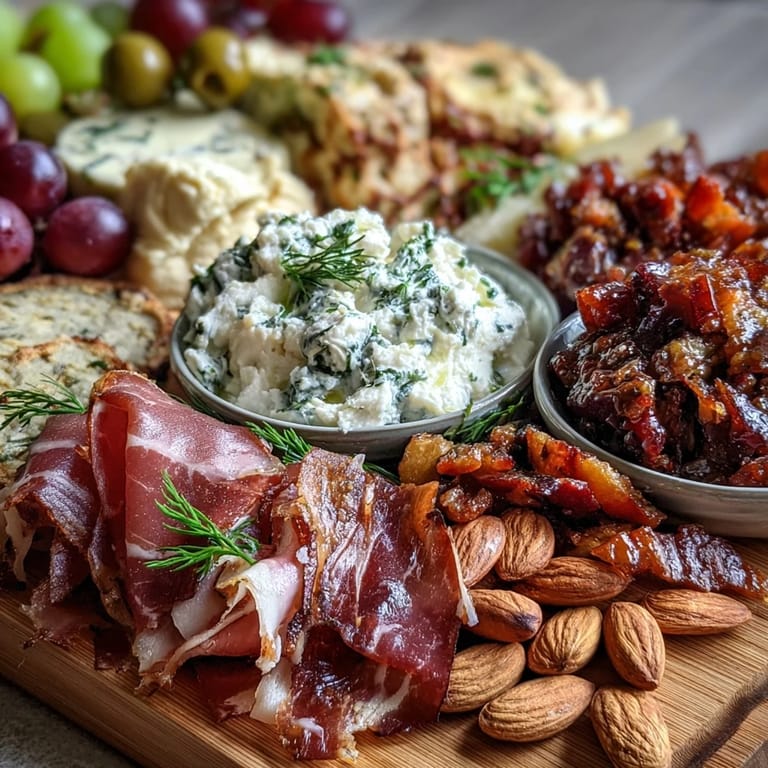
- Combine Greek yogurt, dill, chives, lemon juice, minced garlic, salt, and pepper in a bowl and stir until the herbs are evenly distributed. The mixture should taste bright and a little punchy—add more lemon if it feels flat.
- Blend the roasted red pepper hummus:
- Pulse chickpeas, roasted red pepper, tahini, garlic, olive oil, and lemon juice in a food processor until creamy but still textured, then season with salt and pepper. If it's too thick, drizzle in water one tablespoon at a time until it reaches the consistency you want.
- Arrange the meats and cheeses on your board:
- Start by laying out your cured meats in small clusters and placing cheese pieces so they're easy to grab without dismantling the whole board. Space them generously so the board feels abundant but not crowded.
- Add breads and crackers in groups:
- Group your baguette slices, crackers, and breadsticks in separate sections around the board so people know where to find them without having to hunt.
- Fill empty spaces with fresh produce, olives, nuts, and dried fruit:
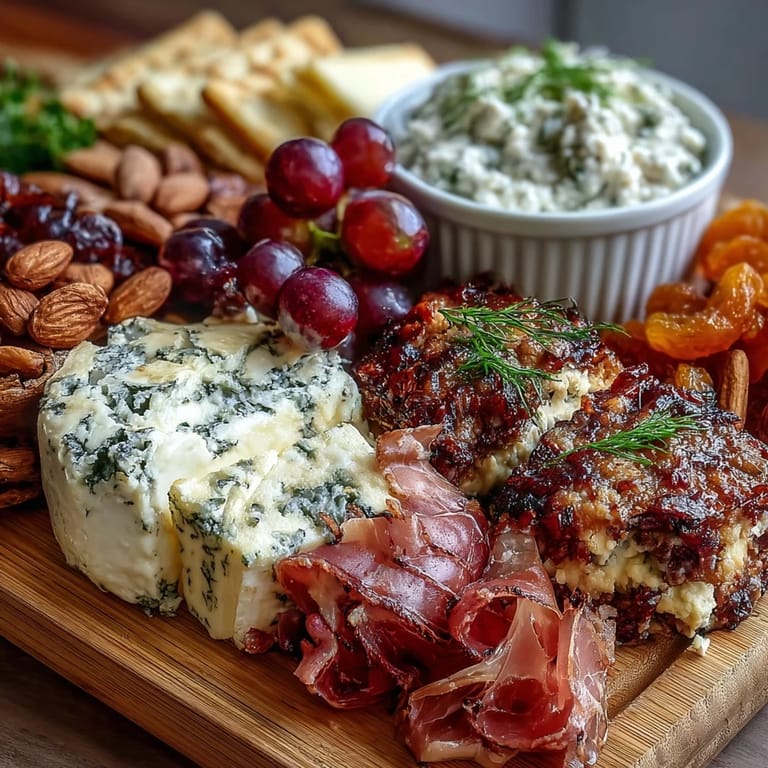
- Tuck in grapes, tomatoes, cucumbers, carrots, olives, almonds, and apricots wherever you see gaps—this is where the board comes alive with color and variety.
- Add fig jam, honey, and your dips in small bowls:
- Place these finishing touches in bowls positioned so people can easily reach them, and know that fig jam with brie is a combination that converts skeptics.
- Finish with fresh herbs if you have them:
- A small handful of fresh dill or basil scattered over the board adds another layer of visual appeal and aroma.
 Save
Save The thing about a charcuterie board that nobody tells you is that it becomes the place where conversations happen. People naturally gravitate toward it, build little combinations, try things they wouldn't normally eat, and then suddenly they're telling stories about their favorite cheese from a trip to France or asking each other what the best pairing is.
How to Build a Board That Actually Works
The secret to a board that looks generous without looking like you dumped everything on there at once is thinking about balance. Mix soft with firm, salty with sweet, mild with bold—if you have three sharp cheeses, add something creamy like brie. If you go heavy on cured meats, load up on fresh vegetables to give people palate cleansers. The eye should travel around the board and find something different every time.
Making the Dips Your Own
These two dips are your canvas. The herbed yogurt dip can absorb whatever fresh herbs you have growing around—tarragon, parsley, even fresh mint works if you're feeling adventurous. The hummus takes kindly to roasted garlic if you want it deeper, or a sprinkle of smoked paprika if you want it warm and complex. People will absolutely ask for the recipes, which is the highest compliment a dip can receive.
Timing and Temperature Tips
Prep everything the morning of or the afternoon before so you're not stressed when people arrive. Keep cheese and cured meats in the fridge until 15 minutes before serving, and chill your vegetables so they stay crisp under the lights. One last thing: set out small plates and small utensils even though it's casual—it makes everything feel more intentional and keeps the board cleaner longer.
- Toast the baguette slices lightly under the broiler for 90 seconds if you want them crispy instead of soft.
- Swap any ingredient you don't love—use different cheeses, skip the olives, add roasted nuts instead of raw almonds.
- Make extra dip if you're feeding more than eight people because these two are never left behind.
 Save
Save A charcuterie board is less a recipe and more an excuse to gather people and say you're glad they're here. Make it with intention, taste as you go, and remember that the best boards are the ones that disappear fastest.
Recipe FAQs
- → What meats are ideal for this board?
Varieties like prosciutto, salami, and chorizo provide a balanced range of flavors and textures that complement cheeses and produce well.
- → How can I prepare the herbed Greek yogurt dip?
Mix plain Greek yogurt with chopped dill, chives, lemon juice, minced garlic, salt, and pepper. Chill until serving.
- → What makes the roasted red pepper hummus special?
Blended chickpeas combine with roasted red peppers, tahini, garlic, olive oil, and lemon juice for a smooth, savory dip rich in flavor.
- → Can I customize the board for dietary preferences?
Yes, swap meats or cheeses for preferred options or use gluten-free breads and crackers to accommodate dietary needs.
- → What tools are recommended to assemble the board?
You'll need a large serving board, small bowls for dips, a chef's knife, cutting board, and a food processor for hummus preparation.