 Save
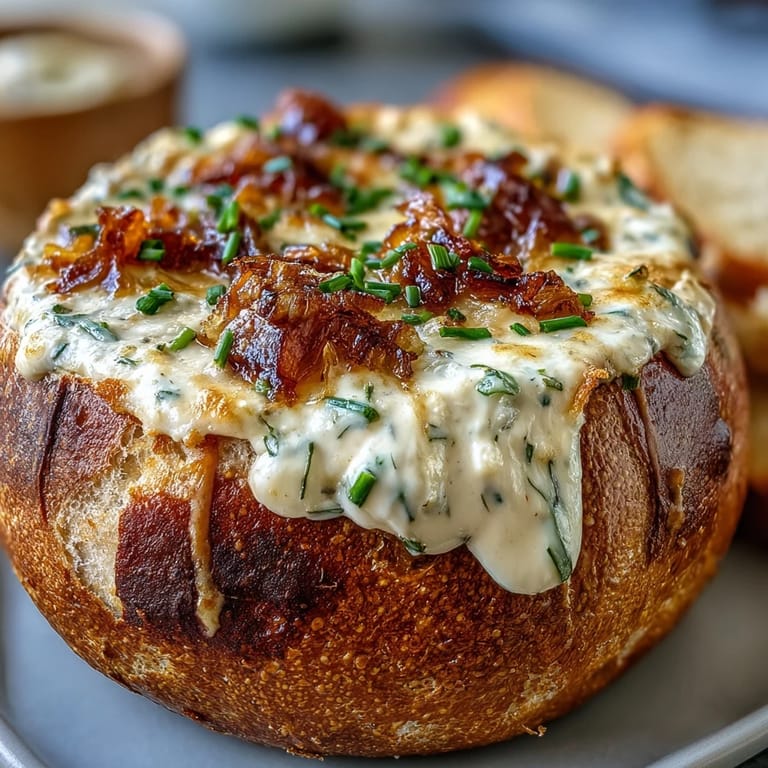
Save There's something about watching a bread bowl emerge from the oven, steam rising from its hollow center, that makes guests pause mid-conversation. I discovered this dish by accident one winter when a party was coming together faster than I'd planned, and I needed something that felt both impressive and manageable. The sourdough bowl trick came to me while staring at a round loaf, wondering how to make something ordinary feel like a moment. That first time, someone actually gasped when I set it down, and I realized I'd found something special.
I made this for my sister's book club once, and the kitchen filled with the smell of onions slowly turning sweet and jammy while everyone gathered in the other room. When I finally carried it out, the conversation stopped completely—not because it was fancy, but because it was so clearly made with intention. Three people asked for the recipe that night, and I remember thinking that this humble dip had somehow become the thing they'd remember about the evening.
Ingredients
- 1 large round sourdough loaf (approx. 1 lb / 450 g): The sourdough's tang cuts through the richness of the dip beautifully—don't skip this for regular white bread, which will taste too plain by comparison.
- 2 tablespoons unsalted butter: This is where the caramelization magic starts; use real butter, not margarine, for the deep golden color and flavor.
- 2 large yellow onions, finely diced: Slice them as evenly as you can so they cook at the same pace and become uniformly sweet.
- 2 cloves garlic, minced: Add it near the very end of cooking so it doesn't burn and turn bitter.
- 1 teaspoon kosher salt: Kosher salt dissolves differently than table salt, giving the onions a gentle seasoning without harsh pockets.
- 1/2 teaspoon freshly ground black pepper: Freshly cracked makes a real difference in depth.
- 1 teaspoon sugar: This little bit helps the onions caramelize faster and balances any sharp notes.
- 1 cup (240 g) sour cream: The backbone of the dip; don't use low-fat versions, which will make it taste thin.
- 1/2 cup (120 g) mayonnaise: This adds richness and helps the texture stay creamy when baked.
- 1/2 cup (120 g) cream cheese, softened: Soften it at room temperature so it blends smoothly without lumps.
- 1 tablespoon fresh chives, finely chopped (plus extra for garnish): Fresh herbs matter here; they add brightness that dried herbs can't match.
- 1 tablespoon fresh parsley, chopped: A gentle herb that doesn't overpower, just rounds out the flavor.
- 1 teaspoon Worcestershire sauce: A teaspoon that tastes like a secret; it adds umami depth without announcing itself.
- 1/2 teaspoon smoked paprika (optional): If you use it, you'll add a whisper of smokiness that elevates the whole thing.
Tired of Takeout? 🥡
Get 10 meals you can make faster than delivery arrives. Seriously.
One email. No spam. Unsubscribe anytime.
Instructions
- Preheat and prepare:
- Set your oven to 350°F (175°C) while you work on hollowing out the bread. Take your bread knife and cut a circle from the top of the sourdough loaf about 2 inches down, then scoop out the insides with a spoon, leaving a sturdy 1-inch shell so the bowl holds its shape when you fill it.
- Cut dipping bread:
- Tear or cut the scooped-out bread into bite-sized cubes—they don't need to be perfect. Set them aside on a plate; they'll eventually be the vehicle for getting the dip to your mouth.
- Start the caramelization:
- Melt butter in a large skillet over medium heat, then add your diced onions along with the salt, pepper, and sugar. Stir occasionally and let time do its work—this takes 20 to 25 minutes, and you'll watch the onions go from pale and raw to deep golden brown, releasing their natural sweetness as the heat breaks them down.
- Finish the onions:
- When the onions are deeply caramelized and smell like caramel itself, add your minced garlic and cook for just one more minute, then remove from heat. Garlic burns quickly, so that timing matters.
- Make the base:
- In a separate bowl, whisk together sour cream, mayonnaise, softened cream cheese, chives, parsley, Worcestershire sauce, and paprika if using. Stir until everything comes together into a smooth, creamy mixture with no visible lumps of cream cheese.
- Combine everything:
- Fold the cooled caramelized onions and garlic into your cream mixture gently so you don't deflate the texture. Taste it and adjust salt and pepper if needed.
- Fill and bake:
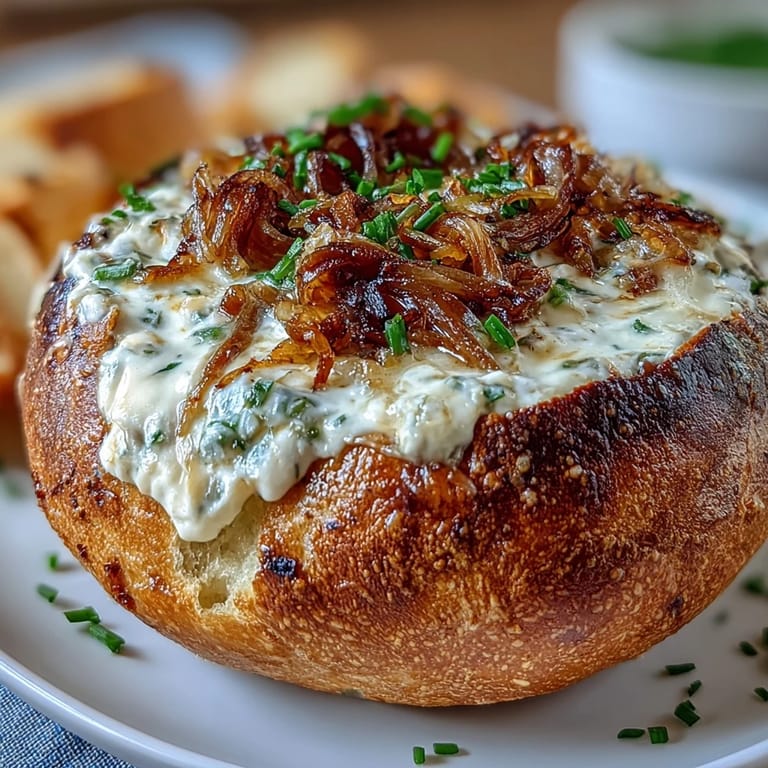
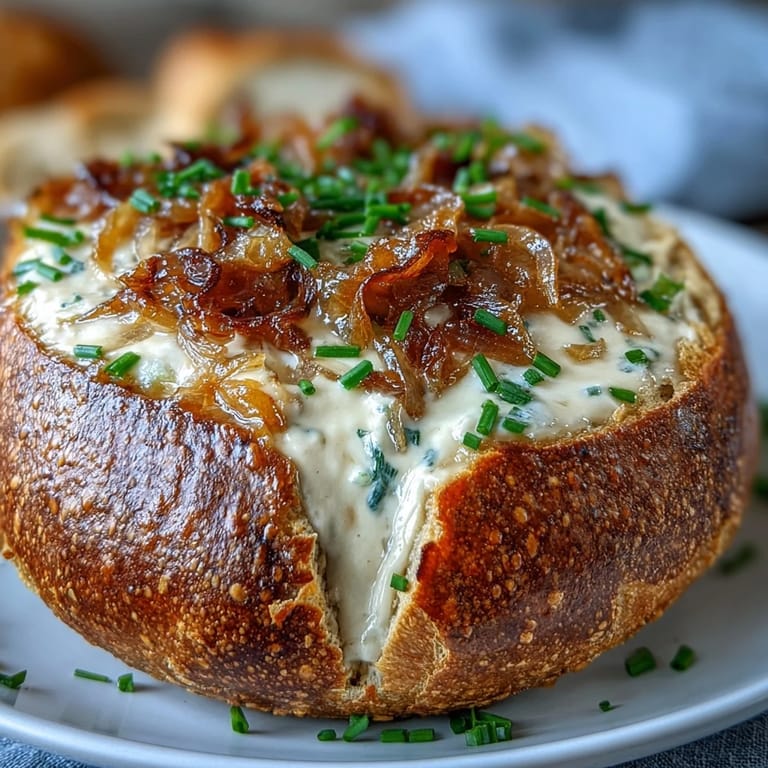
- Spoon the onion dip into your hollowed bread bowl, mounding it generously. Place the filled bowl on a baking sheet and bake for 15 minutes until the dip is heated through and the edges of the bread are just starting to crisp.
- Finish and serve:
- Pull it from the oven, sprinkle fresh chives over the top, and carry it straight to the table while it's still warm. Set it surrounded by the bread cubes, any vegetables you've prepared, and crackers so people can start dipping immediately.
 Save
Save Last summer, I made this for a casual dinner when a friend was going through a tough time, and watching her face light up over something so simple and warm felt like the point of cooking altogether. Sometimes the best moments in the kitchen aren't about impressing anyone—they're just about nourishing the people in front of you.
The Art of Caramelizing Onions
Caramelized onions are not difficult, but they demand patience in a way that most cooking doesn't. The first few minutes feel like nothing is happening, and then suddenly, around minute 15, the onions begin their transformation from sharp and peppery to sweet and dark. Low to medium heat is essential—high heat will scorch them before they caramelize, leaving you with burnt spots and bitter notes instead of that deep, almost jammy sweetness. The sugar I add is just a nudge; it helps speed up the natural caramelization process, but it's the time and gentle heat that truly matter.
Make-Ahead Magic
This is one of those recipes that rewards planning ahead. You can caramelize your onions a full day before, make the entire dip and store it in the refrigerator, and then simply hollow out your bread and fill it 30 minutes before your guests arrive. I've found that when you do this, you actually enjoy hosting because you're not stressed about timing—you're just reheating and presenting, which feels almost effortless.
Variations and Personal Touches
This dip is flexible in ways that make it fun to tinker with. I've added a pinch of cayenne for heat, experimented with fresh dill instead of parsley, and once even stirred in crispy bacon bits at the last moment, which changed everything about how people responded to it. The smoked paprika is optional, but I find that it adds a subtle depth that makes people pause and ask what they're tasting. Think of this as a foundation rather than a strict rulebook—your kitchen instincts and favorite flavors belong here.
- Try a dash of hot sauce or cayenne if you want some heat woven through the creamy richness.
- Fresh dill or thyme can replace parsley if you want to shift the flavor profile slightly.
- A handful of crispy bacon or caramelized shallots stirred in at the end adds texture and makes it feel more like a special occasion.
 Save
Save This bread bowl has become my go-to for moments when I want to feel like I've cooked something special without spending the entire day in the kitchen. It's the kind of dish that makes people feel welcomed and cared for, one warm spoonful at a time.
Recipe FAQs
- → How do you caramelize onions for the dip?
Slice onions finely and cook them slowly in melted butter over medium heat, stirring occasionally until they become deep golden brown and sweet, typically 20–25 minutes.
- → Can this dip be prepared ahead of time?
Yes, you can make the caramelized onion dip a day in advance and refrigerate it. Fill the sourdough bowl and bake just before serving.
- → What bread works best for the bowl?
A large, round sourdough loaf with a sturdy crust is ideal since it holds the dip well and adds a pleasant tangy flavor.
- → Are there any suggested variations for herbs or spices?
Fresh herbs like dill or thyme can be used instead of parsley and chives. Adding a pinch of cayenne or smoked paprika can enhance the flavor.
- → How should leftover bread cubes be stored?
Store any unused bread cubes in an airtight container at room temperature to keep them fresh for snacking or dipping later.
- → What accompaniments can be served with this dish?
Bread cubes, fresh vegetable sticks such as carrots, celery, cucumber, and crackers complement the creamy dip and add texture variety.