 Save
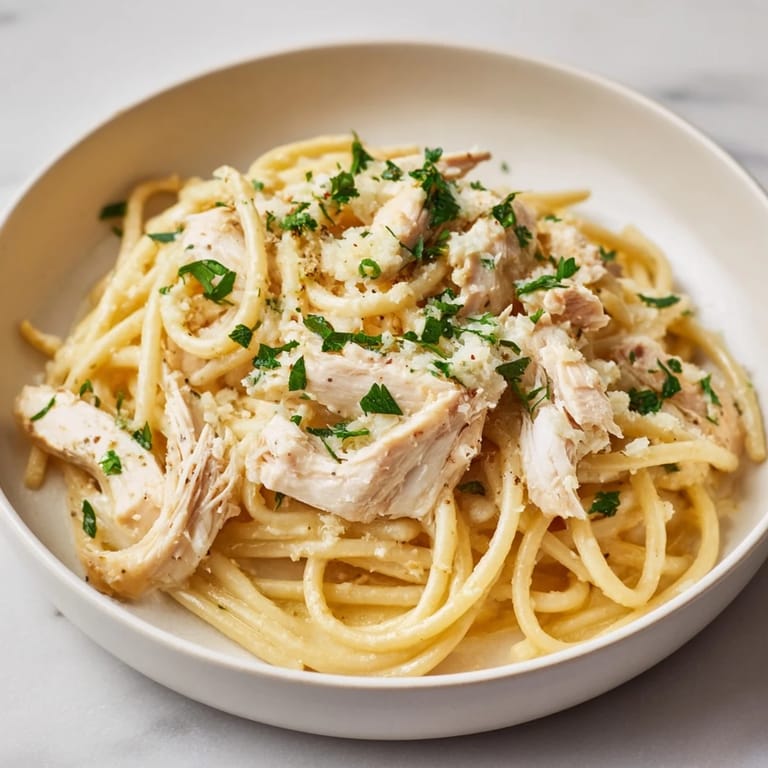
Save There's something about a nearly empty pantry that forces the best cooking decisions. One Tuesday evening, I had bucatini, butter, garlic, and leftover rotisserie chicken—nothing fancy, nothing complicated. I melted that butter, let the garlic whisper its way into golden fragrance, and tossed it all together. The dish was so clean, so honest, that I've made it countless times since, always finding something new in its simplicity.
I made this for my partner on a rainy Saturday, and they actually put their phone down mid-dinner, which doesn't happen often. The chicken added protein without heaviness, and the parsley at the end felt like a small flourish that made the whole thing feel intentional rather than thrown together. It became our go-to when we wanted something comforting but didn't want to spend hours in the kitchen.
Ingredients
- Bucatini pasta (200 g): That hollow center is doing work here—it holds the garlic butter like no other shape can, so don't swap it out for spaghetti unless you have to.
- Unsalted butter (3 tbsp): Use real butter, not margarine; the flavor is the whole point, and you'll taste the difference immediately.
- Garlic cloves (3 large, finely minced): Mince them yourself rather than using jarred; fresh garlic browns better and stays fragrant without turning bitter.
- Cooked, shredded chicken (200 g): Rotisserie chicken is your friend here—it's already seasoned and requires zero extra work, though poached works beautifully too.
- Salt and freshly ground black pepper: Taste as you go; the butter is rich enough that you need these to keep things balanced.
- Fresh parsley (1 tbsp, chopped): Optional but recommended—it catches the light and reminds you this took care, even if it was quick.
Tired of Takeout? 🥡
Get 10 meals you can make faster than delivery arrives. Seriously.
One email. No spam. Unsubscribe anytime.
Instructions
- Boil the water and cook your pasta:
- Bring a large pot of salted water to a boil—make it taste like the sea. Cook the bucatini until it's al dente, which usually means a minute or two under whatever the package suggests; it will continue cooking slightly in the pan. Reserve a quarter cup of that starchy water before draining.
- Make your garlic butter base:
- Melt the butter in a large skillet over medium heat, then add the minced garlic. You're listening for a gentle sizzle here, not a frenzy—if it's browning, your heat is too high. After 1 to 2 minutes, the garlic should smell incredible and look pale gold.
- Bring everything together:
- Add the drained bucatini to the skillet and toss constantly, letting each strand coat itself in that butter and garlic. If it looks dry, splash in a little reserved pasta water; the starch will help everything cling together.
- Season and plate:
- Taste, then season with salt and pepper until it feels right. Divide between plates, top each with shredded chicken, and finish with parsley if you have it.
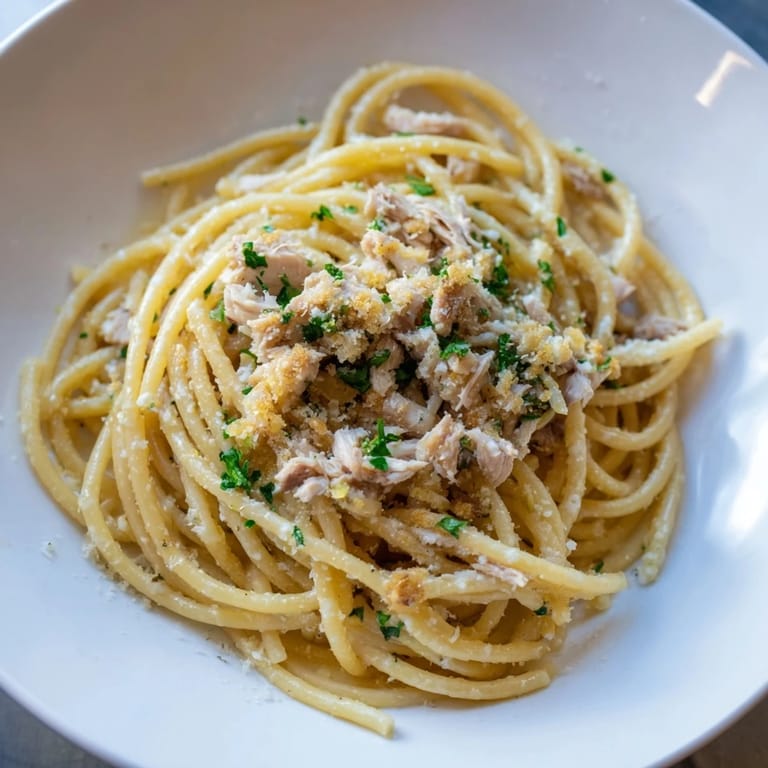 Save
Save The first time someone asked for seconds without prompting, I realized this dish had crossed from quick dinner into something people actually wanted to eat again. There's a quiet confidence in serving something this simple and having people understand that the simplicity was the point.
Why Bucatini Matters Here
Bucatini is hollow, which sounds like a small detail until you're eating it. That tube shape lets the garlic butter flow through the center of each strand, not just coat the outside like it does with spaghetti. You bite through and taste butter and garlic with every single bite, front to back. If you can't find bucatini, fettuccine is your next best choice—it's wide enough to cradle the sauce—but spaghetti will feel noticeably thinner and less substantial in comparison.
Building Flavor in Minimal Steps
This dish proves that you don't need a long ingredient list to make something memorable. The magic lives in technique: butter browning just slightly, garlic releasing its oils without burning, pasta water emulsifying everything into a cohesive sauce. Each element does exactly one thing, and that focus creates clarity on the plate. It's the cooking equivalent of a well-lit room with good furniture—nothing wasted, nothing overdone.
When Simple Becomes Flexible
I've made this seventeen different ways by now, and it works almost every time. The base—butter, garlic, pasta—is unchanging, but everything else adapts. Sometimes it's chicken, sometimes mushrooms sautéed in a separate pan, sometimes just a handful of spinach tossed in at the end. The parsley becomes basil when I have it; the black pepper becomes red pepper flakes when I want heat. What I've learned is that this recipe doesn't need protection; it invites variation.
- Squeeze fresh lemon juice over the finished dish if you want brightness and a subtle acid to cut through the butter.
- A small pinch of chili flakes, added to the butter with the garlic, brings warmth without changing the character of the dish.
- If you have anchovies and aren't afraid of them, mash one into the butter—it dissolves and adds depth that no one will identify but everyone will taste.
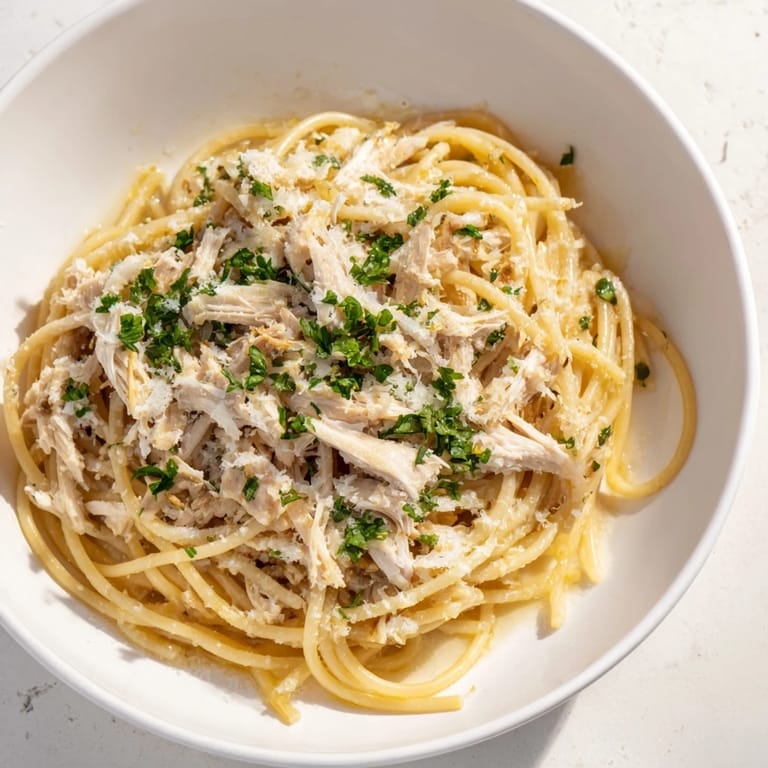 Save
Save This dish reminds me that the best meals don't require apologies for their simplicity; they require confidence. Make it tonight, make it again next week, and watch it become something you reach for without thinking.
Recipe FAQs
- → What type of pasta is used in this dish?
Bucatini pasta is used, which is thick and hollow, offering a satisfying bite and excellent sauce retention.
- → How is the garlic prepared to avoid bitterness?
The garlic is finely minced and sautéed gently in butter until fragrant, avoiding browning to maintain a mellow flavor.
- → Can the shredded chicken be substituted?
Yes, shredded rotisserie chicken or poached chicken breast can be used for convenience and tenderness.
- → What optional ingredients enhance the flavor?
Chili flakes add a touch of heat, and a squeeze of lemon juice can provide brightness to balance the richness.
- → How should the pasta water be used?
A small amount of reserved pasta water is added to the garlic butter sauce to loosen it and help it cling to the pasta evenly.