 Save
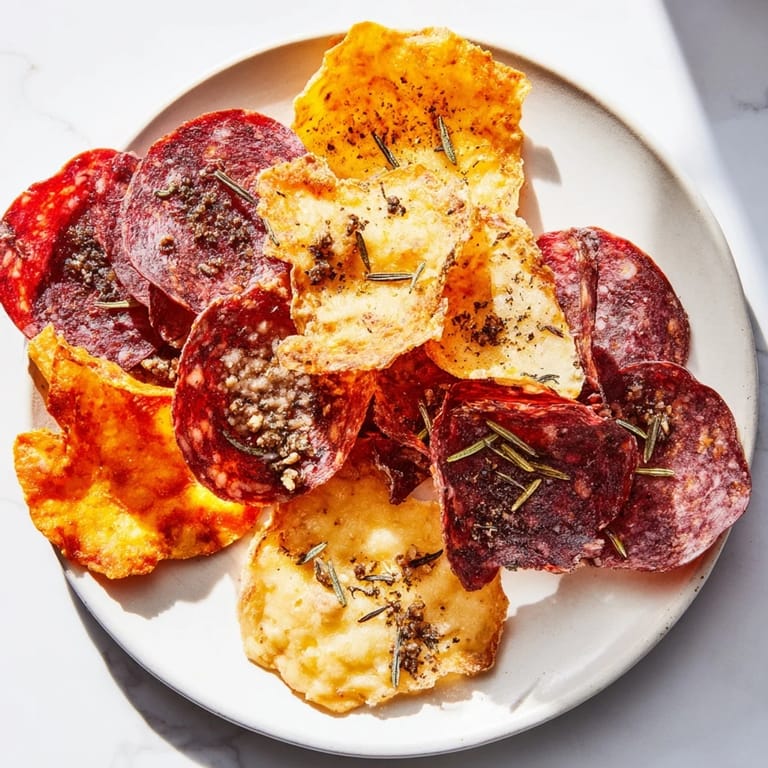
Save I discovered these by accident while organizing my charcuterie board supplies one evening—I had leftover slices of prosciutto and aged cheddar that were just starting to curl at the edges, and instead of tossing them, I thought, why not see what happens in a hot oven? Twenty minutes later, I pulled out something completely different: crispy, salty, deeply savory chips that tasted like the best parts of a charcuterie board had been concentrated into these impossibly thin, delicate shards. Now I make them intentionally, and they've become the snack I reach for when I want something that feels fancy but requires almost no effort.
I served these at a small dinner party last spring, plated them on dark slate, and watched people's faces light up when they realized what they were eating—that moment when someone bites into something and their whole understanding of what's possible shifts slightly. My friend Marcus ate four in a row without talking, which is the highest compliment I've ever received.
Ingredients
- Thinly sliced salami (100 g): The backbone of these chips—use a mandoline or ask the deli counter to slice it paper-thin, and look for varieties with good marbling so they render their fat as they bake.
- Thinly sliced prosciutto (100 g): This becomes almost translucent and delicate when baked, adding a silky texture and salty depth that balances the cheese.
- Thinly sliced pepperoni (100 g): The edges curl and crisp up beautifully, creating little cups of concentrated pork and spice flavor.
- Aged hard cheese like cheddar, Manchego, or Parmesan (100 g): These melt into lacy, golden crisps that shatter when you bite them—the drier the cheese, the better the crunch.
- Semi-hard cheese like Gouda or provolone (100 g): These add richness and a slightly smoother texture than hard cheeses, creating variety in the final batch.
- Fresh herbs like thyme or rosemary, finely chopped (optional): A sprinkle on the cheese before baking adds an aromatic whisper—I learned this tastes better than adding herbs to the meat.
- Cracked black pepper (optional): A generous crack over the cheese intensifies the savory notes.
Tired of Takeout? 🥡
Get 10 meals you can make faster than delivery arrives. Seriously.
One email. No spam. Unsubscribe anytime.
Instructions
- Preheat and prepare:
- Set your oven to 375°F (190°C) and line two baking sheets with parchment—one for the meats, one for the cheese. This separation matters because they cook at different speeds and you want to catch that exact moment when each becomes golden.
- Lay out the meats:
- Arrange salami, prosciutto, and pepperoni slices in a single layer on the first sheet, making sure they don't touch or overlap. Any overlap means steamed meat instead of crispy chips, so take a breath and give each slice its own space.
- Arrange the cheeses:
- On the second sheet, space out your cheese slices with about half an inch between them—they'll spread slightly as they melt, and you want each chip to be its own piece. If using herbs or pepper, sprinkle them now.
- Bake the meat:
- Slide the meat sheet into the oven for 8–10 minutes, watching it lean toward 10 if your oven runs cool. The edges should be darkened and crisp, curled up slightly at the corners—this is when the fat has rendered and concentrated into flavor.
- Bake the cheese:
- While the meat finishes, put the cheese sheet in for 6–8 minutes. You're looking for bubbling and golden edges; it should still be slightly soft when you pull it out because it continues crisping as it cools.
- Cool with patience:
- Let the meat chips cool completely on the sheet—this is when they transform from just-baked softness into proper crispness. For the cheese, wait just 5 minutes, then gently lift each chip with a metal spatula while it's still pliable enough not to shatter.
- Assemble and serve:
- Arrange everything on a platter once fully cooled, and serve immediately. These taste best eaten within an hour of baking, when the contrast between crispy and savory is at its peak.
 Save
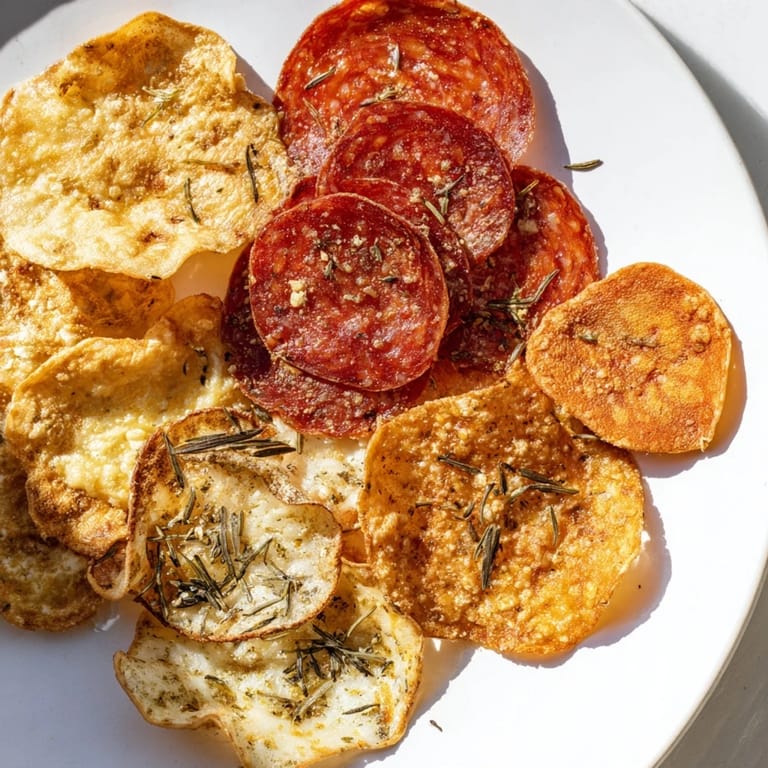
Save There's something deeply satisfying about turning ingredients you'd normally lay on a board into something entirely new and crispy. My kids, who usually ignore the charcuterie boards I set out, will actually ask for 'the chip version,' and that shift from ignored appetizer to requested snack is when I know a recipe is truly working.
The Magic of Thin Slicing
The difference between chips and chewy strips is all in the thickness—ask your deli counter to slice everything paper-thin, or invest in a mandoline if you make these regularly. I use the same approach for all my cured meats now because thin slicing reveals flavors that thicker cuts hide. The surface area matters; it's what creates that shattered, crispy texture instead of rubbery chew.
Choosing Your Meats and Cheeses
This is where you can get creative without the recipe falling apart. Avoid very soft cheeses like brie because they'll melt into puddles rather than crisps, and skip meats with heavy moisture—you want cured meats that are dry and stable. I've used spicy Italian meats, smoked turkey, and even duck prosciutto when I could find it, and each version tastes completely different. The mix of hard and semi-hard cheeses creates variety in texture and flavor on the same plate.
Storage and Serving Ideas
These are best eaten fresh, but they'll keep in an airtight container at room temperature for up to two days—just don't layer them with anything wet or they'll soften. I serve them alongside marcona almonds, olives, and sometimes a spread of good mustard because they're salty and savory enough to play well with other bold flavors. Try them with a light red wine, a dry white, or even with sparkling water and fresh lemon if you're looking for something non-alcoholic.
- Store in airtight containers away from humidity, which is their only real enemy.
- Experiment with smoked paprika dusted on the cheese before baking for a deeper flavor layer.
- Make a double batch if you're entertaining—they disappear faster than you'd expect.
 Save
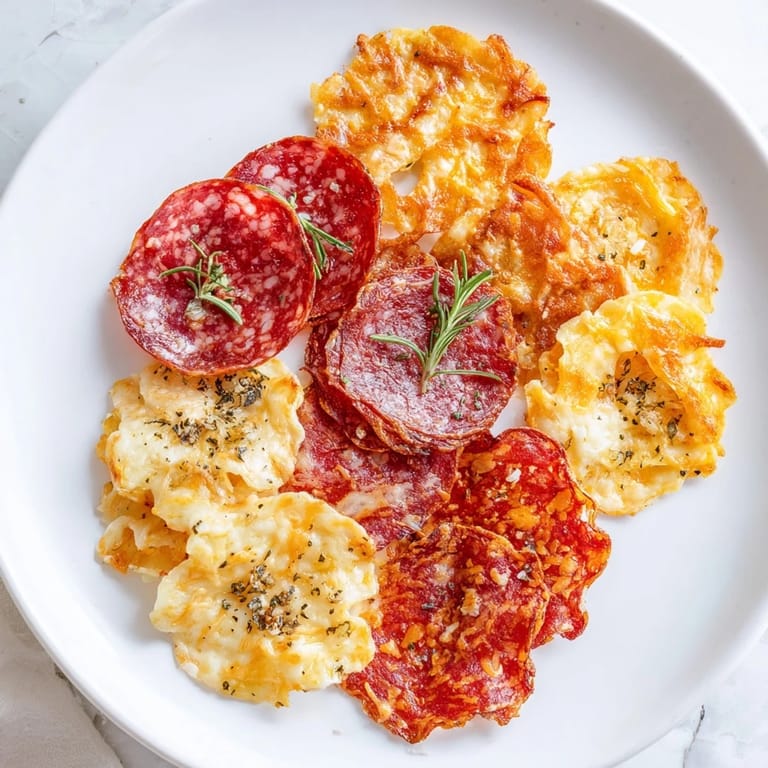
Save These chips prove that sometimes the best snacks come from curiosity and leftover ingredients. Make them once, and they'll become part of your repertoire for lazy weekends, small gatherings, and moments when you want something that tastes fancy but doesn't demand much effort.
Recipe FAQs
- → What types of meats work best for charcuterie chips?
Thinly sliced cured meats such as salami, prosciutto, and pepperoni are ideal as they crisp evenly when baked.
- → How can I ensure cheese chips don’t stick to the baking sheet?
Lining baking sheets with parchment paper and spacing slices apart helps prevent cheese from sticking during baking.
- → Can I add flavors to the chips before baking?
Yes, sprinkling fresh herbs like thyme or rosemary and cracked black pepper adds great flavor without overpowering the chips.
- → What is the best way to store leftovers?
Store cooled chips in an airtight container at room temperature for up to two days to maintain crispness.
- → Are charcuterie chips suitable for a low-carb diet?
Yes, these chips are a low-carb snack combining cured meats and cheeses, making them an excellent option for low-carb eating plans.