 Save
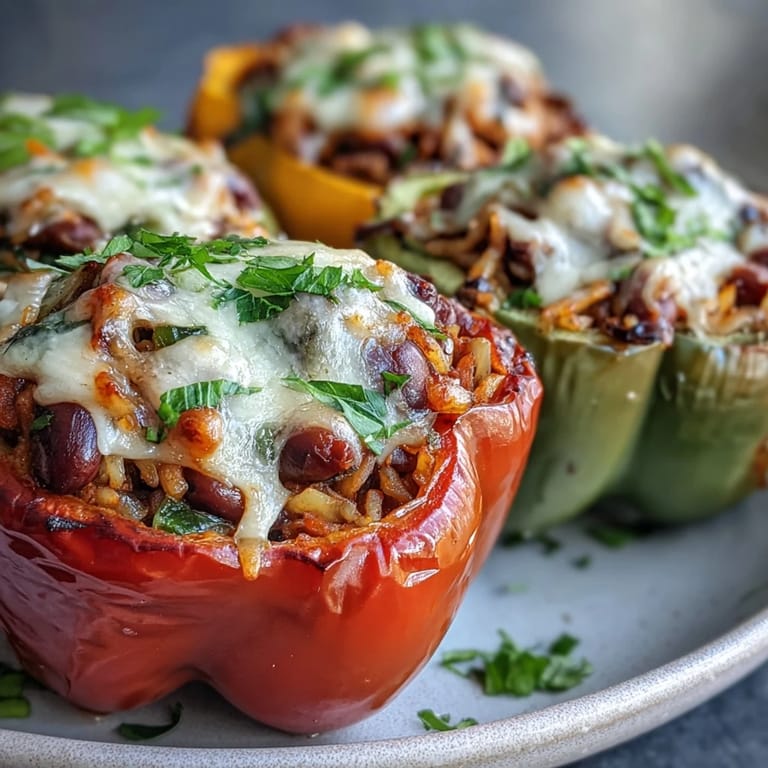
Save There's something about stuffed peppers that makes a kitchen feel purposeful. My neighbor handed me a bag of bell peppers from her garden one August afternoon, and I stood there holding them like I'd been given a small puzzle to solve. Black-eyed peas were already simmering on my stove from an earlier lunch, and suddenly I saw how they could become something entirely new—tender, spiced, nestled inside those glossy pepper shells. That evening, the smell of cumin and smoked paprika filled the house in a way that made people pause at the door and ask what I was making.
I made this for my sister during a surprise visit, and she ate two peppers straight from the baking dish while they were still steaming. She's not usually a vegetarian, but something about the combination—the way the rice soaked up all those spices, the way the pepper softened but held its shape—made her ask for the recipe before she'd even finished. That's when I knew this wasn't just a side dish; it was something that could stand confidently as the main event.
Ingredients
- Bell peppers (4 large, any color): Red and yellow ones tend to be slightly sweeter, while green has a grassy note—pick whichever speaks to you, or mix them for a beautiful presentation.
- Black-eyed peas (1 cup cooked): Canned works perfectly fine; just rinse them well to remove excess sodium and that metallic aftertaste.
- Long-grain rice (1 cup cooked): Cook it with a bit of salt and a bay leaf if you have time—it makes all the difference in the final flavor.
- Onion, garlic, carrot, and celery (finely diced): This aromatic base is your secret weapon; don't skip the mincing step, as it helps everything meld together.
- Smoked paprika and cumin (1 teaspoon each): These two are the backbone of the flavor; they turn simple vegetables into something that tastes like it's been simmering for hours.
- Olive oil (2 tablespoons): Use good olive oil here—it's not being cooked away, so you'll actually taste it in the filling.
- Vegetable broth (1 cup): This becomes a light steam that keeps the peppers moist and prevents them from shriveling.
- Cheese (1/2 cup shredded, optional): Cheddar gets sharp and complex as it bakes, while Monterey Jack melts into creamy pockets—or skip it entirely for a lighter version.
Tired of Takeout? 🥡
Get 10 meals you can make faster than delivery arrives. Seriously.
One email. No spam. Unsubscribe anytime.
Instructions
- Get your peppers ready:
- Slice the tops off your peppers and scoop out the seeds and white membranes—a small spoon works better than a knife for this. Stand them upright in your baking dish and give each one a light brush of olive oil inside and out; this helps them caramelize beautifully as they bake.
- Build the aromatic base:
- Heat your olive oil in a skillet over medium heat and add the onion, garlic, carrot, and celery. Let them soften for 5 to 6 minutes, stirring occasionally—you want them tender but not browned, and your kitchen will smell incredible.
- Marry the filling:
- Fold in your cooked black-eyed peas and rice, then add the smoked paprika, cumin, thyme, salt, pepper, and cayenne if you like heat. Stir for 2 to 3 minutes so the spices bloom and everything is coated evenly, then remove from heat and stir in fresh parsley.
- Fill and top:
- Taste the filling and adjust the seasoning—you might need a pinch more salt or a dash more cumin depending on your ingredients. Spoon the filling generously into each pepper, mounding it slightly at the top, and sprinkle with cheese if you're using it.
- Create steam and cover:
- Pour the vegetable broth into the bottom of the baking dish (not over the peppers), then cover tightly with foil. This traps moisture and ensures the peppers cook through gently.
- Bake low and slow:
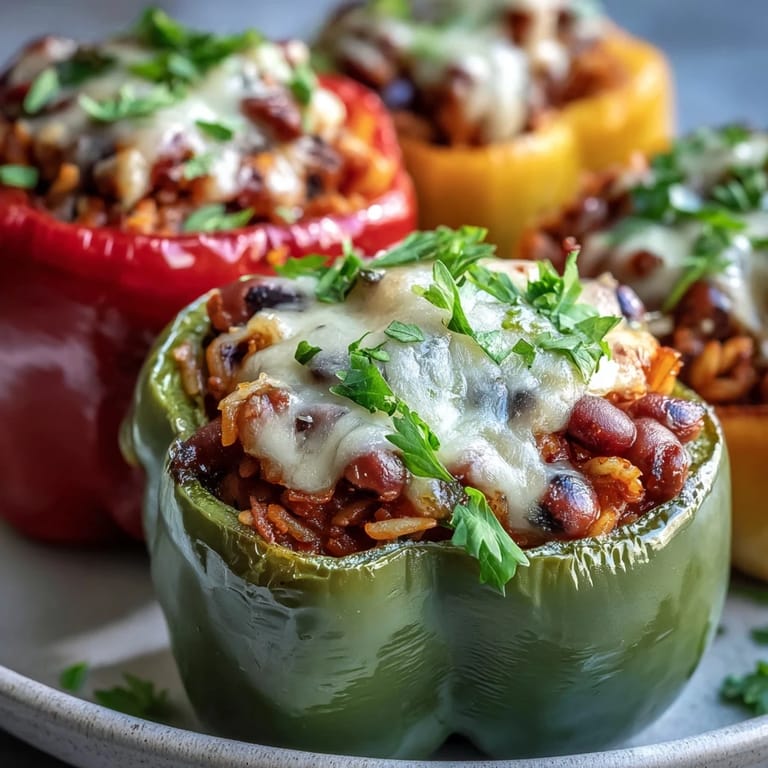
- Bake covered at 375°F for 30 minutes, then remove the foil and bake another 10 minutes so the tops turn golden and the cheese (if using) gets bubbly and slightly browned. Let them cool for a few minutes before serving so they're easier to handle.
 Save
Save My father sat at the dinner table and cut into his pepper with the back of his fork, which is how I knew it was tender enough. He asked if I'd added meat, because somehow the combination of earthy black-eyed peas, warm spices, and that sweet roasted pepper tasted substantial and nourishing in a way that surprised him. That's when I understood that vegetarian cooking isn't about what's missing; it's about what you've chosen to celebrate.
Variations and Swaps
The beauty of this dish is how adaptable it is depending on what's in your pantry or what you're craving. I've made it with brown rice instead of white (heartier texture), swapped the black-eyed peas for cannellini beans (creamier), and even added a cup of diced tomatoes to the filling for brightness. One winter, I stirred in some corn and a handful of spinach, and it felt like a completely different dish—but still undeniably delicious.
Storage and Reheating
These peppers keep beautifully in the refrigerator for up to 4 days, which means you can make them ahead and reheat gently. I've learned that covering them loosely with foil in a 350°F oven for about 15 minutes brings them back to life without drying them out, and they're almost better the next day when all the flavors have had time to settle and get to know each other.
Serving Suggestions and Pairings
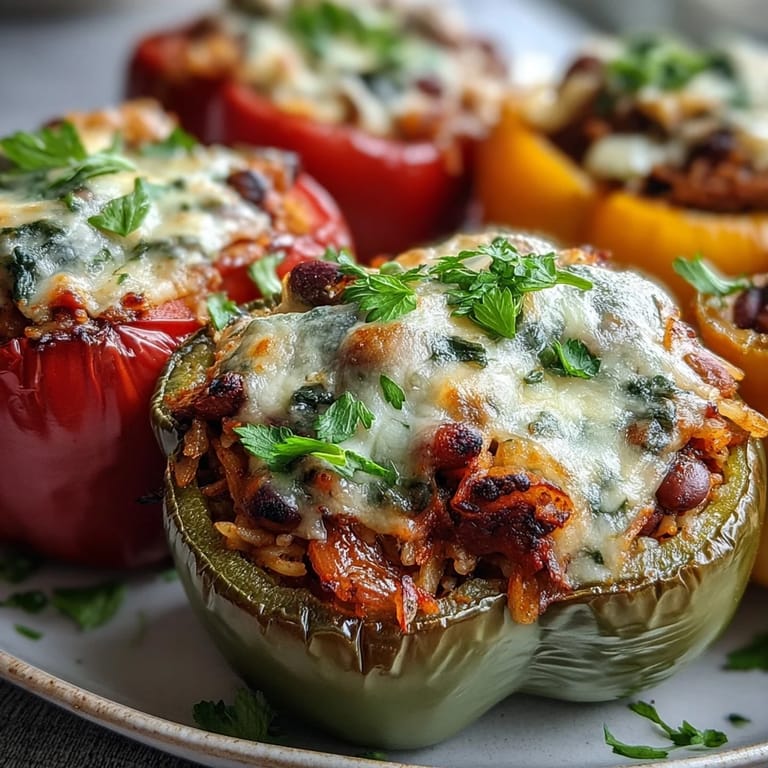
These peppers are wonderful on their own, but I love serving them alongside something that echoes or contrasts their warmth. A crisp green salad with a sharp vinaigrette cuts through the richness, crusty bread is perfect for soaking up any pan juices, and a simple tomato-based soup makes for a light, complete meal. On warmer nights, I've served them alongside chilled cucumber salad, and on cold evenings, a bowl of hearty cornbread on the side feels like coming home.
- If you're serving guests, arrange the peppers on a bed of fresh greens for color and elegance.
- Leftovers can be shredded and mixed into grain bowls or stuffed into wraps for lunch the next day.
- A dollop of sour cream or avocado on top adds creaminess and a subtle richness that rounds everything out beautifully.
 Save
Save There's a comfort in biting into a warm, tender pepper and knowing that everything inside was chosen with intention and care. This dish has become my go-to when I want to feed people something nourishing that doesn't feel like a compromise.
Recipe FAQs
- → Can I make these stuffed peppers ahead of time?
Yes, you can prepare the filling and hollow out the peppers up to 24 hours in advance. Store them separately in the refrigerator. When ready to bake, fill the peppers and proceed with the baking instructions, adding 5-10 minutes if baking cold from the refrigerator.
- → What can I use instead of black-eyed peas?
Black beans, kidney beans, or pinto beans work well as substitutes. Lentils also make a great alternative, though they'll create a slightly different texture. Adjust cooking time as needed since different legumes may require varying moisture levels.
- → How do I know when the peppers are done?
The peppers are ready when they're tender when pierced with a fork, the filling is hot throughout, and any cheese on top is melted and golden. This typically takes 40 minutes total—30 minutes covered and 10 minutes uncovered.
- → Can I freeze these stuffed peppers?
Absolutely. Bake the peppers completely, let them cool, then wrap individually or place in an airtight container. Freeze for up to 3 months. Reheat in a 350°F oven for 20-25 minutes until heated through.
- → What's the purpose of adding broth to the baking dish?
The vegetable broth creates steam in the covered baking dish, which helps cook the peppers evenly and prevents them from drying out. This technique ensures tender peppers while allowing the flavors to meld together beautifully.
- → Are these stuffed peppers spicy?
These have mild heat from the cayenne pepper, which is optional. Without it, the dish is gently seasoned with aromatic spices. Adjust the cayenne or add hot sauce to the filling if you prefer more spice.