 Save
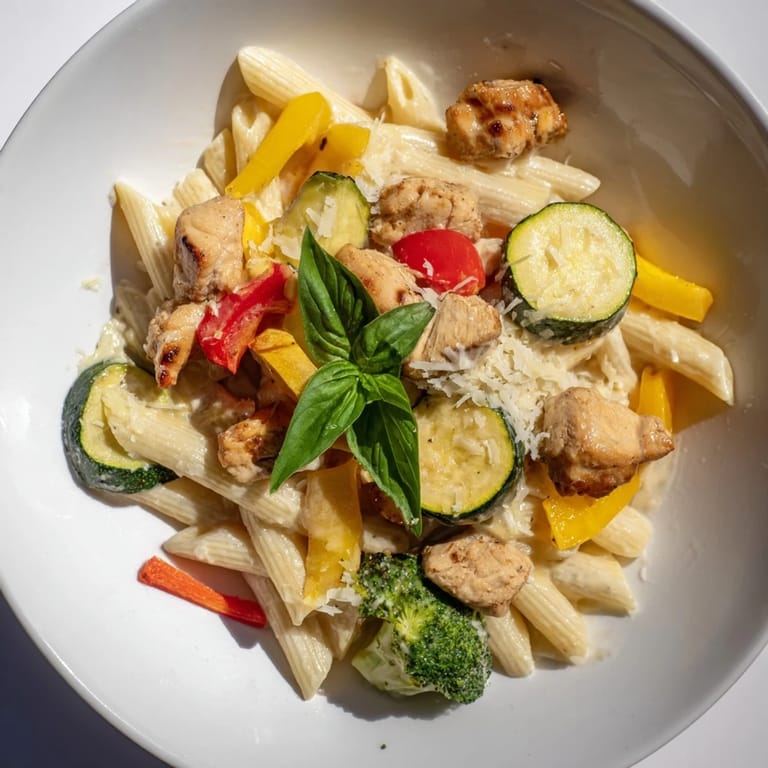
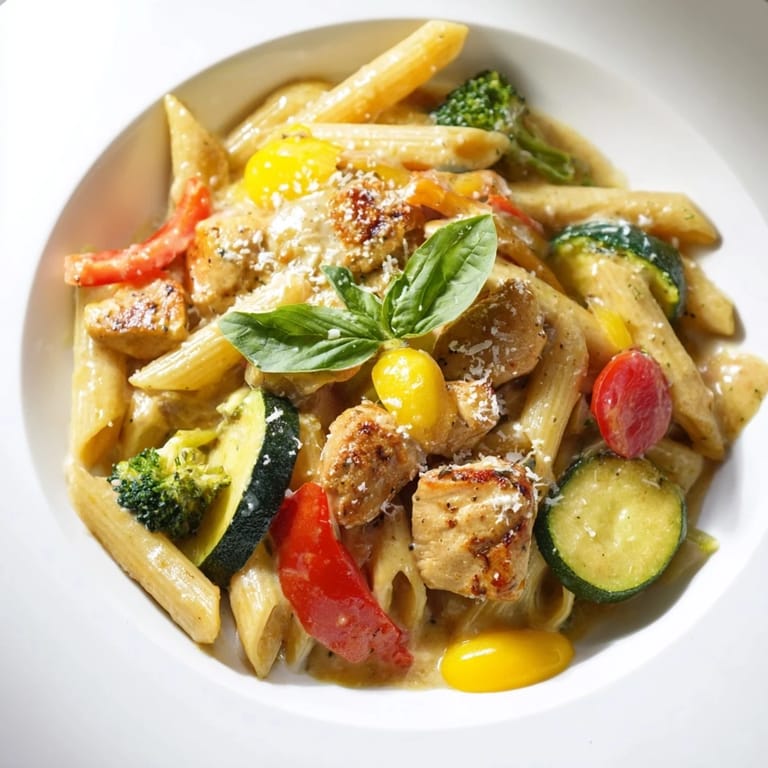
Save There's something about a half-empty vegetable drawer that forces you to be creative. One Wednesday evening, staring at five different veggies that needed using before the weekend, I grabbed pasta and chicken and decided to throw them all together. What emerged was bright, balanced, and done in under forty minutes—no fussy techniques, no pretension, just honest food that tasted like abundance on a plate.
I made this for my sister's surprise visit, and she asked for the recipe before finishing her plate. That's when I realized it wasn't the fancy technique or rare ingredients—it was the simplicity of good vegetables cooked just right, tossed with cream and warmth. She's made it seventeen times since.
Ingredients
- Chicken breasts: Cut into bite-sized pieces so they cook quickly and disappear into every forkful.
- Red bell pepper: Adds sweetness and a visual pop that makes the dish feel intentional.
- Zucchini and yellow squash: They soften beautifully and absorb the cream without becoming mushy if you time it right.
- Cherry tomatoes: Split them in half so they release their juice into the sauce at the last moment.
- Broccoli florets: The sturdy one of the bunch—stays textured and gives you something substantial to bite into.
- Penne or farfalle: Shapes that catch sauce; cook to that exact moment when it's tender but still has backbone.
- Heavy cream: Just a quarter cup binds everything without making it heavy or thick.
- Parmesan cheese: Freshly grated melts into the warmth and adds salty depth you can't replicate from the shaker.
- Garlic, olive oil, and Italian herbs: The aromatic foundation that makes your kitchen smell like someone who knows what they're doing.
Tired of Takeout? 🥡
Get 10 meals you can make faster than delivery arrives. Seriously.
One email. No spam. Unsubscribe anytime.
Instructions
- Start the water and pasta:
- Get a big pot of salted water boiling while you prep everything else. This is when the kitchen starts to feel alive. Cook pasta to al dente—you want resistance when you bite, not softness.
- Sear the chicken:
- Heat olive oil in your skillet until it shimmers, then add chicken pieces in a single layer. Let them sit undisturbed for two minutes so they develop a golden crust, then stir. They'll finish in five or six minutes total.
- Build the flavor base:
- Once chicken is done, a quick 30 seconds of garlic in the same oil fills your kitchen with reason to keep cooking.
- Cook the vegetables:
- Add the bell pepper, zucchini, and squash first since they need a minute longer than the softer ones. After four minutes, they should still have some snap. Listen for the sizzle to tell you things are on track.
- Bring it together:
- Toss in the cherry tomatoes and cooked chicken, let everything warm through for two minutes, then lower the heat. Add pasta, cream, cheese, and herbs, stirring constantly so the cheese doesn't clump. If it seems dry, add pasta water a little at a time until it flows like silk.
- Finish and serve:
- Taste and adjust seasoning. Plate immediately so the vegetables stay vibrant and the sauce stays coating rather than pooling.
 Save
Save There was a moment during a Sunday dinner when someone said this tasted like a restaurant dish, and another guest laughed and said no restaurants do simple right anymore. That's when I understood this recipe isn't about impressing anyone—it's about feeding them something that makes them slow down.
The Five-Vegetable Rule
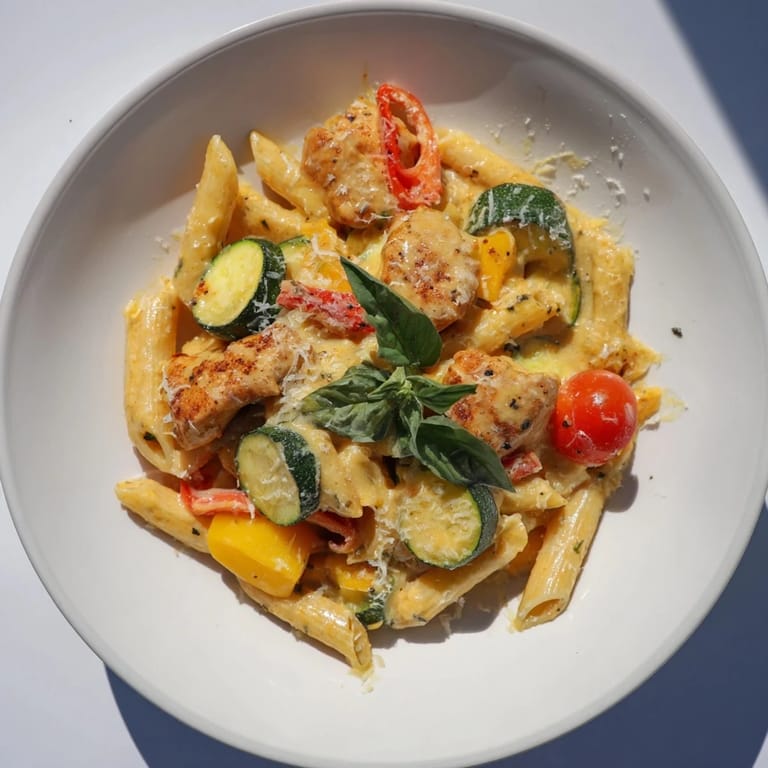
The genius of this dish is the constraint. Five vegetables sounds like a lot until you're at the market and realize you can build this around whatever looks good that week. Soft tomatoes, crisp peppers, tender squash—they all play together because they're cooked with intention, not thrown in at random. I've substituted snap peas, asparagus, green beans, and mushrooms with the same easy confidence.
Why Cream Instead of Oil
A quarter cup of heavy cream does something magic here that olive oil alone never could—it unites the vegetables and pasta into something cohesive without feeling heavy. The cream doesn't dominate; it whispers. If you wanted to skip it, a half cup of reserved pasta water with a tablespoon of butter would work in a pinch, though the texture shifts from silky to glossy.
Timing and Temperature
The entire dish comes together in one skillet in under twenty minutes once pasta water is boiling. Medium-high heat for searing, medium for the vegetables, medium-low for the finale—it's a gentle dance that prevents any one element from overcooking while everything else catches up. Serve immediately, because pasta waits for no one and vegetables lose their snap once they cool.
- Keep the lid off the pasta pot so it boils aggressively and cooks evenly.
- If vegetables are releasing too much liquid, let them sit uncovered for thirty seconds to evaporate moisture.
- Taste three times during cooking—at the end of vegetables, after adding cream, and before plating.
 Save
Save This dish has become the one I turn to when I want something wholesome without the performance. It's proof that the best meals aren't complicated—they're just made with attention.
Recipe FAQs
- → Can I use a different protein besides chicken?
Yes, tofu or chickpeas make excellent vegetarian alternatives, providing texture and protein without compromising flavor.
- → What type of pasta works best here?
Penne or farfalle hold the sauce well, but whole wheat pasta is a great choice for added fiber and a nuttier taste.
- → How do I make the sauce creamy without it being heavy?
Adding reserved pasta water gently loosens the cream and Parmesan mixture, creating a light, silky sauce that coats the pasta evenly.
- → What herbs complement this dish?
Dried Italian herbs blend seamlessly, but fresh basil leaves added at the end add a refreshing brightness.
- → Can this dish be prepared ahead of time?
It’s best served fresh to preserve the textures of sautéed vegetables and tender chicken, though leftovers can be reheated gently.