 Save
Save The first time I made zaatar focaccia, I'd just returned from a market in Istanbul where a vendor pressed a small bag of the spice blend into my hands—insisting it was the only zaatar worth buying. I was skeptical, but once I got home and whispered that earthy, herbaceous mix into warm olive oil, I understood. Now, whenever I stretch dough across a baking sheet and dimple it with my fingertips, I'm transported back to that moment of discovery, the kitchen filling with the same intoxicating aroma that made me fall in love with this bread.
My neighbor once caught the smell of this baking and appeared at my door mid-rise, flour somehow already on her apron. We ended up making two batches together that afternoon—one studded with sun-dried tomatoes because she insisted on improvising. The moment we pulled them from the oven and the kitchen went silent except for the sound of a knife cutting through that golden crust, I knew this was the kind of recipe that brings people together.
Ingredients
- Bread flour (500 g): Use a high-protein flour—it gives the focaccia structure and chew without being heavy.
- Active dry yeast (7 g): Make sure it's fresh and store it in the fridge; old yeast won't rise properly and you'll end up with a dense loaf.
- Fine sea salt (1½ tsp for dough): Don't skip or double this—it seasons the dough itself, not just the surface.
- Warm water (325 ml): Too hot and you'll kill the yeast; too cold and it won't activate. Aim for around 40°C—it should feel comfortably warm to your wrist.
- Extra virgin olive oil (60 ml for dough, 2 tbsp for topping): This is where quality matters; good oil makes a difference you can taste and smell.
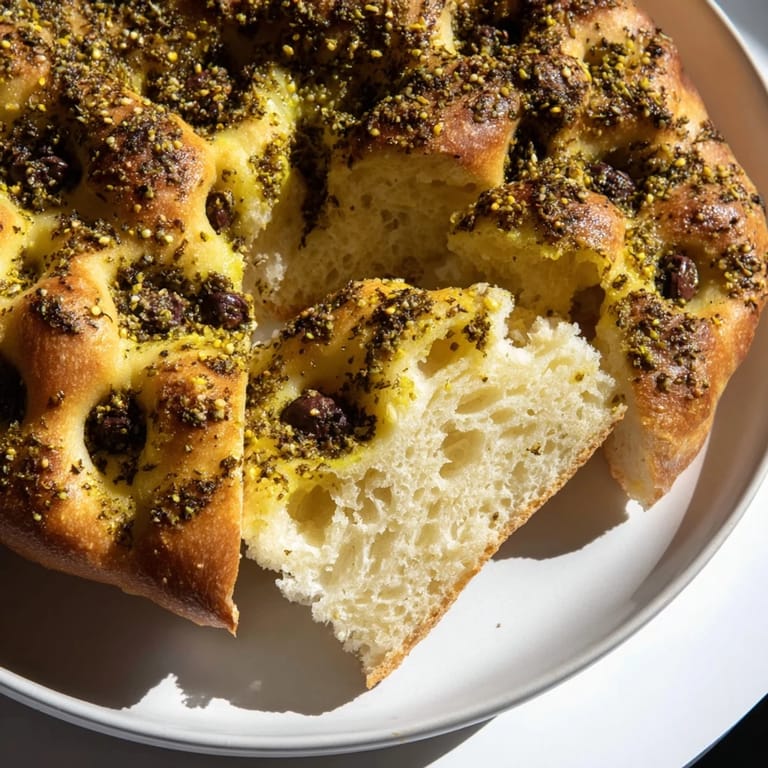
- Zaatar spice blend (2 tbsp): This is the star—a mix of sumac, thyme, sesame, and salt that tastes herbaceous and slightly tangy.
- Kalamata olives (100 g): Halve them so they distribute evenly and release their briny flavor throughout.
- Flaky sea salt (1 tsp): Sprinkle this at the very end for a finishing touch of crunch and visual appeal.
Tired of Takeout? 🥡
Get 10 meals you can make faster than delivery arrives. Seriously.
One email. No spam. Unsubscribe anytime.
Instructions
- Wake the yeast:
- Dissolve the yeast in warm water and let it sit for 5 minutes—you'll see it foam up, which means it's alive and ready to work. If it doesn't foam, your yeast is dead and you'll need to start over.
- Build the dough:
- Combine flour and fine sea salt in a large bowl, then add the yeast mixture and olive oil. Mix until everything comes together into a shaggy, rough dough—don't worry if it looks messy.
- Knead until silky:
- Knead for 8–10 minutes by hand or machine until the dough becomes smooth, elastic, and springs back when you poke it. You'll feel the transformation under your hands as the gluten develops.
- First rise—the patient part:
- Oil a bowl, nestle the dough inside, cover it with a damp towel or plastic wrap, and let it sit somewhere warm for about 1 hour. It should roughly double in size—this is when the flavor develops.
- Shape and second rise:
- Oil a large baking sheet, punch down the dough (this is satisfying, trust me), and press it evenly into the pan. Cover and let it rise again for 30 minutes until it's puffy and ready.
- Create the dimples:
- Using your fingertips, press deep little indentations all over the surface—these create pockets for the toppings and give focaccia its signature texture. Don't be shy; push down firmly.
- Dress it up:
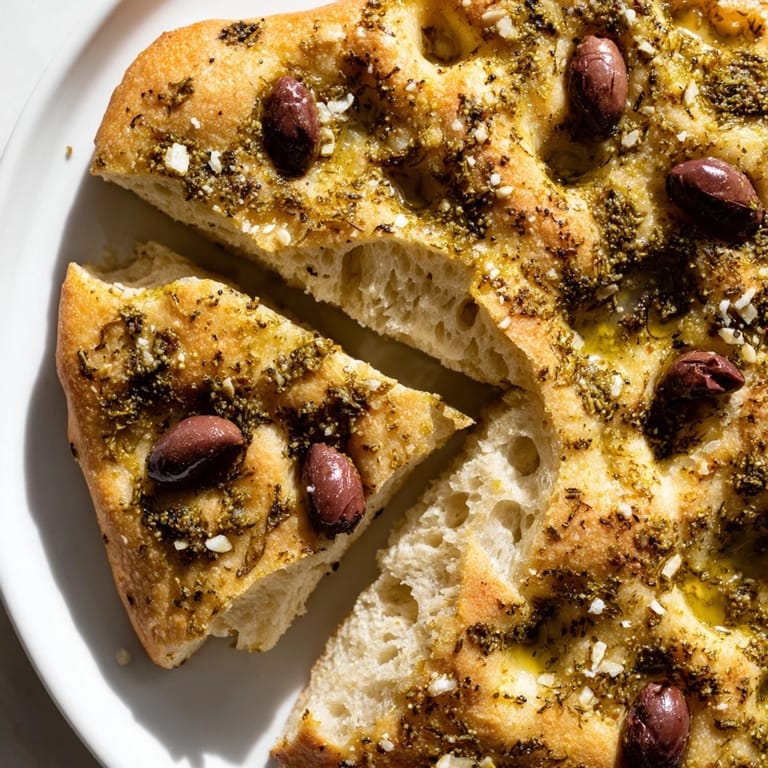
- Drizzle generously with olive oil, scatter zaatar evenly, distribute olive halves, and finish with flaky sea salt. The oil is crucial—it helps everything crisp up and turn golden.
- Bake until golden:
- Bake at 220°C for 20–25 minutes until the top is deep golden brown and the edges are crisp. The kitchen will smell incredible—that's your signal to check it.
- Cool and serve:
- Let it cool for a few minutes so it firms up enough to slice cleanly, then cut and serve warm or at room temperature. Leftovers can be gently reheated.
 Save
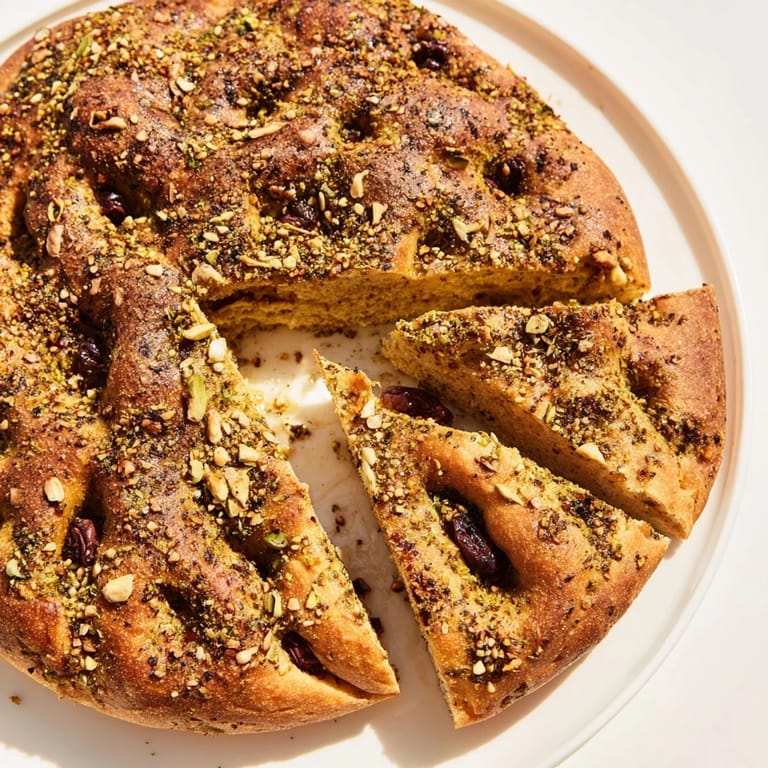
Save There's a moment after I pull focaccia from the oven when I just stand there watching the steam rise off the surface, the herbs releasing one last fragrant sigh. That's when I know it's more than bread—it's proof that simple ingredients, patience, and a little care can create something that feels both homey and elegant.
The Magic of Zaatar
Zaatar is one of those spice blends that seems humble until you taste it properly applied—then it becomes unforgettable. The sumac brings a citrusy tartness, the thyme adds an earthy warmth, and sesame seeds give a subtle nuttiness and crunch. When combined with the richness of olive oil and bread, it transforms something Italian into something Mediterranean in the broadest, most delicious sense. The beauty is that it doesn't overpower; it whispers.
Why This Bread Works
Focaccia is forgiving in a way that makes it perfect for home bakers building confidence. The oil in the dough keeps it tender, the two-rise process develops flavor without requiring a complicated schedule, and the toppings give you room to play. I've made this with additions—sun-dried tomatoes, roasted red peppers, even fresh rosemary—and it adapts beautifully every time. The structure is sound enough to support your creativity.
Serving and Storage Wisdom
Focaccia is best the day it's made, when the crust is still crisp and the crumb is at its most tender. But it keeps surprisingly well—wrap cooled slices in paper, store at room temperature, and gently warm them in a 180°C oven for a few minutes before serving to restore some of that just-baked quality. It pairs beautifully with hummus, labneh, or simply a pool of good olive oil for dipping.
- For a lighter flavor, substitute green olives for some of the Kalamata ones.
- Don't skip toasting the focaccia lightly after it cools if you want to revive it the next day.
- Make two batches at once—the second rise happens while the first bakes, and you'll have extra to share.
 Save
Save This focaccia has become my go-to when I want to feed people something that tastes thoughtful but doesn't demand hours of work. It's the kind of bread that makes a kitchen smell like home.
Recipe FAQs
- → What is the role of zaatar in this bread?
Zaatar adds a warm, herbaceous, and slightly tangy flavor that complements the richness of olive oil and the saltiness of Kalamata olives.
- → How long should the dough rise?
The dough rests for about 1 hour initially, then after shaping, it rises another 30 minutes for optimal texture and flavor.
- → Can I substitute Kalamata olives with other olives?
Yes, green olives can be used for a milder taste, but Kalamata olives provide a distinct briny depth ideal for this focaccia.
- → What temperature is recommended for baking?
The focaccia should be baked at 220°C (425°F) until golden and crisp, usually about 20 to 25 minutes.
- → How can I incorporate more flavor variations?
Adding sun-dried tomatoes or roasted garlic to the topping introduces richer, savory notes to the bread.
- → Is this bread suitable for vegan diets?
Yes, this focaccia contains no animal products, making it suitable for vegan diets.