 Save
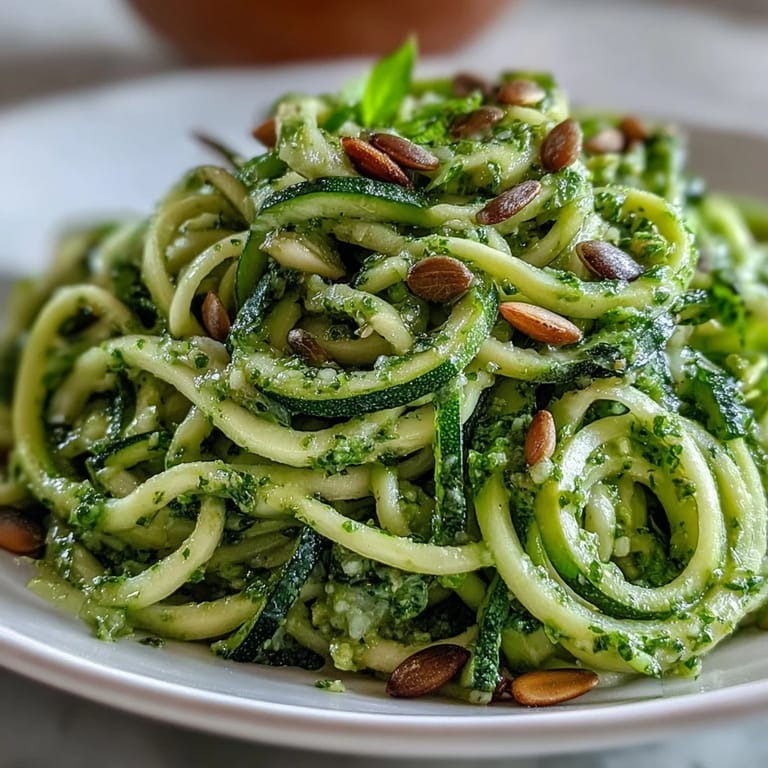
Save I discovered pumpkin seed pesto completely by accident on a late summer afternoon when my basil plant was threatening to take over the entire kitchen counter. Instead of making the same old sauce, I reached for a bag of pepitas I'd been saving and thought, why not? The first bite convinced me instantly—something about the earthiness of the seeds mixed with that bright basil and lemon felt like falling in love with green sauce all over again, except this version happened to be entirely plant-based.
My partner took one bite and asked if I'd made this before, which I hadn't, and then asked if I could make it every week, which I absolutely could. There's something about serving someone noodles that taste this good and knowing they're packed with nutrients and seeds and genuine flavor that makes cooking feel less like a chore and more like a small act of care.
Ingredients
- Raw pumpkin seeds (pepitas): These are the secret foundation—they bring a subtle earthiness and natural creaminess that somehow replaces the role traditionally played by parmesan or pine nuts.
- Fresh basil leaves: Pack them in loosely and don't overthink the measurement; this is where the vibrancy lives, so use the most fragrant basil you can find.
- Garlic: Two cloves is my baseline, but taste as you go because garlic strength varies wildly depending on how it's been stored.
- Extra-virgin olive oil: This deserves to be the good stuff you actually enjoy the taste of, since it's a lead flavor here.
- Lemon juice: Fresh is non-negotiable; the acidity is what makes everything sing instead of sit flat.
- Nutritional yeast: This is the umami layer, the reason the pesto feels complete without any animal products whatsoever.
- Sea salt and black pepper: Season in stages rather than all at once, building layers of flavor.
- Water: Start with less and add gradually to control the exact texture you want.
- Zucchini: Medium-sized ones spiralize better than enormous ones, which tend to be watery and woody in the middle.
- Cherry tomatoes and fresh basil for garnish: These final touches matter more than you'd think—they add color, freshness, and remind your palate why you bothered making this in the first place.
Tired of Takeout? 🥡
Get 10 meals you can make faster than delivery arrives. Seriously.
One email. No spam. Unsubscribe anytime.
Instructions
- Make the Pesto:
- Pulse the pumpkin seeds, basil, garlic, olive oil, lemon juice, nutritional yeast, salt, and pepper together until you reach a thick, coarse consistency—you want texture here, not a smooth paste. Add water one tablespoon at a time and taste between additions so you hit that sweet spot where it's creamy but still has personality.
- Spiralize Your Zucchini:
- Run each zucchini through your spiralizer or use a julienne peeler for longer noodles; the motion is almost meditative, and it only takes a few minutes. If you end up with longer strands, you can give them a quick chop so they're actually fork-friendly.
- Prepare the Noodles Raw or Warm:
- For raw noodles, pat them thoroughly dry with paper towels to prevent a watery plate, then transfer to your serving bowl. If you prefer them warm, heat a tablespoon of olive oil in a large skillet over medium heat, add the noodles, and sauté gently for just two to three minutes until they're barely softened.
- Combine and Serve:
- Toss the zucchini noodles with your pesto until each strand is coated, then taste and adjust seasoning if needed. Plate immediately, garnish with halved cherry tomatoes and fresh basil, and eat while the flavors are still bright.
 Save
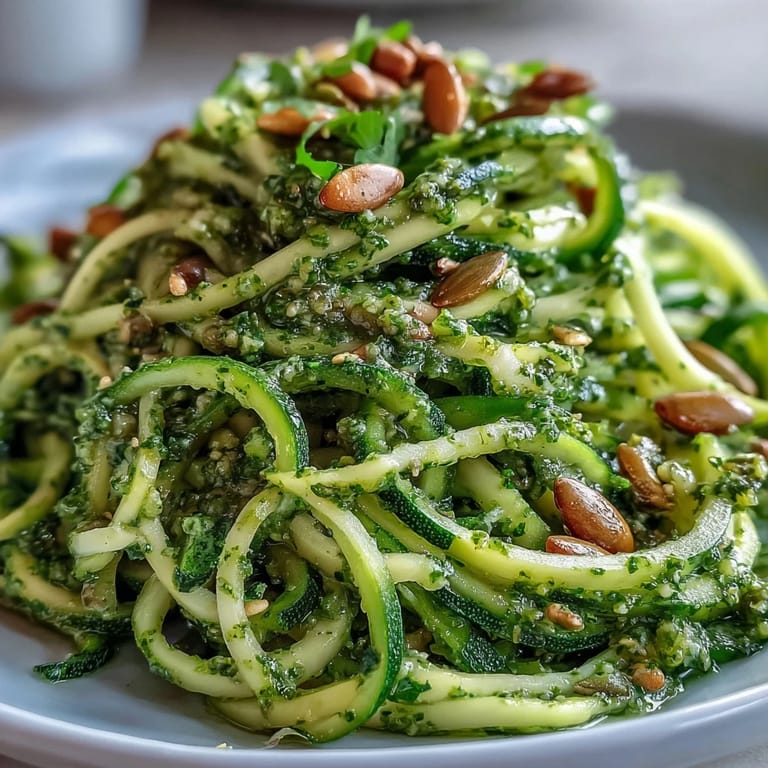
Save What started as an accident became one of those meals I make when I want something that feels special without feeling fussy. It's the kind of dish that reminds you why eating plants can be genuinely exciting rather than a compromise you're settling for.
Why This Works So Well
The magic lives in the combination of textures and flavors colliding on your fork at the same time. You've got the slight chew of spiralized zucchini, the crunch of pumpkin seeds, the brightness of lemon and basil, and then underneath it all, that creamy umami depth from the nutritional yeast. It's a complete experience, which is why a bowl of this feels more satisfying than you'd expect from something so light.
Customization Ideas That Actually Work
This recipe practically invites you to riff on it, and some of my best versions have come from whatever I had on hand that particular evening. A handful of cooked chickpeas transforms it into a protein-forward meal; a few slices of avocado stirred directly into the pesto adds silk and richness; a scatter of toasted pine nuts or walnuts adds another layer of crunch. The base is confident enough to handle your creativity.
Storing and Scaling
The pesto keeps in an airtight container in the refrigerator for about three days, and honestly, it's so good you might find yourself eating it straight from the jar with a spoon when nobody's looking. The recipe doubles easily if you're feeding more people, though I've found that making it fresh each time tastes so much better than trying to plan ahead.
- Keep the pesto and noodles separate until the very last moment if you're not eating immediately.
- Fresh lemon juice makes an enormous difference, so squeeze it yourself rather than reaching for the bottled version.
- Taste everything before serving and trust your own palate over any measurement.
 Save
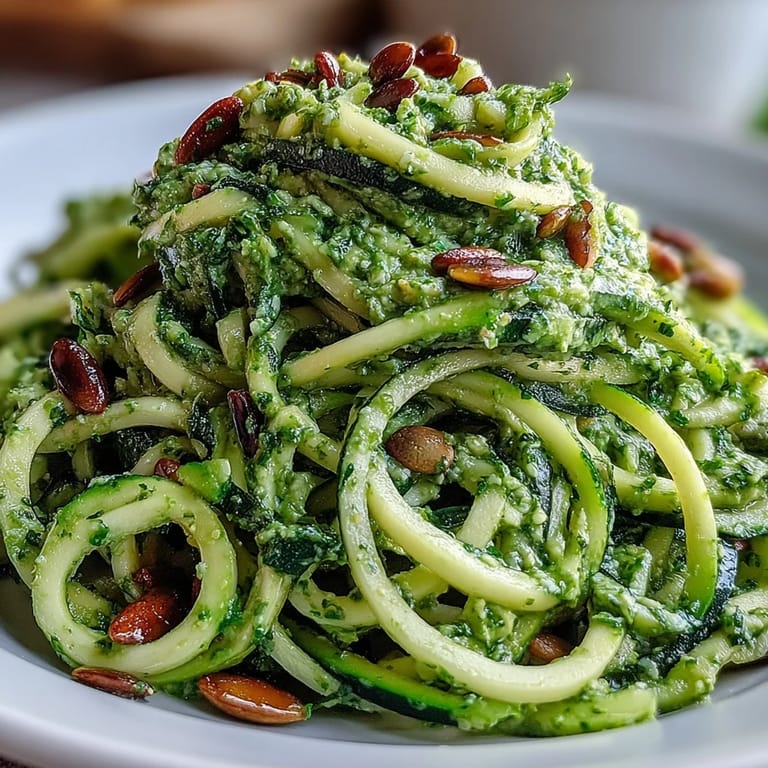
Save This dish proved to me that plant-based cooking doesn't mean sacrificing satisfaction or flavor, and honestly, that's been a game-changer in how I approach feeding myself. Make it once and I think you'll understand exactly why it's become one of my most-repeated meals.
Recipe FAQs
- → Can I make the pesto ahead of time?
Yes, prepare the pesto up to 5 days in advance and store it in an airtight container in the refrigerator. The flavors actually develop and intensify over time. Bring to room temperature before tossing with zucchini noodles for the best texture and flavor distribution.
- → How do I prevent zucchini noodles from becoming watery?
After spiralizing, pat the zucchini noodles thoroughly with paper towels to remove excess moisture. For even better results, lightly salt the noodles and let them sit in a colander for 10-15 minutes, then pat dry again before tossing with pesto.
- → What can I substitute for pumpkin seeds?
Sunflower seeds, walnuts, cashews, or almonds work beautifully as alternatives. Each brings a slightly different flavor profile—walnuts offer earthiness while cashews provide extra creaminess. Use the same quantity called for in the original recipe.
- → Is this dish served raw or cooked?
Both methods work wonderfully. Raw zucchini noodles retain a fresh crunch and vibrant color, perfect for warm weather. Lightly sautéing for 2-3 minutes softens the texture while maintaining structure, making it comforting year-round. Choose based on preference and season.
- → How can I add more protein to this dish?
Incorporate cooked chickpeas, white beans, or lentils directly into the noodles. Crispy roasted chickpeas on top add satisfying crunch. Hemp seeds or additional pumpkin seeds as garnish also boost protein content while complementing the pesto flavors.
- → Can I freeze the pesto?
Absolutely. Portion the pesto into ice cube trays or small containers and freeze for up to 3 months. Thaw overnight in the refrigerator when ready to use. The texture may appear slightly separated after freezing but will emulsify again when stirred or blended briefly.