 Save
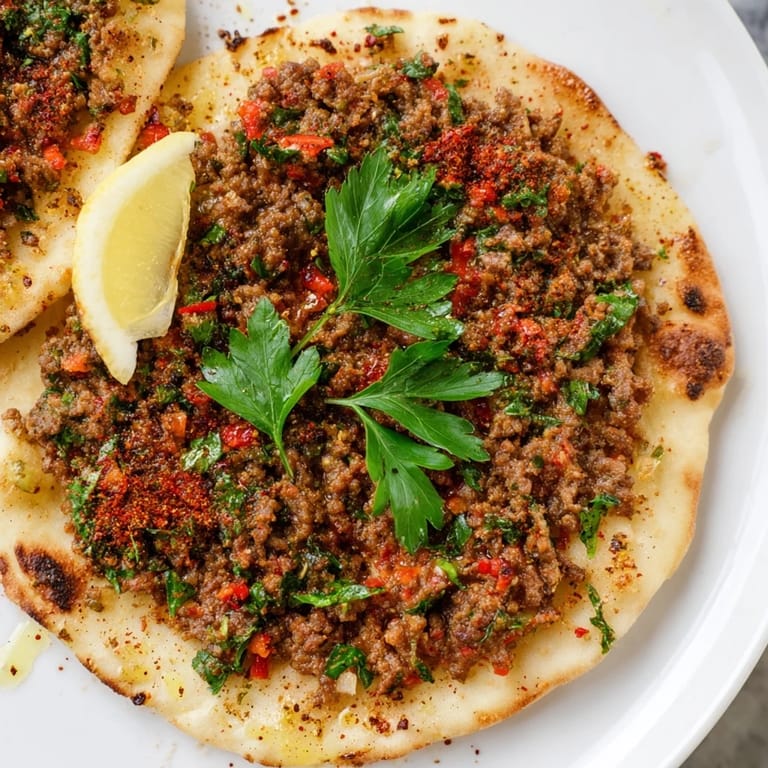
Save My first lahmacun arrived on a makeshift wooden board at a tiny Istanbul stall, still steaming from a brick oven that had been working since dawn. The cook stretched the dough so thin I could almost see through it, topped it with this fragrant meat mixture, and slid it in for what felt like seconds. When it emerged, the edges were blistered and crackling, the meat seasoned so perfectly it made me stop thinking about the heat and just eat. Since then, I've chased that exact moment every time I make it at home—that balance of paper-thin crust and deeply flavored topping that tastes simple but never is.
A friend once asked me why I bothered making lahmacun when we could just order pizza, and I invited her into the kitchen instead of answering. We stood together while the oven preheated, and she rolled the dough—too thick at first, then too thin, laughing at herself—while I browned the meat topping. When those first ones came out of the oven, golden and crispy at the edges, she squeezed lemon over hers and took a bite, and her whole expression changed. She understood then that it wasn't about being better than takeout; it was about making something with your hands that you couldn't get any other way.
Ingredients
- All-purpose flour (300 g): The foundation of a tender yet sturdy dough; I've learned that the quality matters less than keeping your touch light during kneading.
- Warm water (180 ml): Should feel like a comfortable bath temperature—too hot kills the yeast, too cool and nothing happens.
- Instant yeast (1 tsp): One of those moments where measuring matters; I've made this with expired yeast and watched it fail to rise, so check the date.
- Olive oil (2 tbsp for dough, 2 tbsp for topping): Turkish cooks know that oil makes dough easier to stretch and topping richer, so don't skip it.
- Ground lamb or beef (300 g): Lamb tastes more authentically traditional, but beef works and sometimes I use a mixture when that's what I have.
- Onion, garlic, tomato, red bell pepper (finely chopped): The aromatics are what make this special; take time with the knife, as uniform pieces cook evenly.
- Tomato paste (2 tbsp): Concentrate matters—it deepens the flavor in a way nothing else can, but a little goes a long way.
- Fresh parsley (2 tbsp): Add it to the raw topping, and save some for garnish after baking when it's bright green and fresh.
- Cumin, paprika, black pepper, chili flakes (1 tsp, 1 tsp, 1/2 tsp, 1/2 tsp): These spices are the soul of the dish; I always taste the raw topping on a tiny piece of bread before committing it to the oven.
Tired of Takeout? 🥡
Get 10 meals you can make faster than delivery arrives. Seriously.
One email. No spam. Unsubscribe anytime.
Instructions
- Mix the dough:
- Combine flour, sugar, and salt in a bowl, then dissolve yeast in warm water and pour it in along with olive oil. The mixture will look shaggy at first, but as you mix it becomes cohesive and alive-feeling in your hands.
- Knead until smooth:
- Work the dough for 5 to 7 minutes—you're not trying to tire yourself out, just developing enough gluten that it stretches without immediately tearing. It should feel smooth and slightly tacky, not dry.
- Let it rise:
- Cover the bowl and find a warm corner of your kitchen; in 30 minutes or so, the dough will roughly double, and you'll notice it's become more elastic and forgiving.
- Build the meat topping:
- Mix all the chopped vegetables with ground meat, tomato paste, herbs, and spices in one bowl, working it together with your hands until everything is evenly distributed. This is also your moment to taste it and adjust seasoning before it goes in the oven.
- Heat the oven aggressively:
- Turn it to 250°C (480°F) or whatever your oven's highest setting is, and place a pizza stone or baking tray inside so it gets screaming hot. This is what creates those crispy, blistered edges you're after.
- Shape and top:
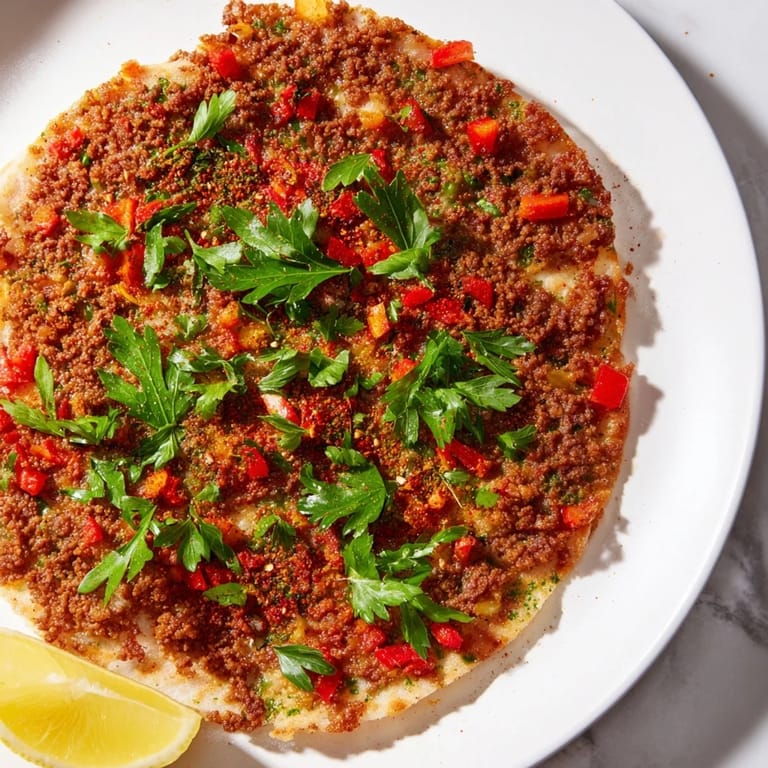
- Divide the dough into 8 balls, then flatten and stretch each one into a thin oval about 20 cm across—it doesn't need to be perfectly round, and thin is the goal so the edges get crispy. Spread a thin, even layer of meat mixture across the top, leaving a tiny border.
- Bake quickly:
- Working carefully with the hot stone or tray, slide the lahmacun in and bake for 6 to 8 minutes until the crust is golden and the meat is no longer raw-looking. The edges should be crispy and slightly charred, which is exactly right.
- Finish and serve:
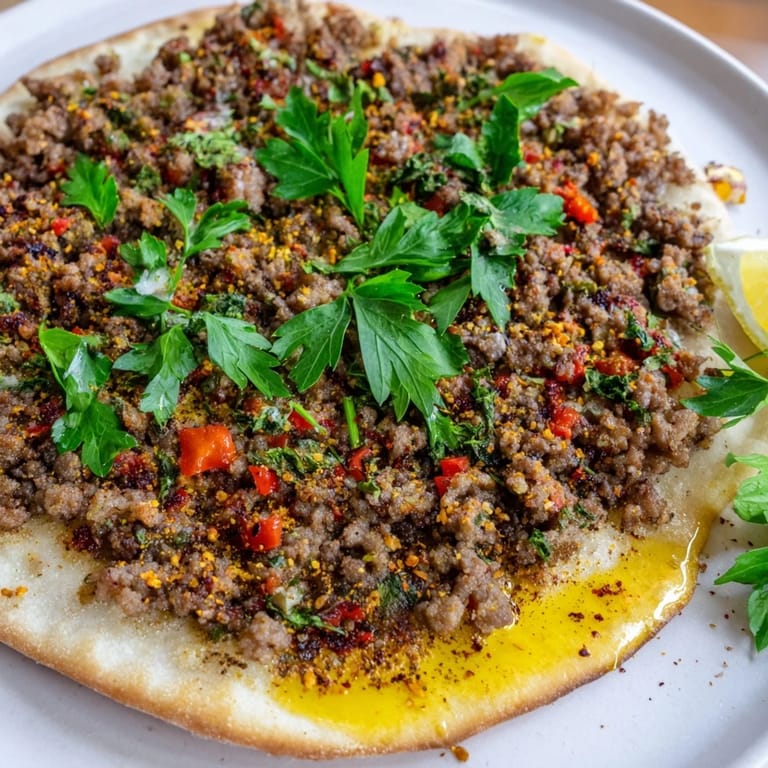
- Pull them from the oven, scatter fresh parsley over the top, and serve immediately with lemon wedges on the side. The moment they come out is when they're best—hot, crispy, and still smelling like the spices.
 Save
Save There's a particular satisfaction in pulling a lahmacun from a home oven and having it actually taste like the ones you remember traveling for, maybe even better because you made it yourself. That feeling—when something foreign becomes familiar in your own kitchen—is why I keep coming back to this recipe.
On Rolling and Stretching
The hardest part of making lahmacun isn't the topping or the oven time; it's learning to stretch dough thin without panicking that you'll tear it. I used to overwork it, getting frustrated, but then I realized the dough actually wants to cooperate if you let it rest between stretches. Roll it out as far as it goes easily, let it sit for a minute while you wash your hands or check the oven, then come back and stretch it again—it relaxes and becomes more forgiving. This small rhythm changed everything about how I approach the dough, and now it feels less like wrestling and more like conversation.
Flavor Layers and Seasoning
What makes an ordinary meat topping become something memorable is building flavor in layers rather than dumping everything in at once. The onion and garlic sauté slightly as you mix them, tomato paste adds umami depth, fresh herbs keep it bright, and the spices tie everything together into something that tastes both complex and perfectly balanced. I learned this by tasting raw topping on a crumb of bread before committing it to the oven—a habit that transformed my understanding of seasoning. Now, when friends ask what makes my lahmacun different, it's usually because I've spent an extra minute getting the topping right, not anything fancy about technique.
Serving and Variations
Lahmacun reaches its peak the moment it comes out of the oven, but it's also forgiving enough to enjoy warm or even at room temperature, rolled up with fresh herbs and maybe some sliced cucumber or tomato. In Turkey, they serve it with ayran, a salty yogurt drink that cuts through the richness, but I've also paired it successfully with simple salads, red wine, or eaten it straight with just lemon. The beauty of this recipe is that it adapts to what you have and what sounds good in the moment.
- Try a vegetarian version by swapping the meat for finely minced mushrooms and walnuts mixed with the same spices and aromatics.
- Serve with fresh mint alongside parsley—the extra herbaceousness rounds out the spiced meat beautifully.
- Make a simple yogurt sauce by mixing labneh or thick yogurt with garlic and lemon if you want something cooling to serve on the side.
 Save
Save Every time I make lahmacun, I'm reminded that some of the best food comes from simple ingredients treated with care and respect for what they are. It's the kind of recipe that feels entirely achievable once you've made it once, and somehow becomes something you want to make again and again.
Recipe FAQs
- → What type of meat is traditionally used?
Ground lamb or beef is commonly used, providing a rich and savory flavor that complements the spices.
- → How thin should the dough be rolled?
The dough is rolled very thin, approximately 20 cm (8 inches) in diameter, to achieve a crisp texture after baking.
- → Can I make a vegetarian version?
Yes, replacing the meat with a minced mixture of mushrooms and walnuts creates a delicious vegetarian alternative.
- → What spices are key to the topping?
Cumin, paprika, black pepper, and optionally chili flakes give the topping its characteristic warm and slightly spicy profile.
- → What is the best way to serve these flatbreads?
Serve hot from the oven with fresh parsley, lemon wedges, and optionally sliced onions sprinkled with sumac for added tang.
- → Is there a recommended cooking temperature?
Bake at a high temperature of around 250°C (480°F) to ensure the dough crisps up while the topping cooks through evenly.