 Save
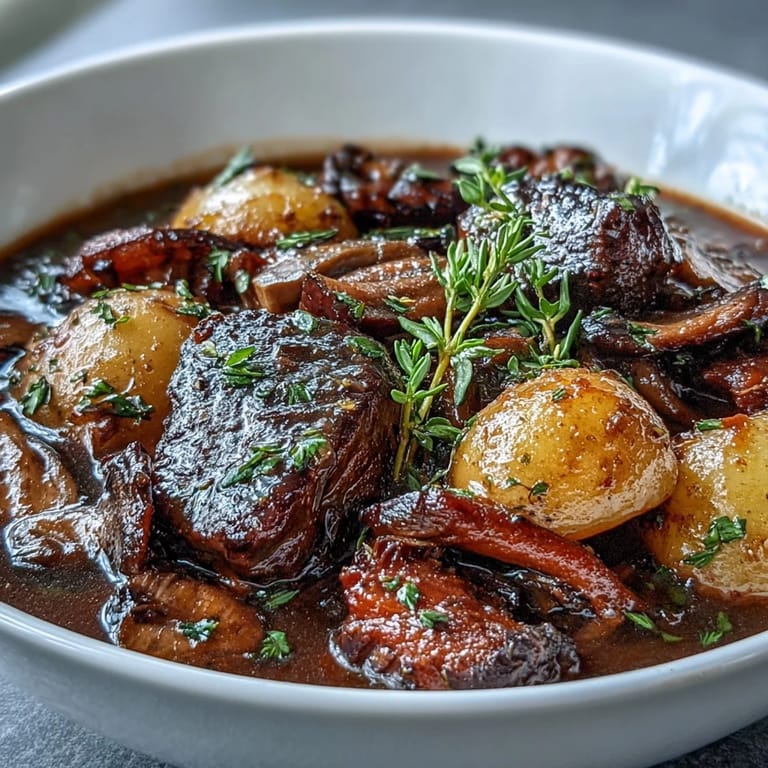
Save My first attempt at veganizing Irish stew happened on a gray Dublin afternoon when my sister mentioned she'd gone plant-based. I stood in my kitchen thinking there was no way to capture that deep, savory comfort without the usual suspects, but then mushrooms caught my eye at the market. Something about their meaty texture and earthy flavor felt like a secret waiting to be unlocked. That first pot taught me that sometimes the best dishes come from working with what you have, not mourning what you're leaving behind.
I made this for a dinner party last winter when someone casually mentioned they'd never had a good vegan stew before. Watching people lean over their bowls, steam rising, and hearing that satisfied silence—you know the kind—made me realize this dish has a kind of quiet power. By the end of the meal, someone asked for the recipe, and someone else scraped their bowl completely clean. Those moments remind me why I love cooking.
Ingredients
- Cremini or portobello mushrooms, 400 g (14 oz), finely chopped: These are the heart of the stew, delivering that meaty texture and deep umami flavor that makes people forget there's no meat involved.
- Soy sauce, 2 tbsp: It adds a savory backbone to the mushroom meat and brings out their natural saltiness without tasting obviously Asian.
- Smoked paprika, 1 tsp: This is what gives the mushroom meat that almost smoky, slightly charred quality that feels authentic to the dish.
- Olive oil, 3 tbsp for the base, 1 tbsp for mushrooms: Good quality matters here because it's building the flavor foundation—don't cheap out if you can help it.
- Yellow onion, 1 large, chopped: Let it get properly soft and golden; this is your flavor base and it shouldn't be rushed.
- Garlic, 2 cloves, minced: Fresh garlic here makes an enormous difference compared to powder, especially once it hits the hot oil.
- Carrots, 3 medium, sliced: They bring natural sweetness and that bright color that makes the stew feel alive in a bowl.
- Parsnips, 3, sliced: These add an almost honeyed earthiness that regular stew vegetables can't quite capture.
- Potatoes, 3 medium, chunked: Waxy potatoes hold their shape better than floury ones; look for something like Yukon Gold.
- Celery, 2 stalks, sliced: It sounds understated, but celery creates subtle background depth that ties everything together.
- Rutabaga or turnip, 1 small, diced (optional): This is the Irish touch—it adds a slightly peppery note that makes people ask what the secret ingredient is.
- Vegetable broth, 1.2 L (5 cups): Use a good one you'd actually drink; the quality matters since it's half the dish.
- Tomato paste, 2 tbsp: It's not for tomatoey flavor—it's here to add richness and a subtle sweetness that balances everything.
- Fresh thyme and rosemary: These herbs carry the Irish countryside into your pot; dried works when fresh isn't available, but use half the amount.
- Bay leaves, 2: They're working quietly in the background, and removing them before serving is non-negotiable.
- All-purpose flour or cornstarch, 2 tbsp: This creates the slurry that thickens the stew into that perfect, comforting consistency.
- Fresh parsley, 2 tbsp, chopped: Scatter this on top just before serving for a bright, fresh finish that cuts through the richness.
Tired of Takeout? 🥡
Get 10 meals you can make faster than delivery arrives. Seriously.
One email. No spam. Unsubscribe anytime.
Instructions
- Sauté the mushroom meat:
- Heat a large skillet with a tablespoon of olive oil over medium-high heat, then add your chopped mushrooms. They'll release water at first, and that's fine—keep cooking until that liquid evaporates and the mushrooms start to brown and caramelize. Add the soy sauce, smoked paprika, and black pepper, stirring occasionally, and let it go for about 8 to 10 minutes total until everything smells rich and almost smoky.
- Build your flavor base:
- In a large pot, warm 3 tablespoons of olive oil over medium heat, then add your chopped onion and minced garlic. Stir them occasionally until the onion becomes soft and translucent, which takes about 5 minutes. When you smell that sweet, cooked garlic aroma, you'll know you're ready for the next step.
- Add the root vegetables:
- Toss in your carrots, parsnips, potatoes, celery, and rutabaga if you're using it. Stir everything together and let it cook for about 5 minutes—this helps the vegetables start to soften slightly and absorb the flavors from the oil and aromatics.
- Season and build the broth:
- Stir in the tomato paste, fresh thyme, rosemary, bay leaves, and a generous pinch of salt and pepper. The tomato paste will coat everything and deepen the flavor profile.
- Simmer the stew:
- Pour in your vegetable broth and bring everything to a boil, then immediately turn the heat down to low. Cover the pot and let it simmer gently for 30 minutes or until the vegetables are tender but still hold their shape. You'll know they're done when a fork slides through a potato chunk with minimal resistance.
- Reunite the mushroom meat:
- Return your cooked mushroom meat to the pot and stir it in thoroughly so it distributes throughout the stew.
- Thicken it up:
- In a small bowl, whisk together your flour or cornstarch with 2 tablespoons of water until you have a smooth slurry with no lumps. Stir this into the simmering stew and keep it uncovered for 5 to 10 minutes, stirring occasionally, until the liquid thickens enough to coat a spoon.
- Final touches:
- Fish out the bay leaves, taste the stew, and adjust the salt and pepper to your preference. Sometimes a pinch more of one or the other makes all the difference.
- Serve with joy:
- Ladle the hot stew into bowls and scatter fresh parsley on top for color and brightness. Serve immediately with crusty bread if you have it.
 Save
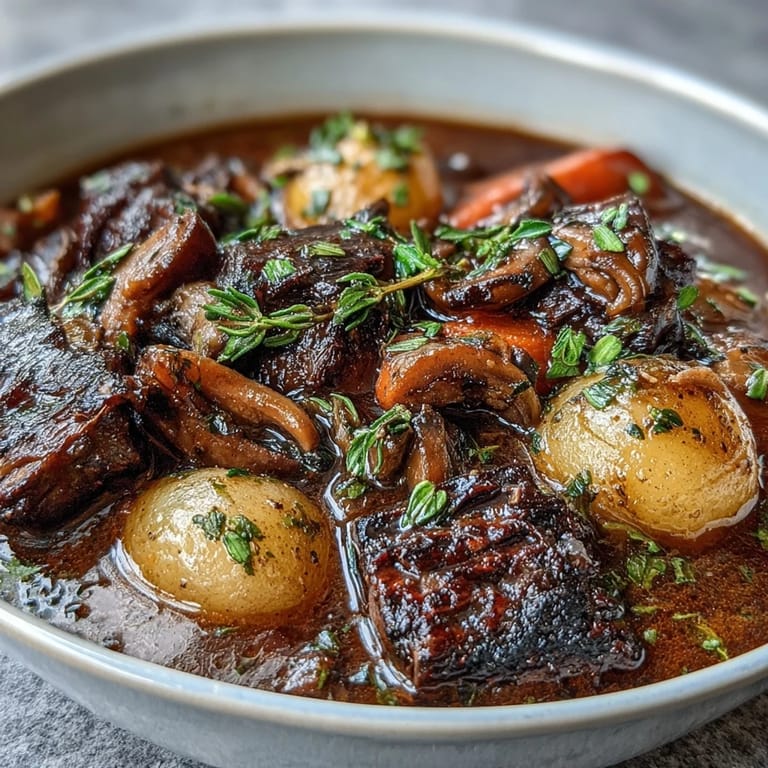
Save There's something almost meditative about standing over a pot of stew as it simmers, the steam rising and carrying the aroma of thyme and mushrooms through your kitchen. My grandmother used to say that stew is proof that the simplest ingredients, given time and care, become something that nourishes more than just your stomach. I think she'd approve of this version.
Building Umami Without the Guinness
People often assume Irish stew needs Guinness to taste authentically Irish, but the truth is that umami—that savory, mouth-filling quality—can come from mushrooms, tomato paste, and good vegetable broth working together. The soy sauce in the mushroom preparation is a secret weapon that most people won't identify, but they'll definitely taste it in the form of depth and richness. It's not about pretending this stew tastes like beef; it's about recognizing that vegetables have their own complete flavor story to tell.
Texture Matters More Than You Think
The thickened broth is what transforms this from a vegetable soup into a stew that feels substantial and warming. If you prefer it brothier, use less slurry or skip it entirely; if you like it thick enough to almost stand a spoon in, add a bit more. The mushroom meat provides a completely different texture from the soft vegetables, and that contrast is part of what makes each spoonful interesting rather than one-note.
Make It Your Own
This stew is forgiving enough to adapt to whatever you have on hand or whatever you're craving. Swap regular potatoes for sweet potatoes if you want earthiness with a hint of sweetness, or add a splash of vegan Worcestershire sauce if you want it even richer. The beauty of a stew is that it invites playing around.
- A teaspoon of marmite stirred in at the end adds an almost meaty depth that surprises people in the best way.
- Serve it with crusty sourdough or thick-cut bread to soak up every last drop of broth—that's honestly half the experience.
- Leftovers taste even better the next day after the flavors have had time to get to know each other.
 Save
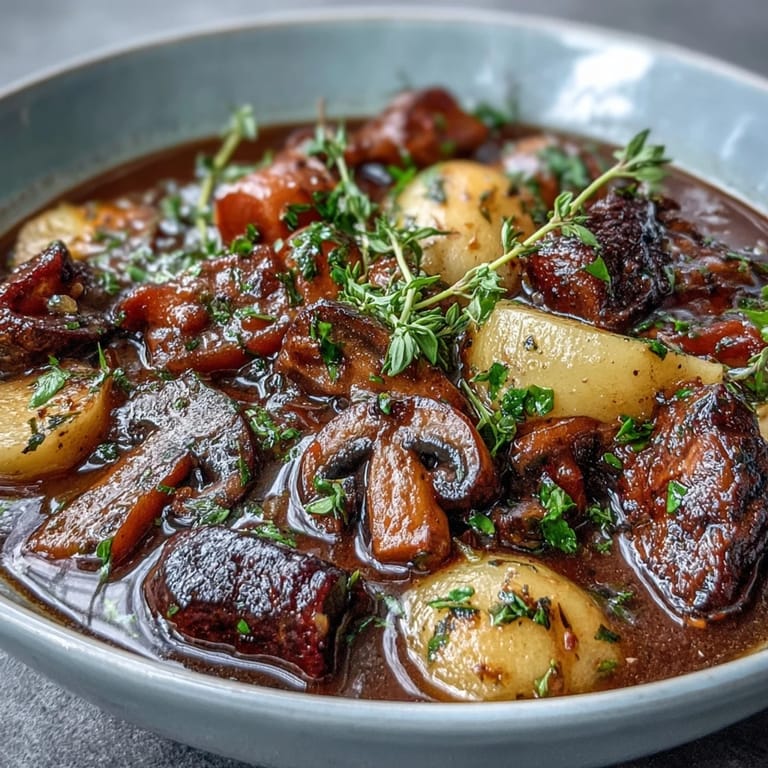
Save This stew has a way of becoming the kind of dish people ask you to make again and again. It proves that feeding people well doesn't require compromise, just thoughtfulness and a willingness to listen to what the ingredients are telling you.
Recipe FAQs
- → How is the mushroom meat prepared?
Chopped mushrooms are sautéed with soy sauce, smoked paprika, and pepper until brown and most moisture evaporates, creating a flavorful base.
- → What vegetables are used in this stew?
Yellow onion, garlic, carrots, parsnips, potatoes, celery, and optional rutabaga or turnip provide the stew's hearty vegetable base.
- → How is the stew thickened?
A slurry made from flour or cornstarch mixed with water is stirred in and simmered until the stew reaches a thicker consistency.
- → Can this dish accommodate dietary restrictions?
Yes, it is naturally vegan and dairy-free; use gluten-free soy sauce and cornstarch for gluten-free needs.
- → What herbs enhance the stew's flavor?
Fresh or dried thyme, rosemary, and bay leaves are simmered in the broth to infuse aromatic notes throughout the dish.