 Save
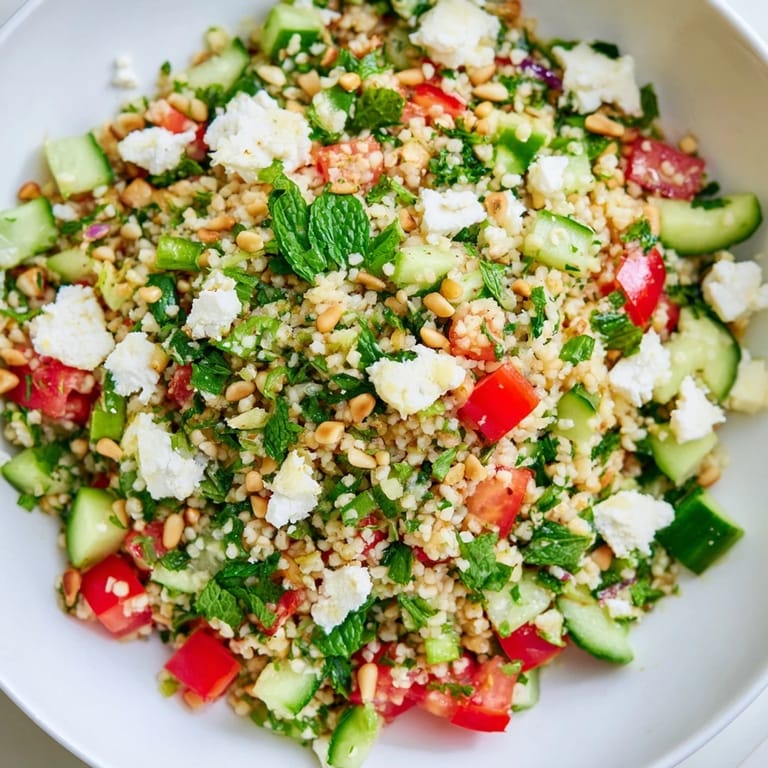
Save There's something about a bowlful of tabbouleh that stops you mid-afternoon. I discovered it at a neighborhood potluck where someone's grandmother had brought a massive ceramic dish, and the first bite—that snap of fresh parsley, the bright lemon hitting your tongue, the way the bulgur held everything together—made me understand why people write about food. I've been making my own version ever since, and it never tastes the same twice, which is exactly the point.
I made this for my friend's birthday picnic last summer, and watching everyone load it into their bowls while sitting under the oak tree by the lake told me everything—no one reached for anything else. That's when I realized tabbouleh is one of those rare dishes that feels equally at home at a casual backyard gathering or on a proper dinner table.
Ingredients
- Fine bulgur wheat: Use fine, not medium or coarse—it hydrates faster and has a better texture that doesn't turn mushy.
- Ripe tomatoes: The kind that smell like summer are non-negotiable; watery winter tomatoes will make your bowl soggy.
- Fresh flat-leaf parsley: This isn't a garnish—it's the main ingredient, so don't skimp or substitute with curly parsley.
- Fresh mint: It brightens everything and adds a coolness that makes you want to eat more.
- Extra virgin olive oil: The good kind, because you'll taste it directly in the dressing.
- Freshly squeezed lemon juice: Bottled lemon juice makes a noticeable difference; squeeze it fresh if you can.
- Scallions: They add a gentle onion bite without overwhelming the dish.
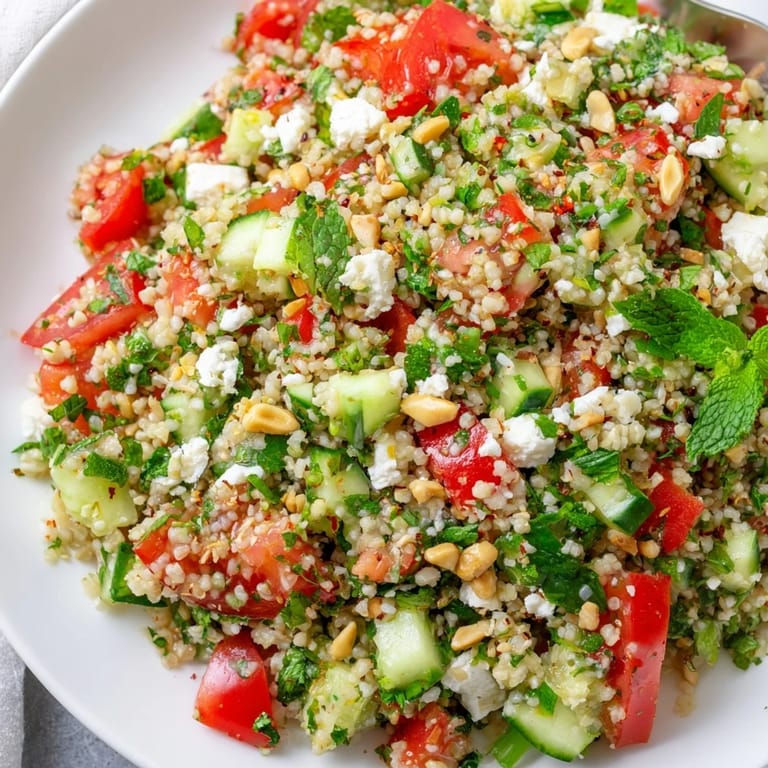
- Optional feta and pine nuts: The feta brings richness, and toasted pine nuts add a warm, buttery crunch.
Tired of Takeout? 🥡
Get 10 meals you can make faster than delivery arrives. Seriously.
One email. No spam. Unsubscribe anytime.
Instructions
- Bloom the bulgur:
- Pour boiling salted water over the grain in a large bowl, cover it, and walk away for 10 minutes. You'll hear it gently absorb the water—that soft sound is how you know it's working. Fluff it with a fork and let it cool; warm grain will wilt your herbs.
- Make the dressing:
- Whisk together olive oil, lemon juice, minced garlic, and pepper in a small bowl until it smells bright and sharp. Taste it—this is your seasoning anchor.
- Assemble with care:
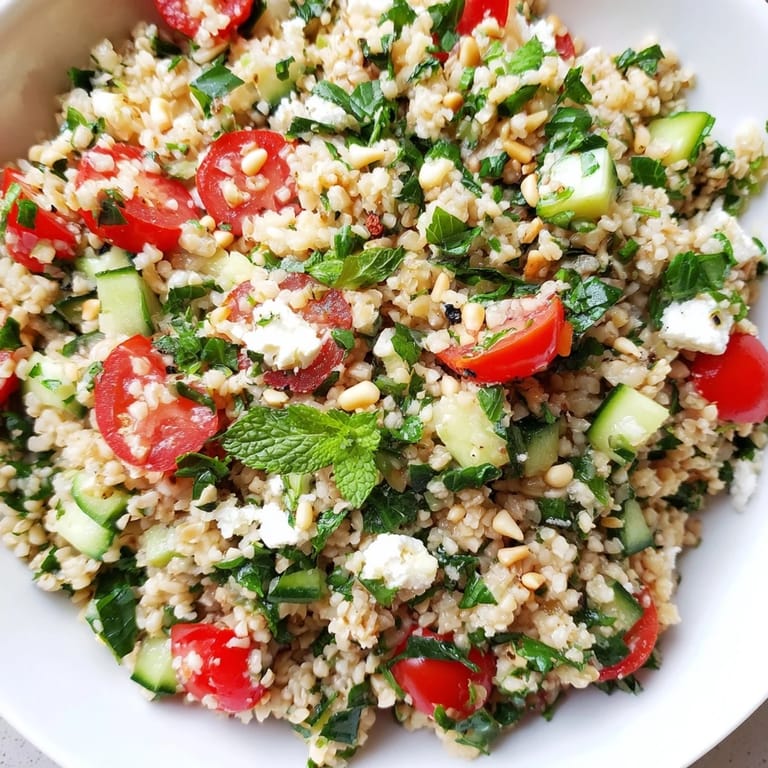
- Once the bulgur is cool, add the tomatoes, cucumber, parsley, mint, and scallions. Toss gently so the herbs don't bruise and release their color into the grain.
- Dress and marry the flavors:
- Pour the dressing over everything and mix thoroughly. If you have 10 minutes, let it chill so the flavors meld together properly.
- Finish and serve:
- Taste it one more time, add feta and pine nuts if you're using them, and serve with lemon wedges alongside so people can brighten their bowls at the table.
 Save
Save I learned the real magic of this dish when someone told me it tastes better on the second day, and I finally understood why my grandmother always made it the morning before we'd eat it. Now that's what I do, and I look forward to the leftovers as much as the first serving.
Why This Works as a Summer Staple
Tabbouleh is the opposite of heavy—it's refreshing without being insubstantial, substantial without being heavy. Every ingredient plays a role: the bulgur gives you something to bite into, the parsley keeps it green and alive, the tomatoes add moisture and brightness, and the lemon dressing ties everything together so seamlessly that you almost forget you're eating something incredibly good for you.
How to Customize Without Losing the Soul of It
You can add chickpeas for protein, swap in grilled chicken if you want something heartier, or use quinoa instead of bulgur if you're avoiding gluten. The beautiful thing is that tabbouleh is flexible—it's a template more than a rigid recipe. The one thing you can't change and keep it tasting right is the herb-to-grain ratio; if your bowl isn't swimming in parsley, you're doing it wrong.
Storage and Next-Day Magic
This salad keeps beautifully in the fridge for up to two days, and the flavors actually improve as they sit together overnight. Pack it in an airtight container, and it travels well to picnics, potlucks, or desk lunches. If it dries out slightly by day two, just drizzle a little extra olive oil and lemon juice over it, and it comes back to life.
- Make it the morning before you need it so the flavors have time to develop.
- If you add feta or pine nuts, do it just before serving so they don't get soggy.
- Bring lemon wedges to the table so everyone can adjust the brightness to their taste.
 Save
Save Tabbouleh is the kind of dish that makes eating feel less like an obligation and more like a small celebration. Serve it when you want people to feel awake and nourished at the same time.
Recipe FAQs
- → What grain works best for this bowl?
Fine bulgur wheat is traditional and absorbs flavors well. For gluten-free needs, quinoa is a great substitute.
- → How do I ensure the bulgur is perfectly tender?
Pour boiling water over the bulgur, cover, and let it soak for about 10 minutes until the water is absorbed and the grains are tender.
- → Can I add protein to this dish?
Yes, chickpeas or grilled chicken make excellent additions for extra protein and heartiness.
- → What gives the dish its bright flavor?
The zesty lemon juice combined with fresh herbs like parsley and mint delivers a refreshing, tangy profile.
- → How should leftover portions be stored?
Store in an airtight container in the refrigerator for up to two days to maintain freshness.