 Save
Save My roommate scrolled through TikTok one evening and gasped, "We need to make this." Within minutes, we were in the kitchen assembling layers like we were building something revolutionary, when really it was just sushi deconstructed and baked into pure comfort. The magic hit when the salmon mixture came out steaming, the cheese bubbling at the edges, and suddenly everyone understood why this dish had taken over the internet. What started as curiosity became our go-to dinner for impressing guests without the stress of rolling perfect maki.
There was a moment during a potluck when someone took their third scoop directly from the baking dish, still warm, while everyone else was politely using spoons. That's when I knew this wasn't just dinner—it was the kind of dish that breaks down social formality in the best way. Everyone gathered around the kitchen counter, passing seaweed snacks, drizzling sriracha-mayo on their portions like artists finishing a masterpiece.
Ingredients
- Sushi rice: Use proper sushi rice, not regular rice, because the starch and texture are what make the base absorb the vinegar seasoning perfectly.
- Rice vinegar, sugar, salt: This trio seasons the rice with balance; don't skip the sugar or your rice will taste flat and one-dimensional.
- Salmon fillet: Choose fresh, skinless salmon and bake it gently so it stays tender and flakes beautifully into the mayo mixture.
- Mayonnaise (Kewpie preferred): Kewpie has a richer, slightly sweeter taste that feels more authentic, though regular mayo works if that's what you have.
- Sriracha sauce: This is your heat control; start with 2 tablespoons and taste, then adjust because everyone's spice tolerance differs wildly.
- Soy sauce and toasted sesame oil: These add umami depth that makes people say the flavor is "more" without being able to pinpoint why.
- Green onion: Fresh and finely chopped, it brings a subtle bite that wakes up the creamy salmon mixture.
- Nori (seaweed sheets): Crumble it coarsely so it keeps some texture and doesn't turn into seaweed dust in your bake.
- Mozzarella cheese: Optional but recommended; it melts into savory pockets and adds a satisfying stretch when you scoop.
- Sesame seeds, avocado, seaweed snacks: These are your fresh, crunchy toppings that transform the warm bake into something bright and balanced.
Tired of Takeout? 🥡
Get 10 meals you can make faster than delivery arrives. Seriously.
One email. No spam. Unsubscribe anytime.
Instructions
- Prepare the sushi rice:
- Rinse the rice under cold water, running your fingers through it, until the water runs clear and your fingers no longer feel starchy. This removes excess starch so your rice stays separate and fluffy instead of gluey.
- Cook the rice:
- Combine rinsed rice and water in a rice cooker or pot and cook according to package instructions. If using a pot, bring to a boil, reduce heat to low, cover, and let steam for 15-18 minutes until the water absorbs.
- Season the rice:
- While rice cooks, warm rice vinegar, sugar, and salt in a small saucepan over low heat, stirring until the sugar dissolves completely. Pour this mixture over the hot rice and gently fold it in with a wooden spoon, using slicing motions rather than stirring, which keeps the grains intact.
- Prep the oven:
- Preheat your oven to 200°C (400°F) so it's ready when you are, and line a baking sheet with parchment paper to prevent sticking.
- Bake the salmon:
- Place your salmon fillet skin-side down on the prepared baking sheet, brush lightly with neutral oil, and bake for 12-15 minutes until the flesh is opaque and flakes easily when tested with a fork. The salmon should be cooked through but still moist inside.
- Make the spicy salmon mixture:
- Once the salmon has cooled slightly, flake it into a mixing bowl with a fork, breaking it into bite-sized pieces. Add mayonnaise, sriracha, soy sauce, toasted sesame oil, and green onions, then fold everything together gently until the mixture is creamy and the salmon pieces are distributed evenly.
- Assemble the base:
- Lightly oil a 9x9-inch baking dish to prevent sticking, then spread the cooled seasoned sushi rice evenly across the bottom, pressing it down gently with the back of a spatula. Sprinkle crumbled nori over the rice in an even layer.
- Layer and top:
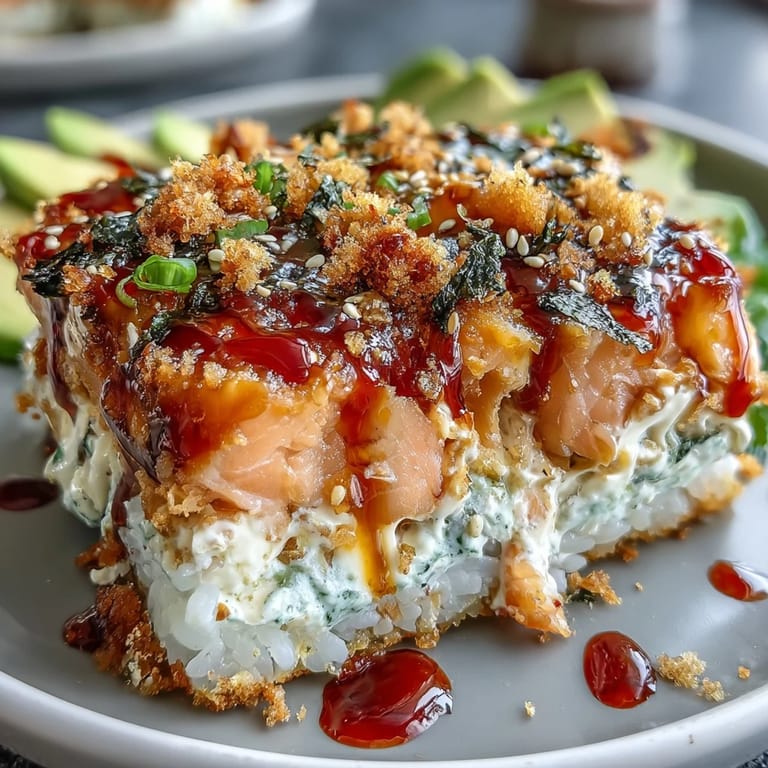
- Spread the spicy salmon mixture evenly over the nori-topped rice, then sprinkle shredded mozzarella cheese over the top if using. The cheese will melt and create savory pockets throughout the bake.
- Final bake:
- Bake for 10-12 minutes until the mixture is heated through and the cheese, if using, is melted and bubbling slightly at the edges. Don't overbake or the rice will dry out.
- Finish and serve:
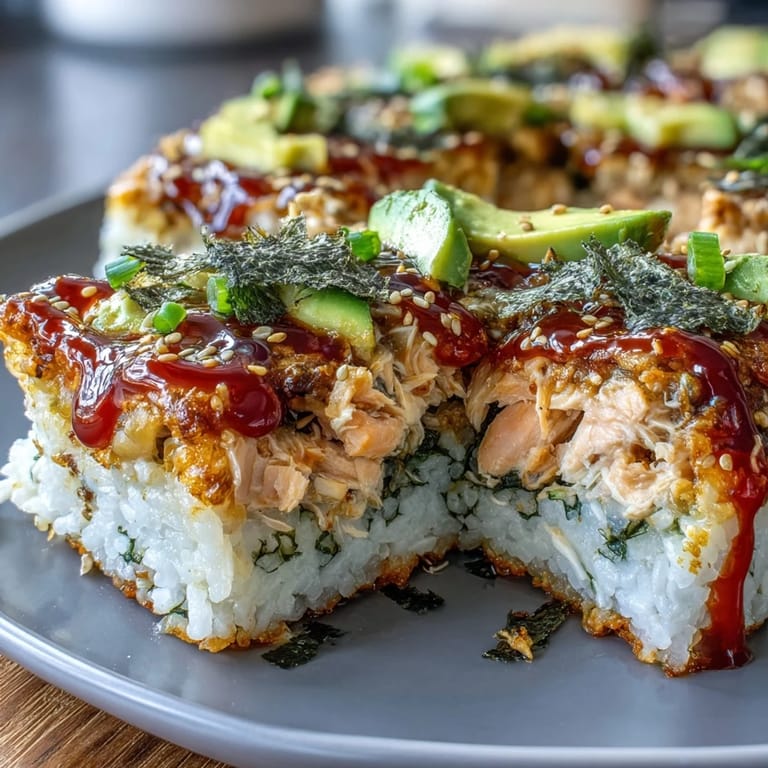
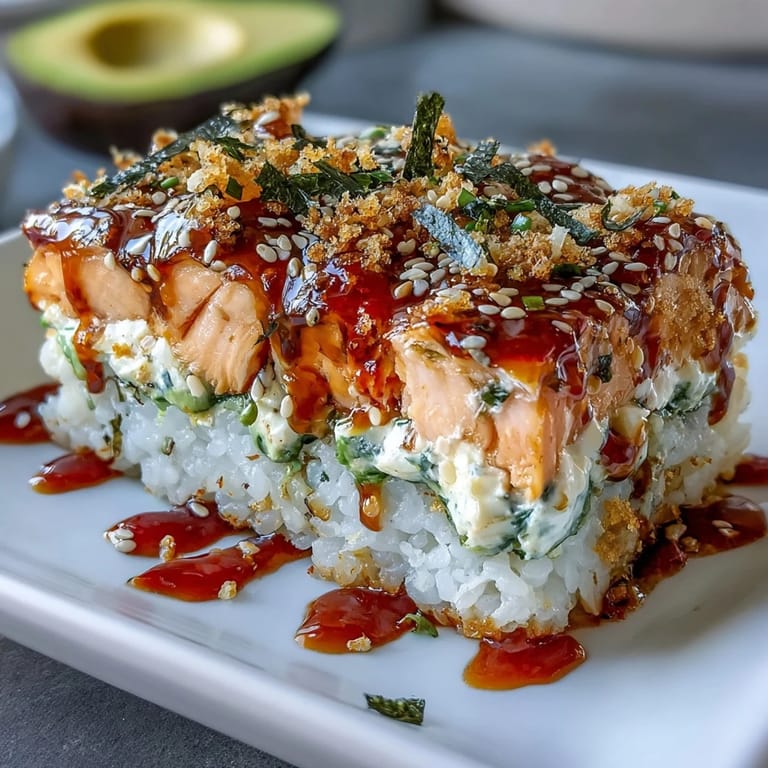
- Remove from the oven and let cool for 5 minutes so the layers set slightly. Garnish generously with toasted sesame seeds, fresh avocado slices, and drizzle with extra sriracha and mayonnaise in decorative lines across the top.
 Save
Save There's something unexpectedly intimate about serving this straight from the baking dish, watching people scoop out layers and customize their plate with avocado and extra sriracha. It stopped being about following a viral trend and became about gathering around food that felt personal and generous.
Why This Became My Signature Dish
This bake wins because it looks restaurant-worthy when you plate it, but the actual cooking is straightforward—no special skills, just patience and good ingredients. People assume you spent hours perfecting some intricate technique when really you were relaxed enough to chat with guests while it baked in the oven.
Customizing Your Bake
One of my favorite discoveries was adding crispy cucumber slices and pickled radish right before serving, which adds a sharp, refreshing contrast to the warm, creamy salmon. Another time, a friend brought cooked crab meat and we swapped it for salmon, and honestly, it was equally stunning and a bit more luxurious-feeling. The flexibility of this dish means it adapts to what's in your kitchen and who you're cooking for.
Pairing and Serving Ideas
I've served this at casual weeknight dinners and more formal gatherings, and it works for both because you can dress it up or keep it relaxed. Pair it with a chilled sake, crisp white wine like Sauvignon Blanc, or even a light lager if you're leaning into the fun, casual vibe. The seaweed snacks aren't just decoration—they're your edible vessel, and eating the bake scooped onto crispy nori brings everything back to its sushi roots in the best way.
- Chill white wine glasses beforehand for a restaurant-level serving experience.
- Set out extra sriracha and mayo on the side so guests can customize their spice level.
- Make the rice and salmon mixture earlier in the day and assemble just before baking for maximum freshness.
 Save
Save This dish proved that sometimes the most memorable meals come from internet trends that actually deliver on their promise. It's now the first thing I suggest when friends ask what to bring to a potluck.
Recipe FAQs
- → Can I make this sushi bake ahead of time?
Yes, you can prepare the rice and salmon mixture separately up to 24 hours in advance. Assemble and bake just before serving for the best texture and temperature.
- → What can I substitute for salmon?
Cooked crab, imitation crab, or cooked shrimp work wonderfully. You can also try cooked tuna for a different flavor profile while maintaining the same preparation method.
- → Is the cheese necessary for this dish?
The mozzarella cheese is optional. It adds a creamy, melty texture but isn't traditional. Omit it for a more authentic Japanese flavor or if you prefer a dairy-free version.
- → How do I adjust the spice level?
Start with 2 tablespoons of sriracha and taste the salmon mixture before baking. Add more for extra heat or reduce it to 1 tablespoon for a milder version. You can also serve extra sriracha on the side.
- → What's the best way to serve sushi bake?
Scoop portions onto roasted seaweed snacks like hand rolls, or serve it in bowls with additional toppings like cucumber, pickled ginger, or edamame. It's delicious warm or at room temperature.
- → Can I use regular rice instead of sushi rice?
Sushi rice is recommended for its sticky texture and authentic flavor when seasoned with rice vinegar. Regular short-grain rice can work in a pinch, but the texture won't be as ideal for this dish.