 Save
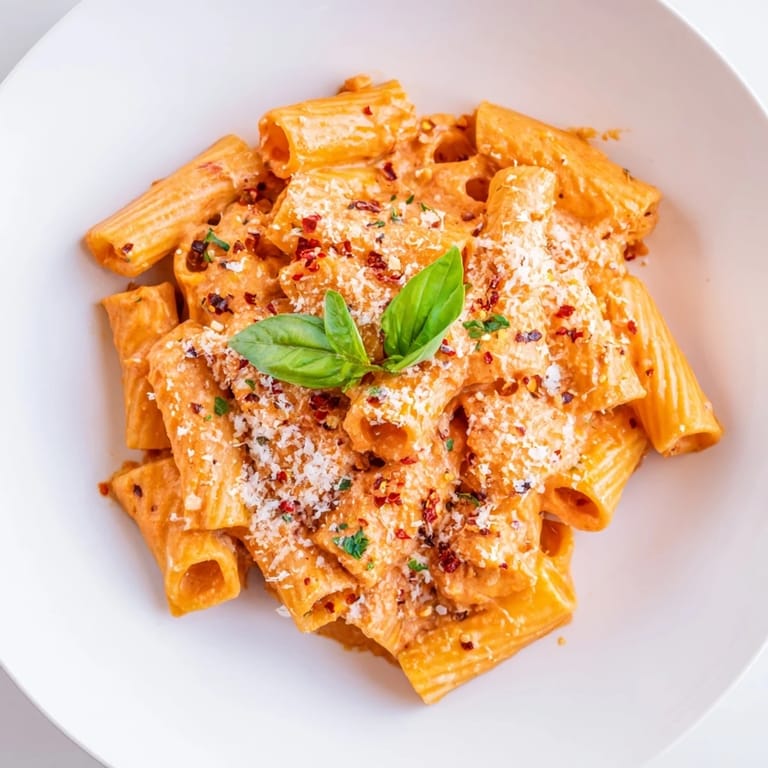
Save There's something about a weeknight when the kitchen smells like garlic and tomatoes simmering together that makes everything feel intentional. I discovered this spicy rigatoni on an ordinary Tuesday when I had cream in the fridge that needed using and a craving for something warm. The rigatoni tubes hold the sauce in a way that feels generous, each bite delivering that perfect balance of creamy and just spicy enough to wake you up. It's become the dish I make when I want comfort without the production, when I want people to feel looked after without spending my whole evening cooking.
I made this for my neighbor Sarah one evening when her kitchen was being renovated, and watching her close her eyes after that first taste made me realize how good simple food can be when it's made with attention. She'd been living on takeout for two weeks, and something about sitting at my table with actual homemade pasta seemed to settle her. We drank wine and talked about her renovation plans while we ate, and the rigatoni kept us both from rushing through the conversation.
Ingredients
- Rigatoni pasta, 400 g (14 oz): The ridged tubes are essential here—they grip the sauce and hold onto the flakes of red pepper, creating texture in every bite. Don't use something smooth unless you're out of options.
- Olive oil, 2 tbsp: This is your base, so use one you actually like the taste of. Cheap olive oil tastes like regret in this context.
- Yellow onion, 1 small, finely chopped: The sweetness of the onion plays beautifully against the heat, so don't skip it or rush the chopping.
- Garlic, 3 cloves, minced: Fresh is crucial. Jarred garlic will taste flat and vaguely chemical in the finished dish.
- Crushed red pepper flakes, 1 tsp: This is where personality enters. Start with one teaspoon and taste as you go—some people want a whisper, others want a shout.
- Tomato paste, 2 tbsp: Don't water this down. Its concentrated flavor is doing heavy lifting in the sauce, deepening everything around it.
- Canned crushed tomatoes, 400 g (14 oz): San Marzano if you can find them, but honestly any crushed tomatoes without added herbs or spice work fine.
- Heavy cream, 120 ml (½ cup): This is what makes it creamy without making it heavy. The fat carries the flavors and rounds everything out.
- Parmesan cheese, 30 g (¼ cup), grated: Freshly grated tastes incomparably better than pre-shredded, which tastes like the cellulose they dust it with.
- Salt and freshly ground black pepper: Taste as you build the sauce, seasoning at the end once everything is combined.
- Fresh basil, chopped: Not traditional in a cream sauce, but it gives you a moment of brightness that cuts through the richness.
Tired of Takeout? 🥡
Get 10 meals you can make faster than delivery arrives. Seriously.
One email. No spam. Unsubscribe anytime.
Instructions
- Set your water to boil:
- Fill a large pot about two-thirds full and get it heating while you prep everything else. Salt the water generously once it boils—it should taste like the sea. This is your only opportunity to season the pasta itself.
- Sauté the onion slowly:
- Heat olive oil in a skillet over medium heat and add the chopped onion. Let it soften for three to four minutes, stirring occasionally. You're looking for it to turn translucent and sweet, not brown and caramelized.
- Build the aromatics:
- Once the onion is soft, add the garlic and red pepper flakes. Stir constantly for about a minute—you'll smell the shift from raw to fragrant, and that's your signal to move forward.
- Deepen the sauce with tomato paste:
- Add the tomato paste and let it cook in the oil for about two minutes, stirring frequently. This small step caramelizes the paste slightly and intensifies its flavor, making the entire sauce taste richer.
- Simmer the tomatoes:
- Pour in the crushed tomatoes and let them bubble gently for eight to ten minutes, stirring every couple of minutes. The sauce will thicken slightly and the raw tomato taste will round out and deepen.
- Cook the pasta properly:
- While the sauce simmers, add the rigatoni to your boiling salted water. Stir it once when it hits the water so it doesn't stick together. Cook according to package instructions, aiming for al dente—tender but with a slight firmness when you bite it.
- Finish with cream and cheese:
- Reduce the heat under the sauce to low. Stir in the heavy cream slowly so it incorporates smoothly, then add the grated Parmesan. Let it warm through for two to three minutes without boiling, tasting and adjusting salt and pepper as you go.
- Bring it all together:
- Drain your pasta, reserving about half a cup of the starchy cooking water. Add the hot pasta to the sauce and toss gently until every piece is coated. If it seems too thick, add pasta water a splash at a time until you get that silky, glossy consistency.
- Plate and serve:
- Serve immediately while everything is still hot, garnished with fresh basil and a shower of extra Parmesan.
 Save
Save There was a night when my teenager came home from a difficult day at school, and I had this sauce simmering by the time they walked through the door. The smell hit them before anything else did, and I watched the tension in their shoulders soften as they helped me drain the pasta. Sometimes food isn't about nutrition or even taste—it's about the message you're sending with the care behind it.
The Secret to Balancing Heat and Creaminess
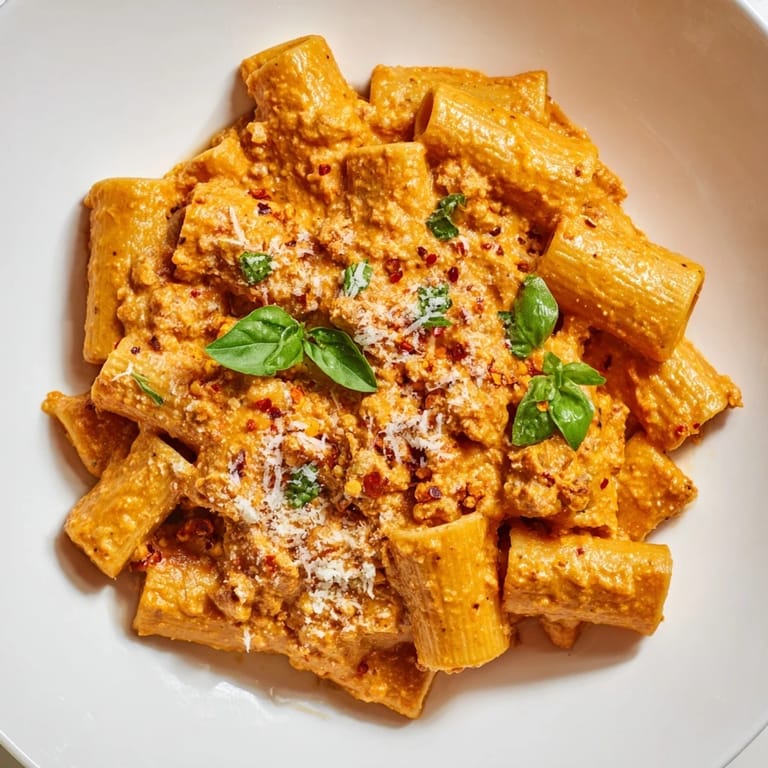
Many people avoid spicy food because they assume it means fire and pain, but this dish proves that heat can be your friend when you layer it with richness. The cream doesn't mask the red pepper flakes—it amplifies them by creating a canvas that lets the heat shine without dominating. I learned this by accident once when I added too much cream trying to fix an overly spicy batch, and instead of diluting the spice, it became more nuanced and interesting. The lesson was that balance isn't about erasing one flavor, it's about giving each element room to breathe.
Making It Your Own
The foundation of this recipe is forgiving enough that you can adjust it based on what's in your kitchen or what you're craving that day. If you have pancetta or sausage, a minute or two in the pan before the onions adds a smoky richness that justifies itself immediately. Some people finish it with a pinch of nutmeg, which sounds strange until you taste how it softens the edges of the spice. Others add a splash of balsamic vinegar for depth, or a touch more lemon zest for brightness.
Timing and Preparation
The beauty of this dish is that most of the work happens while you're waiting—the sauce simmers while the pasta cooks, and there's no stressful multitasking at the end. If you're organized about chopping everything before you turn on the heat, you'll spend more time tasting and adjusting than rushing. I usually set a small bowl nearby with the fresh basil and extra Parmesan so garnishing feels like the final flourish rather than an afterthought.
- Start your pasta water before you do anything else—this single act buys you time and reduces last-minute pressure.
- If you're cooking for guests, you can build the sauce completely thirty minutes ahead and gently reheat it when the pasta hits the water.
- This recipe makes four generous servings, but it's equally good as leftovers reheated gently with a splash of pasta water to loosen the sauce.
 Save
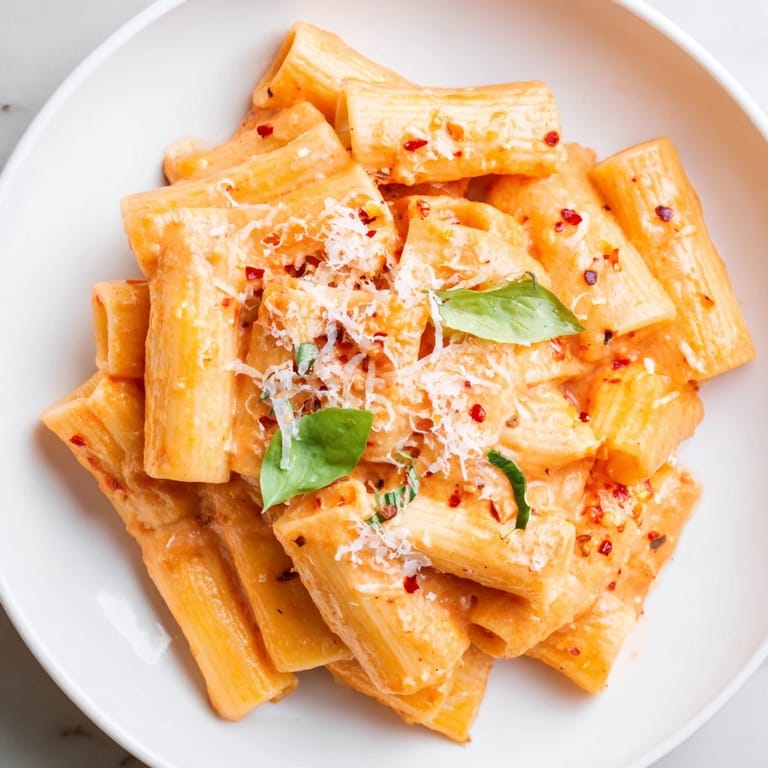
Save This spicy rigatoni has become the dish I reach for when I want to feed someone without fuss, and when I want the kitchen to smell like home for a few hours. It's the kind of meal that works just as well on a quiet Tuesday as it does when you're expecting people, and it never fails to deliver comfort and satisfaction.
Recipe FAQs
- → How can I adjust the spiciness?
Modify the amount of crushed red pepper flakes to suit your desired heat level, adding more for extra spice or less for milder flavor.
- → What pasta can I use instead of rigatoni?
Penne or ziti are excellent alternatives that hold the sauce well and offer a similar texture.
- → Can I make this dish vegetarian-friendly?
Yes, simply omit any meat additions like pancetta or sausage and rely on the rich sauce and Parmesan for depth.
- → How should I store leftovers?
Keep leftovers in an airtight container refrigerated for up to 2 days. Reheat gently, adding a splash of pasta water if needed to restore creaminess.
- → What wine pairs well with this dish?
A crisp white wine such as Pinot Grigio complements the creamy tomato sauce and balances the mild heat nicely.