 Save
Save I discovered these noodles on a weeknight when I was standing in my kitchen at six o'clock with nothing but pasta cravings and a jar of peanut butter. My friend had raved about a similar dish from a Thai takeout place, and I thought, why not try to capture that magic at home? Twenty minutes later, I was twirling noodles coated in this incredible sauce that tasted like someone had bottled pure comfort. Now I make them constantly, sometimes on purpose, sometimes just because I have the ingredients.
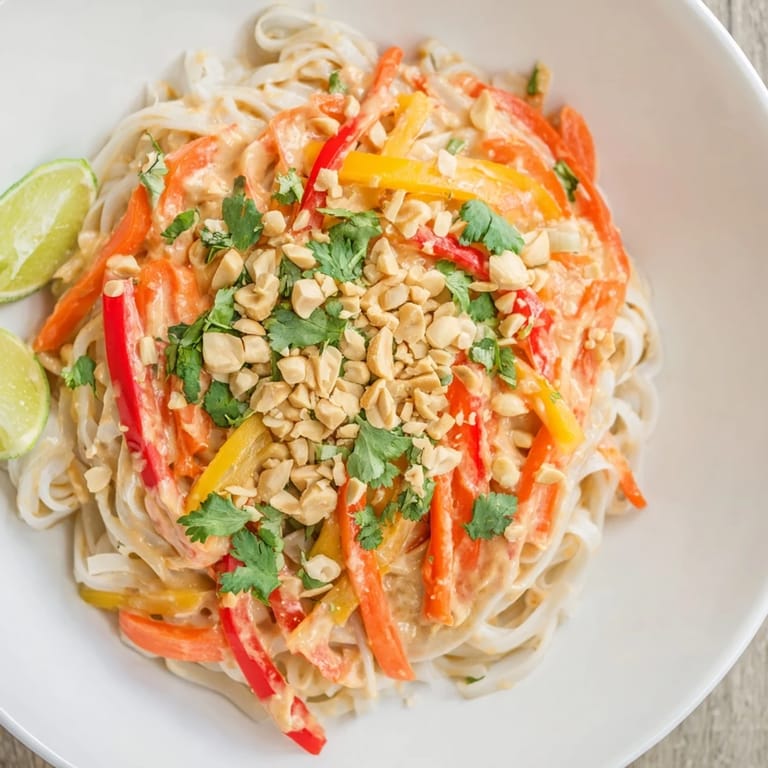
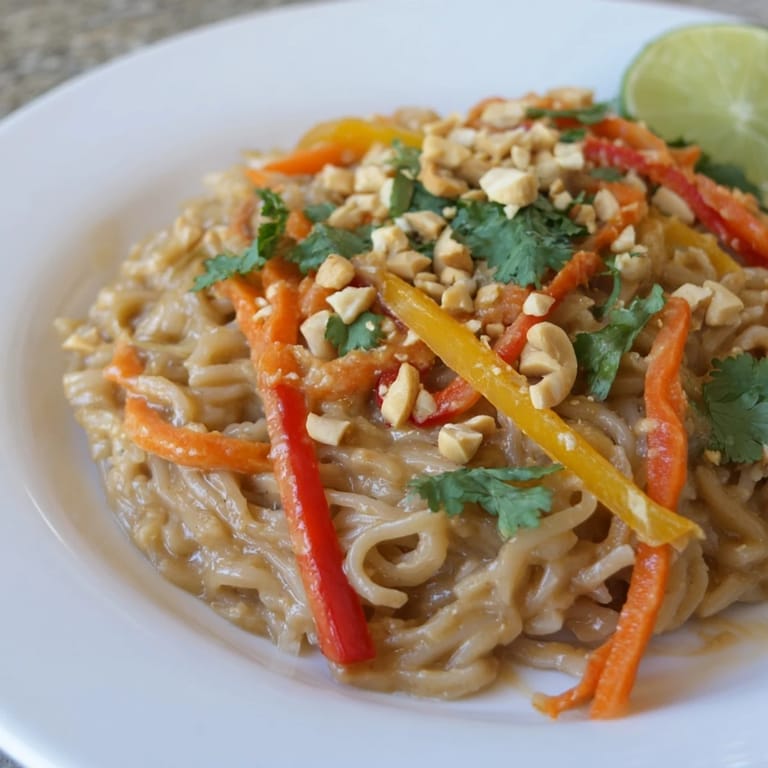
I remember making a huge batch for a casual dinner party last summer, and someone asked if I'd ordered from a restaurant. The pride I felt was probably disproportionate, but there's something about watching people return to the bowl for seconds when you've made the food yourself. The color was so vibrant from the carrots and cilantro that it looked almost too good to eat.
Ingredients
- Dried rice noodles or spaghetti (12 oz): Rice noodles are more authentic and absorb the sauce beautifully, but spaghetti works if that's what you have on hand.
- Creamy peanut butter (1/2 cup): The foundation of everything, so use one you actually like eating straight from the jar.
- Soy sauce (1/4 cup): This provides the savory depth; tamari is your friend if you need gluten-free.
- Rice vinegar (2 tbsp): A touch of brightness that keeps the sauce from feeling one-dimensional.
- Toasted sesame oil (1 tbsp): The small amount packs a huge aromatic punch.
- Honey or maple syrup (2 tbsp): Just enough sweetness to balance the heat and saltiness.
- Sriracha or chili garlic sauce (2-3 tbsp): Start at two and taste as you go because heat preferences vary wildly.
- Fresh garlic and ginger: These transform the sauce from bland to bright; mince the garlic fine so it distributes evenly.
- Warm water (1/4 cup): Loosens the sauce to the right consistency; you might need more depending on your peanut butter's thickness.
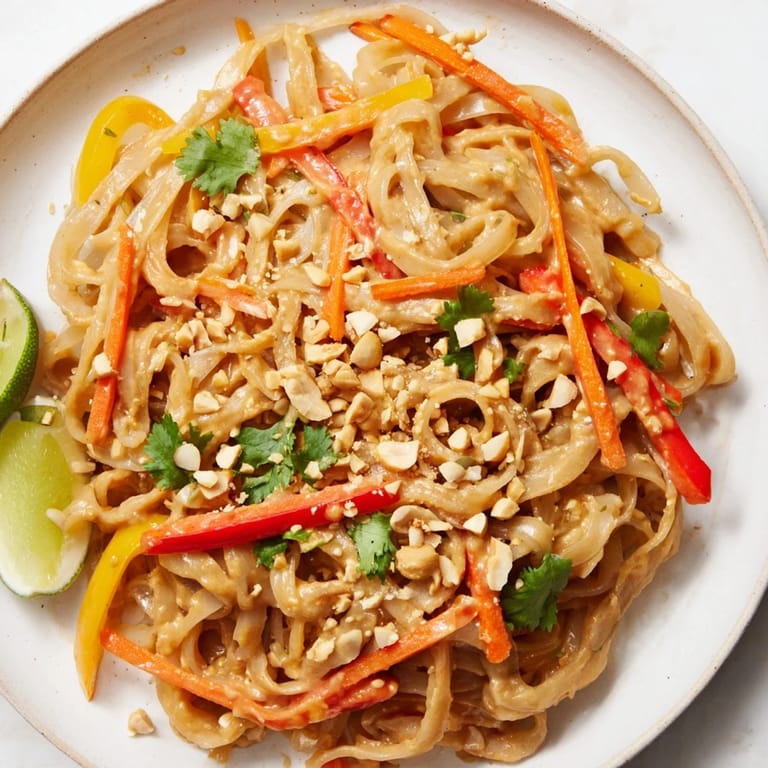
- Shredded carrots and sliced bell pepper: They add crunch, color, and freshness that prevents the dish from feeling heavy.
- Scallions, roasted peanuts, and cilantro: These garnishes are where the dish gets personality; don't skip them.
Tired of Takeout? 🥡
Get 10 meals you can make faster than delivery arrives. Seriously.
One email. No spam. Unsubscribe anytime.
Instructions
- Cook the noodles:
- Boil them according to the package, then drain and rinse under cold water so they stop cooking and stay separate. Set them aside and they'll be ready whenever the sauce is.
- Make the sauce:
- Whisk the peanut butter with soy sauce, rice vinegar, sesame oil, honey, sriracha, garlic, and ginger in a bowl. The mixture will look thick at first, but when you add the warm water, it smooths into something silky that coats everything beautifully.
- Bring it together:
- Toss the drained noodles with carrots and bell pepper in a large bowl, then pour the sauce over and mix until every strand is coated. This is where the noodles transform into something special.
- Plate and garnish:
- Divide among bowls and top with scallions, peanuts, and cilantro so each bite has texture and freshness. A squeeze of lime over the top is essential, not optional.
- Serve warm or chill:
- Eat immediately while there's still warmth and the noodles are tender, or chill for a cold noodle salad that's perfect for summer lunches.
 Save
Save There's a moment when you finish tossing the noodles with that creamy sauce and everything turns into something almost silky, and that's when you know you've made something worth eating. These noodles have become the dish I make when I want to feel like I've cooked something impressive without actually spending hours in the kitchen.
The Magic of Balance
What makes this dish work is the careful balance between savory, sweet, and spicy, with a thread of brightness from the vinegar and lime running through everything. The creamy sauce clings to each noodle while the fresh vegetables and herbs add contrast so the dish never feels heavy or one-note. Learning to taste as you build the sauce means you can adjust it to your own preferences, making it less of a recipe to follow and more of a blueprint.
Customizing for What You Have
I've made these noodles with almond butter when I ran out of peanut, with whatever vegetables were in my crisper drawer, and even with cashew butter for a milder, more luxurious version. The skeleton of the dish is so solid that it survives substitutions well, and half the joy is playing with variations until you land on your favorite combination. Some nights I add a soft-boiled egg or leftover rotisserie chicken, and the noodles become a completely different kind of satisfying.
Small Details That Matter
I learned to always zest my lime and grate my ginger fresh because those tiny additions change everything about how the dish tastes. The sesame oil should be toasted, not plain, and the peanut butter should be creamy unless you want a grittier texture. Toasting the peanuts yourself is worth it if you can manage it, but store-bought roasted ones are completely fine if that's what you have.
- Taste the sauce before tossing it with the noodles so you can adjust the heat and salt to your preference.
- If you're making these ahead, store the sauce separate from the noodles and toss them together just before serving.
- Leftovers keep in the refrigerator for three days and are excellent cold straight from the container.
 Save
Save These noodles are proof that the best dishes don't require fancy techniques or hard-to-find ingredients. They just need a little care and the willingness to taste as you go, adjusting everything until it feels right to you.
Recipe FAQs
- → What noodles work best with this dish?
Dried rice noodles or spaghetti both work well, offering a tender base that soaks up the peanut sauce nicely.
- → How can I adjust the spice level?
Modify the amount of sriracha or chili garlic sauce according to your heat preference, starting with less and adding more as desired.
- → Can I make this dish gluten-free?
Yes, by selecting gluten-free rice noodles and replacing soy sauce with tamari, this dish becomes gluten-friendly.
- → What garnishes enhance the flavor?
Chopped roasted peanuts, fresh cilantro, scallions, and a squeeze of lime all add layers of texture and freshness.
- → Is this dish served hot or cold?
It can be enjoyed warm immediately or chilled for a refreshing cold noodle variation.