 Save
Save The first time I made kimchi fried rice, I was standing in my tiny apartment kitchen on a Tuesday night with leftover rice and a jar of kimchi my friend swore would change everything. I was skeptical—I'd never cooked Korean food before—but twenty minutes later, I was scraping the pan clean and wondering why it took me so long to discover this. Now it's my go-to when I need something bold and satisfying without the fuss.
I made this for my coworker James one lunch break after he mentioned never having tried kimchi, and watching his face when he took that first bite was priceless. He came back the next day asking for the recipe, then showed up with his own jar of kimchi by Friday. It became our unofficial office tradition—sudden kimchi fried rice days when we both wanted something that felt like real food.
Ingredients
- Cold cooked rice (day-old, 2 cups): Day-old rice separates beautifully instead of turning mushy, which is the whole secret to fried rice that actually tastes like individual grains.
- Napa cabbage kimchi, chopped (1 cup plus 2 tbsp juice): This is the soul of the dish—the funkier and more fermented your kimchi, the better the depth of flavor will be.
- Eggs (2 large): They scramble into soft curds that catch the sauce and create pockets of richness throughout.
- Onion, finely diced (1/2 small): The sharp bite mellows as it cooks, becoming sweet undertones in the background.
- Green onions (2, sliced with parts separated): White parts go in early to soften, green parts finish the dish raw for brightness and snap.
- Carrot, finely diced (1 small, optional): It adds a subtle sweetness and color, but honestly the dish is complete without it.
- Gochujang, Korean chili paste (2 tbsp): This fermented paste is where all the umami and heat come from—don't skimp or substitute.
- Soy sauce (1 tbsp): Just enough to deepen the savory notes without overpowering the kimchi.
- Toasted sesame oil (1 tsp): A small drizzle at the end brings an nutty warmth that ties everything together.
- Vegetable oil (1 tbsp): High heat oil for the initial cooking, keeping things sizzling and quick.
- Sugar (1 tsp, optional): A tiny pinch if your kimchi is extremely sour, just to balance things out.
- Optional protein (1/2 cup): Pork belly, Spam, or tofu all work beautifully depending on what you have.
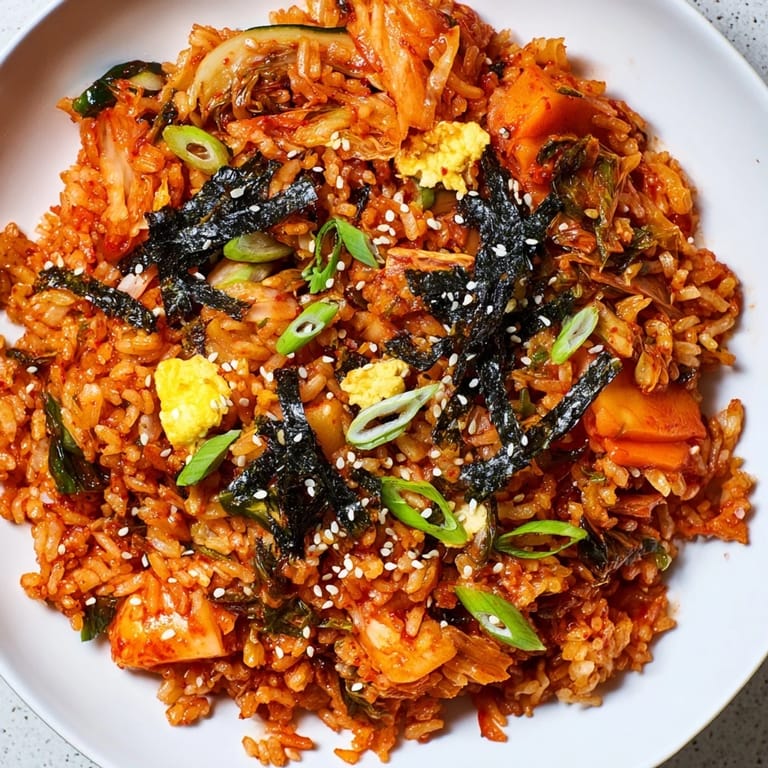
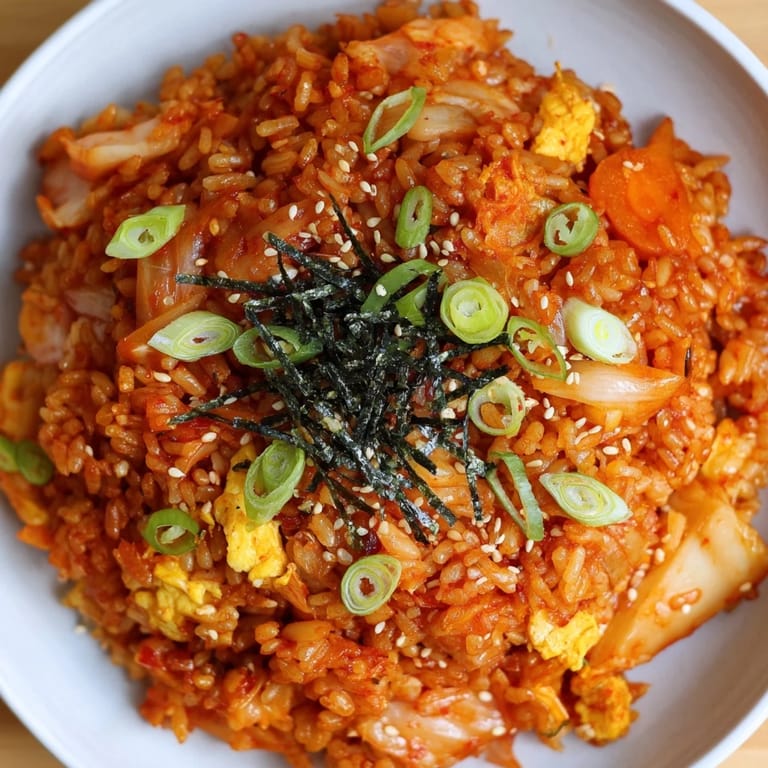
- Sesame seeds and seaweed (for garnish): These finishing touches add texture and visual appeal that make it feel intentional.
Tired of Takeout? 🥡
Get 10 meals you can make faster than delivery arrives. Seriously.
One email. No spam. Unsubscribe anytime.
Instructions
- Get your pan hot and aromatics soft:
- Heat oil over medium-high until it's almost smoking, then add diced onion, white parts of green onion, and carrot. You'll hear them sizzle immediately—that's your signal things are happening. Stir constantly for 2–3 minutes until the onion turns translucent and sweet-smelling.
- Bring in the kimchi:
- Add your chopped kimchi right into the hot pan and let it sit for 30 seconds before stirring. This brief pause lets the edges caramelize slightly, deepening the flavor. Stir-fry for another 2–3 minutes until the kitchen smells spicy and tangy.
- Build the flavor base:
- Add gochujang, soy sauce, and sugar if using, stirring constantly to coat everything evenly. The gochujang will deepen in color as it cooks, and you'll notice the sauce starting to cling to the vegetables.
- Scramble the eggs:
- Push everything to the side of the pan, crack your eggs into the empty space, and let them sit for just a moment before scrambling. They'll cook quickly in the residual heat—you want soft curds, not rubbery bits.
- Add the rice and bring it all together:
- Break up any clumps of cold rice with your spatula as you add it, then stir everything together thoroughly. Pour in the kimchi juice and keep stirring for 3–4 minutes until the rice is heated through and every grain is coated in that spicy, savory sauce.
- Finish with heat and brightness:
- Drizzle sesame oil over the top and fold in the green parts of green onion and any meat or tofu you're using. Taste it right now and adjust salt or spice if needed—this is your moment to make it exactly right.
 Save
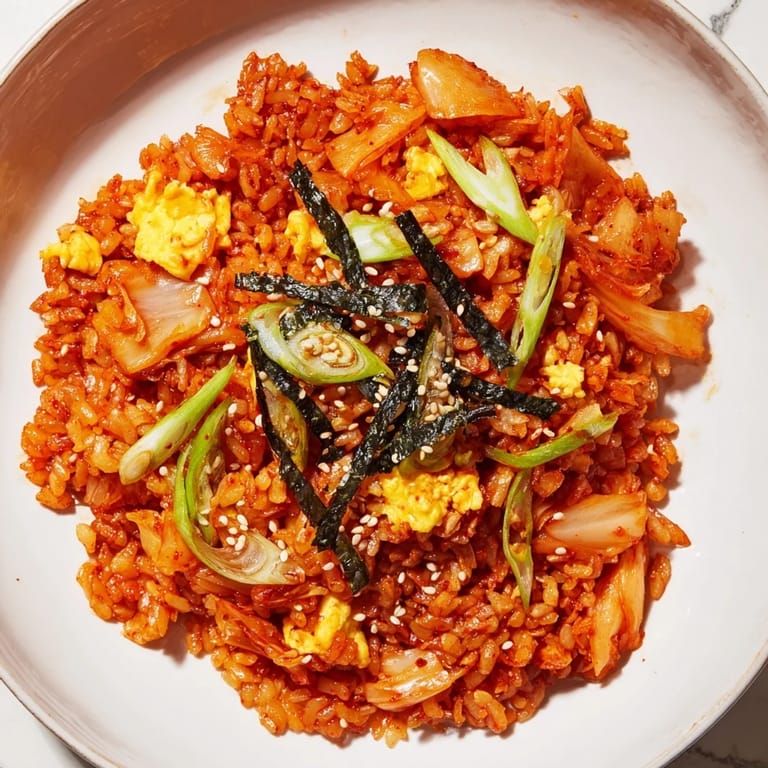
Save There's a moment near the end of cooking when the pan goes quiet and everything softens into this deep red-brown color that just feels right. That's when I know it's ready, and there's something satisfying about that instant where technique and instinct meet.
Why This Dish Works
Kimchi fried rice succeeds because it layers textures and temperatures—soft scrambled eggs, chewy rice grains, crispy edges where things touch the hot pan, all bound together by a sauce that's spicy, tangy, and deeply savory. The fermentation in the kimchi does the heavy lifting flavor-wise, so you don't need to fuss with a dozen ingredients. It's honest cooking that rewards you for respecting simple, quality components.
Building Flavor Through Timing
The order matters here in a way that feels almost musical—aromatic vegetables go in first to build a base, then kimchi gets a moment to deepen, then the sauce components combine before the rice joins the party. Adding the rice too early floods the pan with cold starch and cools everything down; adding it at the right moment means every grain gets a proper coating and the eggs finish cooking gently rather than scrambling frantically. This is where practice teaches you more than any recipe can.
Making It Your Own
The beauty of this dish is that it welcomes improvisation. I've made it with leftover roasted vegetables, with crispy bacon instead of pork belly, even with a bit of peanut sauce drizzled on top when I was feeling adventurous. The framework stays steady while you play with what's in your fridge.
- For a vegan version, skip the eggs and add extra firm tofu that you've pressed and cubed, letting it get golden in the pan before adding everything else.
- Brown rice or even cauliflower rice work if you want to shift the nutrition, though the texture and flavor will shift slightly with each swap.
- Adjust gochujang to your own heat tolerance—start with less and add more next time if you want it bolder.
 Save
Save This is the kind of dish that makes you feel capable in the kitchen without requiring you to be a skilled cook. It reminds me why I love cooking in the first place.
Recipe FAQs
- → What is the best rice to use for this dish?
Day-old cooked white rice works best as it’s drier, helping to achieve a non-mushy texture and better frying results.
- → Can I make this dish vegan?
Yes, substitute eggs with firm tofu and ensure the kimchi does not contain fish sauce or shrimp paste to keep it vegan.
- → How spicy is this dish?
The heat level depends on the amount of gochujang used; adjust it to your taste for milder or bolder spice.
- → What garnishes complement this dish?
Toasted sesame seeds, extra green onions, and roasted seaweed strips add texture and enhance the flavor profile.
- → Can I use other proteins besides pork belly?
Yes, tofu or Spam are great alternatives that absorb the flavors well and suit different dietary preferences.