 Save
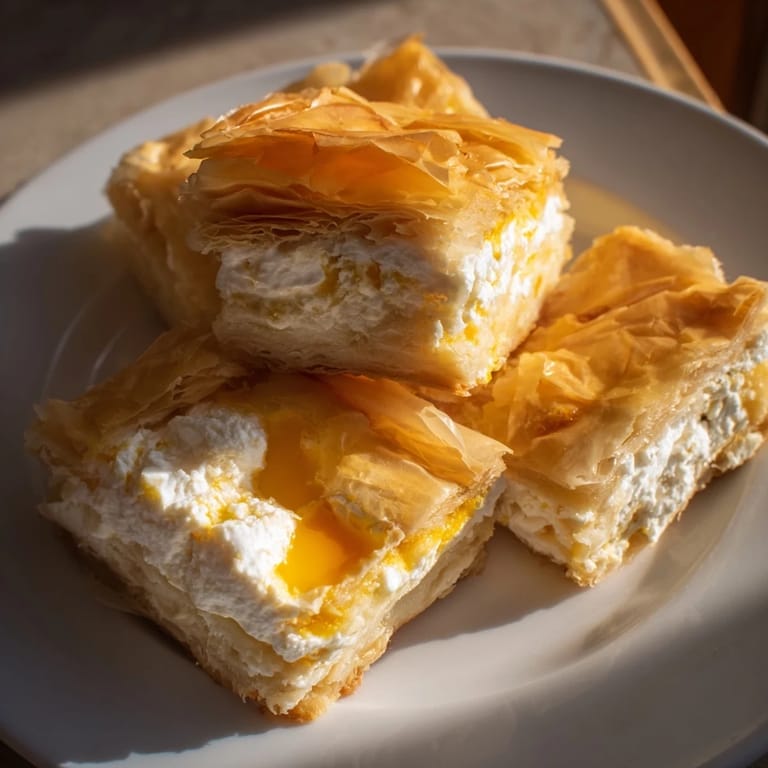
Save My neighbor Marija showed up one autumn afternoon with a still-warm gibanica wrapped in newspaper, the phyllo crackling as she unwrapped it. She described how her grandmother would make this in massive batches for family gatherings, the kitchen filling with the scent of butter and cheese long before anyone arrived. That first bite—crispy, salty, creamy all at once—made me understand why this Balkan staple had survived generations. I asked for the recipe that day, but it took me three attempts to understand the magic wasn't just in the ingredients but in how they came together. Now when I make it, I can almost hear Marija's voice saying, 'Don't rush the layering, let the phyllo breathe.'
I made this for a potluck once, still learning, and accidentally used too much salt. My friend took a bite and said, 'Wow, this tastes like someone's been cooking it their whole life,' not realizing I was sweating through the feedback. That's when I learned that slight imperfections often go unnoticed because the overall effect is so comforting and right. Now I think of that moment whenever someone asks for the recipe, knowing that a little extra care with seasoning makes all the difference.
Ingredients
- Cottage cheese, 300 g: This is the backbone of your filling—mild, creamy, and forgiving. Don't skip it even if feta alone seems tempting; it's what keeps the layers from being too sharp.
- Feta cheese, 200 g, crumbled: The salty wake-up call that makes every bite memorable. Crumble it fresh or buy pre-crumbled; either works, though fresh tastes brighter.
- Eggs, 4 large: These bind everything together and help the filling set during baking. Room temperature eggs mix more smoothly than cold ones.
- Plain yogurt, 100 ml: Adds tang and lightness so the filling doesn't become dense or heavy, making each layer feel almost cloud-like.
- Sunflower oil, 50 ml (plus 2 tbsp for brushing): This is your friend here—it keeps the phyllo crispy as it bakes without overpowering the cheese.
- Sparkling water, 50 ml: A small secret that aerates the filling slightly, making it less likely to be rubbery when baked.
- Salt and pepper: Start conservative with salt since feta is already salty; you can always taste and adjust.
- Phyllo dough, 500 g (about 12 sheets): Keep it thawed and covered with a damp towel so it doesn't dry out while you work.
- Egg yolk, 1 (optional): Only for that burnished, golden finish if you're in the mood to make it look extra.
Tired of Takeout? 🥡
Get 10 meals you can make faster than delivery arrives. Seriously.
One email. No spam. Unsubscribe anytime.
Instructions
- Prepare your space:
- Preheat the oven to 180°C (350°F) and grease your baking dish generously with oil so nothing sticks. Have all your ingredients gathered and within arm's reach because phyllo waits for no one.
- Mix the cheese filling:
- Combine cottage cheese, feta, eggs, yogurt, oil, and sparkling water in a large bowl, stirring gently until smooth and creamy. Season with salt and pepper, tasting as you go—remember feta is already doing a lot of the salty work.
- Begin the first layer:
- Place one phyllo sheet in the dish and brush it lightly with oil using smooth, confident strokes. Repeat with two more sheets, brushing each one, so you have a sturdy base that won't tear when you spread the filling.
- Add the first filling layer:
- Spread 3-4 tablespoons of cheese mixture over the phyllo base, using the back of a spoon to distribute it gently. Don't worry about perfection—the next layers will cover any gaps.
- Build the layers:
- Continue alternating: add 2-3 sheets of oiled phyllo, brush each, then spread more filling. Keep this rhythm going until all your filling is nestled between crispy phyllo sheets.
- Top it off:
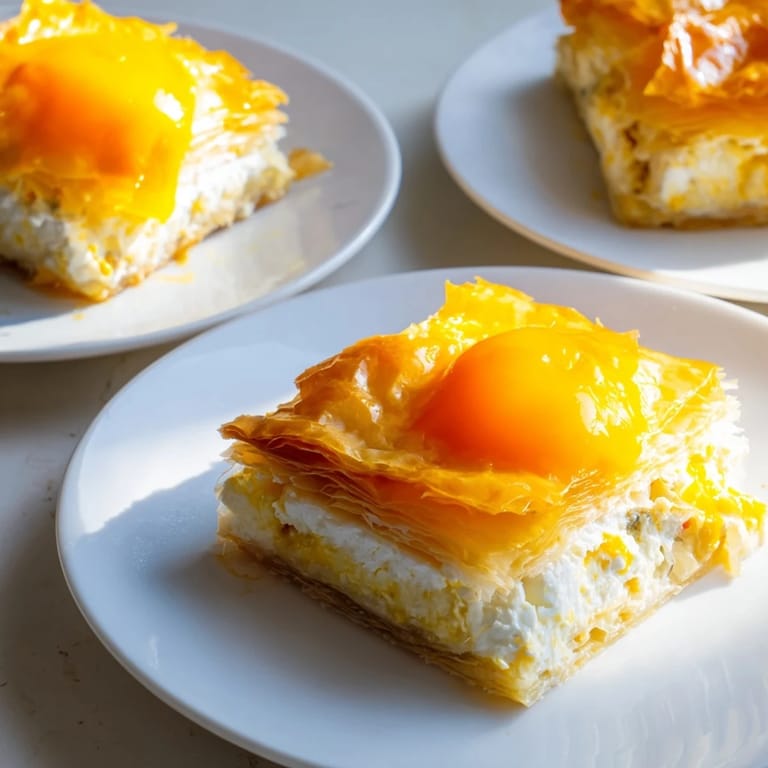
- Finish with 2 sheets of phyllo brushed with oil, making sure they're smooth and taut. If using egg yolk for glazing, beat it lightly and brush it over the very top for a deep golden color.
- Score before baking:
- Use a sharp knife to cut the pie into squares or diamonds, going all the way through but not moving the pieces. This prevents cracking and makes serving cleaner.
- Bake until golden:
- Bake for 35-40 minutes until the top is deep golden brown and the phyllo sounds crisp when you tap it. The smell will tell you when it's getting close—that toasty, savory aroma is impossible to miss.
- Cool and serve:
- Let it rest for 10 minutes so the filling sets slightly, then serve warm or at room temperature with a simple salad alongside.
 Save
Save There was a moment, maybe my fifth time making this, when I realized I wasn't following a recipe anymore—I was making something that belonged in my kitchen. My daughter asked why it tasted different each time, and I said honestly that I was finally cooking it instead of just executing steps. That shift, from careful to confident, is what turns a good dish into something people ask for by name.
The Phyllo Question
People always ask if they can skip the phyllo or use puff pastry instead, and the honest answer is no—not really. Phyllo creates something structurally different: it's individually thin, delicate sheets that crisp up into those shattered, golden layers that make gibanica feel special. Puff pastry is richer and denser; it's a completely different animal. If you're avoiding phyllo because it seems intimidating, I'd gently push back and say thawed phyllo is actually forgiving once you understand it needs a little oil and a steady hand. That's it.
Seasoning and Taste Memory
The filling tastes quite mild when you first mix it, which surprises people, but remember that feta and salt concentrate and intensify in the oven. I used to over-salt at this stage, then taste bitter regret later. Now I taste the raw mixture and imagine it warming and shrinking slightly, which helps me land on the right amount. It's one of those cooking lessons that sticks with you the moment you get it right.
Serving and Storage Wisdom
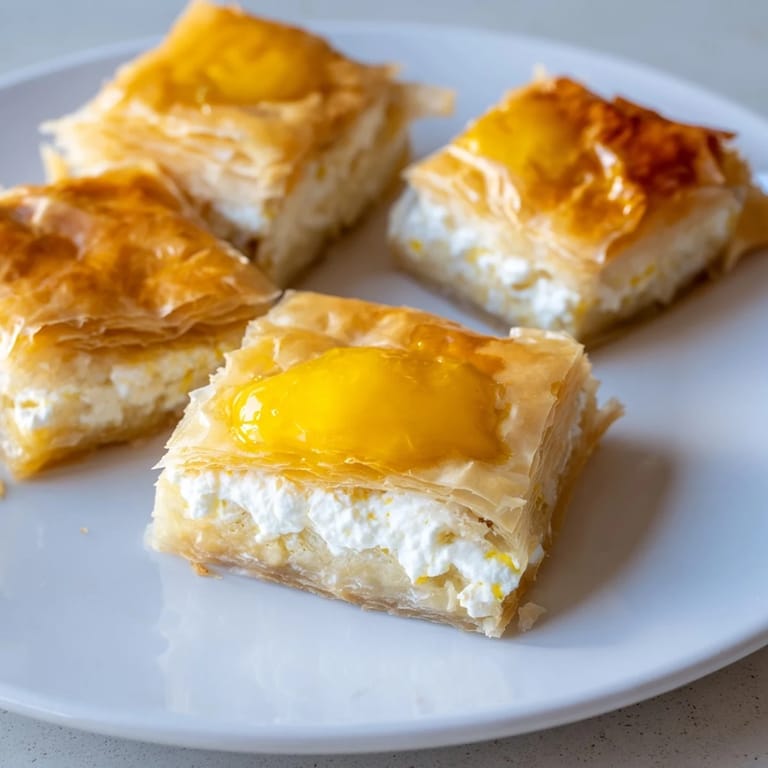
Gibanica is delicious at almost any temperature, which is part of its charm as a potluck or packed lunch option. A simple salad of fresh tomatoes, cucumbers, and a light dressing next to it is all you need—the cheese-forward filling doesn't need competition. Leftovers keep in the fridge for a few days, and yes, you can reheat them gently in a low oven if you want to revive the crisp.
- Serve it warm for maximum crispy-creamy contrast, or at room temperature for a more forgiving texture.
- A dollop of sour cream on the side is how some families do it, and honestly, it's hard to argue with that tradition.
- Make it a day ahead if you're feeding guests; the flavors settle overnight and everything slices cleaner.
 Save
Save This recipe taught me that some of the best foods aren't complicated; they're just the right simple things layered with care and a little olive oil. Make it once, and you'll understand why it's been feeding families across the Balkans for generations.
Recipe FAQs
- → What cheeses are used in this layered pie?
The filling combines creamy cottage cheese and crumbly feta for a rich and tangy flavor.
- → How is the phyllo dough prepared for baking?
Phyllo sheets are layered with sunflower oil brushed between them to ensure crispiness and prevent sticking.
- → Can this dish be served cold or warm?
It is best enjoyed warm or at room temperature to highlight the crisp layers and creamy filling.
- → Is there an option to make it gluten-free?
Gluten-free phyllo sheets can be used as a substitute to accommodate gluten sensitivities.
- → What is the purpose of sparkling water in the filling?
Sparkling water helps lighten the filling, resulting in a fluffier texture within the layers.
- → How is the golden finish achieved on top?
The top layer is brushed with sunflower oil, and optionally with egg yolk, for a glossy, golden crust.