 Save
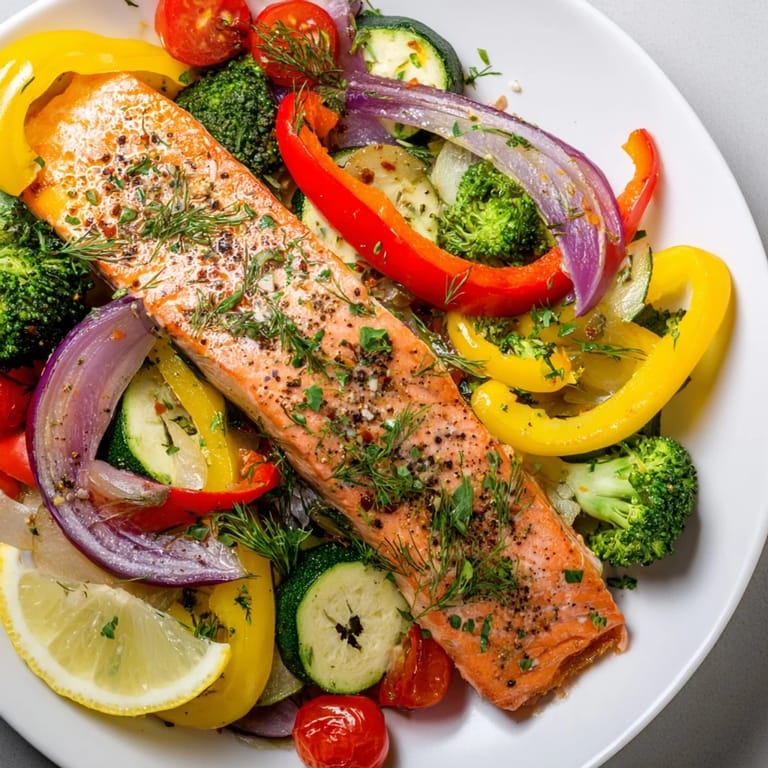
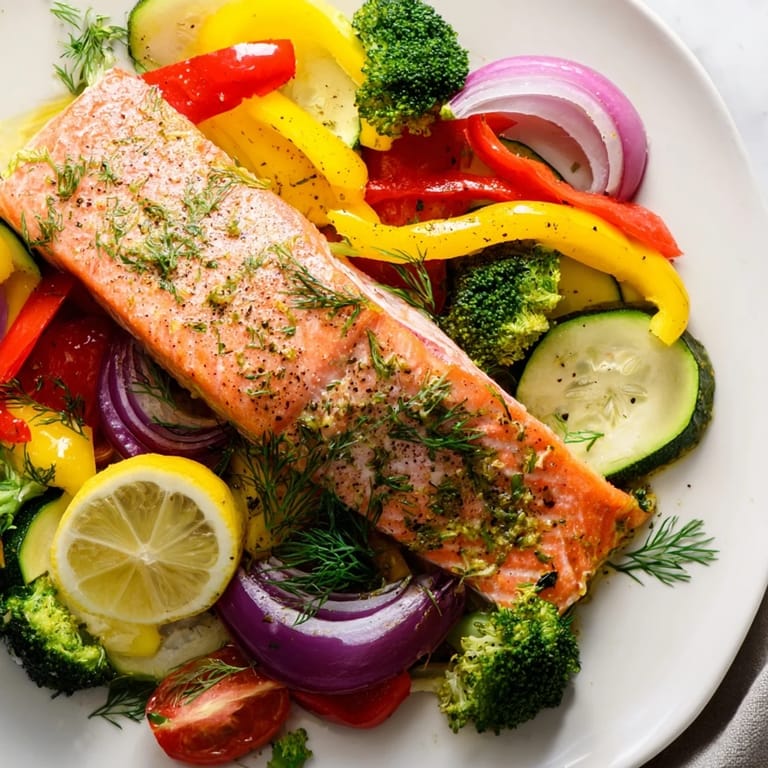
Save There's something quietly magical about watching salmon turn from translucent to opaque under the oven's heat, and that moment when your kitchen fills with the aroma of roasted lemon and dill still gets me every time. I stumbled onto this sheet pan method one weeknight when I had salmon thawing but absolutely no energy for complicated cooking, and what I discovered was that sometimes the simplest approach yields the most satisfying results. The vegetables caramelize while the fish stays impossibly tender, and you're left with one pan to clean instead of a sink full of dishes. That efficiency alone would make this recipe worth repeating, but the flavors are what keep me coming back.
I made this for my brother last spring when he was visiting and mentioned he'd been trying to eat healthier, and watching him go back for seconds of the charred bell peppers told me everything I needed to know. He kept asking if I was sure it wasn't more complicated than it looked, genuinely surprised that throwing everything on a pan could taste this intentional and delicious. That's when I realized this recipe works because it respects both the salmon and the vegetables—neither one gets overshadowed or sacrificed for convenience.
Ingredients
- Salmon fillets (4, about 6 oz each): Look for fillets that are firm and smell like the ocean, not fishy—that's the difference between fresh and old. Skinless fillets are easier to manage on the sheet pan, though skin-on works too if that's what you find.
- Olive oil (2 tbsp): Use something you actually like tasting, because it's doing real work here as both cooking medium and flavor carrier.
- Lemon (1, zested and juiced): Fresh lemon is non-negotiable—bottled juice tastes tired and thin in comparison, and the zest adds brightness the juice alone can't deliver.
- Dill (1 tsp dried or 1 tbsp fresh): Fresh dill is preferable because it doesn't get harsh during roasting, but dried works fine if that's what you have on hand.
- Garlic powder (1 tsp): This dissolves evenly into the oil better than minced garlic would, keeping the texture smooth and the flavor distributed.
- Salt and black pepper (½ tsp and ¼ tsp): These modest amounts let other flavors shine without making the dish aggressive or salty.
- Bell peppers, red onion, zucchini, cherry tomatoes, broccoli: Choose vegetables that appeal to you and are roughly similar in size so they roast evenly—I've swapped in asparagus, green beans, and carrots depending on the season and what looked good at the market.
- Lemon wedges and fresh parsley (optional garnish): The parsley adds freshness at the end, and lemon wedges give people the option to brighten things up to their taste.
Tired of Takeout? 🥡
Get 10 meals you can make faster than delivery arrives. Seriously.
One email. No spam. Unsubscribe anytime.
Instructions
- Heat the oven and prep the pan:
- Get your oven to 425°F and line a large sheet pan with parchment paper or foil—this step saves you from scrubbing salmon residue later. A hot oven is essential because it gives the vegetables a chance to caramelize instead of just steaming.
- Build the seasoning mixture:
- Whisk together the olive oil, lemon zest, lemon juice, dill, garlic powder, salt, and pepper in a small bowl. This is where all your flavor lives, so take a moment to taste it if you can and adjust the lemon or salt to your preference.
- Season and arrange the vegetables:
- Spread your chopped vegetables across the sheet pan and drizzle with half the oil mixture, then toss everything until each piece is coated. The vegetables want to be in a relatively single layer so they roast properly rather than steam on top of each other.
- Nestle in the salmon:
- Place the salmon fillets among the vegetables and brush them with the remaining oil mixture, making sure every surface gets coated. Don't be shy about this—the oil carries all the flavor and keeps the fish moist.
- Roast until done:
- Pop the whole pan into your hot oven for 18 to 20 minutes, watching for the moment when the salmon flakes easily with a fork and the vegetable edges look slightly caramelized. You want the vegetables tender but not falling apart, and the salmon just cooked through.
- Finish and serve:
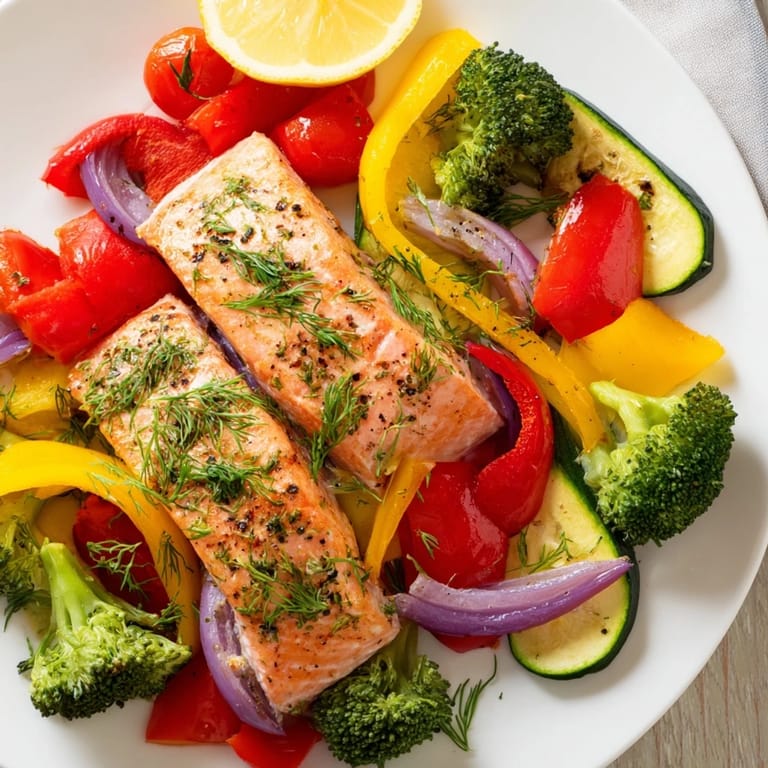
- Pull the pan from the oven, scatter fresh parsley over everything if you like, and set lemon wedges on the side for people to squeeze over their portions. Serve immediately while everything is still warm and the vegetables have their crispy edges intact.
 Save
Save My partner called this the first thing I'd made in months that didn't require negotiation about what to serve alongside it, because everything you need is already on the plate. That's when I understood that sheet pan cooking isn't laziness—it's clarity, a way of saying that good food doesn't need to be complicated to be satisfying.
Vegetable Variations and Seasonal Swaps
The beauty of this recipe is that it adapts beautifully to whatever looks good when you're shopping and whatever you're craving that day. In spring I lean toward asparagus and snap peas, in summer I add more tomatoes and zucchini, and come fall I toss in diced root vegetables that roast into something almost caramel-like. The key is keeping pieces roughly the same size and not overcrowding the pan, because salmon is forgiving but it can't work miracles with a pan that's too full.
Flavor Boosts and Personal Touches
Once the basic recipe clicked for me, I started treating it like a template for experimenting with small additions that shift the mood without changing the structure. A handful of capers scattered over the fillets adds a briny pop that plays beautifully with the lemon, crumbled feta introduces a creamy richness, and a pinch of red pepper flakes brings subtle heat. My friend who loves anchovies swears by adding a tiny bit of anchovy paste to the oil mixture, and while I haven't quite made that leap, I respect the commitment to umami.
Pairing and Serving Suggestions
This meal stands completely on its own, but if you want to round things out a crisp white wine like Sauvignon Blanc or light Chardonnay pairs wonderfully with the lemon and dill notes. A simple green salad alongside adds another texture layer without adding any work, and if your crowd prefers something heavier, crusty bread is the way to go for soaking up the pan juices.
- Let the cooked sheet pan rest for two minutes before serving so people don't burn themselves on the hot pan or vegetables.
- If you're cooking for people with different vegetable preferences, feel free to give them their own section of the pan with vegetables they'll actually enjoy.
- Leftover salmon is excellent cold the next day, though reheating gently in a low oven keeps it from drying out.
 Save
Save This recipe taught me that the best meals aren't always the ones with the longest ingredient lists or the most elaborate techniques—sometimes they're the ones where everything just works together without fuss. That's the kind of cooking I want in my life more often.
Recipe FAQs
- → What vegetables are best for roasting with salmon?
Bell peppers, zucchini, cherry tomatoes, broccoli, and red onion complement salmon well, roasting evenly and absorbing flavors.
- → How do you ensure salmon stays tender when baking?
Brushing fillets with olive oil infused with lemon and herbs helps keep salmon moist and flavorful throughout baking.
- → Can I substitute fresh dill with dried dill?
Yes, dried dill can be used; adjust quantity as dried herbs are more concentrated than fresh.
- → What temperature is ideal for roasting this sheet pan dish?
Roasting at 425°F (220°C) allows vegetables to soften while the salmon cooks perfectly without drying out.
- → Are there suggestions for pairing beverages with this dish?
Light white wines like Sauvignon Blanc or Chardonnay balance the bright, fresh flavors of the fish and vegetables.
- → How can I add extra flavor to the dish?
Sprinkling feta cheese or capers before serving adds a tangy, savory element complementing the roasted ingredients.