 Save
Save The first time I made pelmeni, my hands were shaking—not from nerves, but from the tiny, intricate folding that seemed impossible until suddenly it wasn't. My Russian neighbor had watched me struggle through the first dozen, then gently took one from my pile, showed me how to pinch the corners together in that signature way, and suddenly I understood. Now, when the aroma of boiling pelmeni fills my kitchen, I'm transported back to that moment of breakthrough, when a simple dumpling became a small edible triumph.
I'll never forget the dinner party where I served these to my partner's coworkers, half of whom had never eaten pelmeni before. Watching their faces light up after that first taste, seeing them reach for seconds and thirds, taught me that sometimes the most impressive meals are the ones that taste like they come from somewhere real, somewhere with history. That night, pelmeni stopped being just a recipe and became proof that simple food done right is always better than complicated food done sloppily.
Ingredients
- All-purpose flour (2 cups): The foundation of everything—use good flour because it makes a real difference in how the dough feels under your hands and how it holds up when you're folding fifty little dumplings.
- Cold water (1/2 cup): Keep it cold from the fridge; warm water makes the dough sticky and impossible to work with, which I learned the hard way the second time I made these.
- Egg (1 large): This gives the dough structure and a subtle richness that keeps the filling contained without tearing.
- Salt (1/2 tsp for dough, 1/2 tsp for filling): Don't skip the salt in the dough itself—it seasons the entire dumpling, not just the filling.
- Ground pork (7 oz) and ground beef (7 oz): The combination matters; pork alone tastes too mild, beef alone too heavy, but together they're perfectly balanced.
- Onion, finely grated (1 small): Grating instead of mincing keeps the filling tender and distributes the onion flavor evenly without little chunks getting in the way.
- Garlic, minced (2 cloves): Fresh garlic here is non-negotiable; it's what makes the filling taste alive instead of just meaty.
- Black pepper (1/2 tsp): A generous pinch of freshly ground pepper, not pre-ground from a shaker, makes a surprising difference in how the filling tastes.
- Cold water for filling (2 tbsp): This keeps the meat mixture sticky and tender rather than dense and heavy when cooked.
- Sour cream (1 cup): The real star; choose a quality brand because this is where it shines, creamy and slightly tangy over hot pelmeni.
- Fresh dill, chopped (1 tbsp optional): If you have it, use it—the flavor is so tied to pelmeni that skipping it feels incomplete.
Tired of Takeout? 🥡
Get 10 meals you can make faster than delivery arrives. Seriously.
One email. No spam. Unsubscribe anytime.
Instructions
- Mix the dough and let it rest:
- Combine your flour and salt in a big bowl, then crack the egg in and start mixing while you slowly add cold water, a splash at a time, until it comes together. Knead for 8–10 minutes—your hands will get tired, but that's when you know you're building enough gluten for the dough to stretch without tearing.
- Prepare the filling:
- Combine both meats with the grated onion, garlic, salt, pepper, and cold water in a bowl, then mix it really well—like, really really well. The cold water helps keep it moist and tender once it's cooked inside the dumpling.
- Roll and cut your circles:
- Dust your surface with flour, then roll the dough out so thin you can almost see through it—about 2 mm. Use a 2.5-inch round cutter and keep your circles stacked with a tiny bit of flour between them so they don't stick.
- Fill and fold with intention:
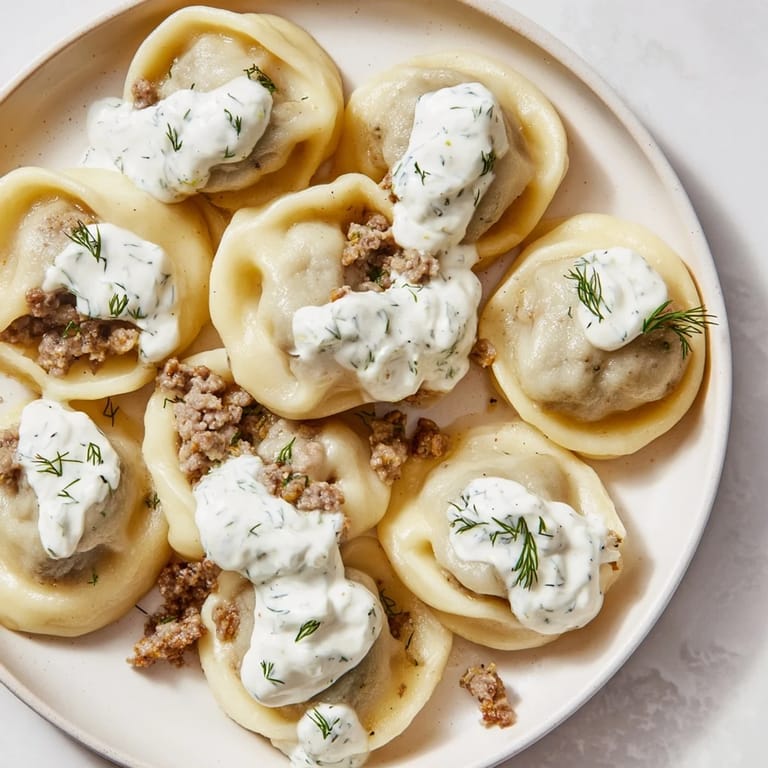
- Place exactly 1 teaspoon of filling in the center of each circle, then fold in half and pinch those edges like you're sealing a secret. Bring the two corners around and pinch them together—that's what makes them look like a proper pelmeni and gives you those beautiful little pleats.
- Boil until they float:
- Get your salted water to a rolling boil, then add the pelmeni a handful at a time so the temperature doesn't drop too much. They'll sink, then float to the top in about 5–7 minutes—let them bob around for another minute or two after floating to make sure the filling is cooked through.
- Serve hot with sour cream:
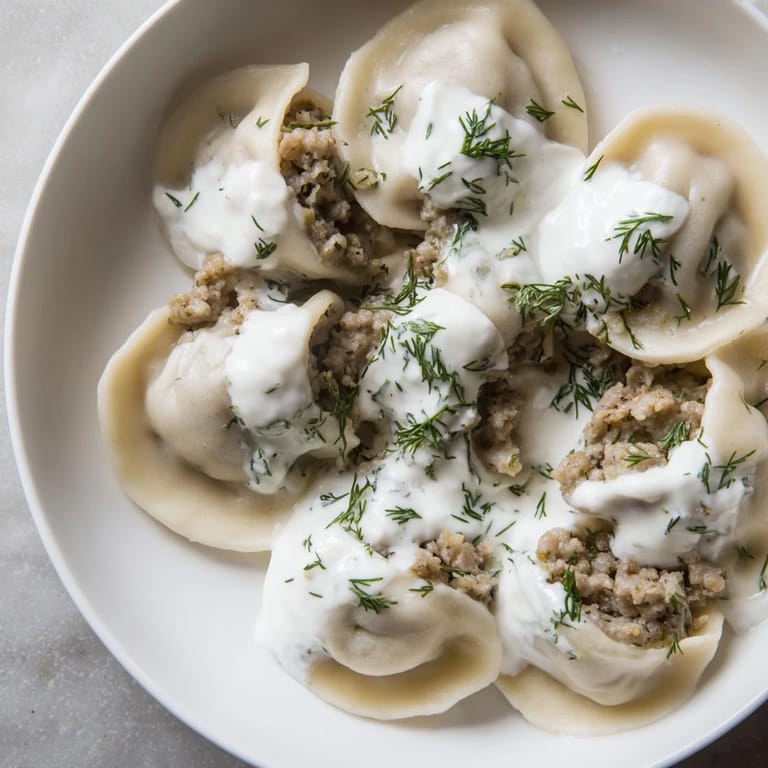
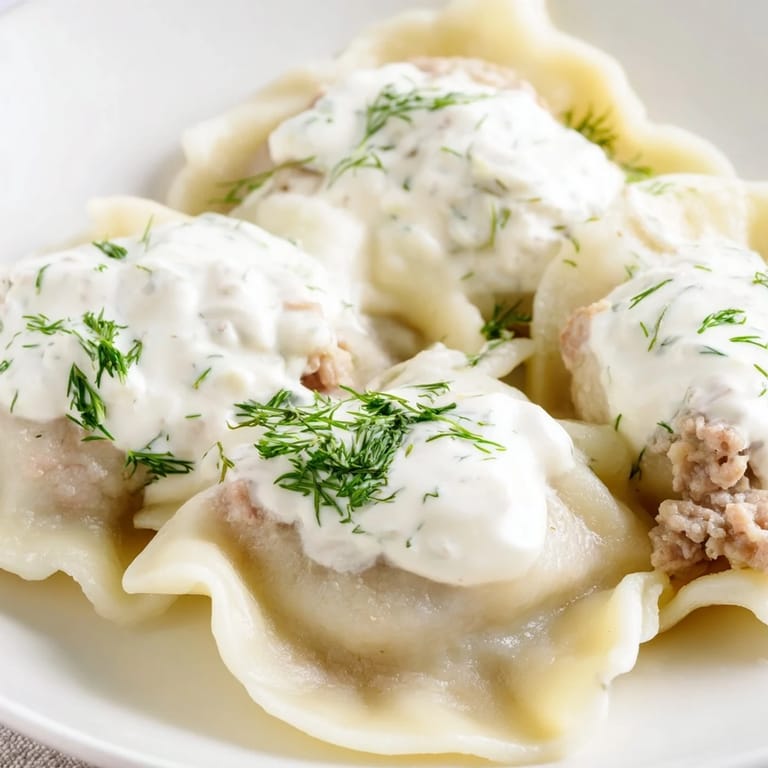
- Lift them out gently with a slotted spoon and serve immediately while they're still steaming, with a generous dollop of sour cream and a sprinkle of fresh dill if you have it.
 Save
Save There's a moment when everything clicks—when you realize you've folded a hundred little dumplings and your hands know exactly what to do without you thinking about it. That's when pelmeni stops being a technique and becomes meditation, something you can do while listening to music or having a conversation, and suddenly you understand why they've been made this way for centuries.
The Freezer is Your Friend
One of my favorite discoveries is that pelmeni actually prefer the freezer. Arrange them on a tray without touching each other until they're completely frozen solid, then pile them into a bag—they'll keep for three months and you can boil them straight from frozen, adding just a minute or two to the cooking time. This changes everything about how you approach making them, turning one long afternoon of folding into weeks of easy dinners that taste like you spent hours cooking.
The Sauce Philosophy
Sour cream is the traditional topping, and it really is the only one you need—cool, tangy, creamy against the hot dumpling. That said, I've learned that the sauce doesn't have to be plain; a tiny pinch of nutmeg in the meat filling, a crack of black pepper over the sour cream, or even a drizzle of melted butter alongside turns the whole thing from good to memorable.
Making Pelmeni Together
The truth I've learned is that pelmeni are better made with someone else, even if you're both fumbling through it at first. There's something about the repetitive folding, the shared focus, the inevitable giggling when someone's dumpling looks lopsided—it turns cooking into connection. This is the kind of recipe that teaches patience, precision, and the satisfaction of finishing something you started with your own hands.
- Don't overthink the folding shape; as long as the edges are sealed, they'll cook beautifully and taste exactly the same.
- Keep your work surface and cutters floured to prevent sticking, and refresh the flour as you go because the dough releases moisture as it sits.
- Serve pelmeni the moment they're done—they firm up quickly as they cool, and they're best when they're still hot and slightly tender.
 Save
Save Pelmeni aren't flashy or complicated, but they're the kind of food that sticks with you long after dinner is over. Make them, eat them, freeze them, and come back to them whenever you need something that tastes like home, even if Russia is nowhere in your own story.
Recipe FAQs
- → What type of dough is used for these dumplings?
A tender dough made from all-purpose flour, egg, cold water, and a pinch of salt is kneaded until smooth and elastic before resting to ensure the right texture.
- → What meats are combined in the filling?
The filling uses a mix of ground pork and ground beef, seasoned with grated onion, minced garlic, salt, and pepper for rich flavor.
- → How are pelmeni shaped and sealed?
The dough is rolled thin and cut into circles, filled with a small spoonful of meat, folded into half-moons, and edges pinched tightly before bringing the corners together to seal.
- → What is the cooking method for pelmeni?
They are boiled in salted water until they float and the filling is cooked through, usually 5–7 minutes, and then removed carefully with a slotted spoon.
- → How is the dish typically served?
Pelmeni are served hot, generously topped with a rich sour cream sauce and optionally garnished with chopped fresh dill for added freshness.
- → Can pelmeni be prepared ahead of time?
Yes, they can be frozen before cooking by placing them on a tray first, then storing in a bag for up to three months without affecting quality.