 Save
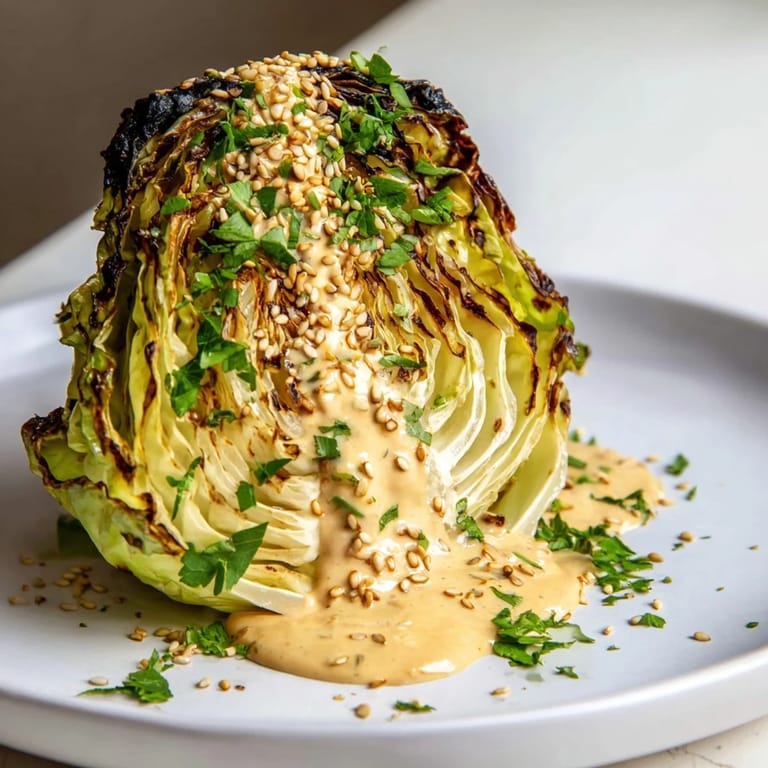
Save I was standing in front of my open fridge one Wednesday night, staring at a sad cabbage I'd bought with good intentions five days earlier. My usual vegetable roasting tricks felt boring, so I grabbed the tahini jar from the back of the pantry and decided to try something I'd seen at a friend's dinner party months before. The cabbage wedges came out golden and tender, edges crispy like autumn leaves, and the nutty tahini sauce turned what could have been a forgettable side into something I actually wanted seconds of. Now it's my go-to when I need vegetables to feel exciting again.
The first time I served this to my skeptical partner, who usually picks at anything green, I watched him quietly go back for a third wedge. He didn't say much, just nodded and kept eating, which in his language means it's a keeper. I've since brought it to potlucks, made it for weeknight dinners when I'm too tired to think, and even packed leftovers in a container for lunch the next day. It's become one of those recipes I don't announce or fuss over, I just make it and people always ask what I did to the cabbage.
Ingredients
- Green cabbage: Choose a firm head with tightly packed leaves, and keep the core intact when you cut wedges so they hold together during roasting.
- Olive oil: This helps the edges crisp up beautifully and keeps the cabbage from drying out in the high heat of the oven.
- Kosher salt and black pepper: Simple seasoning is all you need here, the roasting process coaxes out so much natural sweetness from the cabbage.
- Tahini: Look for a well-stirred jar, the oil separates on top and you want it smooth and creamy before you start whisking.
- Garlic clove: Grating it finely instead of mincing distributes the garlic flavor evenly through the sauce without any harsh bites.
- Fresh lemon juice: Brightens the rich tahini and balances the earthiness, I always use fresh because bottled lemon juice tastes flat in comparison.
- Cold water: Adding it slowly to the tahini makes the sauce seize up at first, which is normal, then it loosens into a silky drizzle.
- Ground cumin: Just a hint adds warmth and a subtle smokiness that makes the sauce taste more complex than it really is.
- Toasted sesame seeds: A quick topping that adds crunch and echoes the tahini flavor, I toast them in a dry skillet for about two minutes.
- Fresh parsley or cilantro: A handful of chopped herbs makes the whole dish look fresh and alive, plus it adds a pop of color.
- Smoked paprika or Aleppo pepper: Optional but wonderful, a pinch on top gives a gentle heat and a little visual drama.
Tired of Takeout? 🥡
Get 10 meals you can make faster than delivery arrives. Seriously.
One email. No spam. Unsubscribe anytime.
Instructions
- Get the oven ready:
- Preheat your oven to 425°F and line a baking sheet with parchment paper so cleanup is nearly effortless later. This high heat is what creates those caramelized, crispy edges.
- Prep the cabbage:
- Cut the cabbage through the core into eight even wedges, leaving the core attached so each wedge stays intact. Arrange them in a single layer on the baking sheet, drizzle with olive oil, and season with salt and pepper.
- Roast until golden:
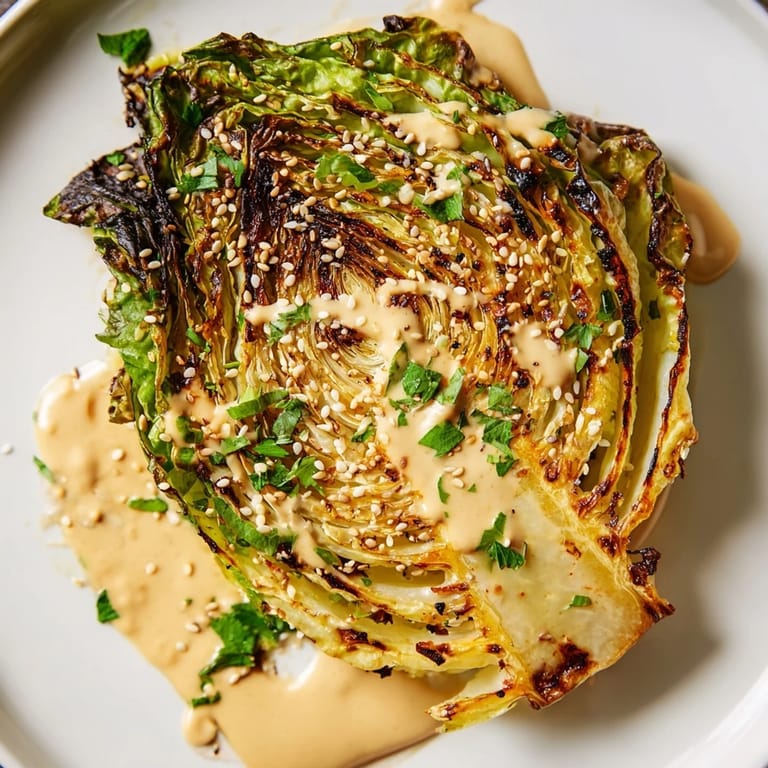
- Slide the pan into the oven and roast for 25 to 30 minutes, flipping the wedges halfway through so both sides get crispy and browned. The cabbage should be tender when you poke it with a fork, with edges that look almost charred in the best way.
- Make the tahini sauce:
- While the cabbage roasts, whisk together tahini, grated garlic, lemon juice, cumin, and salt in a bowl. Add cold water one tablespoon at a time, whisking constantly, until the sauce is smooth and pourable like heavy cream.
- Assemble and serve:
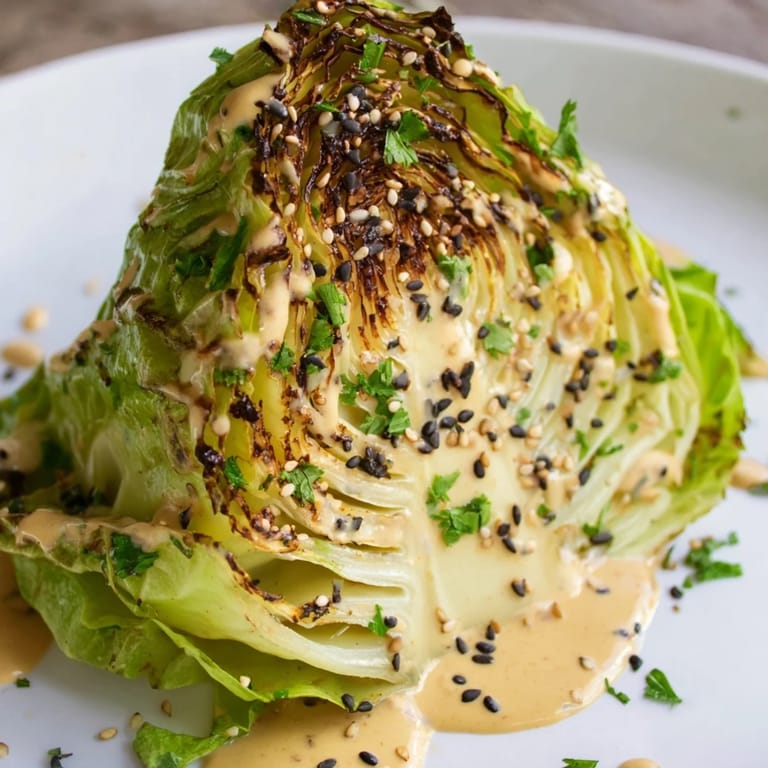
- Transfer the roasted wedges to a serving platter and drizzle generously with the tahini sauce, letting it pool in the crevices. Sprinkle with toasted sesame seeds, chopped herbs, and a pinch of smoked paprika or Aleppo pepper if you like.
 Save
Save One evening I made this for a small dinner with friends who claimed they didn't like cabbage, and I didn't tell them what it was until after they'd eaten half the platter. When I finally confessed, they didn't believe me at first, then they laughed and admitted it tasted nothing like the boiled cabbage they remembered from childhood. That's when I realized this recipe doesn't just transform cabbage, it changes people's minds about it entirely.
Making It a Meal
If you want this to be more than a side, serve the wedges over a bed of fluffy couscous, warm quinoa, or even plain white rice to soak up all that tahini sauce. I've also tucked roasted wedges into warm pita bread with extra herbs and a handful of arugula for a satisfying lunch that feels both light and filling. A fried egg on top turns it into a surprisingly hearty breakfast, and a sprinkle of crumbled feta or toasted chickpeas adds protein if you're feeding someone who needs convincing that vegetables can be a main course.
Flavor Variations
Sometimes I swap the cumin in the tahini sauce for za'atar or sumac, which gives it a more tangy, herbal vibe that feels extra Middle Eastern. A drizzle of pomegranate molasses over the finished dish adds a sweet-tart glaze that makes the cabbage taste almost fancy, and a handful of pomegranate arils scattered on top looks beautiful and adds juicy bursts of flavor. If you like heat, stir a pinch of cayenne or red chili flakes into the sauce, or drizzle the cabbage with a little hot honey right before serving for a sweet and spicy contrast.
Storage and Reheating
Leftovers keep well in an airtight container in the fridge for up to three days, though the cabbage will soften a bit and lose some of its crispness. I reheat wedges in a hot skillet for a few minutes on each side to bring back some of that roasted texture, or I eat them cold straight from the fridge with a little extra tahini sauce drizzled on top. The tahini sauce thickens in the fridge, so thin it out with a splash of water or lemon juice before serving again.
- Make the tahini sauce up to three days ahead and store it separately so the cabbage stays crisp.
- Roast the cabbage in advance and reheat it in a 400°F oven for about ten minutes to restore the crispy edges.
- Red cabbage works too, but it takes a few extra minutes to roast and the color turns a deeper purple that looks stunning on the plate.
 Save
Save This dish has taught me that the simplest ingredients, when treated with a little care and high heat, can surprise you in the best way. I hope it becomes one of those recipes you turn to when you want something easy, healthy, and way more delicious than it has any right to be.
Recipe FAQs
- → How do I keep cabbage wedges from falling apart while roasting?
Keep the core intact when cutting wedges—this holds the leaves together during cooking. Arrange them flat on the baking sheet and flip carefully midway through roasting.
- → What consistency should the tahini sauce be?
The sauce should be pourable but thick enough to coat the cabbage. Add cold water gradually, one tablespoon at a time, whisking until you reach the desired consistency.
- → Can I use red cabbage instead of green?
Yes, red cabbage works well. Note that roasting time may increase slightly since red cabbage is denser. The tahini sauce complements both varieties equally.
- → How should I store leftovers?
Store roasted cabbage and tahini sauce separately in airtight containers in the refrigerator for up to 3 days. Reheat cabbage in a 350°F oven for 5–10 minutes. The sauce can be served cold or at room temperature.
- → What can I serve with roasted cabbage?
This pairs beautifully with rice, quinoa, or warm pita bread. It also complements grain bowls, roasted proteins, or hummus for a light meal. Add pomegranate seeds or nuts for extra texture.
- → Is this truly gluten-free?
Yes, as written. However, always verify that tahini and any store-bought ingredients carry a certified gluten-free label, as cross-contamination can occur during manufacturing.