 Save
Save My grandmother's kitchen in Warsaw always smelled like butter and boiling potatoes on Sunday afternoons, and pierogi were her answer to almost everything—comfort wrapped in soft dough. The first time I tried making them myself, I was standing in my own kitchen years later, realizing I'd memorized the feel of the dough without ever writing down her recipe. That moment taught me that some dishes carry themselves through muscle memory and love, and these tender potato and cheese dumplings are exactly that kind of food.
I made these for my best friend Sarah after she'd had a rough week, and watching her face light up when she bit into one—that creamy potato center with the sharpness of cheddar—reminded me why I loved cooking in the first place. She asked for the recipe immediately, which meant I'd done something right.
Ingredients
- All-purpose flour (3 cups): This is your dough foundation, and you want to treat it gently when kneading so the pierogi stay tender rather than tough.
- Egg, lukewarm water, sour cream, and melted butter: Together these create a dough that's forgiving and rich enough to hold shape without cracking when you fold and seal.
- Russet potatoes (1 ½ lbs): They break down into the smoothest, most luxurious filling—waxy potatoes won't give you that creamy texture.
- Farmers cheese and sharp cheddar: This combination gives you tang and depth; farmers cheese is mild and creamy while the cheddar adds a savory punch that makes the filling memorable.
- Onions for the filling and caramelizing: The first onion goes into the filling for sweetness, while the second batch caramelizes low and slow until they're almost jam-like in their richness.
- Sour cream for serving: It's not optional—the cool tang against the hot, crispy dumplings is where the magic happens.
Tired of Takeout? 🥡
Get 10 meals you can make faster than delivery arrives. Seriously.
One email. No spam. Unsubscribe anytime.
Instructions
- Make the Dough:
- Mix your flour and salt, make a well in the center like you're creating a little nest, and add the egg, melted butter, sour cream, and water all at once. As you stir, you'll notice the dough coming together shaggy and rough—that's exactly right. Knead it on a floured surface for 5 to 7 minutes until it becomes smooth and elastic, then cover it with a damp towel and let it rest for 30 minutes; this rest time is when the gluten relaxes and your dough becomes easier to work with.
- Build the Filling:
- Boil your cubed potatoes in salted water until they're completely tender, then drain them really well—excess moisture is the enemy of a good filling. While they're cooking, melt butter in a skillet and sauté your finely chopped onion until it turns golden and sweet, about 5 minutes, then fold it into your mashed potatoes along with the two cheeses and a generous pinch of salt and pepper.
- Shape the Pierogi:
- Roll out your rested dough to about ⅛ inch thick on a floured surface—thin enough that it's delicate but thick enough to hold the filling without tearing. Cut out circles about 3 inches wide (a glass works perfectly), place a heaping teaspoon of filling in the center of each, fold the circle in half, and pinch the edges firmly to seal so they don't burst when boiling.
- Boil Until They Float:
- Bring a large pot of salted water to a gentle boil, then add your pierogi in batches so they have room to move around. They're done when they float to the surface and then cook for another 1 to 2 minutes after that—they'll look plump and feel tender when you fish them out with a slotted spoon.
- Caramelize the Onions:
- In a large skillet, melt 3 tablespoons of butter over medium-low heat and add your thinly sliced onions, then be patient with them. Stir often as they cook slowly for 20 to 25 minutes, watching as they transform from sharp and raw to deep golden and sweet, almost jam-like in their intensity.
- Pan-Fry to Golden:
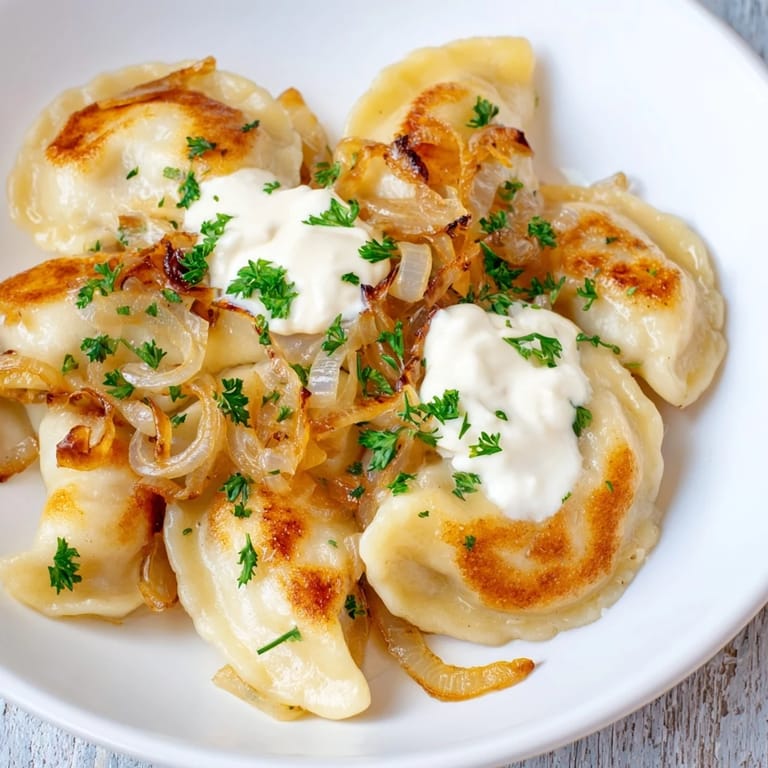
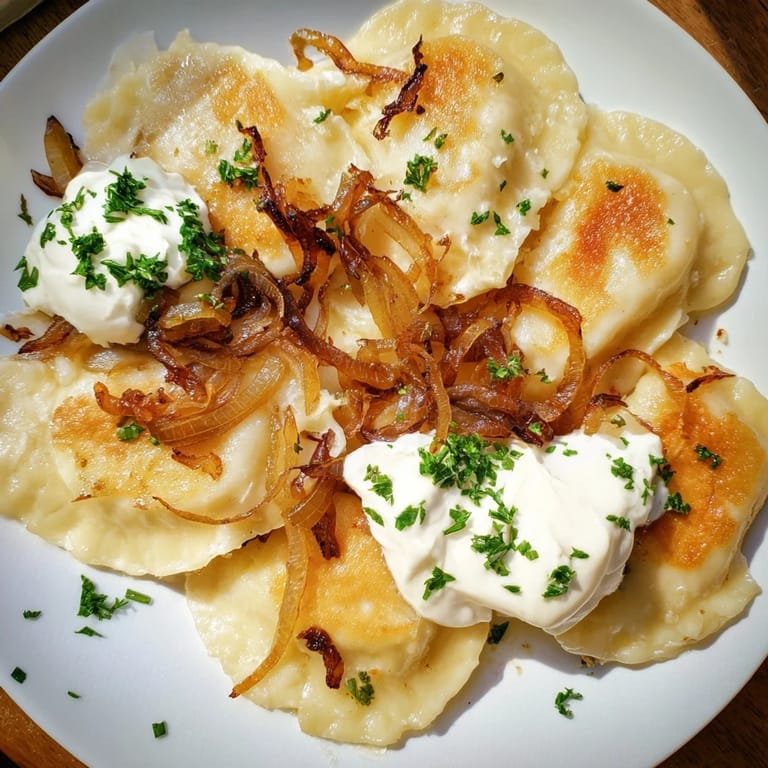
- Add your boiled pierogi to the caramelized onions in batches, frying them on both sides for 2 to 3 minutes per side until the edges turn crispy and golden brown. The contrast between the tender filling and the crispy exterior is what makes this moment worth the effort.
- Plate and Serve:
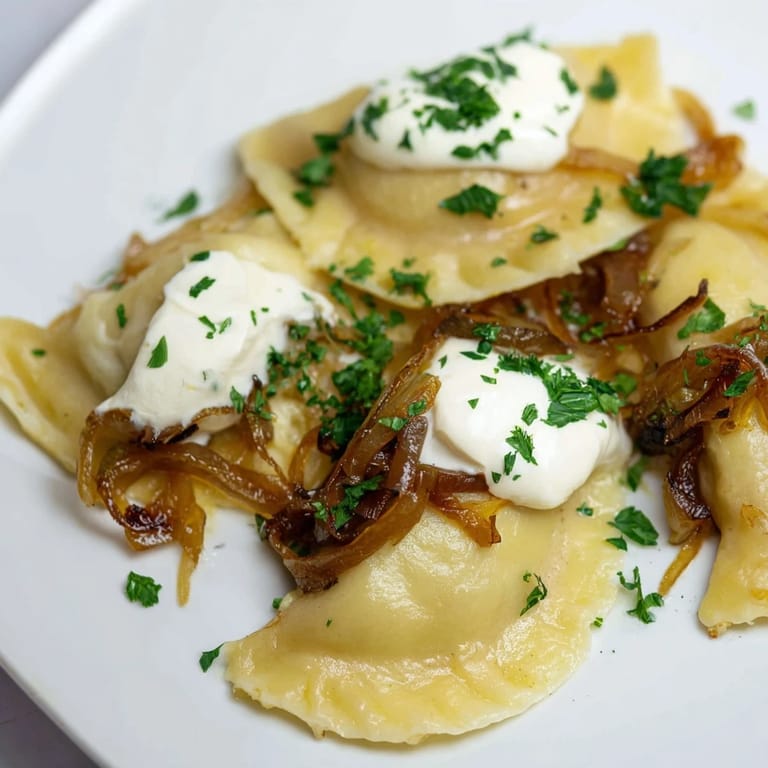
- Transfer your pierogi to a warm plate, pile those caramelized onions on top, add a generous dollop of cold sour cream, and scatter some fresh chives or parsley over everything if you're in the mood.
 Save
Save There's something deeply satisfying about making pierogi—the repetitive motion of folding and pinching becomes almost meditative, and by the time you're plating them, you feel like you've accomplished something real. My kitchen smelled like my grandmother's that day, and somehow, that felt like the whole point.
Why Pierogi Freeze So Beautifully
One of the best things about pierogi is that you can make a massive batch and freeze the uncooked ones on a tray, then transfer them to freezer bags where they'll keep for up to two months. When you want dinner, just drop them straight into boiling water—no thawing needed—and they cook the same way as fresh ones. This is genuinely life-changing on nights when you want something homemade but don't have the energy to make it from scratch.
Variations and Swaps
While potato and cheese is the classic, these dumplings are forgiving enough to adapt. You can swap the farmers cheese for well-drained cottage cheese if that's what you have, or add a handful of caramelized mushrooms to the filling for earthiness. If you're not vegetarian, crispy bacon lardons mixed into the caramelized onions push this from comfort food to truly indulgent.
What to Drink and Serve Alongside
Pierogi deserve something to drink that cuts through the richness, and a crisp Polish lager or dry white wine is exactly right. I also love serving these with a simple green salad on the side—just greens, a sharp vinaigrette, and maybe some toasted seeds—to balance all that buttery, cheesy goodness.
- A cold beer is traditional for a reason; it washes down the richness beautifully.
- If you're making these for a crowd, doubling the caramelized onions is never a mistake.
- Leftovers pan-fry beautifully the next day, so make extra dough and filling without hesitation.
 Save
Save Making pierogi is an act of care, and every time you eat one, you're tasting all that patience and attention. I hope this recipe becomes something you make often and with joy.
Recipe FAQs
- → What type of cheese works best for the filling?
Farmers cheese or well-drained ricotta combined with sharp cheddar offers a creamy and slightly tangy filling that balances well with the potatoes.
- → How do you know when the dumplings are cooked during boiling?
They float to the surface of the boiling water and after an additional 1-2 minutes, they are ready to be removed.
- → What is the purpose of pan-frying the pierogi after boiling?
Pan-frying creates a golden, crisp exterior that adds texture and enhances the overall flavor profile.
- → How are the caramelized onions prepared?
Thinly sliced onions are slowly cooked in butter over low heat until deeply golden and sweet, about 20-25 minutes.
- → Can the dough be prepared in advance?
Yes, the dough can be made ahead and rested, which helps develop its elasticity and ease of rolling.
- → What can be served alongside this dish?
This dish pairs well with sour cream and fresh herbs like chives or parsley, and also complements crisp Polish lager or dry white wine.