 Save
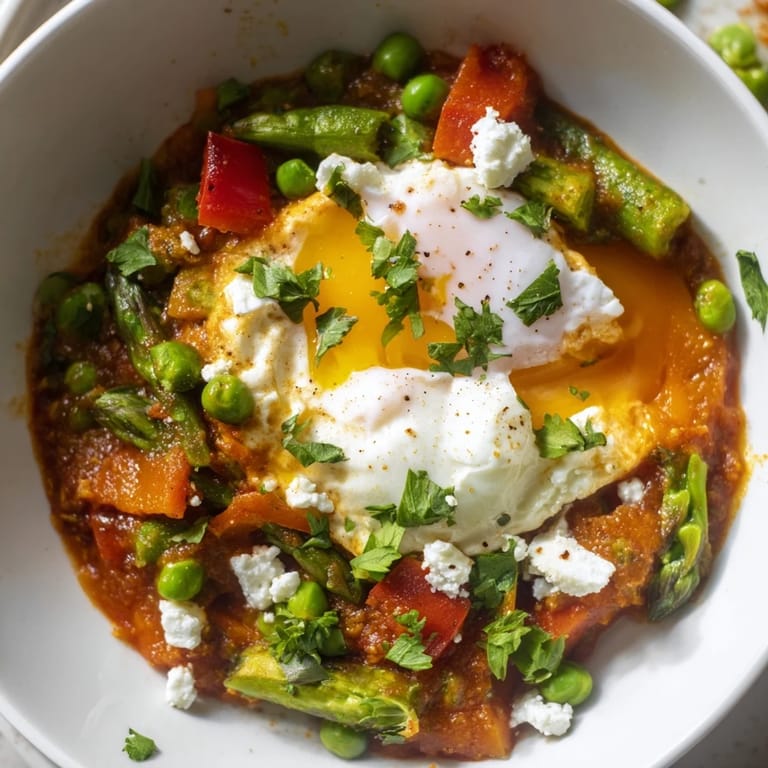
Save I cracked open a can of tomatoes one rainy April morning, convinced I could turn the bag of peas and broad beans in my fridge into something worth talking about. My usual shakshuka felt too heavy for spring, and the asparagus I'd bought two days earlier was starting to look at me accusingly from the crisper drawer. I tossed everything into a skillet with spices I could smell before I even opened the jars, and what emerged was this bright, almost garden-like version of a dish I thought I knew inside out. It's become my go-to whenever I want something that feels like both a proper meal and a celebration of whatever's in season.
The first time I served this to friends, I worried it might be too simple, too thrown-together. But watching everyone tear into warm bread and dip it into the wells of tomato and egg, I realized the beauty was in exactly that simplicity. One friend scraped her plate clean and asked if I'd made the sauce from scratch, as if there was some secret technique. I laughed and told her it was a can of tomatoes, some spices, and whatever green things I could find. Sometimes the best meals are the ones that don't try too hard.
Ingredients
- Olive oil: A good fruity olive oil makes a difference here since it's the base that carries the aromatics, and you'll taste it in the final sauce.
- Onion: Finely chopped onion melts into the tomato base and adds a subtle sweetness that balances the spices.
- Garlic cloves: Fresh garlic is essential for that sharp, warm flavor that blooms when it hits the hot oil.
- Red bell pepper: It adds a gentle sweetness and a pop of color that makes the dish look as vibrant as it tastes.
- Asparagus: Trim the woody ends and cut into short pieces so they cook evenly and stay tender without turning mushy.
- Peas: Fresh or frozen both work beautifully, and frozen peas are often sweeter since they're picked and frozen at peak ripeness.
- Broad beans: If using fresh, blanch and peel them first to reveal the bright green beans inside; frozen ones save you the trouble.
- Canned chopped tomatoes: The backbone of the sauce, providing acidity and body that the vegetables nestle into.
- Tomato paste: A spoonful deepens the tomato flavor and helps thicken the sauce so it clings to everything.
- Ground cumin: Earthy and warm, it's the spice that makes this taste unmistakably like shakshuka.
- Smoked paprika: Adds a subtle smokiness that makes the whole dish feel more complex than the effort you put in.
- Ground coriander: A hint of citrusy warmth that plays beautifully with the fresh vegetables.
- Chili flakes: Optional but recommended for a gentle heat that builds as you eat.
- Salt and black pepper: Essential for coaxing out the flavors of every other ingredient, so taste as you go.
- Eggs: The stars of the show, their runny yolks turn the sauce into something luxurious.
- Fresh parsley or mint: A handful of fresh herbs at the end brightens everything and adds a cool contrast to the warm spices.
- Feta cheese: Crumbled over the top, it adds salty, creamy bites that melt slightly into the hot sauce.
- Lemon wedges: A squeeze of lemon just before eating cuts through the richness and makes the whole dish sing.
Tired of Takeout? 🥡
Get 10 meals you can make faster than delivery arrives. Seriously.
One email. No spam. Unsubscribe anytime.
Instructions
- Soften the Onion:
- Heat the olive oil in your largest skillet over medium heat and add the chopped onion, stirring occasionally until it turns soft and translucent, about 4 to 5 minutes. You want it sweet and yielding, not browned.
- Add Garlic and Pepper:
- Toss in the minced garlic and diced red bell pepper, stirring them around until the garlic smells amazing and the pepper starts to soften, about 2 to 3 minutes. Don't let the garlic burn or it'll turn bitter.
- Bloom the Spices:
- Sprinkle in the cumin, smoked paprika, coriander, and chili flakes, stirring constantly for about a minute until the spices toast and release their fragrance. This step is what builds the depth of flavor in the sauce.
- Build the Tomato Base:
- Stir in the tomato paste first, letting it cook for a moment, then pour in the canned tomatoes along with a pinch of salt and pepper. Let it simmer uncovered for 10 minutes, stirring now and then, until the sauce thickens slightly and the raw tomato edge mellows.
- Add the Spring Vegetables:
- Stir in the asparagus, peas, and broad beans, making sure they're nestled into the sauce. Cover the pan and let everything cook together for 7 to 8 minutes until the vegetables are tender but still bright.
- Nestle the Eggs:
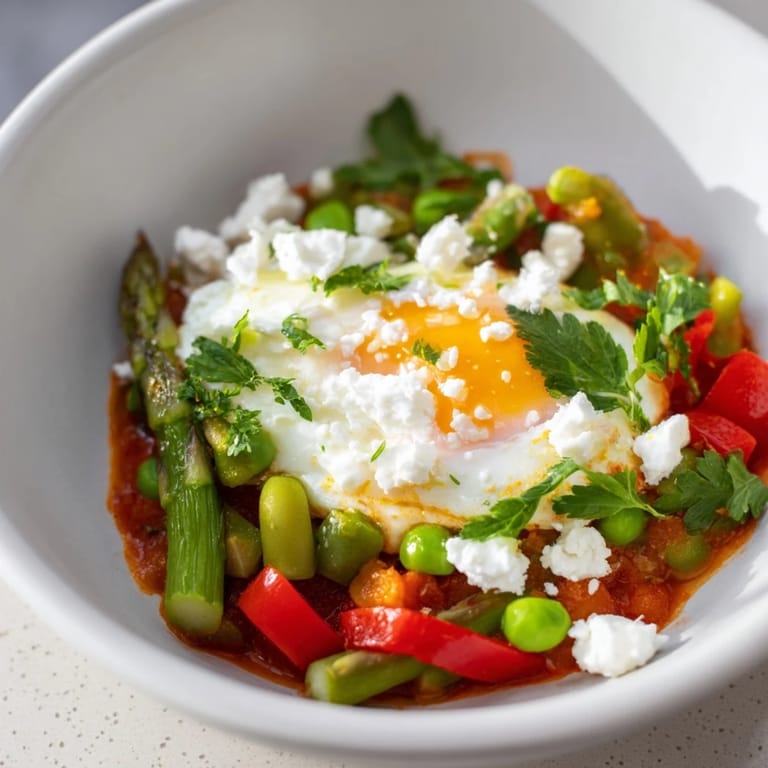
- Use the back of a spoon to make small wells in the vegetable mixture, then crack an egg into each well. Cover the pan again and cook gently for 5 to 7 minutes, checking occasionally, until the whites are set but the yolks are still jiggly and runny.
- Garnish and Serve:
- Take the pan off the heat and scatter the fresh parsley or mint and crumbled feta over the top. Serve straight from the skillet with lemon wedges on the side and plenty of crusty bread for scooping.
 Save
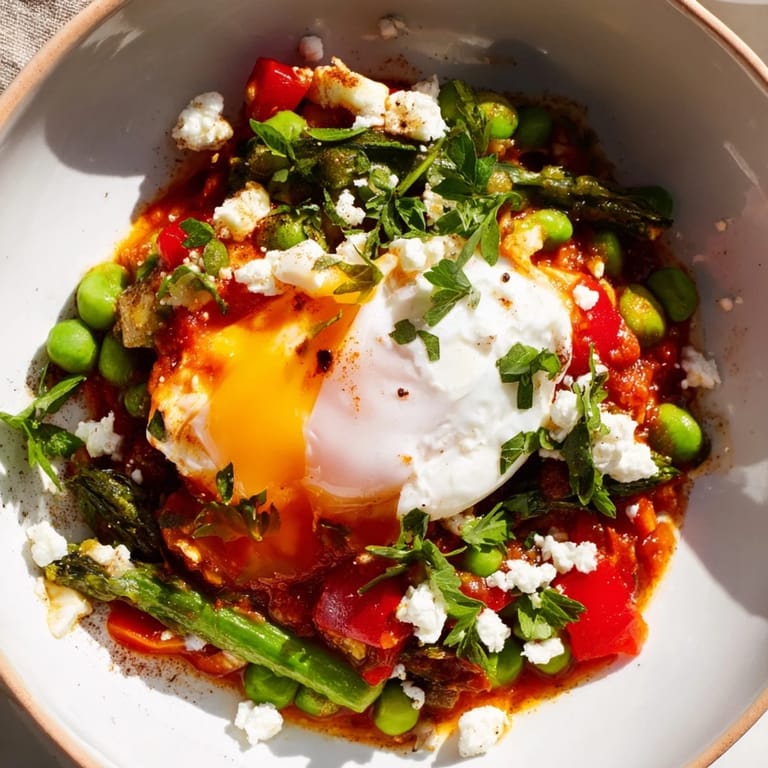
Save There's something quietly triumphant about setting a hot skillet in the center of the table and watching people lean in with their forks, breaking yolks and mixing everything together on their plates. It's not fancy, but it feels generous and alive, like you've brought a little bit of a sunny market into your kitchen. I've made this on mornings when I needed comfort and evenings when I wanted to impress, and it's never let me down.
How to Make It Vegan
Leave out the eggs and feta, and stir in a drained can of chickpeas along with the spring vegetables for protein and texture. The chickpeas soak up the spiced tomato sauce beautifully and turn this into a hearty, satisfying meal that's just as colorful and comforting. I've served the vegan version to friends who didn't even notice the eggs were missing, and they went back for seconds anyway.
Serving Suggestions
This is best eaten straight from the skillet with warm pita, sourdough, or any crusty bread you can tear into chunks. I like to set out a dish of good olive oil for extra drizzling, and sometimes I'll add a dollop of Greek yogurt on the side for those who want a cool contrast to the spice. It's the kind of meal that encourages everyone to dig in together, passing bread and lemon wedges around the table.
Storage and Reheating
The vegetable and tomato base keeps well in the fridge for up to three days, which makes it easy to reheat and crack fresh eggs into for a quick meal. I don't recommend storing it with the eggs already cooked, because reheated eggs turn rubbery and lose their magic. When you're ready to eat, just warm the base in a skillet, make your wells, and cook the eggs fresh.
- Store the base in an airtight container in the fridge and reheat gently on the stovetop with a splash of water if it's thickened too much.
- You can freeze the tomato and vegetable mixture for up to a month, though the asparagus may soften a bit more once thawed.
- Always add fresh herbs and feta after reheating, not before, so they stay bright and don't wilt into the sauce.
 Save
Save This shakshuka has taught me that spring vegetables don't need much to shine, just a little heat, some good spices, and the patience to let everything come together in its own time. I hope it becomes a regular in your kitchen, the way it has in mine.
Recipe FAQs
- → Can I use frozen peas and broad beans?
Yes, frozen vegetables work wonderfully in this dish. Add them directly from the freezer to the sauce; they'll cook in the same 7-8 minutes as fresh ones.
- → How do I poach eggs perfectly in the sauce?
Create small wells in the simmering sauce using the back of a spoon, then carefully crack each egg into a well. Cover and cook gently for 5-7 minutes until the whites set but yolks remain runny. The residual heat will continue cooking them after you remove the pan.
- → Can I make this dish vegan?
Absolutely. Simply omit the eggs and feta cheese, then add a can of drained chickpeas for protein and heartiness. The dish remains equally delicious and satisfying.
- → What vegetables pair well as substitutes?
Spinach, zucchini, or kale are excellent additions. You can also try diced eggplant or fennel. Add them in step 5 alongside or instead of the asparagus, adjusting cooking time as needed.
- → How can I adjust the spice level?
For milder flavor, reduce chili flakes to ¼ teaspoon or omit entirely. For more heat, increase chili flakes to 1 teaspoon or stir in a finely chopped fresh chili in step 3 with the other spices.
- → What bread pairs best with this dish?
Warm pita, flatbread, or sourdough are traditional choices. Use gluten-free bread if needed. Bread serves perfectly for scooping up the flavorful sauce and breaking into the eggs.