 Save
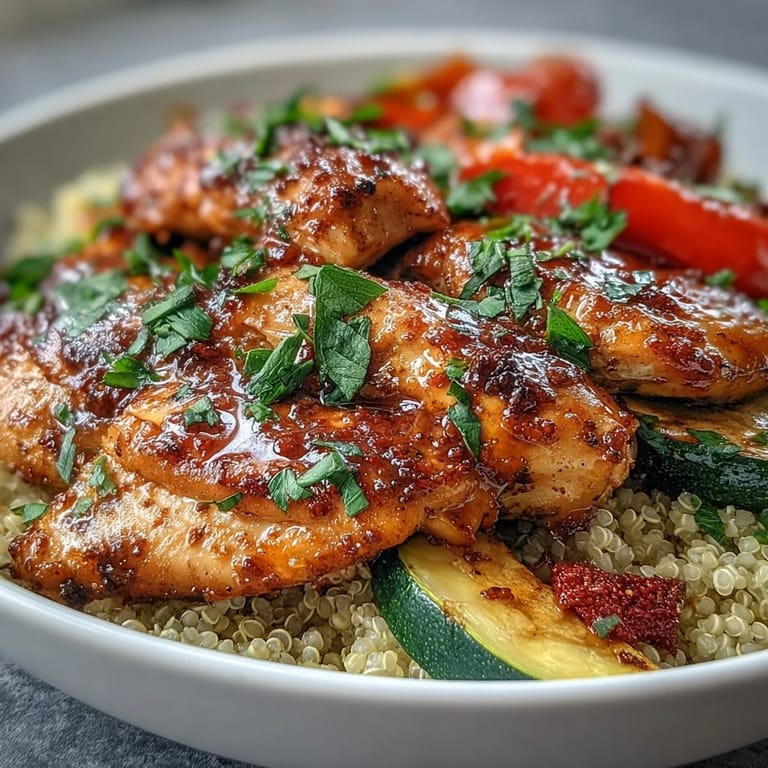
Save My neighbor handed me a container of rose harissa one afternoon, insisting I'd ruin it if I didn't use it soon enough. That tiny push led me to create this bowl, and now it's become the dish I make when I want to feel like I'm eating something intentional without spending hours in the kitchen. The paprika-crusted chicken stays juicy, the vegetables caramelize into something almost sweet, and that harissa drizzle transforms everything into something that tastes far more complex than it has any right to.
I made this for my sister who'd just moved to a new city and was living on takeout, convinced she didn't have time to cook real food. Watching her taste it, then immediately ask for the recipe, reminded me that sometimes people just need permission to believe they can feed themselves something good.
Ingredients
- Boneless, skinless chicken breasts (4): Pound them gently to even thickness if they're stubborn—it helps them cook evenly and stay tender instead of drying out at the edges.
- Smoked paprika (2 tsp): This is the spine of the whole thing; buy the good stuff if you can, because the difference between grocery store and specialty blend is honestly remarkable.
- Dried oregano and thyme (1 tsp each): Don't skip the oregano—it adds an almost Mediterranean earthiness that balances the heat from the harissa later.
- Garlic clove, minced (1): Fresh garlic makes all the difference here; powdered just sits on the surface and doesn't integrate the same way.
- Zucchini, bell peppers, and red onion: Cut everything roughly the same size so they roast evenly and develop that golden, slightly crispy exterior.
- Dried rosemary (1 tsp): Rosemary can be aggressive, so measure it carefully unless you want your vegetables tasting like a pinecone, which I learned the hard way.
- Quinoa, rinsed (1 cup): Rinsing removes the bitter coating; I skip this once and regretted it for the entire bowl.
- Vegetable broth (2 cups): Use actual broth, not water if you can—the quinoa soaks up flavor like a sponge and deserves better than plain water.
- Rose harissa paste (2 tbsp): This is your finishing flourish; it brings everything together with a floral, spiced warmth that lingers pleasantly.
- Greek yogurt (2 tbsp): Optional, but it cools the heat and adds a creamy texture that makes each bite feel luxurious without heaviness.
- Fresh parsley, chopped (2 tbsp): A last-minute shower of green brightens everything and reminds you that you made something that looks like it belongs in a photograph.
- Lemon wedges: These are non-negotiable; they're what makes people say "oh, I taste that" instead of just eating quietly.
Tired of Takeout? 🥡
Get 10 meals you can make faster than delivery arrives. Seriously.
One email. No spam. Unsubscribe anytime.
Instructions
- Set up your mise en place:
- Get the oven heating to 425°F and line a baking sheet with parchment—this five-minute setup prevents panicked scrambling when everything needs to happen at once. Prep all your vegetables and chicken while you're thinking clearly, not when you're sweating over a hot pan.
- Season and roast the vegetables:
- Toss your diced vegetables with olive oil, rosemary, salt, and pepper, spreading them in a single layer so they have room to breathe and caramelize. Roast for 25-30 minutes, stirring halfway through, until the edges turn golden and the zucchini softens—this is where the magic starts.
- Build the chicken coating:
- Mix together your olive oil, smoked paprika, oregano, thyme, minced garlic, salt, and pepper in a bowl, then coat each chicken breast thoroughly so the spices cling like a flavorful crust. Let it sit for a few minutes if you have time; the spices bloom and deepen.
- Sear the chicken until golden:
- Heat your skillet over medium-high heat until it's almost smoking, then lay the chicken in without moving it for 4-5 minutes—this creates that burnished exterior you're after. Flip, cook another 4-5 minutes until the internal temperature reaches 165°F, then let it rest for five minutes before slicing so the juices settle instead of running all over your plate.
- Cook the quinoa gently:
- Combine rinsed quinoa with vegetable broth and salt in a saucepan, bring to a boil, then reduce the heat, cover, and simmer for 15 minutes while everything else finishes. Remove from heat, let it stand covered for five minutes, then fluff with a fork—this resting period prevents it from becoming gluey.
- Assemble your bowl with intention:
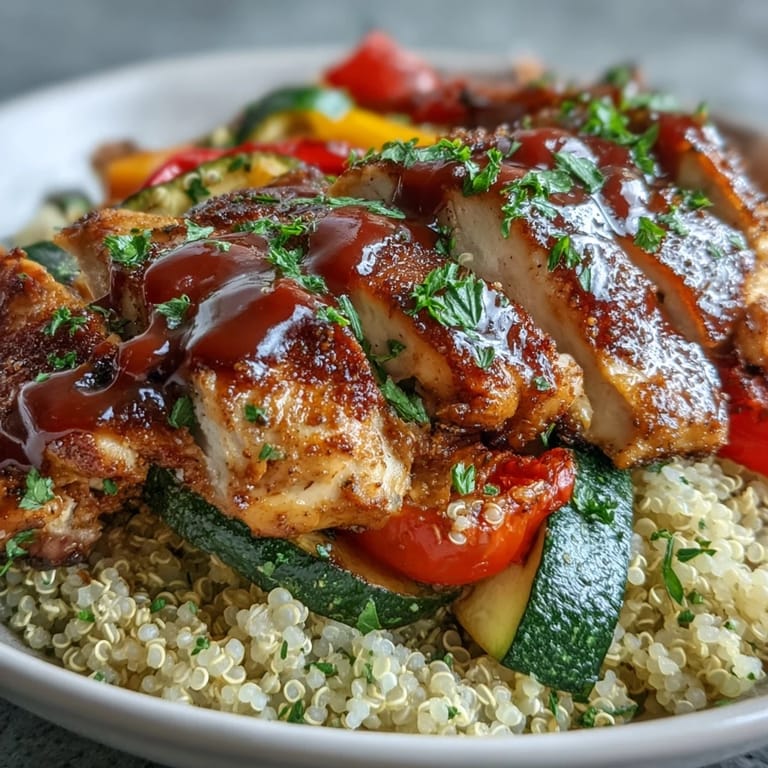
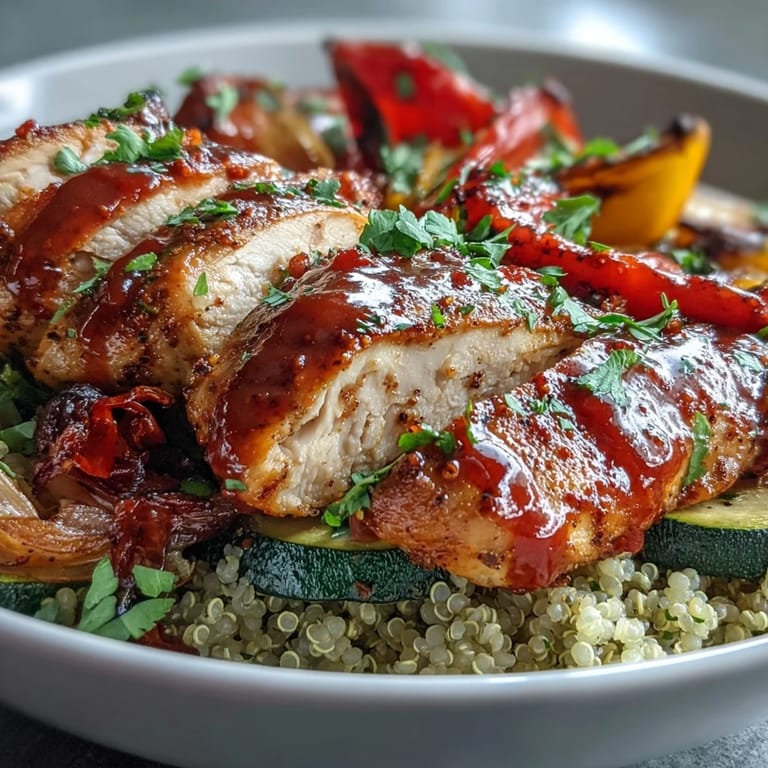
- Divide the fluffy quinoa between bowls, arrange the roasted vegetables on top, then layer the sliced chicken over everything. Drizzle with rose harissa, add a dollop of Greek yogurt if you're using it, shower with fresh parsley, and serve with lemon wedges on the side so people can adjust the brightness to their taste.
 Save
Save My roommate came home to the smell of roasted vegetables and paprika filling our entire apartment, and suddenly we were eating together instead of in separate corners of our lives. Food has this quiet power to create moments out of ordinary Tuesdays.
Why the Timing Works
The beauty of this bowl is that everything finishes within minutes of each other—the vegetables need 25-30 minutes, the chicken takes about 10 minutes in the skillet, and the quinoa simmers for 15 while you're managing the other components. You're never standing around waiting, and you're never frantically rushing one component while another cools on the counter. This kind of synchronization doesn't happen by accident; it's why the ingredient list and instructions are structured the way they are.
Variations That Actually Work
Swap the chicken for thighs if you want something juicier and more forgiving of slight overcooking, or go vegetarian with crispy tofu that's been pressed and cubed then seared the same way. The vegetables are flexible too—use whatever's in season or whatever your market has looking good that day. The constants are the paprika-spiced protein, the roasted vegetables, and that rose harissa finish, which means you can play with everything else and still land somewhere delicious.
- Try adding crumbled feta, avocado slices, or toasted pine nuts for extra texture and richness.
- If rose harissa feels too fancy, regular harissa or even a drizzle of hot sauce works just fine.
- Consider swapping the Greek yogurt for labneh or a dollop of tahini-lemon mixture if you want something different but equally creamy.
What to Serve It With
This bowl is hearty enough to stand alone, but if you want to build a meal around it, pour yourself a Sauvignon Blanc or a light rosé—something with enough acidity to cut through the richness of the olive oil and yogurt without competing for attention. A simple green salad on the side, dressed with just lemon and olive oil, adds freshness without overwhelming the complexity already happening in the bowl.
 Save
Save This bowl has become my version of comfort food—not because it's heavy or overly familiar, but because it proves that you can feed yourself something that tastes intentional in under an hour. That's worth knowing.
Recipe FAQs
- → Can I prepare this bowl ahead of time?
Absolutely. The roasted vegetables, cooked quinoa, and sliced chicken all store beautifully in separate airtight containers for 3-4 days. Reheat gently and assemble bowls when ready to serve, adding fresh garnishes just before eating.
- → What can I use instead of rose harissa?
Regular harissa paste, Calabrian chili paste, or even a sriracha-honey mixture work well as substitutes. Adjust quantities based on your preferred spice level and desired flavor profile.
- → Is this bowl suitable for meal prepping?
Yes, it's ideal for meal prep. The components maintain their texture well when stored separately. Portion everything into containers for easy grab-and-go lunches throughout the week.
- → Can I make this vegetarian?
Replace the chicken with extra-firm tofu cubes, chickpeas, or roasted cauliflower. Adjust cooking times accordingly—tofu needs less time while chickpeas and cauliflower benefit from longer roasting.
- → What other vegetables work in this bowl?
Sweet potatoes, Brussels sprouts, eggplant, or butternut squash all roast beautifully alongside the vegetables listed. Aim for similar-sized pieces to ensure even cooking time.
- → How spicy is the rose harissa?
Rose harissa offers mild to moderate heat with floral, smoky notes rather than overwhelming spice. Start with a small amount and adjust to your preference—the Greek yogurt helps balance any warmth.