 Save
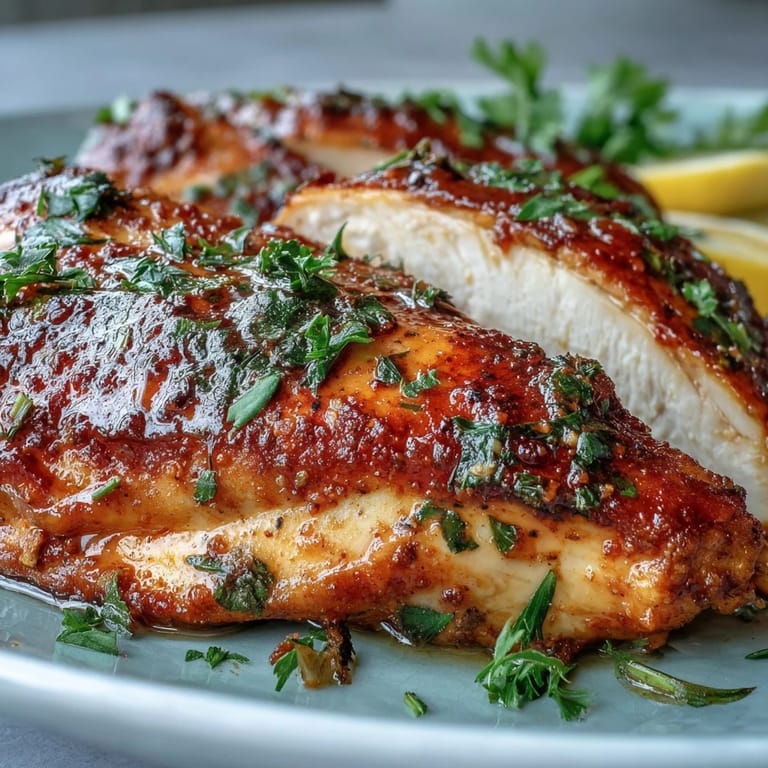
Save My roommate once complained that my chicken was always dry, which stung until I realized she was right—I'd been checking the oven like a nervous parent every thirty seconds. One Thursday night, I forced myself to walk away, set a timer, and trusted the process. Twenty minutes later, when I sliced into those breasts and steam rose up with the most inviting aroma, she actually asked for seconds. That's when I learned that good chicken isn't about luck or some fancy technique; it's about respecting the heat and knowing when to stop poking.
I made this for a potluck once, nervous that plain baked chicken would get overshadowed by everyone else's casseroles and dips. Instead, people kept circling back to it, asking what made it taste different. The secret was just that I hadn't rushed—the seasoning had time to do its work, the chicken had rested so it stayed tender, and there was zero apology in how I served it. Sometimes simple, done right, wins.
Ingredients
- Chicken breasts: Look for ones that are roughly the same size so they cook evenly; if one is noticeably thicker, don't skip the pounding step.
- Olive oil: A good quality oil makes a real difference in flavor, and it helps the seasonings stick without burning.
- Garlic powder: Fresh garlic can scorch in the oven, so the powder gives you that savory depth without the bitterness.
- Paprika: The smoked version adds a quiet depth that makes people ask what you did differently.
- Oregano or Italian seasoning: This is what keeps the chicken from tasting one-note; it rounds everything out.
- Salt and pepper: Don't skimp here—these are doing real work, not just an afterthought.
- Lemon and fresh herbs (optional): These brighten the plate at the very end and make the dish feel finished rather than just cooked.
Tired of Takeout? 🥡
Get 10 meals you can make faster than delivery arrives. Seriously.
One email. No spam. Unsubscribe anytime.
Instructions
- Heat your oven and prep the pan:
- Set the oven to 400°F and line your baking sheet with parchment—this small step saves cleanup and prevents sticking. A 400-degree oven is hot enough to cook the chicken through without drying it out.
- Dry and flatten the chicken:
- Pat each breast dry with paper towels; moisture is the enemy of good browning. Pound them to about three-quarters of an inch thick so they cook evenly—this is where a meat mallet makes life easier, but a rolling pin or even a heavy pan works too.
- Build your seasoning coat:
- Mix the olive oil with all your spices in a small bowl until it looks like a loose paste. This method ensures the seasonings don't burn on their own and distribute evenly across the chicken.
- Season generously and arrange:
- Rub the mixture all over each breast, front and back, then place them on your baking sheet in a single layer with a little breathing room between them. Crowding the pan traps steam and keeps them from getting any color.
- Bake until done:
- Slide the pan into the oven and set a timer for 18 to 22 minutes, depending on thickness. Use an instant-read thermometer inserted into the thickest part—it should hit 165°F, which is when you know it's safe and still tender.
- Rest and finish:
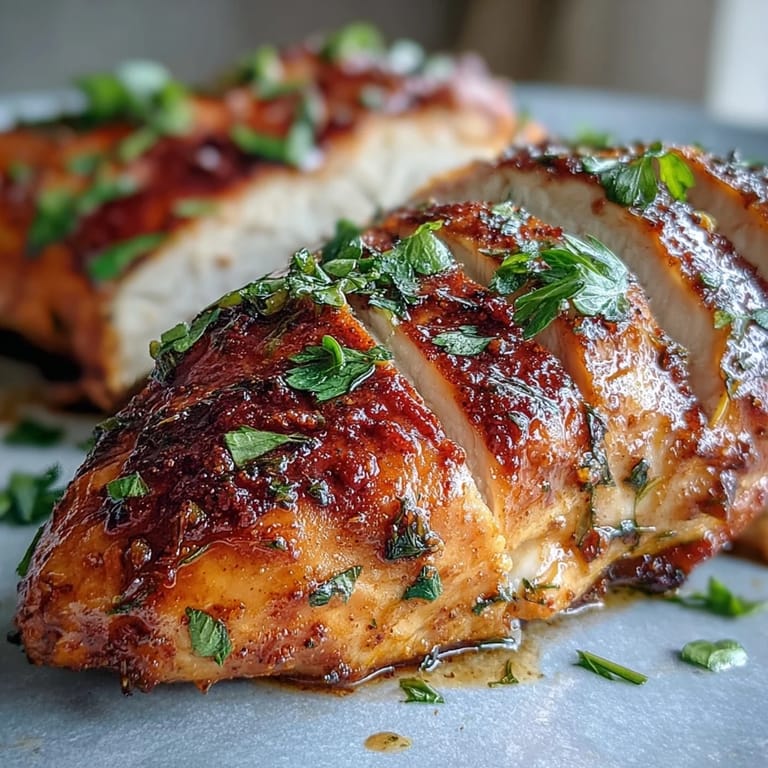
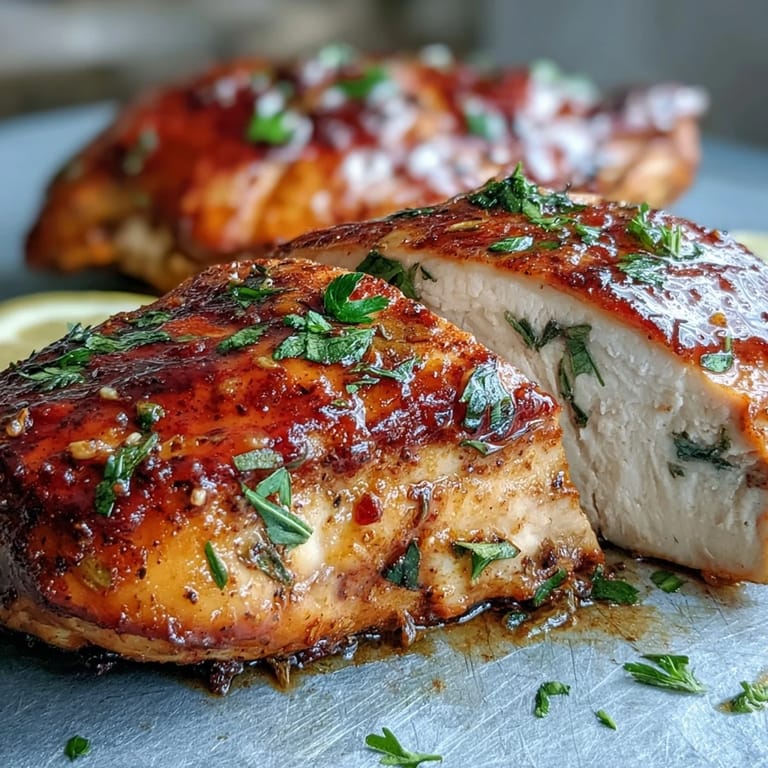
- Let the chicken sit for five minutes after coming out of the oven; this keeps all the juices inside where they belong. Add lemon slices and fresh herbs right before serving if you want that bright, professional touch.
 Save
Save My partner surprised me by saying this chicken reminded him of something his mom used to make, which was unexpected and wonderful because it meant I'd hit that mark between reliable and comforting. Food doesn't have to be complicated to mean something.
Marinade Option for Extra Depth
If you have even a little extra time, the simple marinade transforms the chicken into something more complex and memorable. Whisk together the olive oil, lemon juice, soy sauce, honey, mustard, and garlic, then nestle the chicken into it for anywhere from thirty minutes to two hours. The acid and salt penetrate deeper than surface seasoning alone, and the honey caramelizes slightly during baking. It's optional because the basic version is genuinely good, but this elevates it if you're feeding people you want to impress or if you just want to use up some lemon juice sitting in your fridge.
Serving and Storage Wisdom
This chicken plays well with almost anything—roasted broccoli, a simple green salad, grain bowls, or even shredded and tucked into tacos the next day. The real magic is that it tastes even better as a leftover because the flavors settle and deepen. Store cooled chicken in an airtight container in the refrigerator for up to four days, and it reheats gently in a 350-degree oven covered with foil so it doesn't dry out further.
When You Want to Switch It Up
Once you've made this a few times and it feels easy, you'll start playing with it, and that's exactly when it becomes your recipe instead of just a recipe you're following. Swap in thighs if you want richer, more forgiving meat—just add five to seven minutes to the baking time. Add a pinch of cayenne or red pepper flakes if you're in the mood for heat, or try a different herb blend depending on what you're serving alongside it. The foundation is so solid that it welcomes your own instincts.
- Fresh herbs scattered on top right before serving brighten the whole plate visually and in flavor.
- A quick pan sauce made from the drippings and some broth takes this from simple to restaurant-quality.
- Leftovers are perfect for meal prep, so don't hesitate to make a double batch on Sunday.
 Save
Save This recipe works because it trusts you to get out of the way and let good ingredients and simple technique do the talking. Make it tonight and you'll understand why it became a regular on my table.
Recipe FAQs
- → How do I keep chicken breasts from drying out in the oven?
Pound the chicken to even thickness, don't overcook past 165°F internal temperature, and let it rest for 5 minutes after baking. Using olive oil in the seasoning also helps retain moisture.
- → Can I use bone-in chicken breasts instead?
Yes, but increase the baking time to 30-35 minutes and check that the internal temperature reaches 165°F at the thickest part near the bone.
- → What can I serve with baked chicken breasts?
Pair with roasted vegetables, quinoa, rice, fresh salads, mashed potatoes, or steamed broccoli. They're also perfect sliced over pasta or in sandwiches and wraps.
- → How long can I store leftovers?
Store cooled chicken in airtight containers in the refrigerator for up to 4 days. Reheat gently to avoid drying out, or enjoy cold in salads.
- → Do I need to marinate the chicken?
Marinating is optional but adds extra flavor. The dry seasoning method works perfectly for a quick weeknight meal, while marinating for 30 minutes to 2 hours enhances tenderness and taste.
- → Can I freeze cooked chicken breasts?
Yes, freeze in airtight containers or freezer bags for up to 3 months. Thaw overnight in the refrigerator before reheating.