 Save
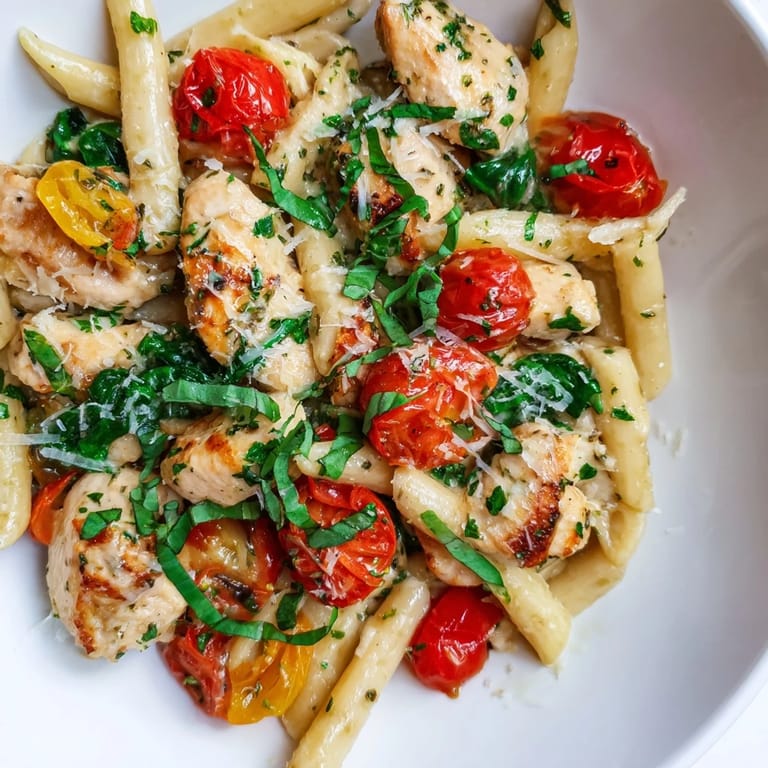
Save There's something about the smell of lemon zest hitting hot oil that makes me stop everything and pay attention. The first time I threw together a one-pan lemon herb pasta, I wasn't trying to impress anyone—I was just hungry and tired after work, standing in front of my open fridge wondering what I could actually pull off in thirty minutes. The chicken, pasta, and broth all went into one pan almost by accident, but that's when I realized how much flavor can happen when you let things cook together instead of keeping them separate.
I made this for my mom on a random Thursday when she was going through a rough week, and watching her take that first bite—how her whole face softened when the lemon hit her tongue—that's when I knew this wasn't just another pasta dish. She asked me to write down the recipe that night, and now it's become her go-to when she needs to feel like she's taking care of herself without spending hours in the kitchen.
Ingredients
- Boneless, skinless chicken breasts: Cut into bite-sized pieces so they cook through quickly and absorb all the broth and lemon flavor—don't worry about them being perfectly even, just aim for roughly the same size.
- Penne or fusilli pasta: The ridges and spirals catch the sauce, but honestly, any short pasta works fine if that's what you have.
- Olive oil: Good quality matters here because it's one of the few fats that carries flavor throughout the whole dish.
- Garlic and onion: These build the savory foundation that everything else rests on—mince the garlic small so it doesn't overpower, and keep the onion fine so it softens into the broth.
- Lemon zest and juice: The zest adds brightness before cooking, while the juice goes in at the end so it stays fresh and zingy.
- Cherry tomatoes: They burst slightly during cooking and add a subtle sweetness that balances the acid from the lemon.
- Baby spinach: Wilts right at the end, adding nutrition and a gentle earthiness without cooking down to nothing.
- Fresh parsley and basil: These go in at the very end so they stay vibrant and don't turn dark from prolonged heat.
- Dried oregano and thyme: These infuse the broth early on, building depth while the pasta cooks.
- Low-sodium chicken broth: This becomes the liquid that cooks the pasta and carries all the flavors—low-sodium lets you control the saltiness.
- Parmesan cheese: Freshly grated melts more smoothly and tastes sharper than pre-shredded, which has anti-caking agents that get in the way.
Tired of Takeout? 🥡
Get 10 meals you can make faster than delivery arrives. Seriously.
One email. No spam. Unsubscribe anytime.
Instructions
- Get the pan hot and sear the chicken:
- Pour olive oil into your large skillet over medium-high heat and let it shimmer for a minute. When you add the chicken, it should sizzle immediately—that's how you know it's hot enough. Season with salt and pepper, then cook the pieces for about 3-4 minutes until they're golden on the outside but still a bit raw inside; they'll finish cooking later in the broth, so don't worry if they look underdone.
- Build the flavor base:
- Set the chicken aside on a clean plate, then add the minced onion and garlic to the same pan. You'll notice how quickly the garlic becomes fragrant—that's your signal it's ready. Let them cook together for about 2 minutes, stirring occasionally, until the onion starts to turn translucent and soft.
- Add the pasta and broth:
- Pour in the uncooked pasta, chicken broth, lemon zest, and dried herbs, stirring everything together so nothing sticks to the bottom. Bring it all to a boil over medium-high heat—you'll see big rolling bubbles breaking the surface, which is what you're waiting for. Once it boils, reduce the heat to medium-low, cover the pan with a lid, and let it simmer for about 8 minutes, stirring every couple of minutes to keep the pasta from clumping.
- Reunite the chicken and add color:
- After 8 minutes, the pasta should be getting tender but not soft yet. Slide the chicken back into the pan along with the halved cherry tomatoes, then let everything cook uncovered for another 7-8 minutes until the pasta reaches that perfect al dente texture and most of the broth has been absorbed. The pasta will continue to soften slightly as it cools, so it's better to stop cooking just before it feels completely done.
- Finish with freshness:
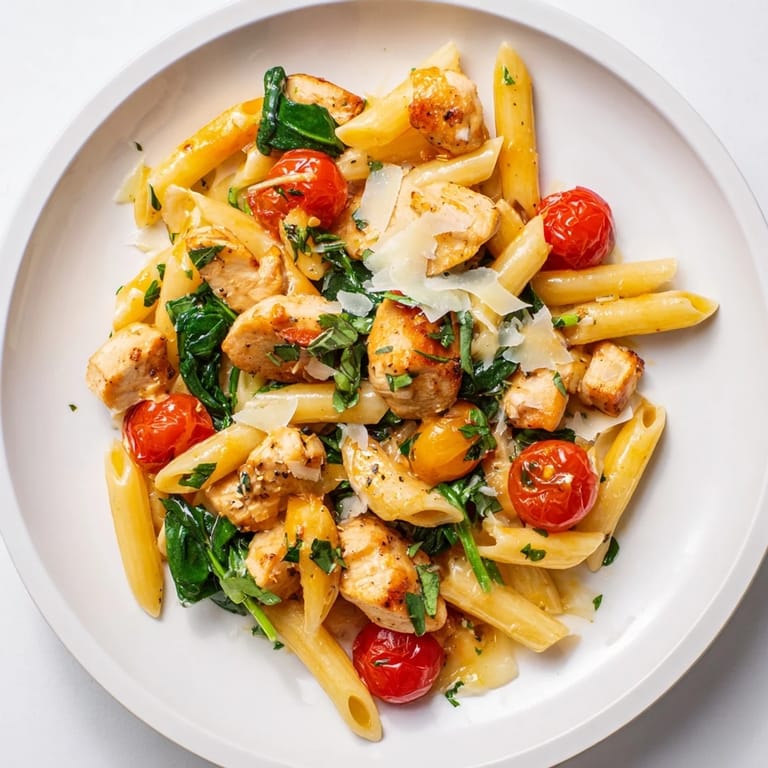
- Turn off the heat and stir in the baby spinach, fresh parsley, basil, and grated Parmesan cheese. The residual heat will wilt the spinach and melt the cheese into the pasta within 1-2 minutes—stir it gently so everything gets coated. Taste a spoonful and add more salt, pepper, or a squeeze of fresh lemon juice if you feel like it needs it.
 Save
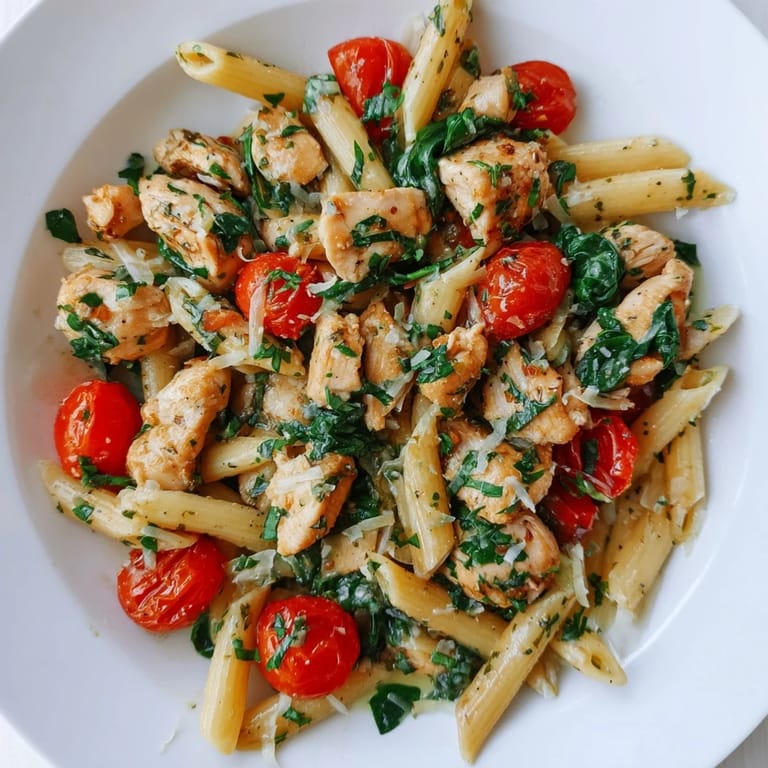
Save There's a moment right when everything comes together—when you stir in the spinach and watch it soften, when the cheese melts into the hot pasta, when that one perfect bite has the chicken, the lemon, and the herbs all at once. That's the moment that makes me keep coming back to this recipe, because it's simple enough to not stress about but delicious enough to feel like you did something special.
How to Make It Your Own
This recipe is a canvas more than a rigid formula, which is part of why it works on a busy weeknight. I've made it with turkey breast when chicken felt predictable, swapped in roasted red peppers for the tomatoes when that's what I had on hand, and thrown in white beans for extra protein and heartiness. The lemon and herbs are what make it recognizably itself, but everything else—the vegetables, the aromatics, even the pasta shape—can shift based on what's in your kitchen or what you're craving.
Pairing and Serving Ideas
Serve this straight from the pan into wide bowls, with extra Parmesan and a few fresh basil leaves scattered on top if you have them. A crisp white wine like Sauvignon Blanc cuts through the richness beautifully, though a simple glass of cold water is honestly perfect too. If you're feeding people who expect sides, a simple green salad dressed with just lemon and olive oil is all you need—anything more feels like overkill.
Storage and Make-Ahead Notes
Leftovers keep well in the fridge for 3-4 days, though the pasta will be softer the next day since it continues to absorb liquid overnight. Reheat gently on the stovetop with a splash of water or broth if it's dried out, and taste again for seasoning because salt and lemon juice can fade as it sits. I don't recommend freezing this dish because the pasta texture changes and the fresh herbs lose their brightness, but if you're planning ahead, you can prepare all your ingredients the night before and have everything ready to go.
- Make a double batch on Sunday if you want quick lunches ready all week.
- If your pasta starts to stick while it simmers, add a tablespoon or two more broth rather than letting it scorch.
- Save a handful of the fresh herbs before you chop them to sprinkle on top right before serving for maximum flavor and visual appeal.
 Save
Save This one-pan dinner has become my quiet victory lap after long days, the recipe I reach for when I want something that tastes like I tried but doesn't demand much of me. Every time I make it, the kitchen fills with that same lemon-and-herb steam, and it still feels a little like a small miracle that something so good can come from one pan and thirty minutes.
Recipe FAQs
- → What pasta works best for this dish?
Penne or fusilli are ideal as they hold the sauce well and cook evenly in one pan. Gluten-free pasta can be substituted as needed.
- → Can I use other proteins besides chicken?
Yes, turkey breast or tofu can be used for variation while maintaining the recipe’s balance of flavors and textures.
- → How do I prevent the pasta from sticking?
Stir occasionally during cooking and ensure enough broth is used to cover the pasta fully for even cooking and to avoid sticking.
- → When should I add fresh herbs in the cooking process?
Fresh herbs like parsley and basil are best stirred in near the end to preserve their aroma and vibrant color.
- → Can I make this dish ahead of time?
It's best served fresh, but leftovers can be refrigerated and gently reheated with a splash of broth or water to keep it moist.