 Save
Save My first mezze platter came together by accident on a Tuesday evening when friends texted asking if they could drop by. I had chickpeas in the cupboard, tahini sitting unopened, and half a lemon on the counter—the makings of hummus stared back at me. Two hours later, our small kitchen had transformed into something that felt like stepping into a sun-soaked Mediterranean corner, and I realized that sometimes the best meals are born from last-minute scrambling and whatever you have on hand.
I'll never forget watching my grandmother's hands move across a similar platter at her apartment in Beirut—the way she'd arrange each element with the precision of an artist, talking the whole time about which tomatoes were sweetest that morning, why the olives mattered, how bread should always be warm. She taught me that mezze isn't about perfection; it's about abundance and the quiet generosity of saying "help yourself."
Ingredients
- Cooked chickpeas: The foundation of creamy hummus—canned and rinsed work beautifully, though freshly cooked taste noticeably better if you have time.
- Tahini: This is the secret to silky texture; it's worth seeking out good quality sesame paste because the flavor difference is real.
- Fresh lemon juice: Never use bottled; fresh juice brightens the hummus in a way that tastes alive, and your guests will taste the difference immediately.
- Extra virgin olive oil: The drizzle on top matters as much as the oil blended in—choose something fruity that you actually enjoy tasting on its own.
- Garlic: Just one small clove keeps things balanced; too much overpowers the delicate earthiness of the chickpeas.
- Cumin: Ground cumin adds a warm, almost nutty note that transforms hummus from simple to crave-worthy.
- Salt: Essential for bringing all the flavors into focus—taste as you go because you can always add more.
- Cold water: Added slowly, it creates that impossible creaminess without making the hummus gluey.
- Cherry tomatoes: Their sweetness balances the richness of hummus and tahini, and halving them makes them easier to pop in your mouth.
- Cucumber: Cool and crisp, cucumber provides textural contrast and cleanses your palate between bites.
- Red bell pepper: Sweet and slightly crunchy, bell peppers add color and a pleasant crispness that keeps the platter interesting.
- Carrot sticks: Natural sweetness and earthy flavor that pair perfectly with hummus for dipping.
- Mixed olives: Use both green and Kalamata for variety—their brininess is the counterpoint that makes everything taste better.
- Feta cheese: Salty, tangy, and substantial, feta makes this feel like an actual meal rather than just snacking.
- Pita bread: Warm pita is your vehicle for everything else, and the way it softens hummus slightly as you scoop is part of the whole experience.
- Fresh parsley and sumac: These are the finishing touches that say you cared—they add color, freshness, and a subtle citrusy note.
Tired of Takeout? 🥡
Get 10 meals you can make faster than delivery arrives. Seriously.
One email. No spam. Unsubscribe anytime.
Instructions
- Blend the hummus until it dreams:
- Combine your chickpeas, tahini, lemon juice, olive oil, garlic, cumin, and salt in a food processor and blend until completely smooth. Add cold water one tablespoon at a time, listening to the sound of the processor change as it becomes creamier—that's your signal you're getting close to the right texture.
- Crown it with olive oil:
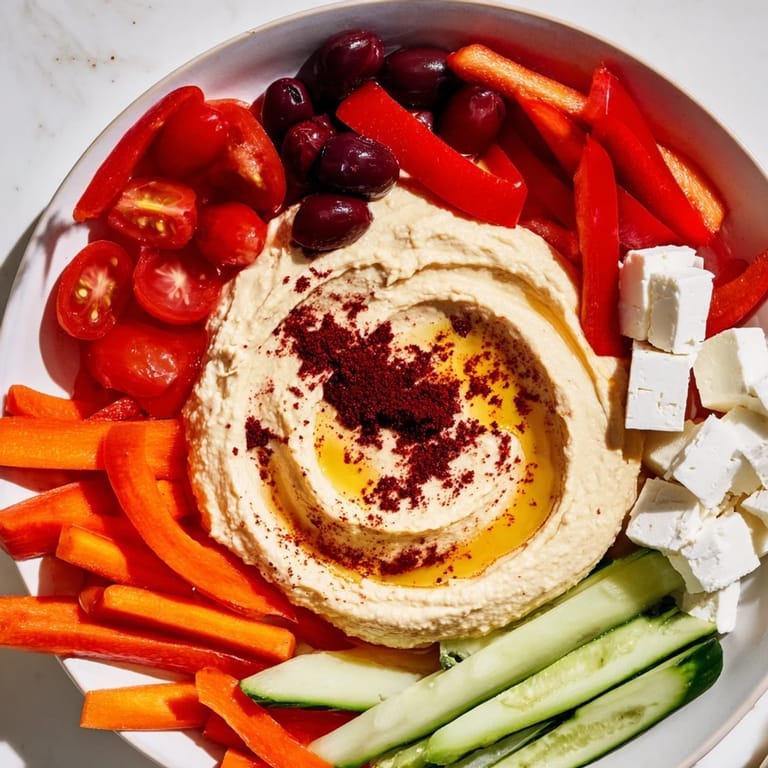
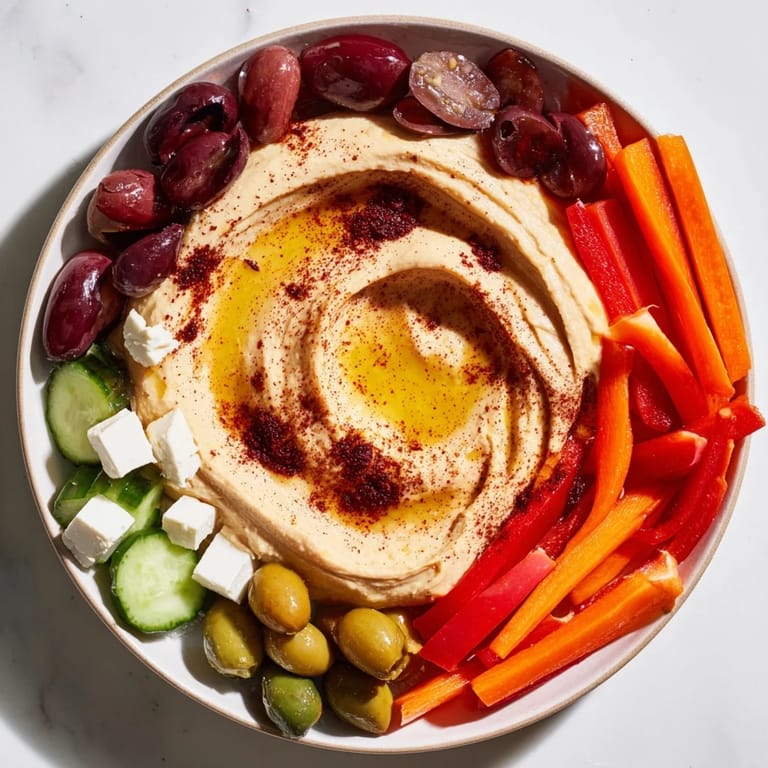
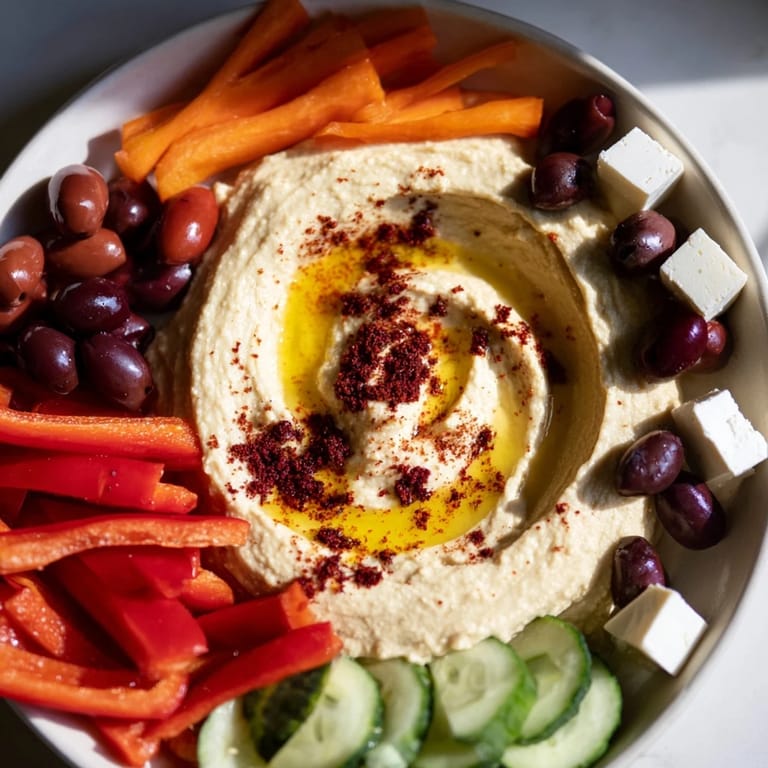
- Spread the hummus into a shallow bowl or onto your platter and drizzle generously with extra olive oil, then dust with sumac or paprika. The oil should pool slightly in the center—this is both beautiful and functional, as it keeps everything from drying out.
- Compose your canvas:
- Arrange the tomatoes, cucumber, bell pepper, carrots, olives, and feta around the hummus in whatever pattern speaks to you. There's no wrong way to do this; the goal is for everything to look abundant and inviting.
- Warm the bread if you're feeling thoughtful:
- If you have a moment, wrap pita in a damp towel and warm it gently in a skillet or oven just before serving. Even thirty seconds of warmth makes a difference in how it tastes.
- Finish and serve right away:
- Scatter parsley over everything and add lemon wedges so people can squeeze their own brightness into bites. Mezze tastes best when it's fresh and everyone's reaching for it at the same time.
 Save
Save There was a moment last summer when three people I'd never met before were sitting in my apartment, all reaching for the same piece of carrot, talking and laughing while olive oil dripped from their fingers. That's when I understood that mezze isn't fancy—it's just permission to be generous and honest about feeding people.
The Art of Building a Better Hummus
The texture of hummus comes down to the ratio of liquid to solids and the patience of your processor. I once thought I could rush it, stopping after a couple minutes when the hummus looked smooth enough, only to discover midway through serving that it was grainy and heavy. Now I let the processor run until the mixture transforms into something almost silken, and I taste for seasoning before I stop—that small habit makes the difference between hummus you tolerate and hummus people come back for.
Why Temperature Matters More Than You'd Think
Cold hummus tastes muted and flat, almost as if the flavors went into hiding. Pull it out of the fridge and let it sit while you finish arranging the platter, and by the time your guests arrive, it'll taste noticeably brighter and more lively. The same goes for pita bread—even just a quick pass over a warm skillet wakes it up and makes it somehow more bread-like, if that makes sense.
Making This Your Own
The beauty of mezze is that it bends to whatever you have in your kitchen or whatever mood you're in that day. I've added roasted red peppers when I wanted sweetness, thrown in torn pieces of labneh for richness, scattered pomegranate seeds when I wanted something special. You're not bound to the original—you're just creating an invitation to the table.
- Swap the feta for labneh, goat cheese, or even halloumi if you prefer something creamier or saltier.
- Add roasted red peppers, dolmas, falafel, or tabbouleh if you want to expand the platter into something more substantial.
- Keep everything at room temperature so all the flavors come through—cold vegetables taste like almost nothing.
 Save
Save Mezze is one of those rare meals that requires almost no skill and almost no time, yet somehow makes everyone feel celebrated. It's the kind of food that says you're welcome here without needing to say much of anything at all.
Recipe FAQs
- → How is the hummus prepared for the mezze platter?
Blend chickpeas, tahini, lemon juice, olive oil, garlic, cumin, and salt until smooth, adding cold water for desired creaminess.
- → What vegetables are typically included?
Cherry tomatoes, cucumber slices, red bell pepper, and carrot sticks add freshness and crunch.
- → Can the platter be adapted for dietary restrictions?
Yes, use gluten-free pita or crackers and substitute feta with labneh or goat cheese as needed.
- → Are there suggested garnishes for extra flavor?
Chopped parsley, sumac, paprika, and lemon wedges enhance the platter with bright, aromatic notes.
- → What occasions suit this mezze platter?
Perfect for casual gatherings, light lunches, or as an impressive appetizer for guests.