 Save
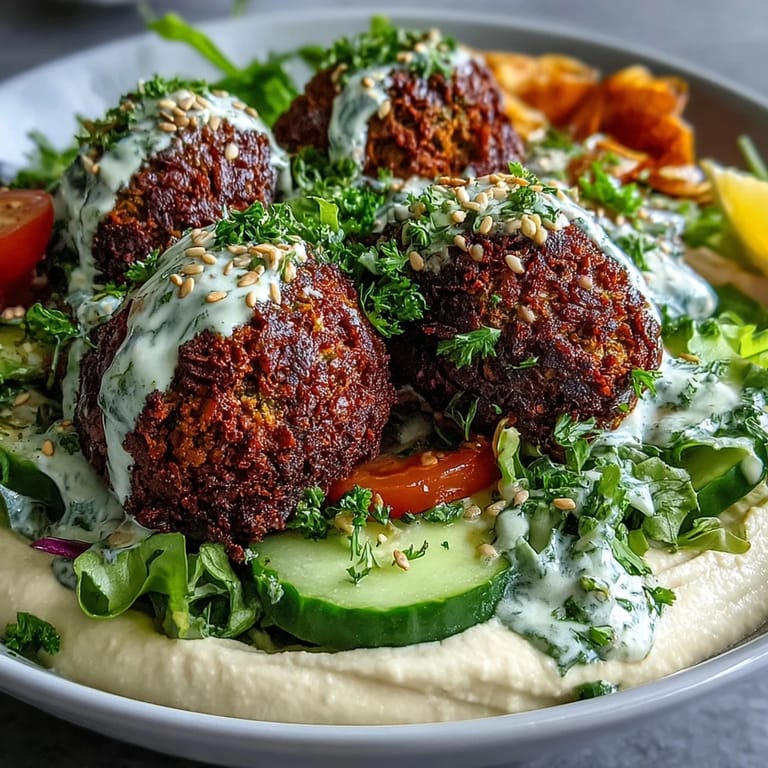
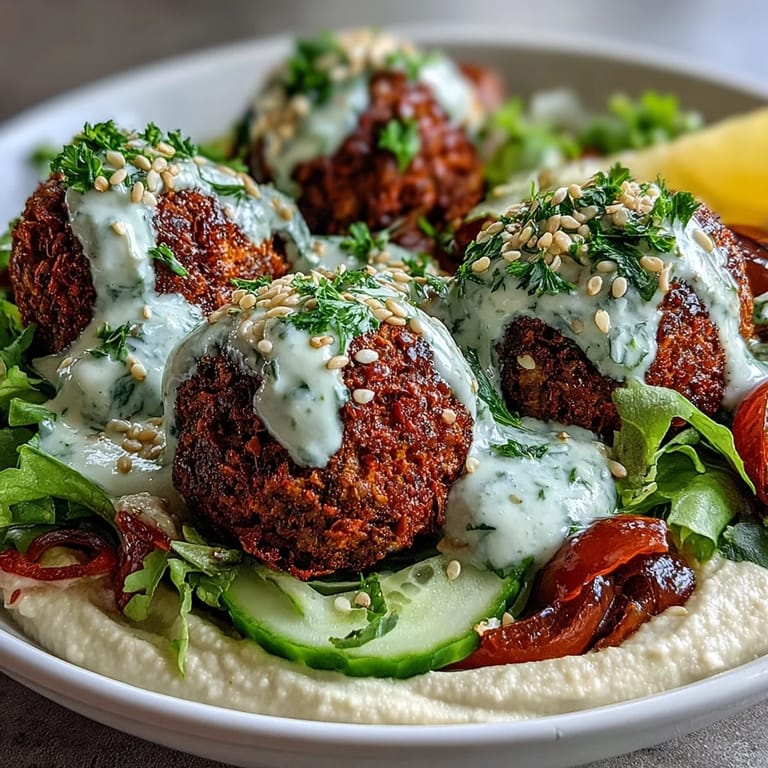
Save My neighbor handed me a container of homemade falafel one afternoon, still warm from her kitchen, and I stood there wondering what on earth to do with twelve perfectly golden balls. That evening, I threw together whatever vegetables I had lingering in my crisper drawer, spread some hummus on a plate, and assembled what I can only describe as controlled chaos. The first bite changed something—suddenly I understood why she'd been raving about these bowls at the farmer's market every weekend.
I made these bowls for my book club last month, and watching four different people build their own versions at the table was oddly delightful—someone loaded theirs with extra red onion, another went light on the tahini, and one friend discovered she preferred it all mixed together rather than layered. By the end of the evening, the conversation had shifted entirely from discussing the book to debating the perfect hummus-to-tzatziki ratio, which somehow felt like a victory.
Ingredients
- Store-bought or homemade falafel (12 balls): These little spheres are the backbone of everything—buy the good ones if you're short on time, or make your own if you want that extra layer of pride when serving.
- Hummus (1 cup): The creamy foundation that makes every bite taste complete; I always taste mine first because quality varies wildly between brands.
- Tzatziki (1 cup): This cool, garlicky yogurt sauce cuts through the richness and adds brightness that wakes up your palate.
- Tahini sauce (1/4 cup): The finishing drizzle that ties everything together with nutty, subtle depth.
- Mixed salad greens (4 cups): Use whatever makes you happy—peppery arugula, tender spinach, crisp romaine, or a combination of all three.
- Cherry tomatoes (1 cup, halved): Their sweetness plays beautifully against the savory components, so don't skip them.
- Cucumber (1/2 cup, sliced): The refreshing element that keeps the bowl from feeling heavy.
- Red onion (1/4 cup, thinly sliced): A bit of bite that makes your taste buds sit up and pay attention.
- Shredded carrots (1/4 cup): Both sweet and slightly earthy, they add color and a gentle crunch.
- Fresh parsley (2 tablespoons, chopped): More than just a garnish—it adds herbaceous freshness that ties the whole bowl together.
- Toasted sesame seeds (1 tablespoon): These tiny kernels add texture and a subtle nutty flavor that makes people ask what your secret ingredient is.
- Lemon wedges: Squeeze these over just before eating for brightness and acidity that brings everything into focus.
Tired of Takeout? 🥡
Get 10 meals you can make faster than delivery arrives. Seriously.
One email. No spam. Unsubscribe anytime.
Instructions
- Warm your falafel:
- If you're using store-bought, follow the package directions—usually a quick oven warm or pan sear brings them back to life. If you've made them fresh, they're already perfect.
- Build your canvas:
- Spoon a generous dollop of hummus and tzatziki onto each bowl or plate, letting them pool slightly and create little pockets of flavor throughout.
- Layer the greens:
- Create a bed of mixed salad greens that covers most of the surface, leaving room for the vegetables you're about to arrange.
- Arrange your vegetables:
- Scatter the cherry tomatoes, cucumber slices, red onion, and carrots across the greens in whatever pattern feels natural—this is your bowl, so make it beautiful.
- Crown with falafel:
- Place three warm falafel balls per serving right in the center or nestled among the vegetables.
- The finishing touches:
- Drizzle tahini sauce across everything in a generous crisscross pattern, then sprinkle parsley and sesame seeds over the top.
- Serve with purpose:
- Add a lemon wedge to each bowl and bring it to the table immediately while the falafel is still warm and the greens are still crisp.
 Save
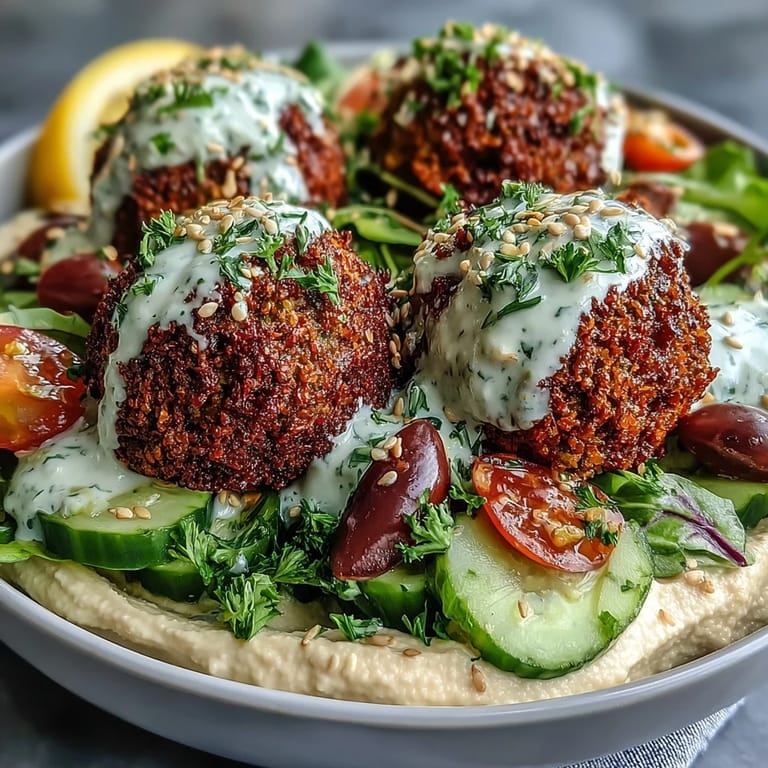
Save My partner came home one evening to find me arranging vegetables with an almost meditative focus, and asked if I was okay—apparently I'd been silent for ten minutes straight. It wasn't stress; it was the quiet satisfaction of building something colorful and whole with my hands, something that fed more than just hunger.
Customizing Your Bowl
The beauty of a falafel bowl is that it bends to your preferences without losing its identity. I've made versions with crispy roasted chickpeas instead of falafel when I was running low on supplies, added a handful of quinoa for substance, swapped the tzatziki for a garlicky yogurt when dairy-free guests arrived, and once piled on pickled red onions because my fridge had too many of them. Each variation tasted completely different yet somehow still felt true to itself.
Why This Works as a Meal
There's something intelligent about how these components stack together—the protein from the falafel and tahini, the probiotic tang of tzatziki and hummus, the minerals and fiber from the vegetables, the healthy fats that make everything taste richer than it actually is. You're not eating a salad with toppings; you're eating a complete meal that happens to look like a work of art. This is the kind of bowl that satisfies you for hours, not just until 3 PM when hunger strikes again.
Make-Ahead Magic and Storage
I've learned to chop and store all the vegetables the night before, keeping them in separate containers so nothing gets soggy or discolored, then assemble everything just before eating. The hummus and tzatziki last for days in the fridge, the falafel can be warmed in the oven on a sheet pan, and the greens only take minutes to prep. What started as a spontaneous dinner has become my go-to strategy for meal prep when I want something that tastes made-to-order without actually being made-to-order.
- Prep vegetables the morning of and store them separately to prevent sogginess and color bleeding.
- Warm falafel in a 375°F oven for five minutes rather than microwaving, which keeps them crispy on the outside.
- Store tahini sauce in an airtight container and thin it with a teaspoon of water if it thickens during refrigeration.
 Save
Save These bowls have become my answer to what feels like a hundred different dinner questions—quick but impressive, healthy but satisfying, adaptable yet never boring. There's something grounding about eating from a bowl instead of a plate, about gathering every color and flavor in one place and calling it dinner.
Recipe FAQs
- → Can I make this bowl vegan?
Absolutely. Simply use a dairy-free tzatziki alternative or omit it entirely. Double-check that your store-bought hummus and falafel are vegan, or prepare them at home to control the ingredients.
- → What's the best way to warm store-bought falafel?
Baking falafel in a 375°F oven for 10-12 minutes gives them the crispiest texture. Alternatively, air fry at 375°F for 8-10 minutes or pan-fry in a little olive oil for 5-7 minutes until heated through and crisp.
- → Can I prepare the components ahead of time?
Yes. Chop vegetables up to a day in advance and store in airtight containers. Falafel can be made ahead and frozen. Assemble bowls just before serving to keep vegetables crisp and falafel warm.
- → What other vegetables work well in this bowl?
Roasted eggplant, bell peppers, radishes, shredded cabbage, or roasted cauliflower make excellent additions. Pickled vegetables like turnips or cabbage add wonderful tang and crunch.
- → How can I add more protein to this bowl?
Add cooked chickpeas, grilled chicken strips, lamb kefta, or a hard-boiled egg. You could also stir diced tofu into the hummus or serve with a side of lentil soup.
- → What's a good substitute for tahini sauce?
Lemon-herb yogurt sauce, garlic sauce, or a simple olive oil and lemon juice vinaigrette all work beautifully. A spiced yogurt sauce with cumin and paprika also complements the Mediterranean flavors.