 Save
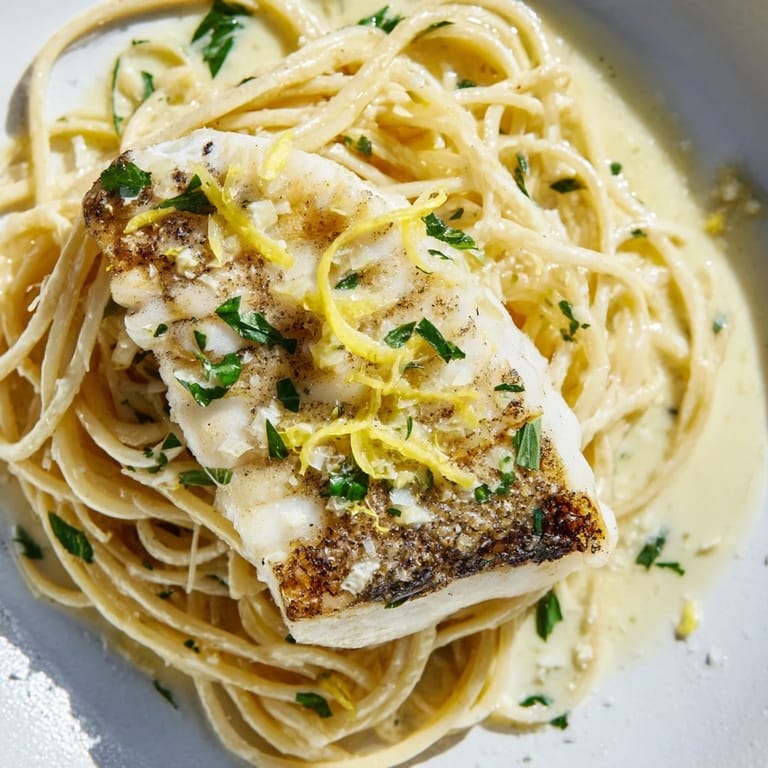
Save There's something about the sizzle of fish hitting a hot grill that makes me forget about everything else. I discovered this lemon bass pasta on a whim one summer evening when I had fresh fish from the market and half a lemon rolling around in my crisper drawer. The combination felt obvious in hindsight—bright, clean, almost light enough to eat in the heat—but in that moment it felt like an invention. Now it's become my go-to dinner when I want something that feels restaurant-quality but comes together in under an hour.
I made this for my sister's boyfriend the first time he came to dinner, and I was nervous about it in a way that surprised me. But the moment he took that first bite and went quiet, I knew I'd nailed it. He came back for seconds and asked for the recipe, which felt like the highest compliment. Now whenever they visit, he reminds me it's his favorite thing I make.
Ingredients
- White fish fillets (sea bass or cod): These mild, delicate fish won't overpower the lemon sauce and stay tender if you don't overcook them—look for fillets that are about the same thickness so they grill evenly.
- Spaghetti or linguine: The long strands trap the lemon-butter sauce beautifully, though I've used other pastas and they work fine too.
- Unsalted butter and olive oil: Together they create that silky emulsion that coats every strand; using both matters more than you'd think.
- Fresh lemon juice and zest: This is where the brightness comes from, so use fresh lemons and don't skimp on either component.
- Garlic: Just three cloves minced fine, cooked gently so it perfumes the oil without turning bitter.
- Reserved pasta water: The starch in this liquid is what transforms the butter and lemon juice into a proper sauce instead of a greasy puddle.
- Fresh parsley and Parmesan: These finish the dish with a final layer of freshness and umami that ties everything together.
Tired of Takeout? 🥡
Get 10 meals you can make faster than delivery arrives. Seriously.
One email. No spam. Unsubscribe anytime.
Instructions
- Start the pasta first:
- Get a big pot of well-salted water to a rolling boil and add your pasta. Set a timer and don't walk away, because the moment it hits al dente you need to scoop out that pasta water before draining.
- Get your grill ready:
- While the pasta cooks, heat your grill pan or outdoor grill over medium-high heat. You want it hot enough that a drop of water sizzles immediately.
- Prepare the fish:
- Pat those fillets completely dry with paper towels—this is the secret to a good sear instead of steam. Drizzle lightly with olive oil, then season with salt, pepper, and fresh lemon zest.
- Grill the fish:
- Lay the fillets on the hot grill and don't move them for 3 to 4 minutes. You'll see the flesh start to turn opaque from the bottom up, which is your signal to flip gently. Another 3 to 4 minutes and you're done—it should flake easily with a fork.
- Build the sauce:
- In a large skillet, melt butter with olive oil over medium heat, then add your minced garlic. Cook it for just about a minute until it smells incredible but before it browns at all.
- Bring it together:
- Add the lemon zest and juice to that garlicky butter, then toss in your drained pasta. As you stir, slowly add some of that reserved pasta water—you're looking for a silky sauce that coats the strands, not a soup.
- Finish with herbs and cheese:
- Stir in the fresh parsley and grated Parmesan, then taste and adjust the salt and pepper. This is your moment to make sure it's perfectly seasoned.
- Plate and serve:
- Divide the pasta among four plates and top each one with a grilled fillet. Garnish with lemon wedges, extra parsley, and more Parmesan if you're feeling it.
 Save
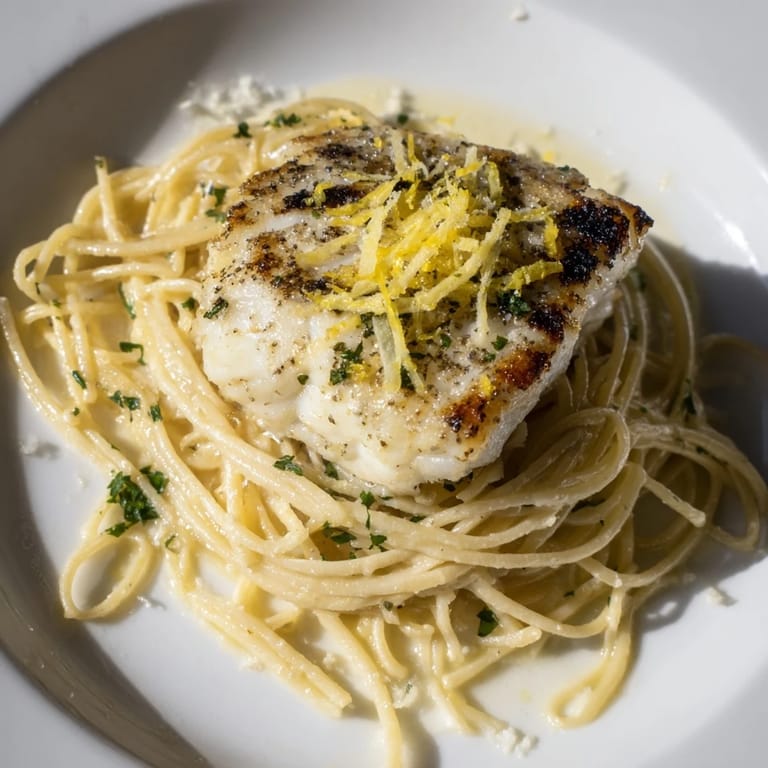
Save There was this one night when my friend arrived with his new partner, and I served this for the first time. Watching them eat together, laughing between bites, I realized this dish had become one of those meals that makes a moment feel special without trying too hard. It's simple enough to be weeknight dinner but elegant enough to be something you serve when you want to show someone you care.
Why This Works
The lemon-butter sauce is the real star here—it's bright enough to feel fresh, rich enough to feel indulgent, and quick enough that nothing gets cold waiting around. The fish sits on top like a crown instead of swimming in sauce, which is how I learned to plate it after watching a chef do it that way at a restaurant. The pasta underneath is silky and clings to every strand, and everything finishes at the same moment, which feels like a small miracle when you're cooking for people.
The Art of Not Overcooking Fish
I learned the hard way that fish goes from perfect to rubbery in about thirty seconds. The trick is to watch the sides of the fillet as it cooks—you'll see the flesh turn opaque and creep up about halfway, and that's when you flip it. If you wait for the color to reach all the way to the top, you've already overdone it. I use a timer now and set it for just under what the package suggests, then check it early.
Make It Your Own
This dish is flexible in ways that feel forgiving. You can substitute any mild white fish if sea bass is hard to find or expensive, and honestly it tastes just as good with a good piece of halibut or sole. The sauce takes heat beautifully—a pinch of red pepper flakes stirred in right before the pasta makes it interesting without overwhelming the fish. If you're cooking for someone who loves garlic, add an extra clove; if someone's vegetarian, you can skip the fish and double down on the herbs and cheese and it becomes its own beautiful thing.
- A splash of dry white wine added to the pan right after the garlic adds complexity and richness.
- Finish with a tiny drizzle of good olive oil right before serving if you want to make it feel extra.
- Thin slices of grilled lemon on top instead of wedges give you more lemon flavor in every bite.
 Save
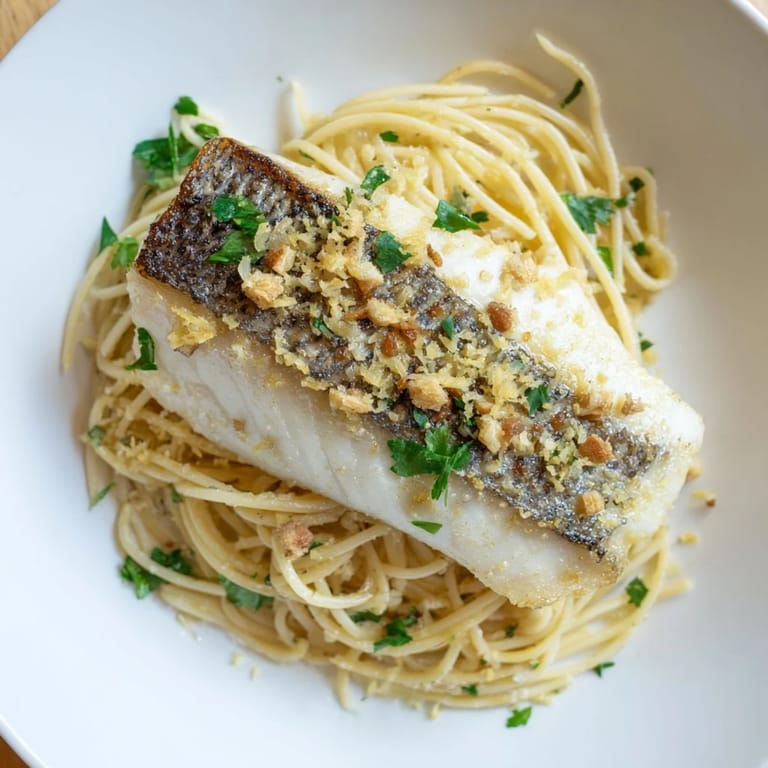
Save This dish has become my answer to so many different dinner questions—when I want to cook something impressive but feel calm doing it, when I'm cooking for people who matter, when I want summer in a bowl no matter what season it is. That first instinct to toss together fresh fish and bright lemon turned into something I return to again and again.
Recipe FAQs
- → What type of fish works best for this dish?
Sea bass or cod fillets are ideal due to their mild, flaky texture that pairs well with lemon and butter flavors.
- → How can I achieve the perfect sauce consistency?
Reserve some pasta cooking water to toss with the lemon, butter, and garlic, creating a silky and cohesive sauce that clings to the pasta.
- → Can I cook this dish gluten-free?
Yes, simply substitute regular spaghetti with gluten-free pasta to accommodate gluten sensitivities.
- → What herbs enhance the flavor best?
Fresh parsley complements the lemon and garlic, adding a bright herbal note without overpowering the dish.
- → What wine pairs well with this preparation?
A crisp Sauvignon Blanc or Pinot Grigio balances the zesty lemon and buttery elements perfectly.