 Save
Save The first time I made tteokbokki wasn't planned—it was a rainy Seoul afternoon when my neighbor brought over a bag of chewy rice cakes and challenged me to recreate the street vendor magic from outside her apartment. I stood at my stove, uncertain but curious, watching the gochujang dissolve into ruby-red broth while my kitchen filled with that unmistakable spicy-sweet aroma that made everything feel urgent and exciting. By the time those soft, chewy cakes hit the serving bowl, I understood why people line up for this stuff in the cold.
I remember making this for friends during a weeknight dinner when someone said they were craving something warm and comforting but didn't know what. Tteokbokki appeared in my mind like an obvious answer, and twenty minutes later, four of us were hunched over bowls, slightly sweating, completely content, barely pausing for breath between bites. There's something about this dish that breaks down social walls—everyone gets messy, everyone moves at the same pace, and somehow that makes the conversation better.
Ingredients
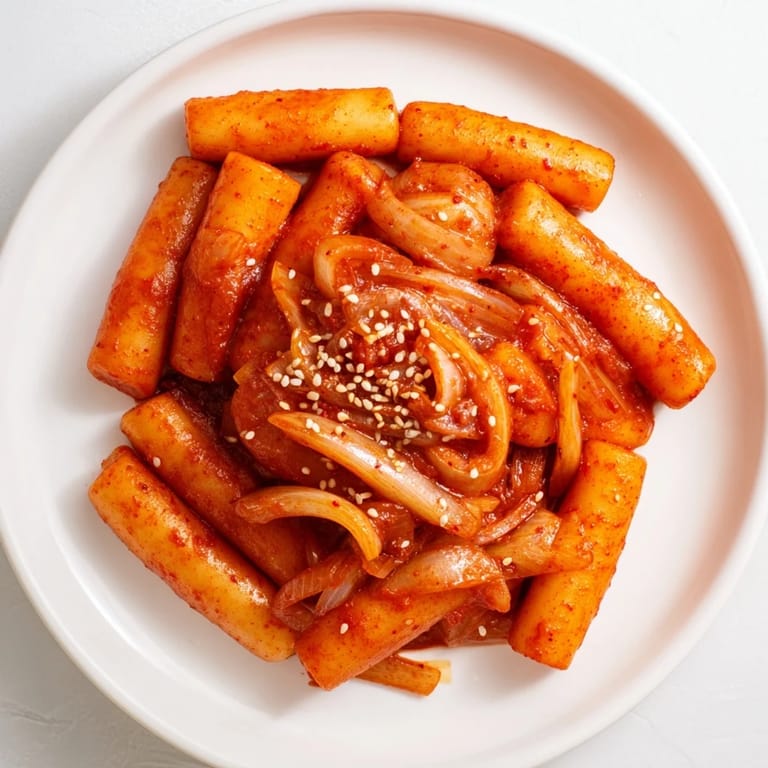
- Rice Cakes (500 g): These cylindrical Korean tteok are the whole point—they should be chewy and slightly springy, never mushy, so soaking matters.
- Gochujang (3 tbsp): This fermented chili paste is what gives the sauce its depth; don't substitute it with sriracha or you'll miss the savory funk that makes this special.
- Gochugaru (1 tbsp): Korean chili flakes add brightness and heat that gochujang alone can't deliver, so include it even if you're nervous about spice.
- Soy Sauce (2 tbsp): Use regular soy sauce unless you have a reason not to; it balances the sweetness and chili.
- Sugar and Honey (1 tbsp each): The sweetness isn't about dessert—it's about contrast, making the spice hit differently and keeping you coming back for more.
- Garlic (2 cloves, minced): Fresh garlic dissolves into the broth and becomes almost invisible, but removing it leaves the dish flat.
- Broth (3 cups water with kelp and anchovies): This base is the secret—homemade broth turns ordinary rice cakes into something crave-worthy, so don't skip it.
- Green Onions, Onion, and Cabbage: These add texture and freshness right when the sauce gets heavy; the green onions especially should go in at the last second.
- Boiled Eggs and Sesame Seeds: Optional but recommended—eggs add richness, and sesame seeds catch light and make the dish feel intentional.
Tired of Takeout? 🥡
Get 10 meals you can make faster than delivery arrives. Seriously.
One email. No spam. Unsubscribe anytime.
Instructions
- Wake up the rice cakes:
- If your tteok are hard or straight from the fridge, soak them in warm water for 10 minutes to soften them gently. They should bend without breaking.
- Build your broth foundation:
- In a medium pot, combine 3 cups water with the kelp and anchovies (if using). Simmer for 10 minutes, letting them infuse their savory depths into the liquid, then remove and discard the solids but keep every drop of broth.
- Mix in the sauce:
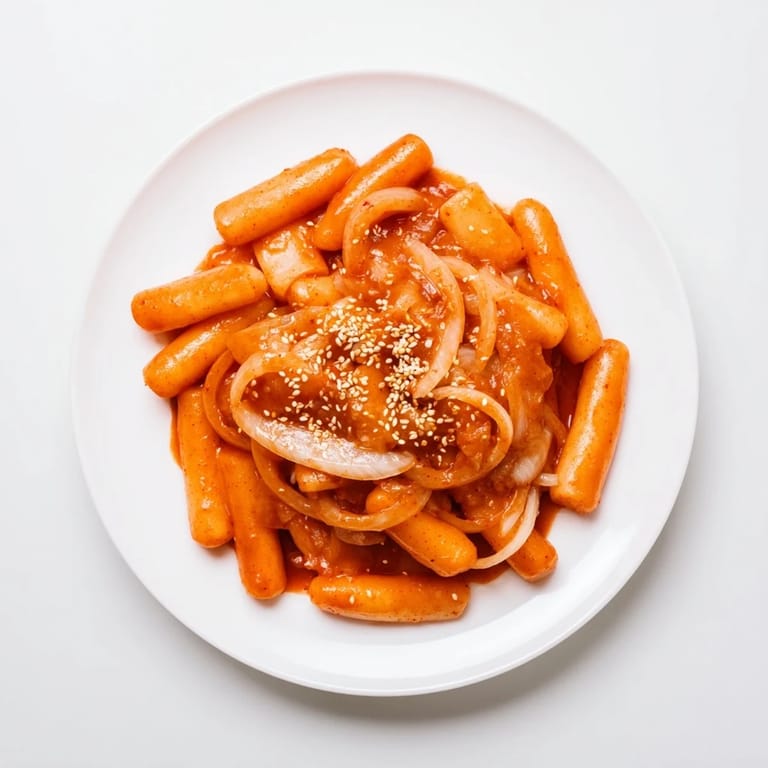
- Add gochujang, gochugaru, soy sauce, sugar, honey, and minced garlic to the hot broth and stir steadily until the paste completely dissolves and the broth turns that gorgeous deep red color.
- Add the rice cakes:
- Toss in your drained rice cakes along with the sliced onion and chopped cabbage (if using), stirring gently to coat everything in sauce. Bring the pot to a gentle boil, stirring occasionally so nothing sticks to the bottom.
- Simmer until chewy:
- Lower the heat and simmer for 10-15 minutes, stirring occasionally, until the sauce thickens slightly and the rice cakes are soft, chewy, and have absorbed enough sauce to taste incredible. The broth should cling to the cakes, not pool at the bottom.
- Final touches:
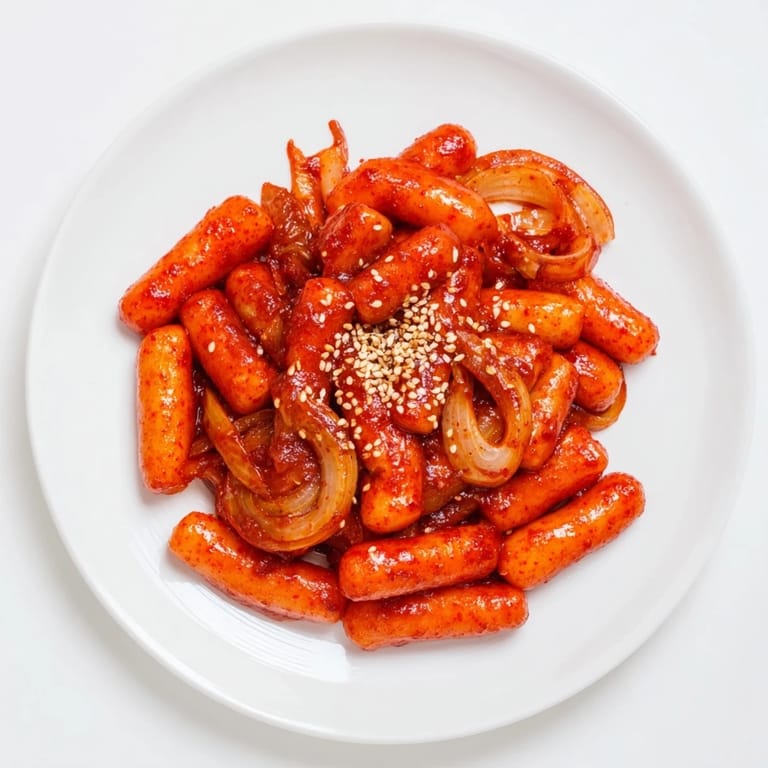
- In the last 2 minutes, scatter in the green onions and boiled eggs if using them, just to warm through. Transfer everything to a serving platter and sprinkle sesame seeds on top while it's still steaming.
 Save
Save I'll never forget the moment my mom tasted this version for the first time—she nodded slowly, took another bite, and said, 'This tastes like memory.' I think she meant it tasted like Seoul street corners and late-night cravings and the version she'd grown up with, all rendered in my small apartment kitchen. When food can do that across time and distance, you know you're making something that matters.
Adjusting Heat Levels
Spice is personal, and tteokbokki should be delicious at whatever heat level you choose. If you're nervous, start with half the gochugaru and taste before adding more—you can always make it spicier, but you can't undo it. Some people keep a dollop of sour cream or a drizzle of sesame oil nearby just in case, and that's completely valid.
Making It a Meal
On its own, tteokbokki is wonderful and rich enough to satisfy, but it becomes something fuller when surrounded by small sides. Think pickled radish for brightness, steamed dumplings for substance, or even kimchi if you want to lean further into bold flavors. The interplay between these elements teaches you something about Korean cooking—nothing exists alone; everything is better with friends.
Keeping the Sauce Balanced
The magic happens in the tension between sweet, spicy, and savory—tip too far one way and the dish loses its character. I learned this by overthinking it the first few times, adding extra honey, then regretting it, then learning to taste and trust. The recipe as written is balanced, but your palate might pull differently, so taste as you go and adjust by small increments.
- If it tastes too spicy, a pinch more sugar or honey softens the edges without making it cloying.
- If it tastes flat, add a splash more soy sauce or a squeeze of fresh garlic to wake it up.
- If the sauce is too thick before the rice cakes are tender enough, add warm water a tablespoon at a time rather than cooking it longer.
 Save
Save Tteokbokki is the kind of dish that deserves repetition and slow understanding. Make it once and you'll understand why it's beloved; make it a few more times and you'll find your version, the one that tastes like your kitchen and your preferences and the people you like to feed.
Recipe FAQs
- → What gives tteokbokki its unique chewy texture?
The chewy texture comes from Korean cylindrical rice cakes that soften yet retain a pleasant bite when simmered.
- → Can the dish be made vegetarian?
Yes, by using kelp (kombu) broth and omitting anchovies, the dish suits a vegetarian diet without compromising flavor.
- → How spicy is the gochujang sauce used here?
The sauce balances moderate heat from gochujang and gochugaru with subtle sweetness from honey and sugar.
- → What vegetables complement this dish best?
Green onions, sliced onion, and optional cabbage add freshness and texture that enhance the overall flavor profile.
- → Are there tips for preventing rice cakes from sticking together?
Stir gently during simmering and soak rice cakes in warm water before cooking if they are hard or refrigerated.
- → What garnishes are traditionally used?
Sesame seeds and chopped green onions are classic garnishes that add aroma and a slight crunch.