 Save
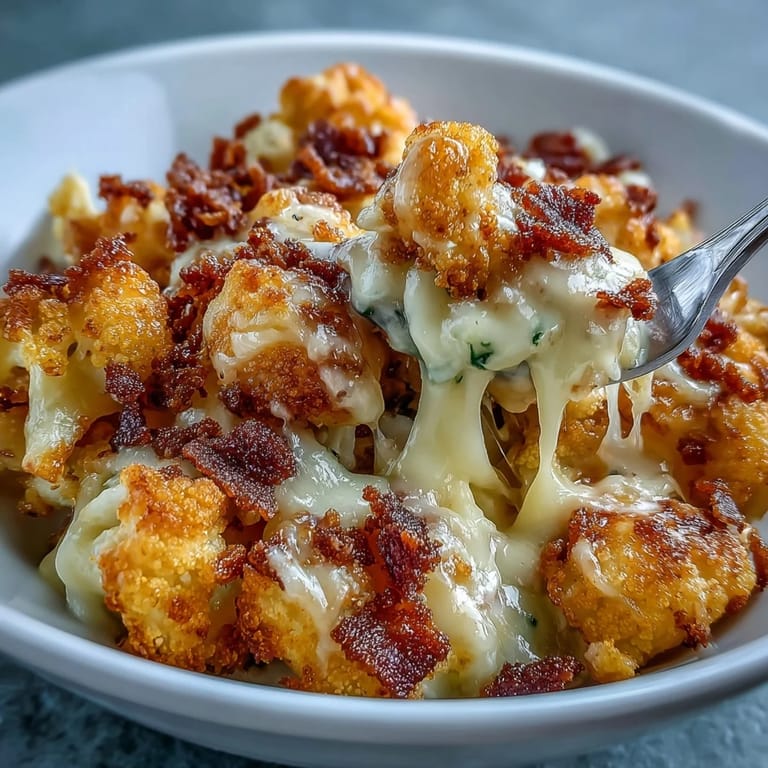
Save There's a moment in every low-carb kitchen when you realize cauliflower isn't a compromise—it's an upgrade. I discovered this while standing in front of my stove on a Tuesday evening, watching bacon sizzle and realizing I'd been overthinking comfort food for months. This keto mac and cheese arrived without fanfare, just a quiet realization that roasted cauliflower florets could deliver the exact textural satisfaction I'd been missing, especially when draped in a sauce so creamy and cheese-forward it barely remembers it's supposed to be virtuous.
I made this for my sister last month when she mentioned feeling stuck in a keto rut, tired of the same proteins and vegetables arranged in different orders. Watching her face as she took the first bite—that moment of surprise when comfort food doesn't taste like guilt—reminded me why I love cooking this particular dish. It's become the recipe I reach for when someone needs proof that eating well doesn't mean eating boring things.
Ingredients
- Cauliflower florets: One large head, cut into bite-size pieces that roast evenly and won't overwhelm your baking sheet.
- Unsalted butter: Two tablespoons total—one for tossing the cauliflower, one for starting your sauce base.
- Heavy cream: One cup is the foundation of everything that makes this creamy, so don't skip or substitute.
- Sharp cheddar cheese: One and a half cups shredded, and sharp matters because mild cheese gets lost in the sauce.
- Mozzarella cheese: Half a cup shredded, for stretch and a subtle sweetness that balances the sharpness.
- Cream cheese: Two ounces helps bind everything and creates that luxurious texture that separates this from watery mac and cheese.
- Parmesan cheese: Quarter cup grated, for a salty umami note that deepens the entire dish.
- Bacon: Six slices, cooked until it shatters between your fingers, then crumbled into pieces small enough to distribute with each bite.
- Garlic powder, onion powder, smoked paprika: Half teaspoon, half teaspoon, and quarter teaspoon respectively—these aren't decorative spices, they're flavor anchors that prevent the cheese from tasting flat.
- Salt and freshly ground black pepper: Season in layers as you go, tasting as you build the sauce.
- Fresh chives or parsley: One tablespoon chopped and sprinkled at the end, optional but worth the two minutes of knife work for brightness.
Tired of Takeout? 🥡
Get 10 meals you can make faster than delivery arrives. Seriously.
One email. No spam. Unsubscribe anytime.
Instructions
- Heat your oven and prepare the stage:
- Preheat to 425°F and line a baking sheet with parchment paper so the cauliflower won't stick and you'll actually get those golden, crispy edges.
- Roast the cauliflower until golden:
- Toss your florets with one tablespoon melted butter, salt, and pepper, spread them in a single layer, and roast for 20 to 25 minutes, stirring halfway through. You're looking for golden browning on the florets, which means they're caramelized and sweet.
- Crisp the bacon while you wait:
- Cook six slices in a skillet over medium heat until they shatter between your fingers, about seven to eight minutes. Drain on paper towels and crumble into bite-size pieces.
- Build your cheese sauce:
- In a large saucepan over medium-low heat, melt one tablespoon butter, then add heavy cream, cream cheese, garlic powder, onion powder, smoked paprika, salt, and pepper. Whisk constantly for two to three minutes until the cream cheese fully dissolves and the sauce is smooth—this prevents lumps later.
- Add the cheeses slowly:
- Gradually stir in the sharp cheddar, mozzarella, and Parmesan, whisking continuously until you have a thick, glossy sauce. Keep the heat at medium-low and never let it boil, which would break the sauce and make it grainy.
- Combine cauliflower and sauce:
- Gently fold the roasted cauliflower florets into the cheese sauce, making sure every piece gets coated. This is when the dish starts looking like the real thing.
- Finish in the oven:
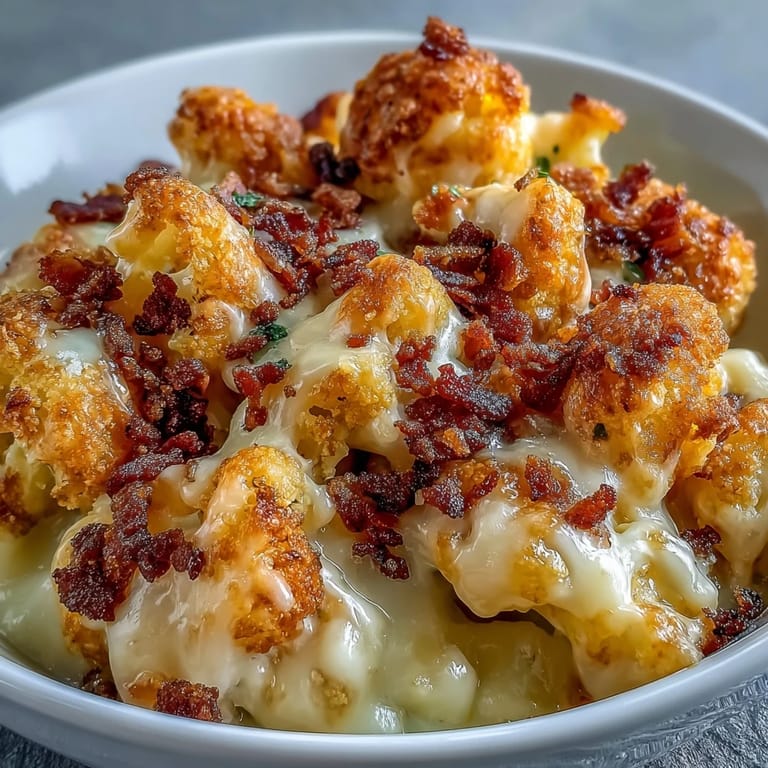
- Transfer everything to a baking dish, sprinkle bacon crumbs evenly across the top, and bake at 400°F for seven to ten minutes until the surface is golden and the sauce bubbles slightly at the edges. This final bake creates that casserole-style finish.
- Garnish and serve:
- Top with fresh chives or parsley if you have them, and serve while it's still hot and the cheese is at peak creaminess.
 Save
Save There was a moment last week when my partner took a second helping without asking if it was keto-friendly, just moved straight into eating. That's when I knew this recipe had crossed from being something I make to something that quietly belongs on the table, no explanation needed.
Why Cauliflower Works Better Than You'd Think
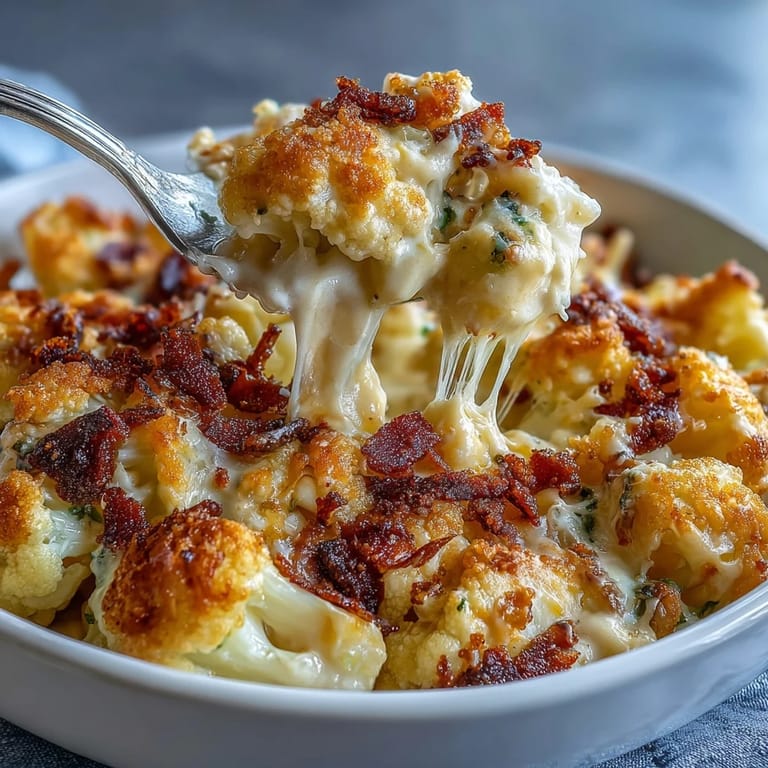
I used to believe that cauliflower in mac and cheese was a workaround, something you did when you were trying too hard. Then I actually paid attention to how it cooks. When you roast it properly, the florets develop caramelized edges and a tender center that has almost nothing in common with raw or steamed cauliflower. The texture becomes almost nutty, and the natural sweetness emerges. Suddenly it's not a substitute for pasta—it's a different thing entirely, and honestly, a better vehicle for cheese sauce because it actually absorbs the flavors instead of just sitting under them.
The Sauce Is Where All the Magic Lives
I learned this the hard way after my first attempt, when I used only cheddar and wondered why everything tasted one-dimensional. The combination of four cheeses sounds excessive until you taste how they work together—cheddar brings sharpness, mozzarella adds creaminess and slight sweetness, cream cheese ensures smoothness, and Parmesan delivers that salty umami punch that makes you keep reaching for another bite. The spices matter too; smoked paprika especially adds a subtle depth that prevents the sauce from tasting aggressively cheesy in a way that gets tired fast.
Making This Work for Your Kitchen
This dish is flexible enough to live in your regular rotation without feeling like a production. You can prep the cauliflower and bacon ahead of time, storing them separately in the refrigerator, then make the sauce fresh when you're ready to eat. The final bake brings everything together in minutes, so you're looking at actual active cooking time of maybe twenty minutes spread across an hour. For a main dish, this serves four generously, or six as part of a larger meal with grilled vegetables or meat.
- Swap the sharp cheddar for Gruyère if you want earthier, nuttier notes that hit differently.
- Add a pinch of cayenne pepper to the sauce if you want heat without changing the fundamental flavor profile.
- Sprinkle crushed pork rinds with the bacon crumbs for extra crunch and added fat satisfaction.
 Save
Save This has become the dish I make when I want proof that eating well doesn't require sacrifice, just intention. Make it once and you'll understand why it's worth the small effort.
Recipe FAQs
- → Can I make this dairy-free?
While traditional dairy substitutes would alter the flavor profile significantly, you could experiment with coconut cream and vegan cheese alternatives. However, the rich cheese sauce is central to this dish's character.
- → How do I store leftovers?
Store in an airtight container in the refrigerator for up to 3 days. Reheat gently in the microwave or oven at 350°F until warmed through. The cauliflower may become slightly softer after reheating.
- → Can I use frozen cauliflower?
Fresh cauliflower works best for roasting as it maintains better texture. Frozen cauliflower tends to release more moisture and can become mushy. If using frozen, thaw and pat thoroughly dry before roasting.
- → What can I substitute for bacon?
Crispy pancetta, prosciutto, or even crushed pork rinds work well as toppings. For a vegetarian version, try toasted almond flakes or buttery breadcrumbs made from low-carb bread.
- → Is this suitable for meal prep?
Yes, this dish meal preps beautifully. Portion into individual containers and refrigerate. The flavors often deepen overnight. Add fresh garnish just before serving for the best presentation.
- → Can I add other vegetables?
Broccoli florets, Brussels sprouts halves, or butternut squash cubes can be roasted alongside the cauliflower for variety. Just ensure all vegetables are cut to similar sizes for even cooking.