 Save
Save I discovered okonomiyaki at a cramped food stall in Osaka during a spontaneous weekend trip, watching a chef work with the speed and precision of someone who'd made thousands of these pancakes. The sizzle of the griddle, the theatrical drizzle of sauce and mayo, the bonito flakes dancing from the residual heat—it was mesmerizing. When I bit into mine, warm cabbage gave way to crispy edges, and I understood instantly why this humble street food had captured so many hearts. I spent the next three days seeking out different versions before finally deciding to crack the code in my own kitchen.
My partner was skeptical when I announced I was making okonomiyaki for dinner, arms crossed at the kitchen counter with that expression that says "I'll be the judge of this." Twenty minutes later, watching the bonito flakes curl up from the warmth, they quietly asked for seconds before I'd even finished plating the first one. It became our favorite lazy-but-feels-fancy dinner, the kind where we argue playfully over who gets to peel the spatula from the pan first.
Ingredients
- All-purpose flour: This is your batter backbone—it needs to be just enough to bind everything without turning dense or heavy, so don't be tempted to add more.
- Dashi stock: If you can find it, use it; the umami changes everything and makes the batter taste authentically Japanese.
- Eggs: Two large ones give you structure and richness without overwhelming the delicate cabbage flavor.
- Green cabbage, finely shredded: The soul of the dish—shred it thin so it cooks through and stays tender even in the center of the pancake.
- Okonomiyaki sauce: It's tangy, slightly sweet, and slightly savory all at once; store-bought versions are reliable and honestly, there's no shame in using them.
- Japanese mayonnaise: Richer and more forgiving than American mayo, it browns beautifully and adds a subtle sweetness.
- Bonito flakes: They're not just garnish—their slight smokiness and the way they move from the heat are part of the whole experience.
- Aonori: This seaweed powder brings a grassy, slightly briny note that anchors all the other flavors together.
Tired of Takeout? 🥡
Get 10 meals you can make faster than delivery arrives. Seriously.
One email. No spam. Unsubscribe anytime.
Instructions
- Mix the batter base:
- Whisk flour, dashi stock, eggs, salt, and baking powder together until smooth—this should take barely a minute. The batter will be thicker than pancake batter but pourable, and you want no lumps.
- Fold in the vegetables:
- Gently combine cabbage, green onions, carrot, and bean sprouts until everything is coated. If you're adding shrimp, this is when they join the party.
- Heat the pan properly:
- Medium heat on a nonstick skillet or griddle is your sweet spot—too high and the outside burns before the inside cooks; too low and you'll lose that golden crust. A light oil coating is all you need.
- Pour and shape:
- Use about 1/4 of the batter for one pancake, shaping it into a round roughly 1/2-inch thick. It's okay if the edges are rustic and irregular; that's part of its charm.
- Add protein if using:
- Lay 2 halves of bacon or pork belly across the top of the batter as soon as you pour it, pressing gently so it stays put as it cooks.
- First side:
- Cook for 4 to 5 minutes until the bottom is golden and sounds crispy when you tap it with a spatula. You'll see the edges start to set and pull away from the pan slightly.
- The flip:
- This is the moment that feels dramatic every single time—slide your spatula underneath, take a breath, and flip decisively in one smooth motion. The second side needs another 4 to 5 minutes to match the first side's color and ensure everything is cooked through.
- Repeat with confidence:
- You'll make three more of these, and each one gets a little easier as the pan stays at the perfect temperature.
- Finish with the good stuff:
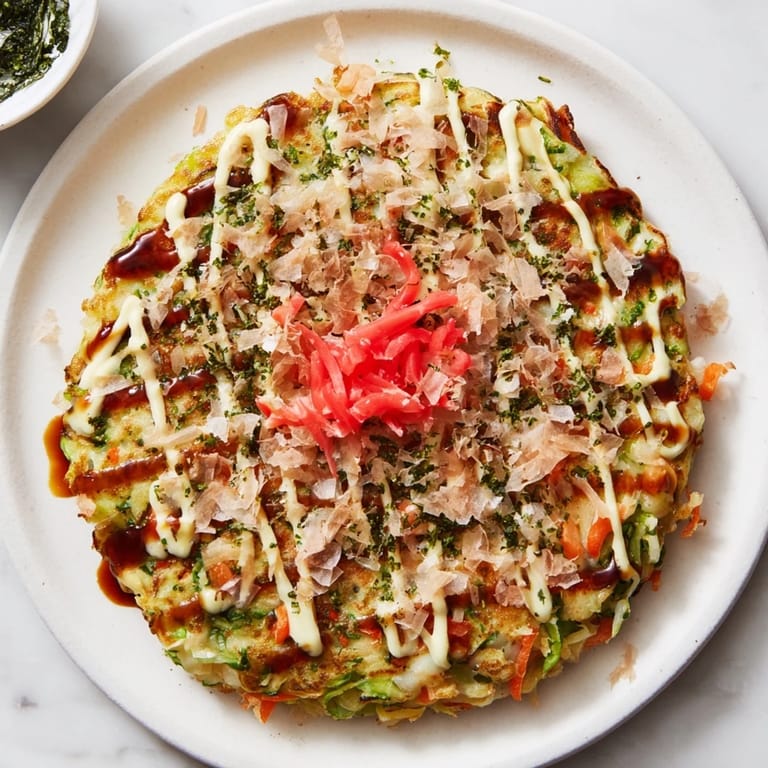
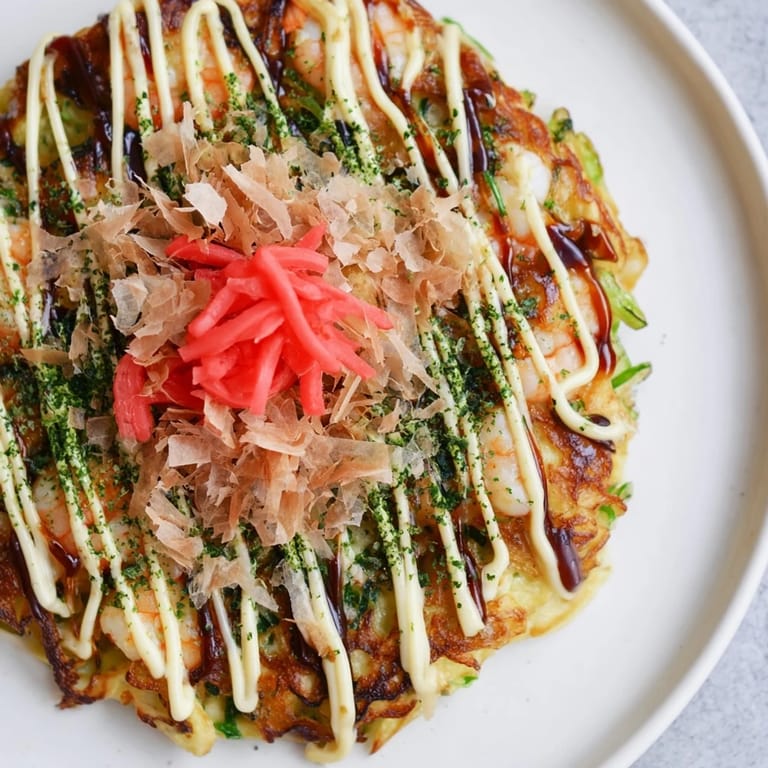
- Transfer each warm pancake to a plate, then drizzle okonomiyaki sauce and mayo in a loose crisscross pattern. Sprinkle bonito flakes, aonori, and pickled ginger on top while the pancake is still warm—the heat makes the flakes shimmy slightly, and it looks stunning.
 Save
Save There was a moment, maybe the fifth time I made these, when my neighbor poked their head in and said they smelled something incredible. I handed them a plate with an extra okonomiyaki, and they sat at my kitchen table for an hour talking about their own food memories. That's when I realized this wasn't just a recipe anymore—it was an excuse to slow down and share something warm with someone.
The Secret to Perfect Texture
The magic happens in the marriage of structure and tenderness. Too much flour and your okonomiyaki becomes a dense, heavy disk; too little and it falls apart on the flip. The dashi stock matters more than you'd think—it adds umami that makes every bite taste intentional and full. I learned this the hard way by substituting water my first attempt, wondering why it tasted flat despite following every other step perfectly. Once I switched to proper dashi, it was like someone had turned up the volume on all the flavors.
Customizing Your Okonomiyaki
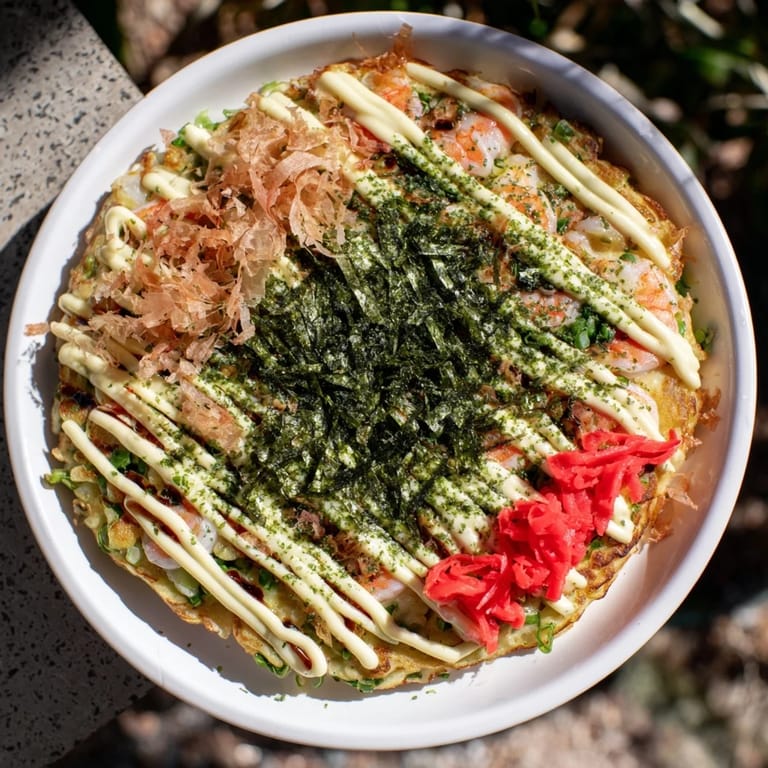
The beauty of this dish is that it welcomes creativity. I've added corn for sweetness, mozzarella for richness, and mushrooms for earthiness—each version tastes different but unmistakably like okonomiyaki. Some people layer the toppings and fillings strategically, almost building them like a savory layer cake. Others keep it simple and classic, letting the cabbage and sauce speak for themselves. There's no wrong approach as long as you respect the core technique: a thin, even batter that cooks through without burning, and toppings added when the pancake is still warm enough to let them meld slightly into the surface.
Pairing and Serving Ideas
Okonomiyaki is a complete meal on its own, but it sings when served alongside a few simple sides. A cold Japanese beer or sake cuts through the richness beautifully, and a small side of pickled vegetables adds brightness and cleansing acidity. I often serve mine with a simple cucumber sunomono salad or a bowl of miso soup on the side, creating a mini Japanese dining experience without the stress. Eat these while they're warm, preferably with someone worth slowing down for.
- If you can't find bonito flakes, don't skip them—dried seaweed powder alone is good, but the flakes truly make the dish dance.
- Leftover okonomiyaki reheats well in a dry skillet for about 2 minutes per side, though the bonito flakes won't have quite the same theatrical curl.
- Make the batter just before cooking rather than ahead of time; the vegetables release water the longer the batter sits, which affects the texture.
 Save
Save Every time I make okonomiyaki, I'm transported back to that Osaka food stall, but I'm also exactly here in my own kitchen, grateful for the simplicity of flour, eggs, and cabbage transformed into something that brings people together. Make this recipe, make it again, and eventually it becomes less about following instructions and more about the conversation happening at your table.
Recipe FAQs
- → What key ingredients give these pancakes their unique flavor?
The combination of dashi stock in the batter, shredded cabbage, green onions, and toppings like okonomiyaki sauce, Japanese mayonnaise, bonito flakes, aonori, and pickled ginger create a distinctive savory and tangy profile.
- → Can I make this dish vegetarian-friendly?
Yes, by omitting shrimp and bacon or pork, you can enjoy a vegetarian version while maintaining the core flavors from the vegetables and toppings.
- → How is the batter prepared for the pancakes?
The batter is made by whisking flour, dashi stock (or water), eggs, salt, and baking powder until smooth, then folding in the shredded vegetables gently.
- → What cooking method is used for these pancakes?
The batter is cooked on a lightly oiled nonstick skillet or griddle over medium heat until golden on both sides and cooked through, about 4–5 minutes per side.
- → Are there any recommended toppings or garnishes?
Typical garnishes include a drizzle of okonomiyaki sauce and Japanese mayonnaise, sprinkled with bonito flakes, aonori seaweed flakes, and pickled ginger for added flavor and texture.
- → What are some suggested variations or additions?
You can enhance the batter with corn, cheese, or other vegetables, and substitute the okonomiyaki sauce with a mix of Worcestershire, ketchup, and soy sauce.