 Save
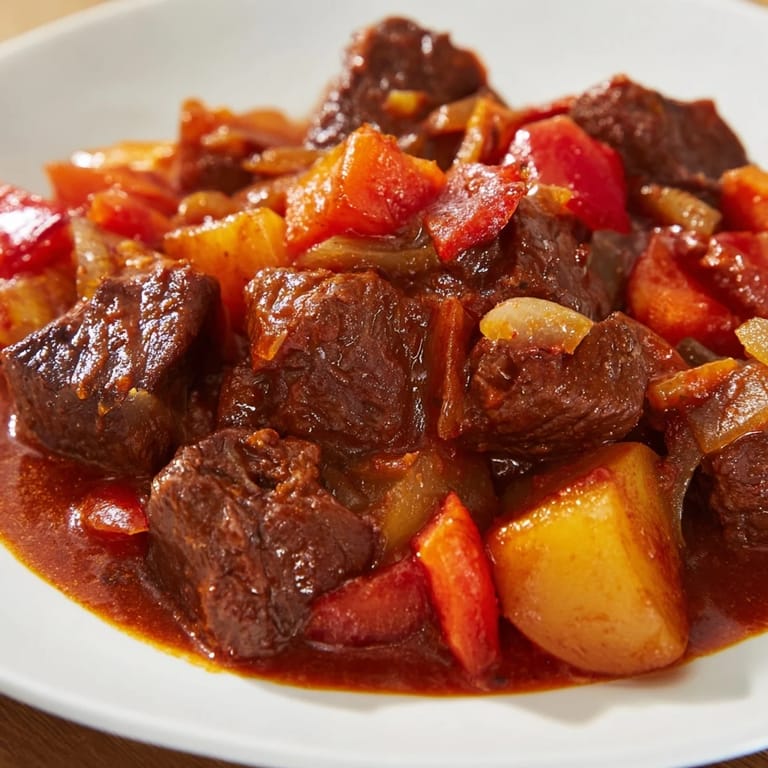
Save My first real goulash came not from a recipe but from a neighbor who insisted I stop by her kitchen on a Saturday afternoon. The smell alone—that deep, almost sweet paprika blooming in hot fat—told me I'd been missing something essential. She stirred the pot with the kind of ease that comes from making the same dish a hundred times, and when I tasted it, I understood why this stew has survived centuries of Hungarian tables. It wasn't just food; it was a conversation held in spices and tender meat.
I made this for a dinner party once and forgot to add the potatoes until the very end—they barely softened, but somehow everyone preferred it that way. The stew was purer, more concentrated, and the vegetables provided just enough substance without diluting that incredible paprika sauce. It became my accidental signature move, the kind of mistake that teaches you something worth remembering.
Ingredients
- Beef chuck (2 lbs, cut into 1-inch cubes): This cut has just enough marbling to stay tender during the long simmer, and it breaks down into soft, almost melting pieces that absorb all the paprika-forward flavors.
- Hungarian sweet paprika (3 tbsp): Don't substitute regular paprika—the Hungarian kind has a deeper, almost fruity complexity that defines this entire dish, so seek it out.
- Onions (2 large, finely chopped): They dissolve into the sauce during cooking, creating a natural sweetness and body that no amount of flour could replicate.
- Carrots (2 medium, sliced): They stay firm enough to offer texture while soaking up all those paprika-rich juices.
- Red bell pepper (1 large, diced): The sweetness balances the earthiness of the paprika and keeps the stew bright.
- Garlic (2 cloves, minced): Just enough to add depth without overpowering the paprika's subtle sweetness.
- Potatoes (2 medium, optional): They're a texture thing—some meals need them, some don't, and that's perfectly fine.
- Caraway seeds (1 tsp) and dried marjoram (1 tsp): These are the quiet partners that complete the Hungarian flavor profile, adding subtle earthiness and warmth.
- Beef broth (4 cups): Use the best quality you can find; it becomes the foundation of everything good about this stew.
- Tomato paste (2 tbsp): A small amount adds depth and helps round out the paprika's sweetness.
Tired of Takeout? 🥡
Get 10 meals you can make faster than delivery arrives. Seriously.
One email. No spam. Unsubscribe anytime.
Instructions
- Start with the onions:
- Heat your oil or lard in a heavy pot over medium heat and watch the onions soften and turn golden—this takes about 8 minutes and is worth the wait because you're building the sweet foundation everything else sits on. Listen for that gentle sizzle and don't rush it.
- Wake up the garlic:
- Add your minced garlic and let it cook for just 1 minute until the kitchen fills with that unmistakable aroma. You're not looking for color here, just fragrance.
- Brown the beef:
- Increase the heat slightly and add your beef cubes, stirring occasionally until they're golden on all sides—about 5 minutes total. You're sealing in the flavors, not cooking the meat through.
- Toast the paprika:
- This is the crucial moment: sprinkle the paprika over the meat and onions, then stir quickly and constantly for about 30 seconds. You want the paprika to bloom and coat everything in that deep red color, but raw paprika can turn bitter if it catches, so keep moving.
- Build the base:
- Add your tomato paste, caraway seeds, marjoram, black pepper, and salt, stirring until everything is coated and fragrant. Then add the carrots, bell pepper, and bay leaf, mixing well.
- Add the broth and simmer:
- Pour in your beef broth, using a spoon to scrape up all the brown bits stuck to the bottom of the pot—that's pure flavor. Bring everything to a simmer, then cover and cook gently on low heat for 1 hour, stirring occasionally so nothing sticks.
- Finish with potatoes (if using) and final cook:
- After the first hour, add your potatoes and continue simmering uncovered for another 45 to 60 minutes until the beef is falling-apart tender and the stew has thickened slightly. Taste as you go and adjust the salt to your preference, then fish out the bay leaf.
 Save
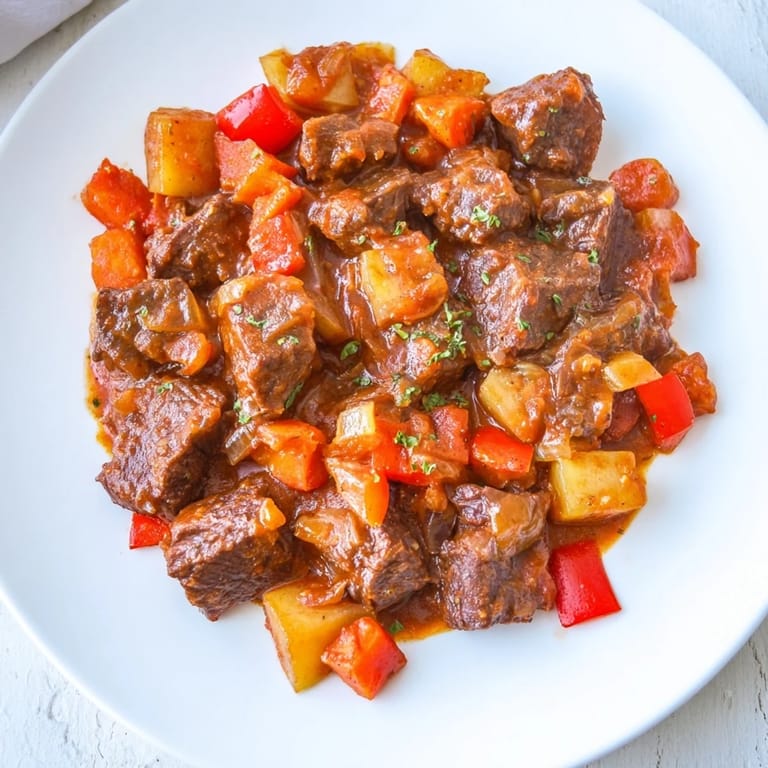
Save There's a moment late in the cooking when the stew stops smelling like individual ingredients and suddenly smells like something whole and complete. That's when you know you're almost there, and it's a feeling worth waiting for.
On Serving This Stew
Goulash is forgiving about what you serve it with—crusty bread works, egg noodles work, even plain rice will make people happy. I've found that something with a little chew or substance does best because it gives you something to do with all that incredible sauce.
The Spice Question
The paprika here is sweet, not hot, which is traditional and honestly what makes this dish so approachable. But if you like heat, there's room for it: a pinch of hot paprika or a diced chili stirred in at the end won't ruin anything, and it might become your new thing.
Making It Your Own
Some people add a splash of sour cream at the end, which is delicious if you don't mind breaking the dairy-free promise. Others swear by a spoonful of honey to round out the flavors. The base is strong enough to handle small experiments without falling apart.
- If you have time, let it cool completely before reheating—the flavors deepen overnight in a way that feels almost like magic.
- This freezes beautifully for up to three months, so make a double batch when you have the energy.
- Fresh herbs like parsley scattered on top at the end add a bright contrast that your guests will notice.
 Save
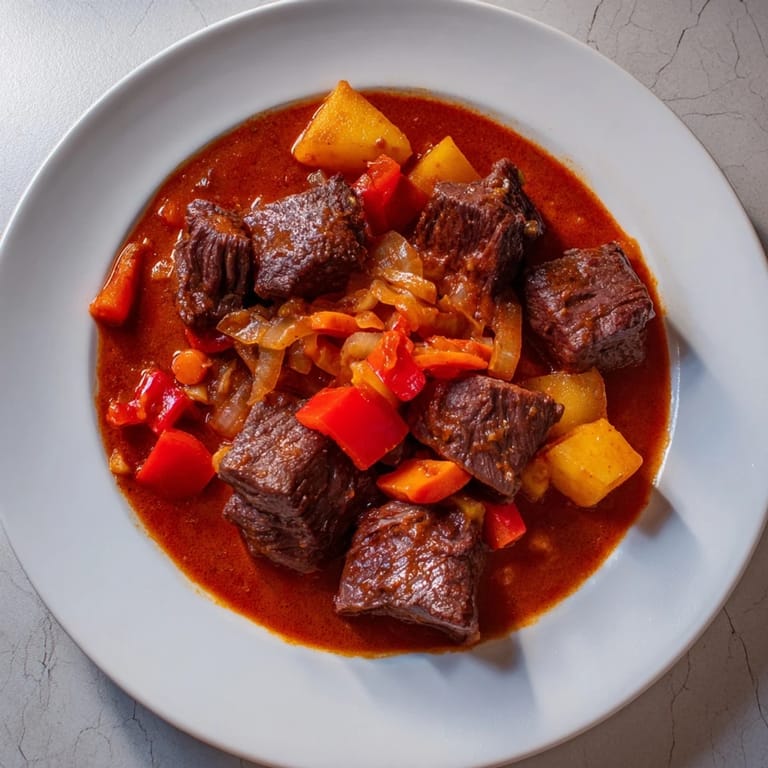
Save This stew is the kind of thing that makes a kitchen feel full and lived-in. Make it once and you'll understand why people keep coming back to it.
Recipe FAQs
- → What cut of beef is best for this stew?
Beef chuck cut into 1-inch cubes works best as it becomes tender and flavorful after slow cooking.
- → Can I adjust the spice level of the stew?
Yes, for more heat add a pinch of hot paprika or a chopped chili to enhance the spiciness.
- → Should potatoes be included in the stew?
Potatoes are optional but add extra heartiness and help thicken the stew during the final simmer.
- → How long should the stew simmer?
Simmer gently on low heat for about 2 hours until the beef and vegetables are very tender.
- → What traditional sides pair well with this dish?
Rustic bread, egg noodles, or Hungarian csipetke dumplings complement the stew perfectly.
- → Which spices give the stew its distinct flavor?
Hungarian sweet paprika, caraway seeds, marjoram, and black pepper together create the stew's rich and aromatic profile.