 Save
Save There's something about a bowl of hummus that stops a dinner party in its tracks—especially when you've crowned it with vegetables that still carry the warmth and char from the oven. I discovered this combination by accident one summer evening when I had guests arriving in an hour and my fridge held little more than chickpeas, some sad bell peppers, and a jar of tahini. Rather than panic, I decided to roast everything until the edges turned dark and smoky, then pile it all onto the creamiest hummus I could whip up. What arrived at the table felt intentional, Mediterranean, and somehow more generous than the sum of its parts.
The first time I made this for my neighbor Sarah, she stood in my kitchen and kept going back for more, tearing off pieces of pita and loading them high. She mentioned she'd been avoiding appetizers because store-bought ones always felt impersonal, and somehow this felt different—like I'd actually cooked something with intention. That comment stuck with me, because it's true: this dish rewards a few extra minutes of real cooking in a way that's hard to replicate.
Ingredients
- Canned chickpeas: Don't skip the rinsing step—it removes the starchy liquid that makes hummus gluey instead of silky.
- Tahini: The backbone of creamy hummus; make sure yours is well-stirred before measuring, since the oil separates during storage.
- Fresh lemon juice: Bottled juice will work, but fresh makes an unmistakable difference in brightness and flavor depth.
- Extra-virgin olive oil: This is one ingredient where quality genuinely matters; splurge a little here.
- Ground cumin: It adds warmth without announcing itself, letting the other flavors sing.
- Red bell pepper, zucchini, red onion, and eggplant: The vegetables are your canvas; their char and sweetness make the dish feel special.
- Smoked paprika: This is what gives the vegetables their smoky character—regular paprika won't deliver the same depth.
- Pine nuts: Toast them yourself right before serving; the few extra minutes transform them from pleasant to essential.
- Fresh parsley and sumac or zaatar: These are the final flourish that makes the dish feel gathered and intentional.
Tired of Takeout? 🥡
Get 10 meals you can make faster than delivery arrives. Seriously.
One email. No spam. Unsubscribe anytime.
Instructions
- Get your oven ready and prepare the vegetables:
- Preheat to 425°F and toss your cut vegetables with olive oil, smoked paprika, salt, and pepper until they're evenly coated. Spread them out on a baking sheet in a single layer so they actually roast instead of steam, then slide them in the oven.
- Roast until the edges tell you they're done:
- After about 22 to 25 minutes, the vegetables should be tender inside with char spots that look almost blackened—that's where the flavor lives. Stir them once halfway through so they color evenly.
- Build your hummus while the vegetables roast:
- Add chickpeas, tahini, lemon juice, garlic, olive oil, cumin, and salt to your food processor and blend until completely smooth. Add cold water a tablespoon at a time until you reach that cloud-like consistency—it should hold a swoosh but still spread easily.
- Toast the pine nuts right before assembly:
- In a dry skillet over medium heat, watch them for 2 to 3 minutes, stirring constantly, until they're golden and fragrant—they'll brown quickly, so don't walk away. This step takes three minutes but tastes like five minutes of extra attention.
- Create your base:
- Spread the hummus onto your serving platter or shallow bowl and use the back of a spoon to create a gentle swoosh or shallow well in the center. This isn't just for looks; it gives the vegetables somewhere to nestle and creates visual movement.
- Top with intention:
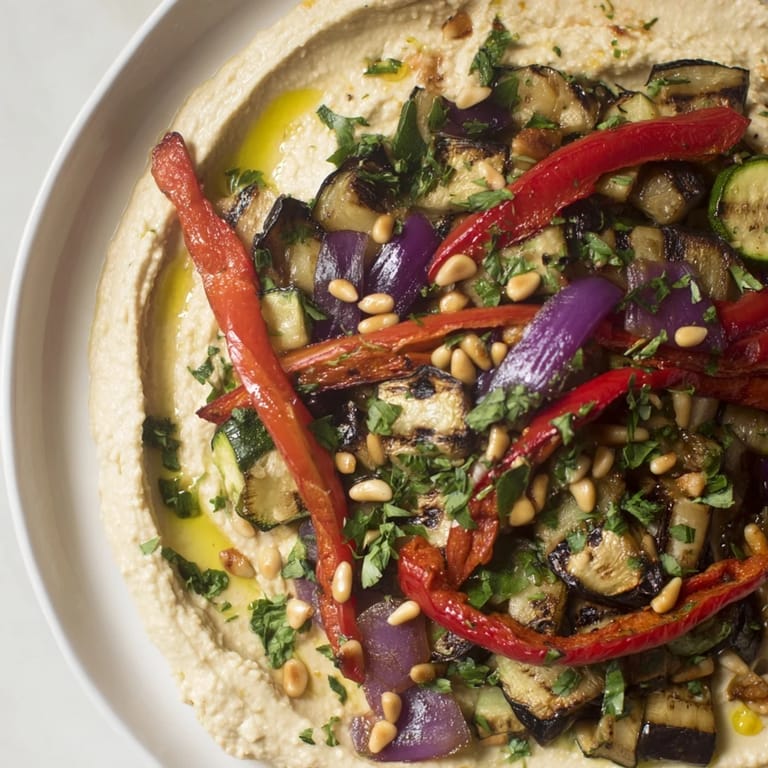
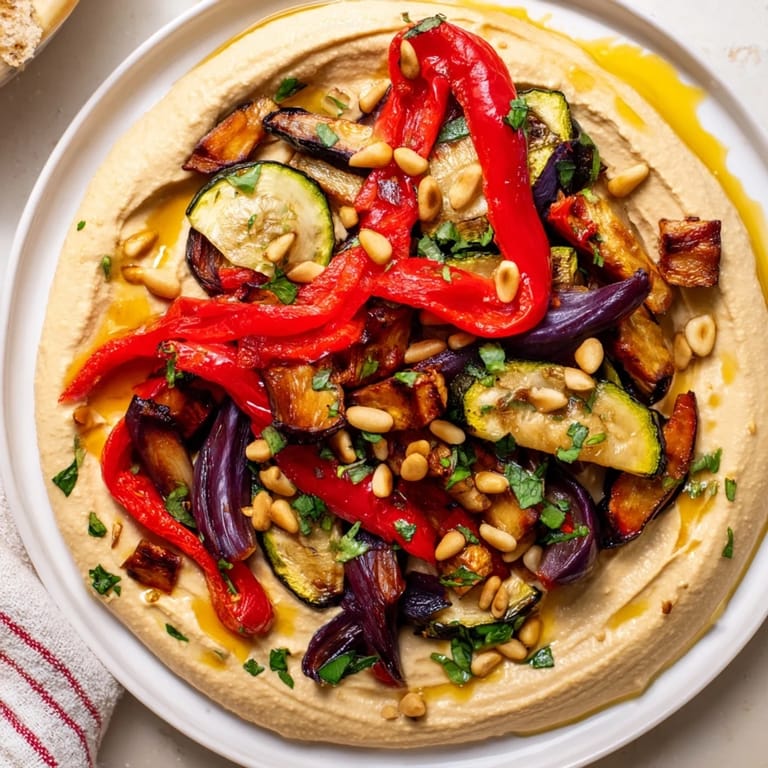
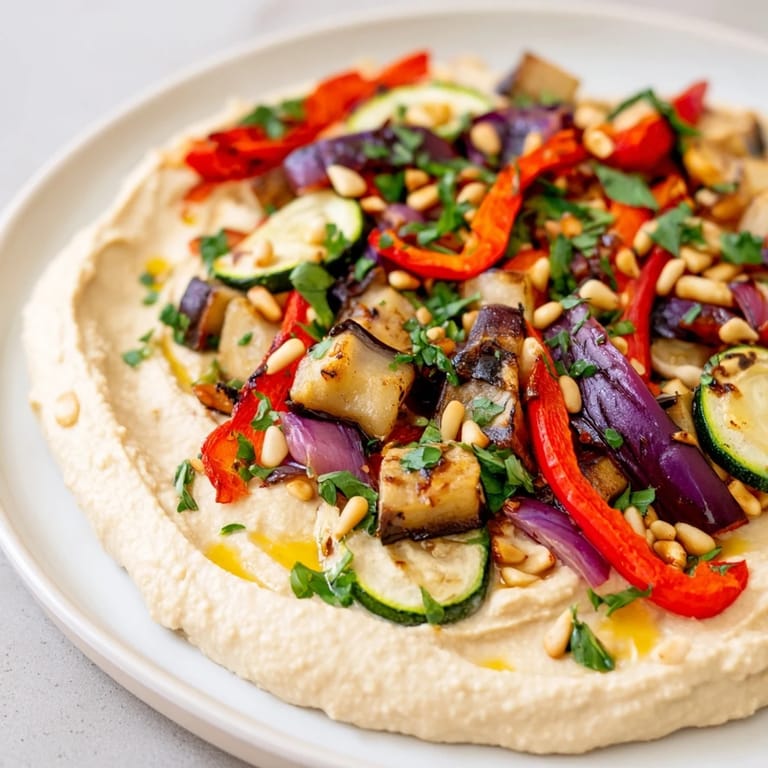
- Pile the warm roasted vegetables over the hummus, scatter the toasted pine nuts across the top, and finish with a shower of fresh parsley and sumac or zaatar if you have it. Drizzle everything generously with good olive oil.
 Save
Save I once made this for a potluck where I was nervous about showing up with "just hummus," but somehow it became the dish people remembered. A friend came back to me weeks later and said she'd been making it at home, experimenting with different vegetables each time, and it had become her answer to "I don't know what to bring." That's when I realized this recipe isn't just food—it's an invitation to cook with intention.
Variations That Feel Natural
The vegetables here are a starting point, not a rule. In autumn, I roast carrots, cauliflower, and mushrooms instead, and the earthiness feels exactly right for the season. Spring calls for asparagus and snap peas, roasted just until they're tender with blistered skin. Summer is for this exact combination, but I've also loaded it with charred cherry tomatoes and thin slices of summer squash that caramelize into jam-like sweetness. The hummus stays the same; only the vegetables change.
Serving This Beyond the Appetizer Course
There's a moment when you realize hummus with roasted vegetables stops being an appetizer and becomes something bigger. Spoon it onto warm toast for a simple lunch that feels composed. Serve it alongside grains—it's stunning next to farro or couscous—and suddenly it's a light main course. I've even seen it become a breakfast situation when someone topped it with a softly fried egg and called it genius. The point is, this dish adapts to whatever your meal needs.
The Magic in the Details
What separates this from ordinary hummus is that you're not relying on the dip alone to carry the show. The roasted vegetables bring texture and depth, the toasted pine nuts add a subtle richness, and the sprinkle of sumac or zaatar brings brightness and a whisper of complexity. Every element earned its place on the platter.
- Keep tasting your hummus as you blend it—lemon juice and salt can shift everything, and you're the only one who knows what tastes right to your palate.
- If your hummus seems too thick after blending, don't panic; a splash more cold water will bring it back to silky perfection.
- The roasted vegetables taste better warm but still delicious at room temperature, so don't stress if timing feels slightly off.
 Save
Save This dish has become my answer when I want to feed people something that feels thoughtful without requiring hours in the kitchen. It's honest food that tastes like you cared enough to actually cook.
Recipe FAQs
- → How do I achieve a creamy hummus texture?
Blend chickpeas with tahini, lemon juice, garlic, olive oil, and cumin, adding cold water gradually until smooth and creamy.
- → What vegetables work best for roasting?
Bell peppers, zucchini, red onion, and eggplant offer great texture and flavor when roasted but feel free to substitute seasonal veggies like carrots or cauliflower.
- → How can I add a smoky flavor to the veggies?
Toss vegetables with smoked paprika before roasting to infuse a subtle, smoky depth.
- → What is the best way to toast pine nuts?
Toast pine nuts in a dry skillet over medium heat for 2-3 minutes, stirring frequently until golden and fragrant.
- → Can I prepare this dish ahead of time?
Yes, roast the vegetables and prepare the whipped chickpea base in advance. Assemble just before serving to keep textures fresh.
- → What are good serving suggestions?
Serve with warm pita bread or crisp crudités for dipping, or use as a vibrant topping on toasted bread or grains.