 Save
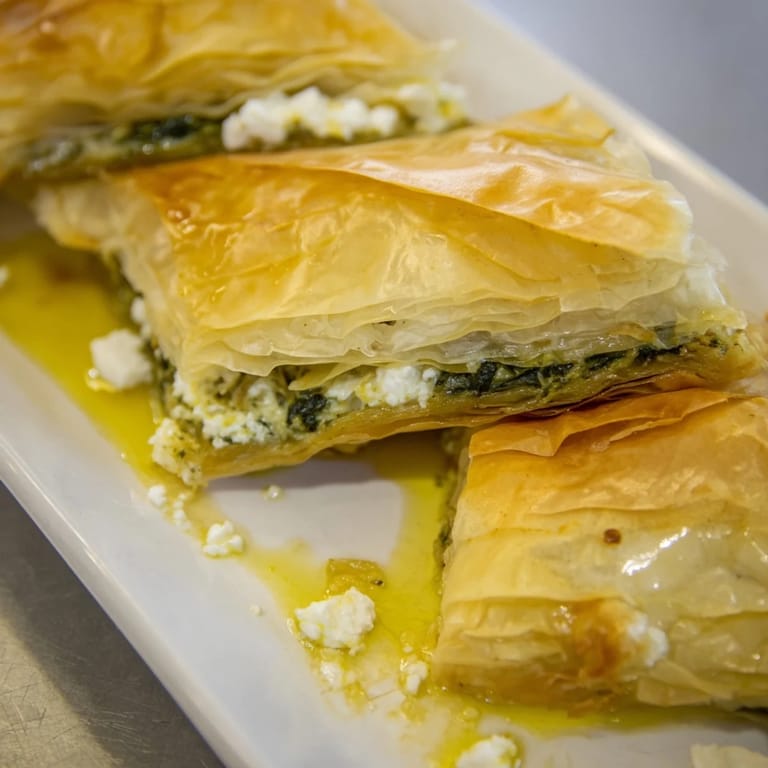
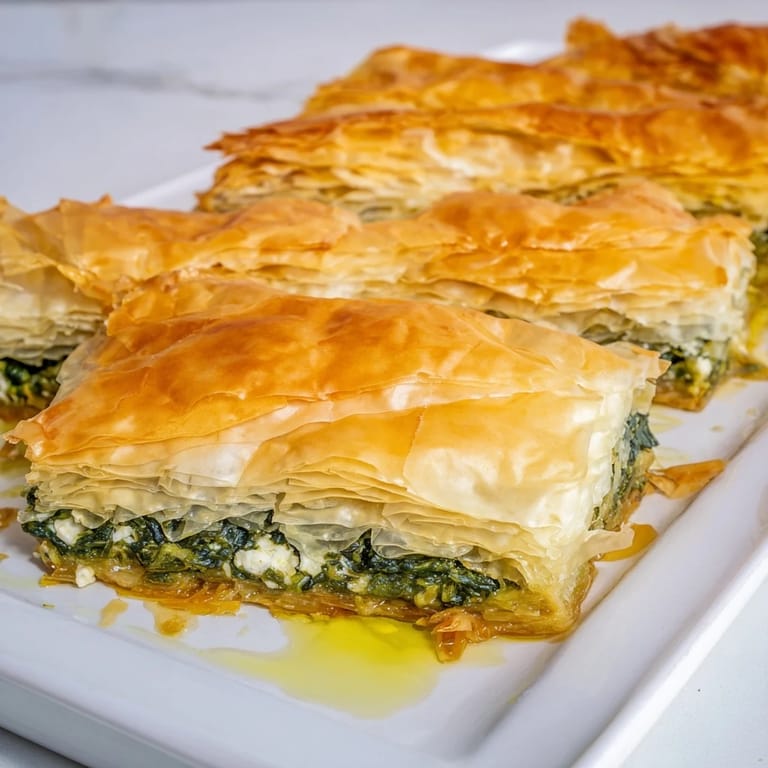
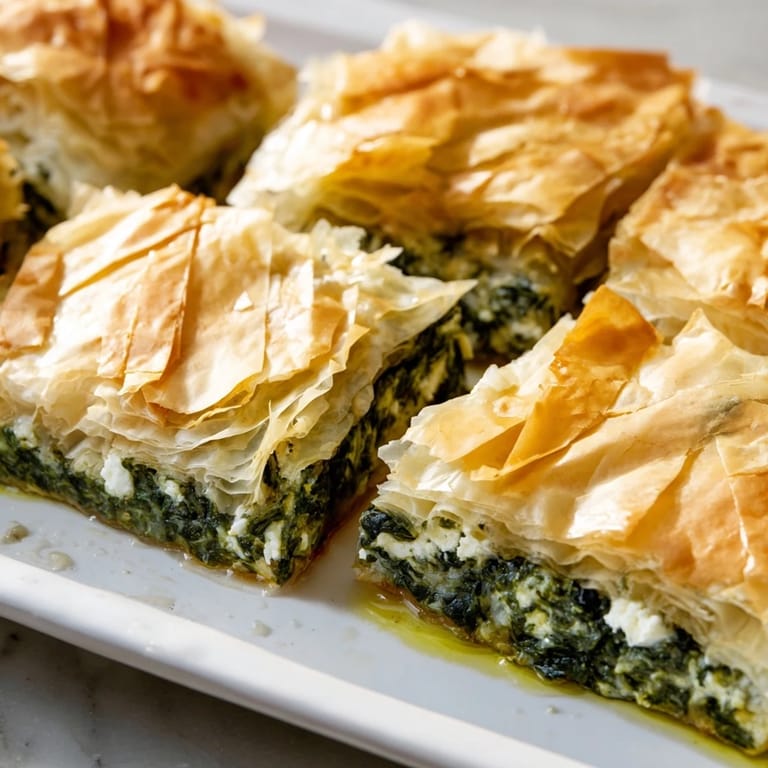
Save My mother's kitchen always smelled like olive oil and fresh dill when she made spanakopita, and I'd watch her layer those paper-thin phyllo sheets with a patience I didn't understand as a kid. Years later, standing in my own kitchen with spinach-stained hands, I finally got it—there's something almost meditative about building those golden, flaky layers, knowing they'll crack and shatter under your fork to reveal that bright, creamy filling inside. This Greek pie became my go-to when I wanted to impress without spending all day cooking, and somehow it always tastes like home.
I made this for a potluck once where I knew almost nobody, and it became the thing people kept coming back to, asking for the recipe with genuine surprise that it wasn't harder to make. One person even told me it reminded them of a trip to Athens, which felt like the highest compliment possible for something I'd made in my small apartment kitchen.
Ingredients
- Fresh spinach: Two pounds might seem like a lot until it wilts down to almost nothing—this is where all the flavor lives, so don't skip the fresh stuff if you can find it, though frozen works perfectly fine when thawed and squeezed dry.
- Yellow onion and scallions: These are your flavor foundation, and finely chopping them matters because they need to disappear into the filling rather than announce themselves.
- Fresh dill: This is non-negotiable; dried dill feels like a completely different herb, so splurge on fresh if possible.
- Parsley: A bright note that keeps everything from feeling too heavy.
- Feta cheese: Crumble it yourself if you can—pre-crumbled has a different texture and sometimes tastes a bit salty.
- Ricotta or cottage cheese: Optional, but it makes the filling creamier and less likely to feel grainy, which I learned the hard way.
- Eggs: Your binder, so beat them lightly to combine.
- Nutmeg and black pepper: Just enough nutmeg to make people ask what the secret ingredient is—it shouldn't be obvious.
- Phyllo dough: Keep it thawed but cold, and work quickly so it doesn't dry out; buy it from the frozen section and let it sit in the fridge overnight.
- Olive oil or melted butter: For brushing between layers—this is what creates that shattering crispness.
Tired of Takeout? 🥡
Get 10 meals you can make faster than delivery arrives. Seriously.
One email. No spam. Unsubscribe anytime.
Instructions
- Prep your spinach:
- If you're using fresh spinach, heat 2 tablespoons of olive oil in a large skillet over medium heat and sauté your finely chopped onion and scallions until they're soft and golden, about 5 minutes. Add the spinach in batches, stirring as it wilts down, and keep cooking until nearly all the liquid has evaporated—this step is crucial because wet spinach makes a soggy pie.
- Cool and combine:
- Let the spinach mixture cool completely, then squeeze it hard one more time to get out any remaining moisture. Mix it in a large bowl with the dill, parsley, crumbled feta, ricotta if you're using it, beaten eggs, black pepper, nutmeg, and salt to taste.
- Layer the base:
- Preheat your oven to 350°F and lightly grease a 9x13-inch baking dish. Lay one sheet of phyllo in the bottom, letting the edges hang over the sides, then brush it lightly with olive oil or melted butter. Repeat this with 6 or 7 more sheets, brushing each one as you go—the layers are what make it special.
- Spread the filling:
- Pour your spinach mixture evenly over the phyllo base, spreading it so every bite will have filling.
- Top with phyllo:
- Layer the remaining phyllo sheets on top, brushing each one with oil or butter just like you did for the base, then tuck the overhanging edges into the dish so everything is sealed.
- Score and bake:
- Using a sharp knife, score the top into squares or diamonds—don't cut all the way through, just enough to mark where to break it apart later. Bake for 35 to 40 minutes until the top is deep golden and you can hear it crackling slightly when you move the pan around.
 Save
Save There's a moment when the spanakopita comes out of the oven and your whole place fills with that golden, buttery, herbaceous smell—that's when you know you've done something right. My dad always said spanakopita tasted like Greece, whatever that meant, and I think he meant that it tastes like something made with care and time, even though it's faster than most people think.
The Phyllo Factor
Working with phyllo can feel intimidating if you've never done it, but the secret is moving confidently and not overthinking it. The sheets are supposed to be delicate, and a few tears don't matter because they're going to layer on top of each other anyway. Keep your brush wet with oil, work one sheet at a time, and you'll develop a rhythm that feels almost natural by the second or third layer.
Making It Your Own
While this is the classic version, I've experimented with different greens—chard, kale, even a mix—and it all works beautifully as long as you squeeze out the moisture. Some people add a pinch of cinnamon to echo Mediterranean flavors, and I've even tried crumbled pine nuts mixed into the filling, which added a subtle richness. The beauty of spanakopita is that it's forgiving enough to play with while staying true to itself.
Serving and Storage
Let it cool for at least 10 minutes before cutting—it needs that time to set slightly so it doesn't fall apart on the plate. Serve it warm or at room temperature, and it actually tastes even better the next day once all the flavors have settled.
- Leftover spanakopita keeps for 3 days in an airtight container and reheats beautifully in a 300°F oven for about 10 minutes.
- Pair it with a crisp white wine like Assyrtiko or Sauvignon Blanc, or just a simple Greek salad with olives and tomatoes.
- This freezes surprisingly well raw—assemble it, wrap it tightly, and bake from frozen, adding about 10 extra minutes to the cooking time.
 Save
Save This spanakopita is proof that some of the best dishes don't require fancy techniques or hard-to-find ingredients—just good spinach, real feta, fresh herbs, and the willingness to layer things carefully. Make it once and it becomes yours.
Recipe FAQs
- → What type of spinach works best?
Fresh spinach yields the best texture and flavor, but well-thawed, drained frozen spinach is a convenient alternative.
- → Can I substitute the cheeses?
Feta provides tanginess while ricotta or cottage cheese adds creaminess; you can omit ricotta for a firmer filling.
- → How should phyllo be handled?
Keep phyllo covered with a damp cloth to prevent drying out and brush each sheet lightly with olive oil or butter for crispiness.
- → What herbs enhance the flavor?
Dill and parsley lend freshness and aroma, key to balancing the richness of the cheeses and spinach.
- → Is it necessary to score before baking?
Scoring the top layers into squares or diamonds helps portion the pie and ensures even baking without cutting through fully.