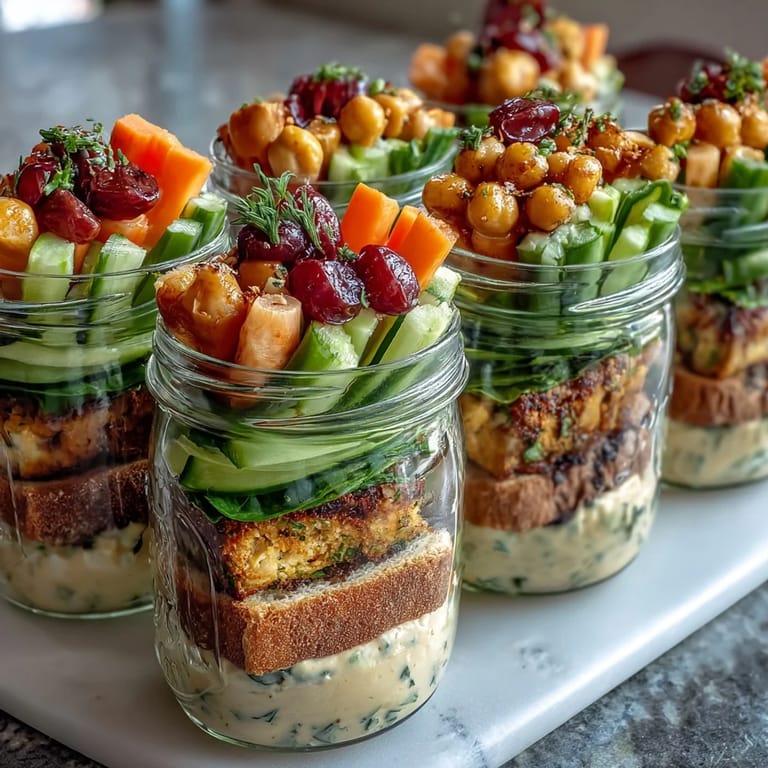
 Save
Save My daughter came home from school one afternoon with a permission slip for a field trip, and I realized I'd been packing the same sad sandwich in her lunchbox for weeks. That night, I stood in the kitchen wondering what could actually survive in a backpack and still taste good by noon. These snack cups were born from that moment of mild panic and a sudden memory of how she'd demolished a plate of veggies and hummus at a friend's birthday party. Now they're her favorite thing to request, and honestly, they've become my go-to solution whenever I need something that feels intentional but doesn't require any cooking.
Last summer, I made these for a road trip with my partner, and we discovered something magical happened around hour three—the veggies stayed crisp because they were sitting upright in the hummus, and the whole thing felt like we were on some fancy hiking adventure instead of driving through construction. My partner actually said, "This is better than gas station snacks," which might be the highest compliment I've ever received in a car.
Ingredients
- Hummus: Buy the good stuff if you can—or make your own if you're feeling ambitious—because this is really the star, and a mediocre hummus will make the whole thing feel forgettable.
- Carrots: Their natural sweetness and satisfying crunch are what make these cups feel special rather than like punishment vegetables.
- Cucumber: Cool and refreshing, especially if you're eating these in the heat, and they never get soggy if you keep the hummus container separate until you're ready to eat.
- Red and yellow bell peppers: These add bright color and a hint of sweetness that balances the earthiness of the hummus beautifully.
- Snap peas: They're slightly sweet, fun to bite into, and people always seem to eat these first.
- Cherry tomatoes: These add bursts of acidity that keep the whole snack from feeling heavy, plus they're the right size for dipping.
- Celery and jicama: Optional, but celery adds a nice bitter note and jicama brings something unexpected and crispy that people genuinely get excited about.
Tired of Takeout? 🥡
Get 10 meals you can make faster than delivery arrives. Seriously.
One email. No spam. Unsubscribe anytime.
Instructions
- Wash and prep your vegetables:
- Rinse everything thoroughly under cold water, then pat dry with a towel—damp vegetables will get slimy in the cup, which defeats the whole purpose. Cut your carrots, cucumber, and celery into sticks about the width of your pinky finger, seed those peppers and cut them into strips, and leave the snap peas and cherry tomatoes whole.
- Divide the hummus:
- Spoon about a quarter cup of hummus into each of your six small cups, spreading it across the bottom so it creates a nice bed for your veggies. If you're making these the night before, this is where you'd stop and refrigerate—the hummus acts like a buffer that keeps everything fresh.
- Arrange your vegetables:
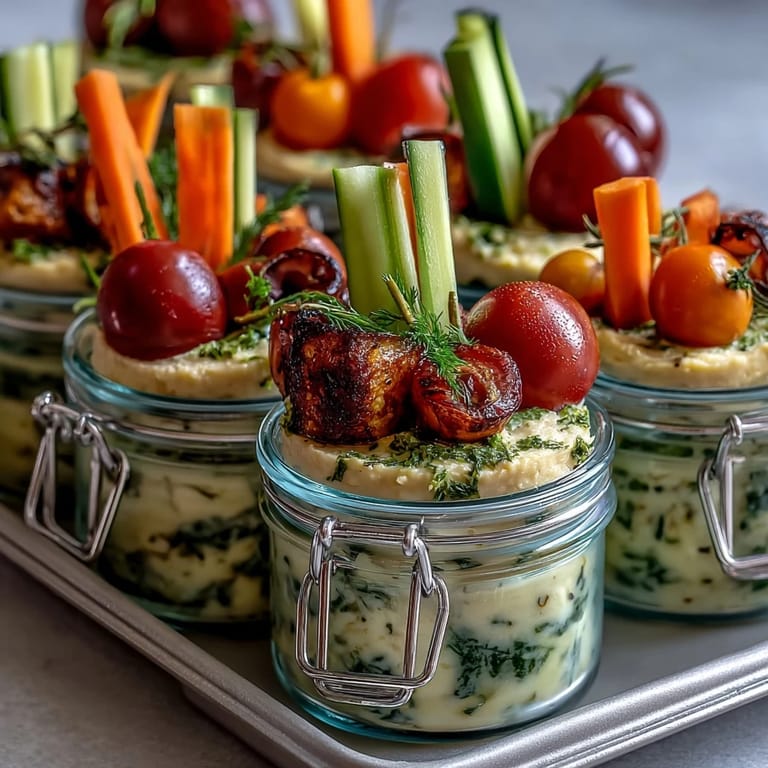
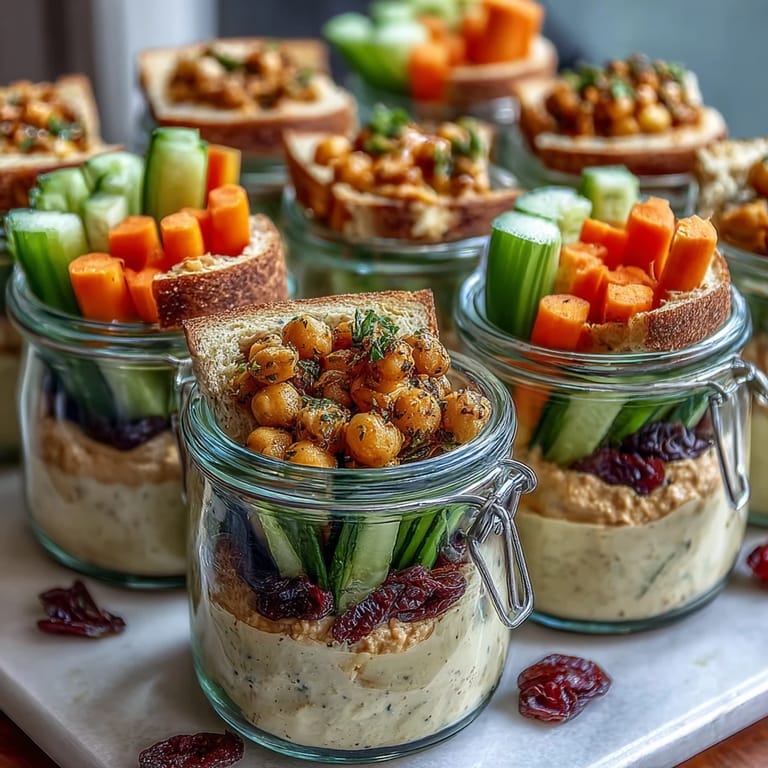
- Start standing your veggie sticks upright in the hummus, mixing colors and textures as you go—it should look inviting enough that someone wants to dig in immediately. Play around with the arrangement; I like to alternate colors so each dip feels like a little adventure.
- Seal and chill:
- Pop the lids on your cups and slide them into the refrigerator until you're ready to eat. They'll keep beautifully for two days, though they taste best the same day you make them.
 Save
Save There's something genuinely sweet about watching someone's face light up when they open a lunchbox and find these cups instead of the usual options. It's such a small thing, but it somehow makes the whole day feel a little more intentional and a little less like you're just going through the motions.
Flavor Variations That Actually Work
I started experimenting with the hummus itself after my friend mentioned she loves roasted red pepper hummus, and now I'll often drizzle a tiny bit of really good olive oil on top, then sprinkle with za'atar or smoked paprika—suddenly it feels fancy enough for a dinner party appetizer. You could also try swapping plain hummus for something flavored like roasted garlic, sriracha, or even a white bean dip if you're in the mood for something different. The vegetables are pretty forgiving, so the hummus is really where you can have fun and make these feel brand new every time you make them.
Veggie Swaps by Season
Spring feels like the time for blanched asparagus tips and tender radish slices, summer is all about those snap peas and cherry tomatoes, fall calls for some roasted broccoli florets and maybe thin apple slices, and winter is when I'll throw in some thinly sliced fennel or even some pickled vegetables if I'm feeling creative. The beauty of this snack is that you're not locked into one specific combination—work with what your market or garden is offering and you'll never get bored. I've learned that when you use vegetables that are actually in season, they taste better, cost less, and somehow feel more exciting than forcing yourself to eat the same four veggies year-round.
Quick Serving Ideas
These cups are obviously perfect for lunchboxes and road trips, but they're also surprisingly great as an appetizer if you're hosting and want something that doesn't require last-minute assembly. I've brought them to picnics, packed them for hiking trips, and even served them at a small gathering where I was genuinely too tired to cook anything complicated. They somehow feel intentional and impressive even though anyone could make them, which is maybe the whole point of why they've become my secret weapon.
- Make these cups the night before so you have one less thing to think about on a busy morning.
- Double or triple the batch and store them in the fridge for grabbing throughout the week whenever you need something real and good.
- If you're bringing them somewhere warm, pack the cups in an insulated lunchbox with an ice pack so the hummus stays cool and creamy.
 Save
Save These snack cups have somehow become the thing people request by name, which still surprises me a little. There's something really satisfying about feeding people food they actually want to eat, especially when it's this easy to put together.
Recipe FAQs
- → What vegetables work best for these snack cups?
Fresh, crisp vegetables like carrots, cucumbers, bell peppers, snap peas, and cherry tomatoes provide great texture and flavor.
- → How should the cups be stored before eating?
Cover the cups with lids and refrigerate until ready to enjoy. They stay fresh best within two days.
- → Can I customize the flavors?
Yes, sprinkle hummus with spices like paprika or zaatar, or drizzle olive oil for added flavor before adding vegetables.
- → Are there protein options to add?
You can include baked tofu sticks or cheese cubes if dairy is not a concern to boost protein content.
- → What kitchen tools do I need?
A sharp knife, cutting board, and small lidded cups or jars are essential for preparing and storing these snack cups.
- → Are these cups suitable for special diets?
They are gluten-free, dairy-free, and vegetarian. Check hummus labels for potential allergens like soy or sesame.