 Save
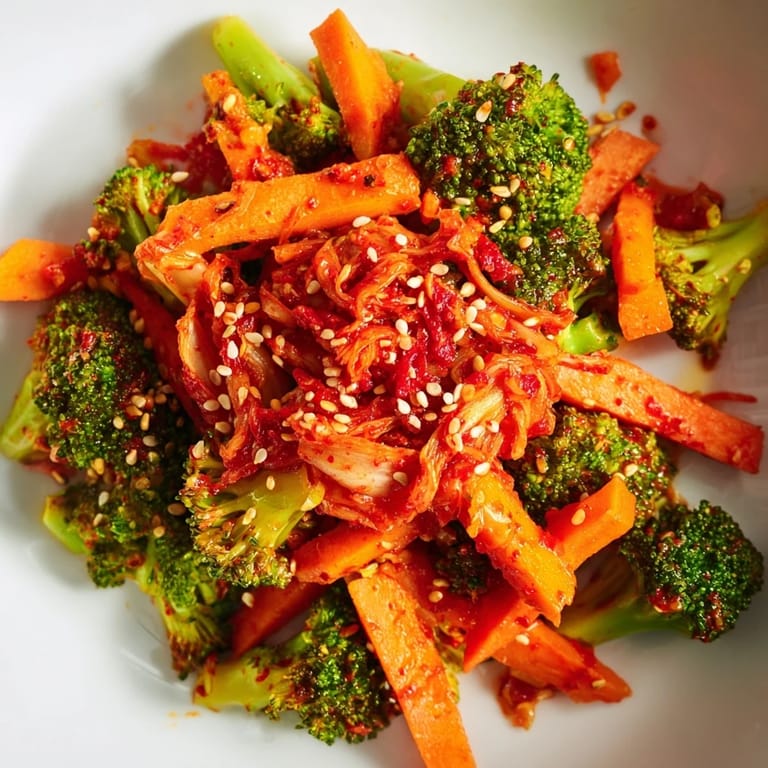
Save The sizzle of ginger hitting hot sesame oil never fails to wake up my kitchen, especially on those gray January afternoons when I need something bright and alive. I started making this stir-fry during a particularly brutal winter when my body was craving both warmth and something tangy to cut through all the heavy comfort foods. The trick I stumbled upon was adding the kimchi off the heat, keeping all those good probiotics intact while still getting that fermented punch. Now it's my go-to whenever I need vegetables to feel less like a chore and more like a celebration.
I made this for my neighbor who swore she hated cabbage, and she asked for the recipe before she even finished her bowl. We sat at my tiny kitchen table with steam rising from our plates, and she kept saying she couldn't believe something so simple tasted this good. That night taught me that the right combination of textures and that fermented tang can completely change someone's mind about vegetables. It's become my secret weapon for converting vegetable skeptics.
Ingredients
- Broccoli florets: Cut them smaller than you think, they shrink less than you expect and you want everything to cook evenly in that quick, hot pan.
- Carrots and parsnip: Slicing on the bias isn't just pretty, it gives you more surface area for caramelization and they cook faster without going mushy.
- Sweet potato matchsticks: Keep them thin or they won't cook through in time, I learned this after serving half-raw sweet potato chunks to very polite dinner guests.
- Green cabbage and red bell pepper: These go in later because they need less time, and the pepper adds a sweet crunch that balances the funky kimchi.
- Fresh ginger and garlic: Grate the ginger on a microplane if you have one, those tiny shreds distribute the heat and flavor so much better than chunks.
- Toasted sesame oil: This is not the time for neutral oil, the nutty richness is half the reason this tastes like something special.
- Soy sauce, rice vinegar, maple syrup: This quick trio creates a balanced sauce without measuring ten different things, adjust the sweetness to match your kimchi's intensity.
- Kimchi: Use whatever you like or have on hand, just make sure it's chopped small enough to toss evenly through the vegetables.
- Green onions and sesame seeds: Totally optional but they make the dish look like you tried harder than you actually did.
Tired of Takeout? 🥡
Get 10 meals you can make faster than delivery arrives. Seriously.
One email. No spam. Unsubscribe anytime.
Instructions
- Prep your station:
- Get everything chopped and ready before you turn on the heat because once you start, this moves fast and you won't have time to slice anything mid-cook. Line up your vegetables in the order they'll hit the pan.
- Heat and aromatics:
- Warm your sesame oil over medium-high heat until it shimmers, then add the ginger and garlic for just 30 seconds until your kitchen smells incredible. Don't let them brown or they'll turn bitter.
- First vegetable wave:
- Toss in the carrots, parsnip, sweet potato, and broccoli, stirring constantly so everything gets coated in that fragrant oil. Let them cook for 4 to 5 minutes, they should start to soften but still have some resistance when you bite into a piece.
- Second vegetable wave:
- Add the cabbage and bell pepper, keep stirring for another 3 to 4 minutes until everything is crisp-tender. You want color and slight char in spots, that's where the flavor lives.
- Sauce it up:
- Whisk your soy sauce, vinegar, and maple syrup together quickly and pour it over the vegetables, tossing fast to coat everything evenly. The sauce will sizzle and reduce almost immediately.
- Kimchi finish:
- Pull the pan completely off the heat, then fold in your chopped kimchi gently so it warms through without cooking. This keeps the probiotics alive and the kimchi stays punchy instead of going limp.
- Serve immediately:
- Pile it into bowls while it's still steaming and scatter green onions and sesame seeds over the top if you're using them. This is best eaten right away while the textures are still distinct.
 Save
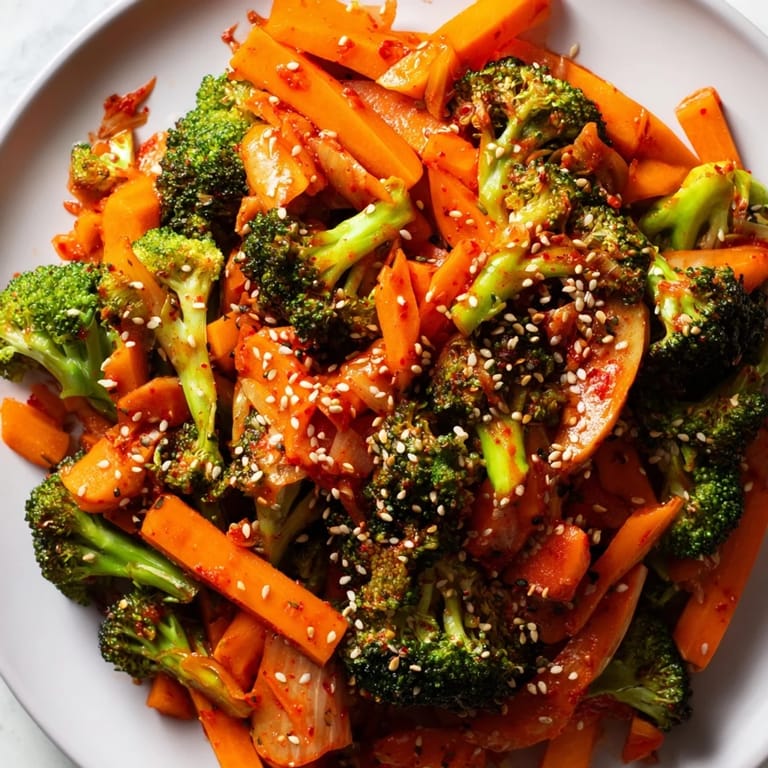
Save There's something about eating this on a cold night that feels restorative in a way plain steamed vegetables never do. My partner and I have started making this on Sunday evenings when we're both too tired to think but need something nourishing. We've experimented with adding different fermented vegetables, tried it with sauerkraut once which was interesting, and now keep a jar of kimchi in the fridge specifically for this dish. It's become less of a recipe and more of a ritual, one that reminds us that taking care of ourselves doesn't have to be complicated.
Making It Your Own
This stir-fry is endlessly flexible once you understand the basic rhythm of what goes in when. I've swapped the sweet potato for cubed butternut squash, added turnips when that's what I had, and thrown in handfuls of kale at the end which wilts beautifully in the residual heat. The key is matching cooking times, hard vegetables first, tender ones later, fermented additions off heat. You can also change up the fermented vegetable entirely, I've used curtido and even some experimental fermented radishes my friend made, both were excellent in completely different ways.
Serving Suggestions
While this is perfectly satisfying on its own, it becomes a proper meal when you serve it over a bowl of short-grain brown rice or soba noodles. I've also piled it on top of crispy rice cakes for a textural contrast that's genuinely exciting, and once served it alongside some quick pan-fried tofu for extra protein. My favorite lately is making a big batch of quinoa on Sunday and keeping it in the fridge, then this stir-fry becomes a five-minute assembly job on weeknights. Sometimes I'll fry an egg and set it on top, breaking the yolk so it runs through the vegetables like a rich, impromptu sauce.
Storage and Reheating
Leftovers keep well for about three days in an airtight container in the fridge, though the vegetables will soften a bit as they sit in the sauce. I actually don't mind this, it becomes more of a braised situation which is nice in its own way, especially if you reheat it gently in a pan with a splash of water. You can also eat it cold straight from the fridge as a sort of marinated salad, which I've done more times than I'd like to admit while standing in front of the open refrigerator. If you're planning to make this for meal prep, consider keeping the kimchi separate and stirring it in right before eating so it stays crunchy and alive.
- Store in glass containers rather than plastic, the kimchi smell can really linger.
- Add a squeeze of fresh lime juice when reheating to brighten everything back up.
- If the vegetables release a lot of liquid as they sit, drain some off before reheating or it'll be soupy instead of glossy.
 Save
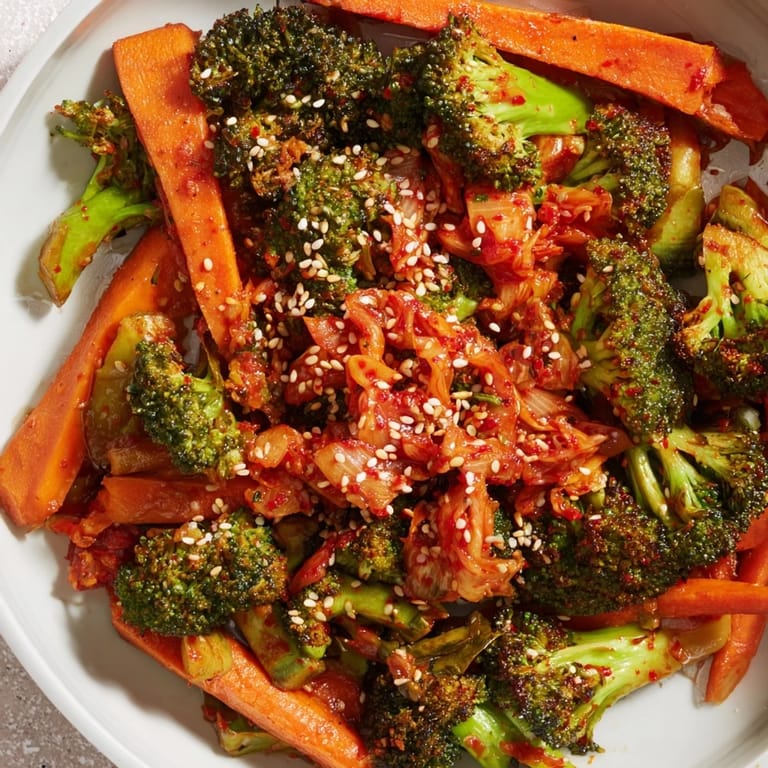
Save This dish has taught me that winter vegetables don't need to be boring, they just need a little heat and something wildly flavorful to keep them company. I hope it becomes as much of a staple in your kitchen as it has in mine.
Recipe FAQs
- → Can I prepare the vegetables ahead of time?
Yes, chop all vegetables and store them in airtight containers for up to 24 hours. Keep the kimchi separate until ready to serve to maintain its probiotic benefits and texture.
- → What winter vegetables work best as substitutes?
Turnip, rutabaga, kale, Brussels sprouts, and winter squash all work well. Cut them into similar sizes to ensure even cooking. Aim for pieces that cook in 8-10 minutes over medium-high heat.
- → How do I keep the kimchi's probiotics intact?
Add the kimchi after removing the pan from heat and toss gently to combine. This prevents the beneficial bacteria from being destroyed by high temperatures while still incorporating its tangy flavor.
- → Is this suitable for those with soy allergies?
Use tamari instead of soy sauce for a gluten-free option. However, check store-bought kimchi labels carefully, as many brands contain soy, fish, or shellfish. Some homemade varieties avoid these allergens.
- → How can I make this heartier?
Serve over steamed rice, quinoa, soba noodles, or buckwheat groats. Add tofu or tempeh for extra protein, or top with nuts and seeds for additional texture and nutrition.
- → Can I adjust the spice level?
Absolutely. Use less kimchi for mild heat or more for extra spice. You can also add fresh chilies, sriracha, or chili oil to the sesame-soy glaze to your preference.