 Save
Save My first goulash disaster happened on a gray Prague afternoon when I burned the paprika and nearly ruined everything—but that mistake taught me the rhythm of this dish. Years later, I learned that Czech goulash isn't just beef stew; it's about balancing deep, earthy spice with crispy potato strips that shatter between your teeth. The combination felt almost reverent the first time it worked, tender meat swimming in a sauce that tasted like someone's grandmother had whispered her secrets into the pot. Now whenever I make it, I chase that same feeling—the one where comfort and technique finally align.
I made this for a dinner party once when snow had just started falling outside, and my Czech friend closed her eyes after the first spoonful—not because it was perfect, but because it tasted like home to her. That moment changed how I thought about cooking; it wasn't about impressing anyone, just about creating something honest. The whole table got quiet for a minute, forks moving slowly, and someone asked for seconds before anyone had finished their first bowl.
Ingredients
- Beef chuck (800 g, 2.5 cm cubes): Choose a cut with good marbling; the fat melts into the sauce and keeps the meat tender during the long simmer.
- Vegetable oil (2 tbsp, plus 500 ml for frying): Use a neutral oil that won't compete with the paprika's warmth.
- Onions (2 large, finely chopped): They become almost invisible in the sauce, providing a subtle sweetness that anchors the spice.
- Garlic (3 cloves, minced): Add it after the paprika has toasted, never before, or it turns bitter and harsh.
- Sweet Hungarian paprika (2 tbsp): This is the soul of goulash—buy the best you can find and treat it gently to avoid burning it into something acrid.
- Caraway seeds (1 tsp): These tiny seeds taste like whispered anise and are what make goulash feel authentically Czech rather than generically spiced.
- Marjoram (1 tsp): Fresh marjoram is ideal, but dried works; it adds an herbal note that softens the earthiness.
- Salt (1 tsp) and black pepper (½ tsp): Taste as you go; the sauce will concentrate as it simmers.
- Tomato paste (2 tbsp): Let it cook in the oil briefly so it loses its raw edge and darkens slightly.
- Beef broth (750 ml): Use homemade if you have it; store-bought works too, but taste the sauce before adding more salt.
- Bell pepper (1, diced): Add it in the last 45 minutes so it stays tender but doesn't dissolve into the sauce.
- All-purpose flour (1 tbsp): This thickens the sauce naturally without making it feel heavy or pasty.
- Bay leaf (1): Remove it before serving; it flavors the sauce but tastes unpleasant if you bite into it.
- Potatoes (4 large, peeled): Waxy potatoes work best for frying because they hold their shape and don't get mushy inside.
Tired of Takeout? 🥡
Get 10 meals you can make faster than delivery arrives. Seriously.
One email. No spam. Unsubscribe anytime.
Instructions
- Toast the aromatics:
- Warm the oil in your heaviest pot over medium heat, then add onions and let them turn golden and soft, about 8 minutes. You'll smell when they're ready—a sweet, almost caramel-like fragrance fills the kitchen.
- Wake up the spices:
- Stir in garlic, caraway seeds, and paprika, cooking for just 1 minute while stirring constantly. The paprika needs heat to release its color and warmth, but too much turns it bitter and dark—watch it like you're coaxing it awake, not bullying it.
- Sear the beef:
- Add beef cubes and brown them on all sides, about 5 minutes total. You're not looking for a perfect crust, just enough color to tell your palate that something good is happening.
- Build the base:
- Stir in tomato paste, marjoram, salt, pepper, and the bay leaf. Let the tomato paste cook briefly in the oil so it loses its sharp, raw taste.
- Thicken gently:
- Sprinkle flour over the meat and stir well, coating everything evenly. This will thicken the sauce without making it taste floury.
- Simmer into tenderness:
- Add the bell pepper and pour in beef broth, then bring everything to a boil before reducing to low heat. Cover and let it simmer for 1.5 to 2 hours, stirring occasionally—the longer it goes, the deeper the flavors become, and the meat will fall apart at the mere suggestion of your spoon.
- Prepare the potatoes:
- While the goulash works its magic, cut peeled potatoes into thin matchsticks using a mandoline or very sharp knife. Uniformity matters here; thin, even pieces fry evenly and get golden all over.
- Soak and dry:
- Rinse the matchsticks thoroughly in cold water to remove excess starch, then pat them completely dry with a clean towel. Any moisture left behind will spatter in the hot oil and prevent crispness.
- Fry until golden:
- Heat oil in a deep pan to 180°C (350°F), then fry potatoes in small batches, 3 to 4 minutes each, until they turn golden and crispy. Don't overcrowd the pan or the temperature will drop and they'll absorb oil instead of crisping.
- Drain and season:
- Remove potato strips with a slotted spoon and drain on paper towels, then immediately season with salt while they're still hot and steaming.
- Finish and serve:
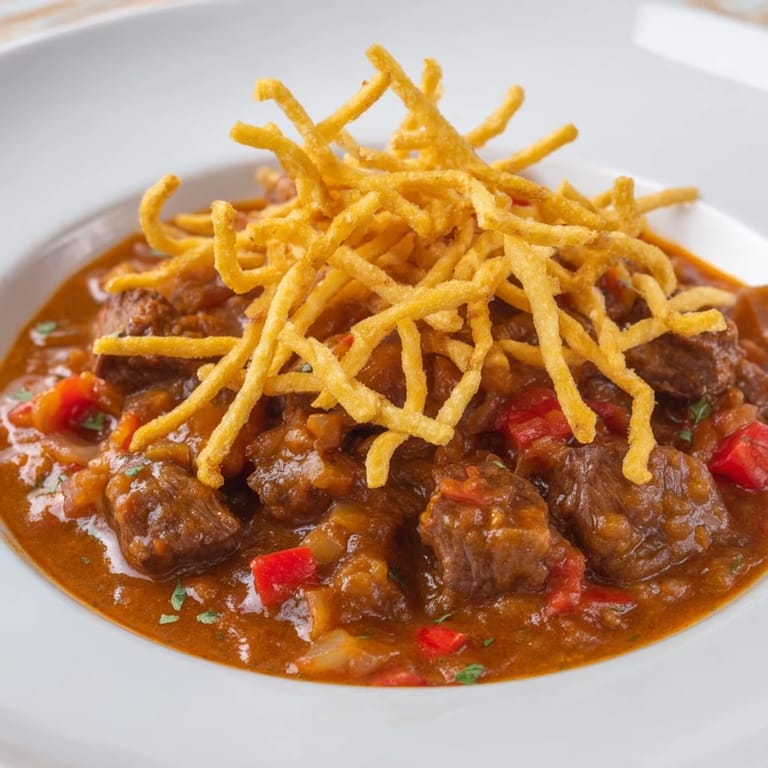
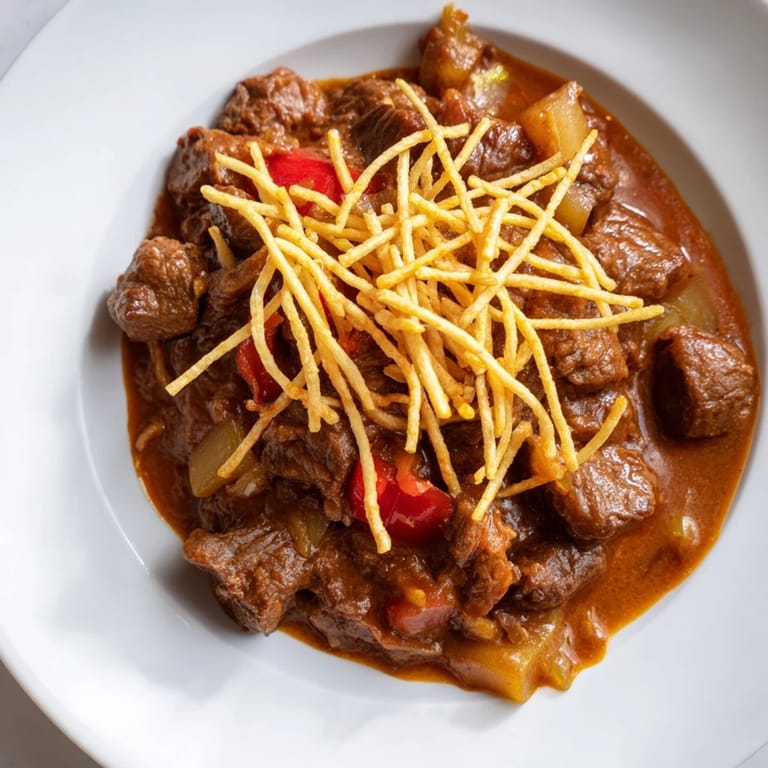
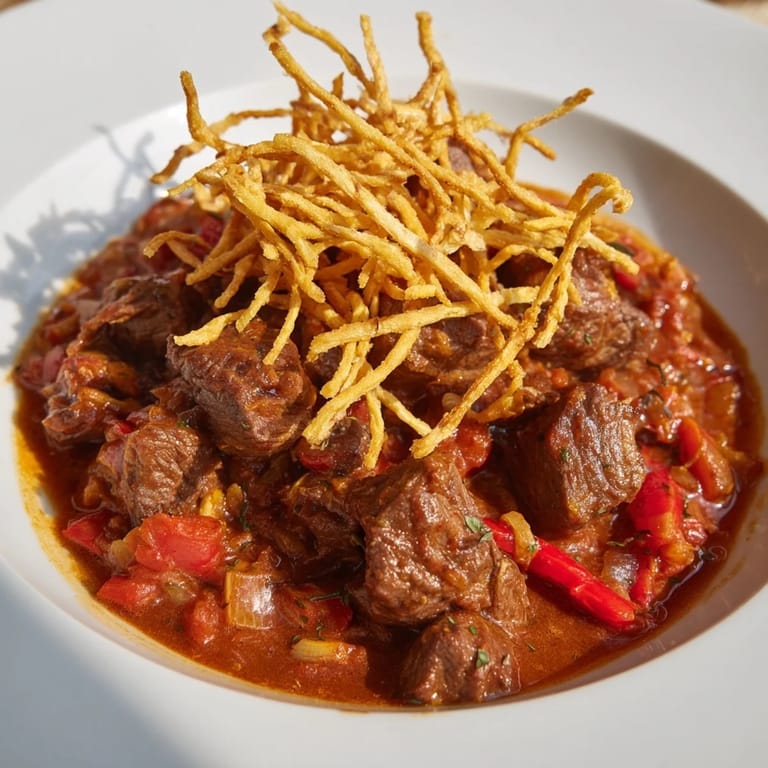
- Remove the bay leaf from the goulash, taste the sauce, and adjust seasoning if needed. Serve the hot goulash in bowls, crowned with a generous handful of crispy fried potatoes.
 Save
Save I remember serving this to my partner on the night we moved into our first house together, when we were too tired to cook anything complicated, but I wanted the meal to feel like a celebration anyway. The kitchen still smelled of cardboard and change, but that goulash with its crispy potatoes made everything feel settled and right, like we'd already been there for years.
The Paprika Difference
Hungarian paprika is not just a red powder—it's the entire spirit of this dish. Sweet paprika gives warmth and color without aggressive heat, while hot paprika brings a sharp kick if you want intensity. The key is never to buy paprika in bulk and let it sit for years; it fades in flavor and loses its brightness. If you find yourself with paprika that tastes dusty or muted, replace it immediately. A fresh tin makes the difference between a sauce that tastes like proper goulash and one that tastes vaguely like tomato soup with beef in it.
Timing and Tenderness
The long, gentle simmer is what separates goulash from ordinary beef stew—the meat doesn't just get tender, it becomes almost creamy as the collagen in the chuck transforms into gelatin. Resist the urge to turn up the heat to speed things along; a boiling goulash is an angry goulash, and the meat will tighten and resist. Keep the heat low enough that only the smallest bubbles occasionally break the surface. Every time you stir, you're not just mixing flavors; you're coaxing the sauce to thicken naturally as it reduces, so more stirring actually helps the texture develop.
Serving and Variations
The crispy potatoes are essential—they're not just a side, they're the textural anchor that makes this dish feel complete and crunchy against the soft meat and thick sauce. Some people serve goulash with sour cream spooned generously on top, which is traditional and makes the sauce richer and more luxurious. Fresh parsley scattered over everything adds a bright green note that cuts through the heaviness. If you want heat, a dash of hot paprika or fresh chili flakes stirred in at the end transforms the warmth into something with a real bite.
- Pair this with a Czech Pilsner beer or a light red wine that won't overpower the delicate spice balance.
- Leftovers reheat beautifully and often taste even better the next day when the flavors have melded overnight.
- You can make this entirely ahead of time, then quickly fry the potatoes fresh just before serving for maximum crispness.
 Save
Save This goulash has a way of making any table feel welcoming and full, the kind of food that people remember long after the meal ends. Make it for someone you care about, and watch what happens when comfort and care meet on the same plate.
Recipe FAQs
- → What type of beef works best for this dish?
Beef chuck cut into cubes is ideal due to its balance of tenderness and flavor, which develops beautifully during slow cooking.
- → How can I ensure the paprika doesn't burn during cooking?
Stir the paprika in quickly over moderate heat and avoid prolonged cooking without stirring to prevent burning and bitterness.
- → Can I prepare the potato strips ahead of time?
Yes, you can cut and rinse the potato strips in advance. Dry them thoroughly before frying to maintain crispiness.
- → What is the secret to making the potato strips crispy?
Fry the strips in hot oil at about 180°C (350°F) in small batches to allow even cooking and a golden, crispy texture.
- → Which spices enhance the depth of flavors in this dish?
Caraway seeds, marjoram, and sweet Hungarian paprika combine to create the signature warmth and aroma central to the dish.
- → Is this dish suitable for gluten-sensitive diets?
Yes, by substituting all-purpose flour with gluten-free flour, the dish remains gluten-free without sacrificing texture.