 Save
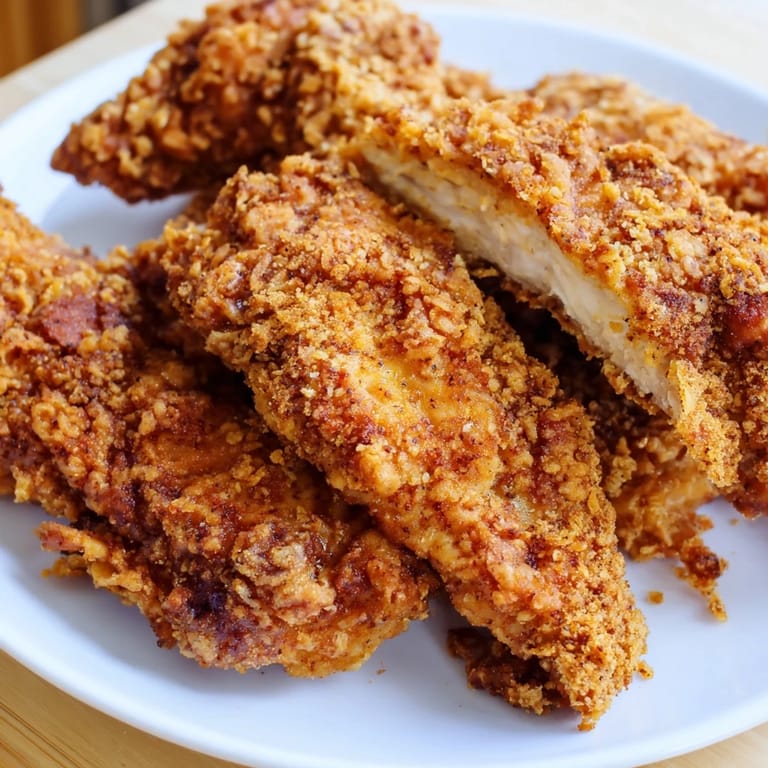
Save My dad used to make these chicken tenders on Friday nights, and I'd stand on a step stool watching the oil shimmer and pop as he lowered each golden piece in. Years later, when I finally got around to making them myself, I realized the secret wasn't some fancy technique—it was patience with the marinade and not being afraid of the sizzle. That buttermilk bath transforms tough protein into something impossibly tender, and the flour coating gets this shattering crunch that makes everyone stop mid-conversation to ask for the recipe.
I made these for my nephew's birthday sleepover, and watching eight kids demolish an entire batch in under five minutes told me everything I needed to know about whether the recipe worked. The sound of them crunching through the crust, that satisfied silence as they ate—that's when I knew this wasn't just dinner, it was the kind of meal that gets remembered.
Ingredients
- Chicken tenders (500g): Look for pieces that are roughly the same thickness so they cook evenly; if yours vary wildly, pound the thicker ones gently to match.
- Buttermilk (240ml): This is non-negotiable—the acidity tenderizes the chicken and creates the base for crispy coating, regular milk won't do it.
- Salt (1 tsp for marinade, 1 tsp for coating): The double salt might seem like too much, but it's actually building layers of seasoning that penetrate the meat.
- Black pepper, garlic powder, onion powder: Toast these in a dry pan for 30 seconds before mixing if you want their flavor to sing instead of fade into the background.
- All-purpose flour (180g): Don't sift it unless you hate texture; the slightly lumpy flour catches better and fries crisper.
- Paprika and cayenne pepper: Paprika gives color that looks like restaurant quality; cayenne is your friend if you like heat without overwhelming flavor.
- Baking powder (1 tsp): This is the quiet hero—it creates tiny air pockets in the coating that make everything shattering and light instead of dense and heavy.
- Vegetable oil (500ml): Use whatever neutral oil you have, but avoid olive oil; it smokes too easily and makes everything taste wrong.
Tired of Takeout? 🥡
Get 10 meals you can make faster than delivery arrives. Seriously.
One email. No spam. Unsubscribe anytime.
Instructions
- Build your marinade and soak the chicken:
- Whisk buttermilk with salt, pepper, garlic powder, and onion powder in a large bowl—you should smell that tangy richness immediately. Toss the chicken tenders in until every piece is coated, then cover and refrigerate for at least an hour; overnight is even better and transforms the texture into something almost silky.
- Mix your flour coating:
- In a shallow dish, combine flour, paprika, salt, black pepper, cayenne, and baking powder, stirring with a fork to break up any clumps. The mixture should smell savory and slightly spiced, inviting you to coat something immediately.
- Heat your oil to the right temperature:
- Pour oil into a deep skillet and set heat to medium-high, using a thermometer to hit 175°C (350°F)—too cool and you get soggy, greasy chicken; too hot and the outside burns before the inside cooks. While you wait, line a plate with paper towels and set a cooling rack or a clean towel nearby.
- Dredge and fry in batches:
- Pull each chicken tender from the buttermilk, let excess drip back into the bowl, then press it into the flour mixture on both sides until it looks fully coated and the flour is beginning to stick. Carefully place 3-4 tenders into the oil (crowding the pan drops the temperature and makes everything steam instead of fry), and let them sizzle undisturbed for 4-5 minutes until the bottom is deep golden.
- Finish cooking and rest:
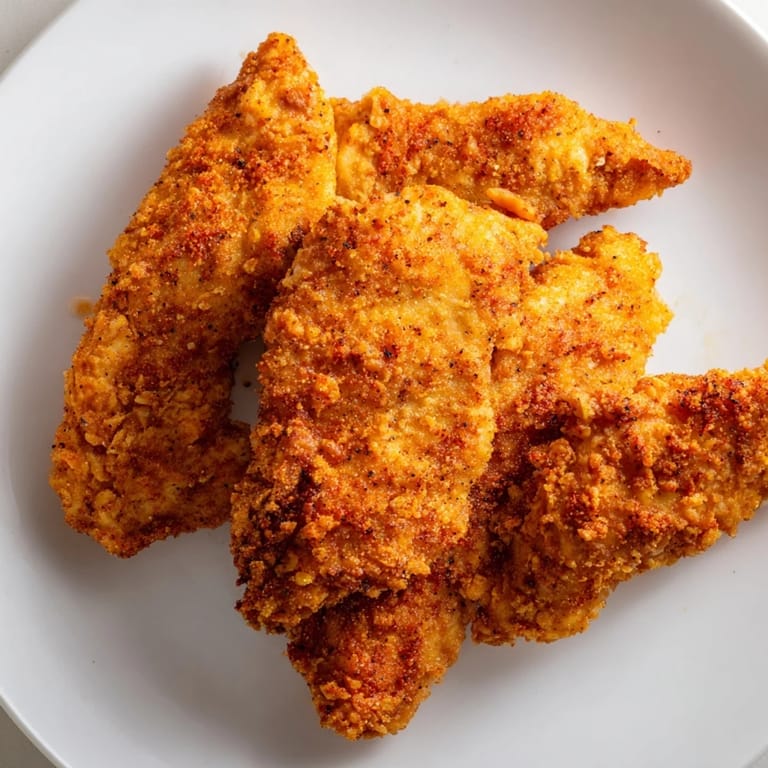
- Flip each tender and fry the other side until matching golden brown, then use tongs to transfer to your paper towel plate—they'll finish cooking slightly as they rest for 2 minutes, hitting that perfect internal temperature of 75°C (165°F). This resting time is crucial; it lets the coating set and keeps the inside from being steamy.
 Save
Save There's a moment when you're plating these fresh from the oil, steam rising off them, still crackling slightly as they cool, when you realize you've made something that tastes like comfort and effort meeting perfectly. My friend who usually skips fried food looked at me in honest surprise and said, 'These are different,' and that's the highest compliment a chicken tender can get.
The Double-Dip Secret
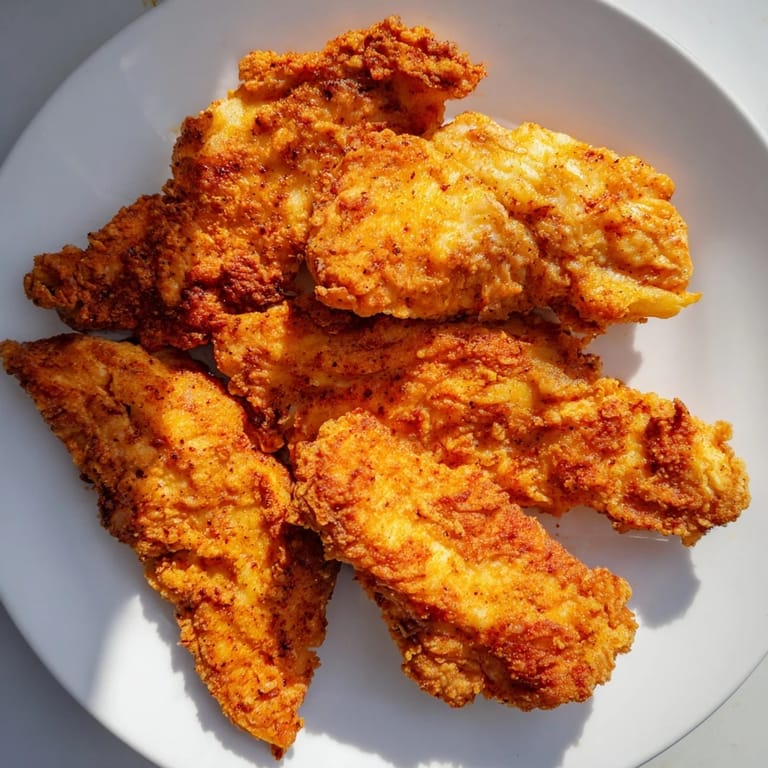
If you're after that restaurant-level crunch that lasts through dinner, the double-dip is your answer. After your first flour coat, dunk the tender back into buttermilk and coat it again in flour—you'll see the coating get visibly thicker and bumpier, which is exactly what you want. This isn't unnecessary fussing; it's the difference between crispy-for-a-few-minutes and crispy-all-the-way-through-the-meal.
Dipping Sauces That Actually Matter
Honey mustard is the classic pairing for a reason—the sweetness and tangy heat complement the savory crunch without competing. Ranch works if that's what your household is into, but try mixing a little hot sauce into mayo, or even whisking Dijon mustard with a touch of maple syrup if you want something slightly unexpected that still feels instinctive.
Making This Gluten-Free or Healthier
A gluten-free flour blend works almost identically, though the texture will be slightly less shattering—account for that by extending the double-dip and giving the coating a little extra time in the oil. If you're looking to cut fat, baking these on a preheated 220°C (425°F) oven for about 20 minutes works, though you'll lose some of the crispy-outside quality that makes these worth making in the first place.
- Air-frying is genuinely a decent substitute if you're avoiding deep oil; use a spray of oil on the coating and fry at 200°C (400°F) for about 12 minutes, shaking the basket halfway through.
- Panko breadcrumbs mixed into your flour coating adds even more crunch if you're willing to skip the buttermilk entirely.
- Make a big batch on Sunday and reheat pieces in a 180°C (350°F) oven for 5 minutes to bring back most of the crispiness through the week.
 Save
Save These tenders have become the meal I make when I want to feel like a good cook without overthinking it. They're approachable enough for a weeknight, impressive enough for unexpected guests, and honest enough that your only ingredient is actual technique.
Recipe FAQs
- → How long should the chicken marinate?
Marinate the chicken tenders for at least 1 hour, though overnight marinating enhances flavor and tenderness.
- → What oil is best for frying?
Use vegetable oil or any neutral oil with a high smoke point to fry chicken tenders evenly and achieve a crispy crust.
- → Can I make the coating spicier?
Yes, add more cayenne pepper or paprika to the flour mixture to increase heat according to your preference.
- → How do I know when the chicken is done?
The chicken tenders are cooked when golden brown and reach an internal temperature of 75°C (165°F).
- → Is double-dipping necessary?
Double-dipping in buttermilk and flour creates an extra thick and crunchy crust but is optional based on desired texture.